How To Remove Kohler Devonshire Faucet Handle – Pro Tips
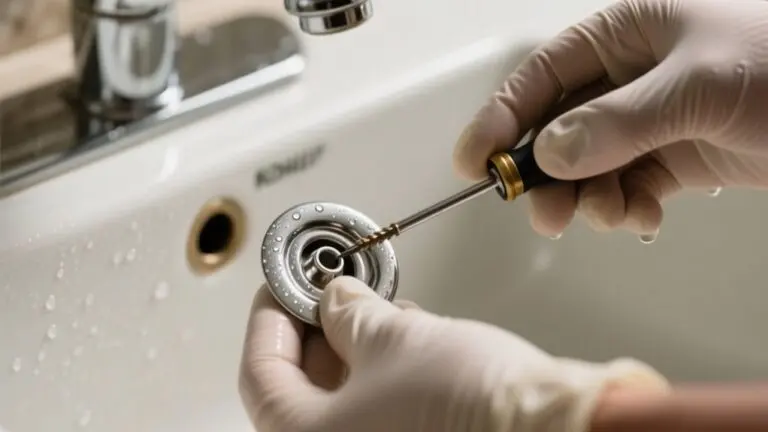
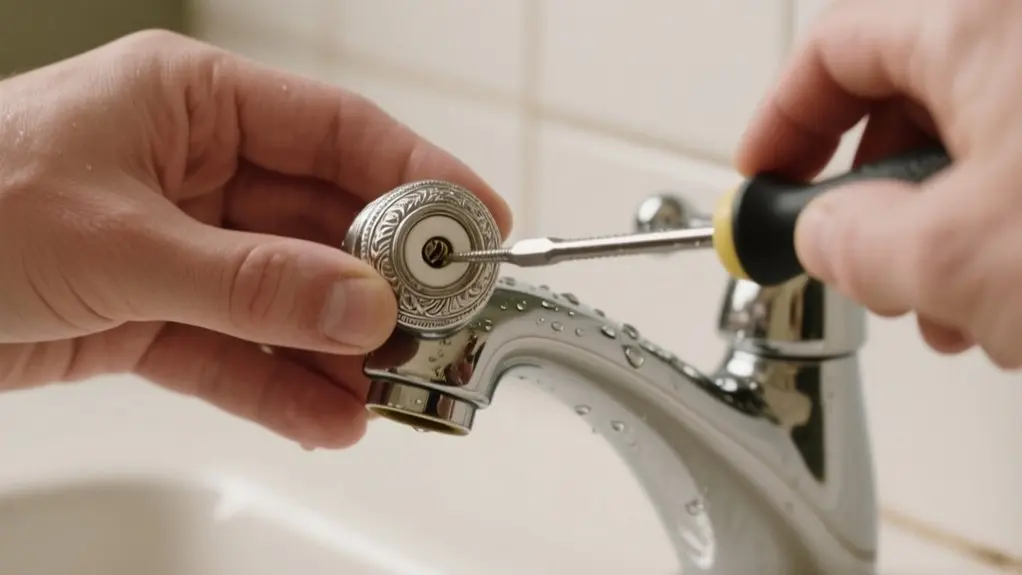
To remove your Kohler Devonshire faucet handle, first locate the set screw, usually found underneath or at the back, and loosen it with a 3/32 hex wrench. Protect the finish by wrapping the handle with a soft cloth.
Apply penetrating oil like WD-40 around the base, then gently tap and wiggle the handle to loosen it. If it’s stuck, carefully use a rubber mallet or strap wrench and inspect for corrosion.
Follow these steps, and you’ll be ready to learn effective reassembly and maintenance techniques.
Locate the Set Screw on Your Kohler Devonshire Handle
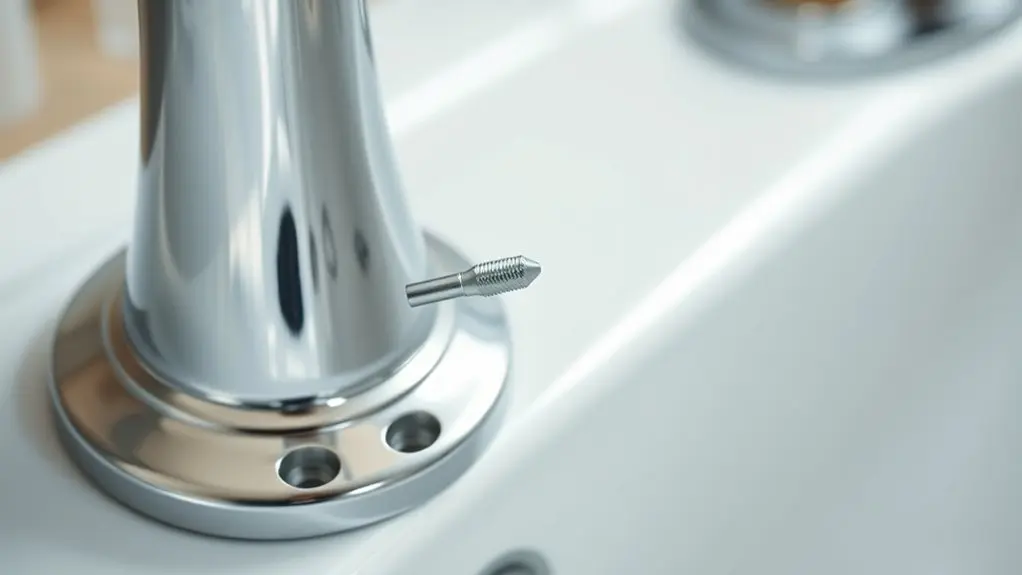
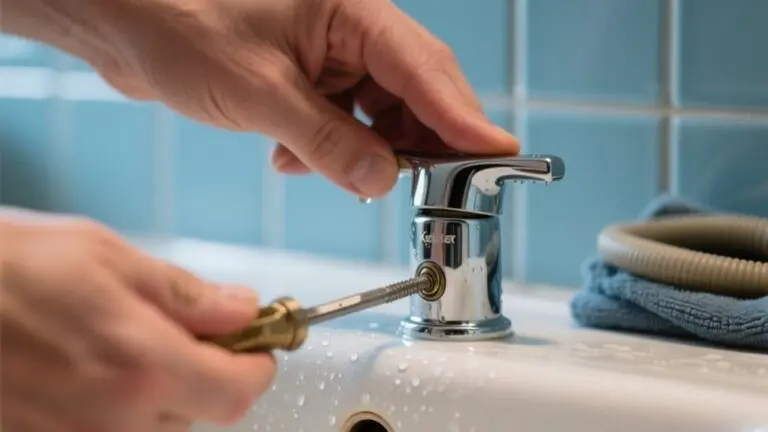
To begin, locate the single set screw on your Kohler Devonshire handle. It’s usually found at the back or underside of the lever, hidden from immediate view. You may need to carefully rotate the handle upwards to access it, as it’s often concealed for a sleek appearance.
Before loosening the set screw, clean the area with a cloth to remove any dirt or grime that could interfere with removal. Use a 3/32 hex wrench or a suitable screwdriver to remove the set screw, turning it counterclockwise.
Once loosened, keep the screw in a safe place for reassembly.
Following these steps guarantees you effectively locate and prepare the set screw for removal without causing damage or losing components.
Protect Your Kohler Devonshire Faucet’s Finish First
Before you take off the handle, go ahead and wrap it along with the surrounding area in a soft towel. This helps protect the finish from any accidental scratches.
Try to stay away from abrasive tools. Instead, use a strap wrench or cover any tools with a cloth—this way, you won’t risk damaging the surface.
Just be gentle when handling the faucet, and keep your workspace nice and clean.
That’ll help keep the finish looking pristine.
Use Soft Protective Materials
Although removing a faucet handle might seem straightforward, protecting your Kohler Devonshire’s finish requires using soft, lint-free cloths or rubber pads to prevent scratches and maintain its appearance.
Wrap a lint-free cloth or towel around the faucet handle before applying a strap wrench, ensuring the protective layer cushions the finish.
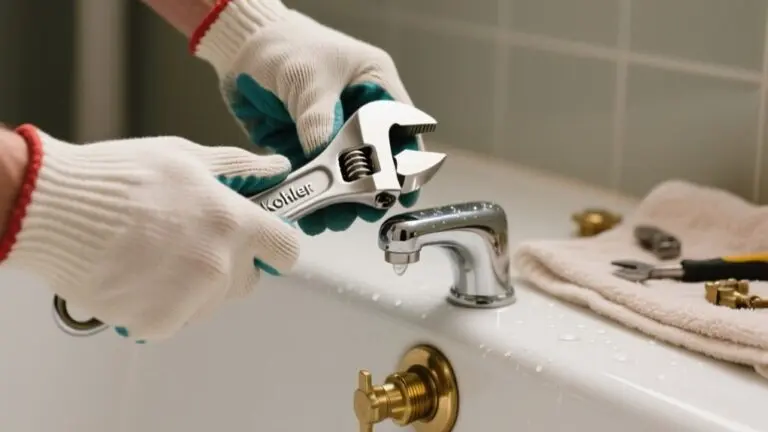
If you use an adjustable wrench, cover its jaws with soft material to avoid direct metal contact. Using warm water to soften mineral deposits can also ease handle removal without damaging surfaces.
These soft protective materials provide grip and shield the finish from dents or marks during removal.
Always avoid abrasive tools near the faucet handle to preserve its pristine condition and make maintenance easier in the future.
Avoid Abrasive Tools
When removing your Kohler Devonshire faucet handle, you’ll want to steer clear of abrasive tools like steel wool and harsh chemicals that can scratch or dull the finish. Instead, use non-abrasive materials such as rubber pads or towels to protect the surface.
A strap wrench offers a secure grip without damaging the finish, making it ideal for loosening the handle. If mineral deposits impair removal, soak a cloth in white vinegar and apply it to dissolve buildup gently. Avoid scrubbing with abrasive pads.
Also, protect surrounding areas with soft cloths or painter’s tape to prevent accidental nicks. Following these precautions guarantees you maintain the faucet’s pristine appearance while effectively removing the handle without compromising its finish.
Handle With Care
To protect your Kohler Devonshire faucet’s finish, always cover it with a towel or rag before removing the handle. This simple step prevents scratches during tool use and handling.
When applying pressure with wrenches or pliers, wrap them in a cloth to avoid marring the surface. Clear the workspace to minimize accidental contact with hard objects.
Avoid abrasive materials that can permanently damage or discolor the finish. Before you start, inspect and clean the faucet to remove grime and mineral deposits, reducing the risk of scratching.
These precautions preserve the faucet’s appearance and guarantee smooth handle removal without compromising the finish.
Handle your faucet gently, and use protective layers whenever tools are involved to maintain its pristine look.
Loosen the Handle With Lubrication and Gentle Tapping
Start by applying a generous amount of WD-40 around the base of the Kohler Devonshire faucet handle and let it sit for a few minutes. This helps penetrate grime or mineral deposits causing the handle to stick.
Next, use a rubber mallet or a piece of wood to gently tap the handle in various directions. Combine tapping with gentle wiggling to break the adhesive seal from corrosion and enhance movement.
Keep these tips in mind:
- Use light, controlled taps to avoid damaging the finish
- Wiggle the handle carefully to increase looseness
- Reapply lubrication if the handle remains stuck
These steps prepare the handle for easy removal without harsh force, ensuring you protect the faucet’s integrity.
Troubleshoot Stuck Handles and Common Removal Issues
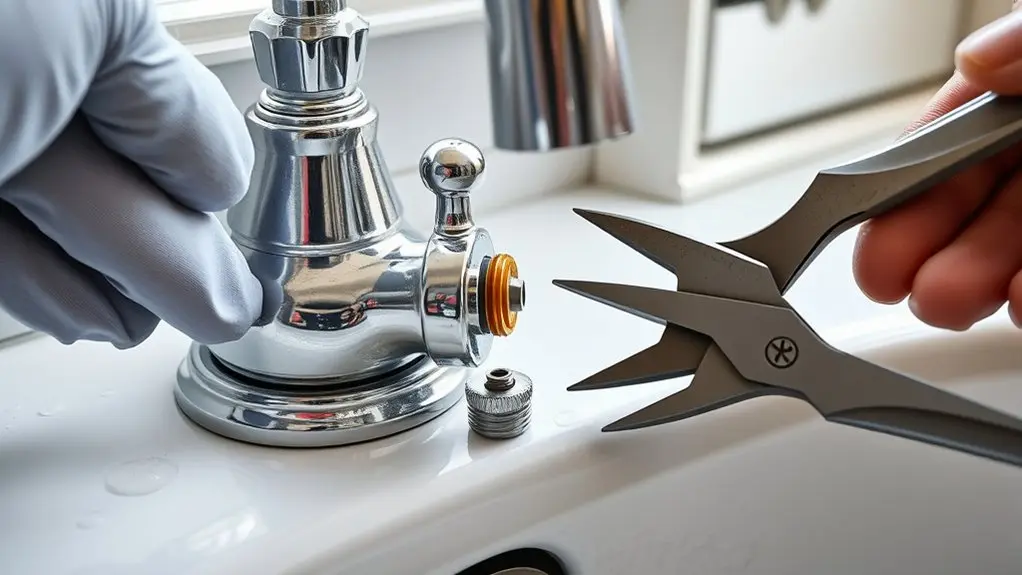
First, you’ll want to figure out why the handle is stuck. Check for any hidden set screws or mineral buildup that might be causing the problem.
Once you’ve identified the issue, apply some penetrating oil to help loosen any corrosion.
After that, try using safe tools like a strap wrench or a rubber mallet. These help you avoid damaging the handle while you’re working to remove it.
If it still won’t budge, you can carefully apply a bit of heat. This helps expand the metal, making it easier to get the handle off.
Identifying Handle Sticking Causes
Several factors commonly cause a Kohler Devonshire faucet handle to stick, including mineral deposits, grime buildup, and corroded set screws. These issues restrict the handle’s smooth movement and make removal more complicated.
To figure out the root cause, focus on these key areas:
- Mineral deposits often build up around the base and internal parts, hardening over time.
- Grime buildup from soap and dirt can create a sticky residue that slows rotation.
- Corroded set screws, usually found at the back of the lever handle, may seize and resist loosening.
You’ll want to inspect each factor carefully before moving forward.
Use a 3/32 hex wrench to check the set screw’s condition. Tackling these causes early helps ensure safer and easier handle removal without damage.
Effective Lubrication Techniques
Although stuck faucet handles can be frustrating, applying the right lubricant can greatly ease removal. Start by spraying WD-40 around the base to dissolve grime and mineral buildup.
Alternatively, soak the base with a 50/50 mix of white vinegar and warm water to naturally break down deposits. If the handle remains immobile, apply a penetrating oil like PB Blaster to target rust and corrosion.
Let any lubricant sit for several minutes to penetrate seals effectively.
For additional ease, gently heat the handle with a hairdryer to expand the metal, loosening its grip.
These lubrication steps reduce resistance and prevent damage during removal, making the process smoother and more efficient. Always guarantee thorough application and adequate wait time before attempting to remove the handle.
Safe Removal Tools Usage
Three key tools will help you safely remove a stuck faucet handle without causing damage: a strap wrench, a 3/32 hex wrench, and a rubber mallet.
Start by applying penetrating oil like WD-40 around the base to loosen mineral buildup. Use the strap wrench to grip the handle firmly without scratching the finish.
Next, insert the 3/32 hex wrench into the set screw at the back and gently loosen it. If the handle remains stuck, tap it lightly with the rubber mallet to break the seal.
- Use a strap wrench to avoid damaging the handle’s finish
- Loosen the set screw carefully with a 3/32 hex wrench
- Tap gently with a rubber mallet to free stubborn handles
Keep a tray handy to catch any leaks during removal.
Reassemble the Kohler Devonshire Faucet Handle Correctly
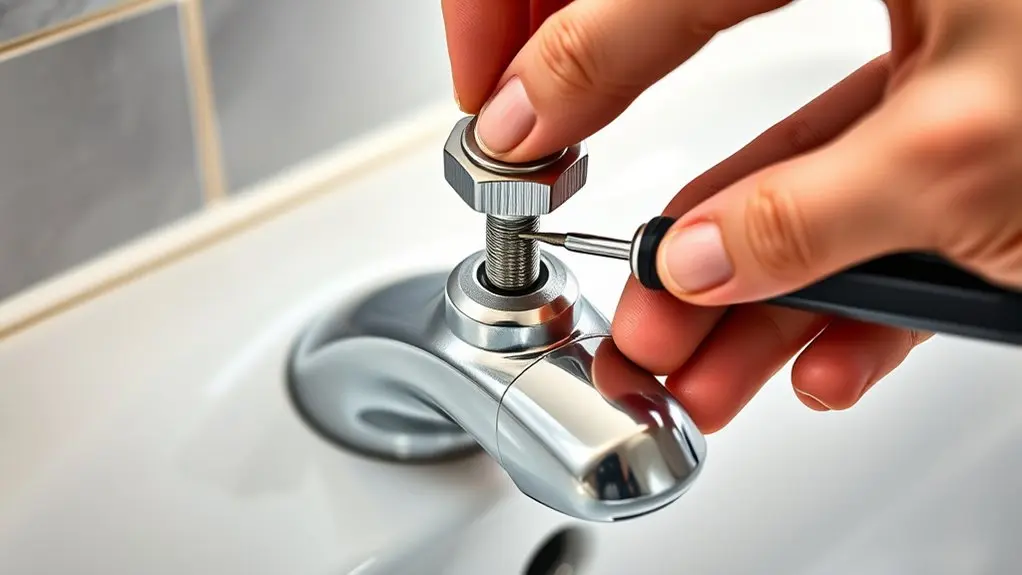
To reassemble the Kohler Devonshire faucet handle correctly, start by organizing all removed components to streamline the process.
Begin reassembly by placing internal parts back in the reverse order of disassembly.
Make certain the valve aligns properly with the handle before securing any screws or fasteners. Tighten set screws firmly but avoid over-tightening to protect the finish and internal mechanisms.
After securing the handle, turn on the water supply and test its movement to verify smooth operation and confirm the faucet functions as intended. Only once you’re satisfied with the handle’s performance should you replace any decorative covers.
Following this precise sequence will make certain your faucet handle is reassembled efficiently and functions reliably without damage.
Tips to Maintain Your Kohler Devonshire Faucet Handle
When you maintain your Kohler Devonshire faucet handle regularly, you guarantee its smooth operation and extend its lifespan. Focus on key practices to keep your faucet functioning effectively and looking pristine.
Regular maintenance of your Kohler Devonshire faucet handle ensures smooth operation and lasting durability.
Clean the handle with a 50/50 white vinegar and warm water solution to remove mineral deposits and prevent buildup.
Inspect components for wear or damage during routine checks to prevent leaks and operational issues.
Lubricate moving parts using a silicone-based lubricant to guarantee smooth movement and reduce corrosion risk.
Always use a soft cloth when cleaning to protect the finish.
Schedule periodic maintenance, especially if you have hard water, to address potential problems early.
These steps help you avoid costly repairs and maintain reliable faucet performance.
Frequently Asked Questions
What Tools Do I Need to Replace the Kohler Devonshire Handle?
You’ll need a 3/32 hex wrench to loosen the set screw behind the handle and a Phillips screwdriver to remove the bonnet screw.
An adjustable wrench helps you grip and turn components securely.
Keep a towel handy to protect surfaces from scratches.
If parts are stuck or rusted, use penetrating oil like WD-40 to loosen them before disassembly.
These tools will make replacing your Kohler Devonshire handle straightforward and efficient.
Can I Use Household Oil Instead of WD-40 for Lubrication?
Think of your faucet handle like a rusty hinge on an old gate. Household oil is like a light sprinkle of water; it might wet the surface but won’t break through corrosion.
You shouldn’t use household oil instead of WD-40 because it lacks penetrating power and can become sticky. WD-40’s formula dissolves rust and mineral buildup, ensuring smooth removal.
For stubborn handles, stick with penetrating oils or natural acids like vinegar for effective lubrication.
How Do I Identify the Model Number of My Kohler Devonshire Faucet?
To identify your Kohler Devonshire faucet model number, first check under the sink on the faucet body or supply lines for a tag or sticker.
Next, inspect the faucet handle near its base for any engraved or printed numbers.
If you have the original packaging or manual, find the model there. You can also visit Kohler’s website under Product Support to match your faucet visually.
If all else fails, contact Kohler customer service with a photo for help.
Are There Warranty Considerations When Removing the Handle?
Yes, you have to take into account the warranty before removing the handle because tampering can void it.
Always review Kohler’s warranty terms first to avoid losing coverage.
Document your process and keep original parts and tools handy for possible verification.
If you’re unsure, contact Kohler’s customer service.
Taking these steps guarantees you don’t accidentally jeopardize your limited lifetime warranty while performing maintenance or repairs on your Devonshire faucet.
How Often Should I Clean the Faucet Handle to Prevent Sticking?
You should clean your faucet handle at least once a month using a 50/50 mixture of white vinegar and warm water. This helps prevent mineral buildup and sticking.
If you have hard water, increase cleaning frequency to every two weeks.
Always dry the handle thoroughly after cleaning to avoid moisture buildup and corrosion.
Regular inspections every few months help catch wear early. This keeps your handle operating smoothly and extends its lifespan.
Conclusion
Removing your Kohler Devonshire faucet handle is straightforward when you follow these steps carefully. Remember, “a stitch in time saves nine.” Addressing minor issues early prevents bigger problems later.
Always protect your faucet’s finish, use proper tools, and apply lubrication to ease removal. If you encounter stubborn handles, troubleshoot patiently before forcing them off.
Finally, reassemble everything correctly to maintain smooth operation and prolong your faucet’s life. Regular maintenance keeps it working like new.