Who Makes Kohler Oil Filters – The Answer
You rely on Kohler oil filters because Kohler manufactures them to precise OEM standards, ensuring perfect compatibility and protecting your engine’s warranty. These filters are engineered with specific bypass valve pressures and sizes tailored for ideal oil flow and engine performance.
Using genuine Kohler filters prevents risks like oil starvation and warranty voids that often come with non-OEM alternatives. Understanding who makes these filters shows their quality and reliability, and exploring further reveals why this matters for your equipment.
How Kohler Ensures Oil Filter Quality and Compatibility
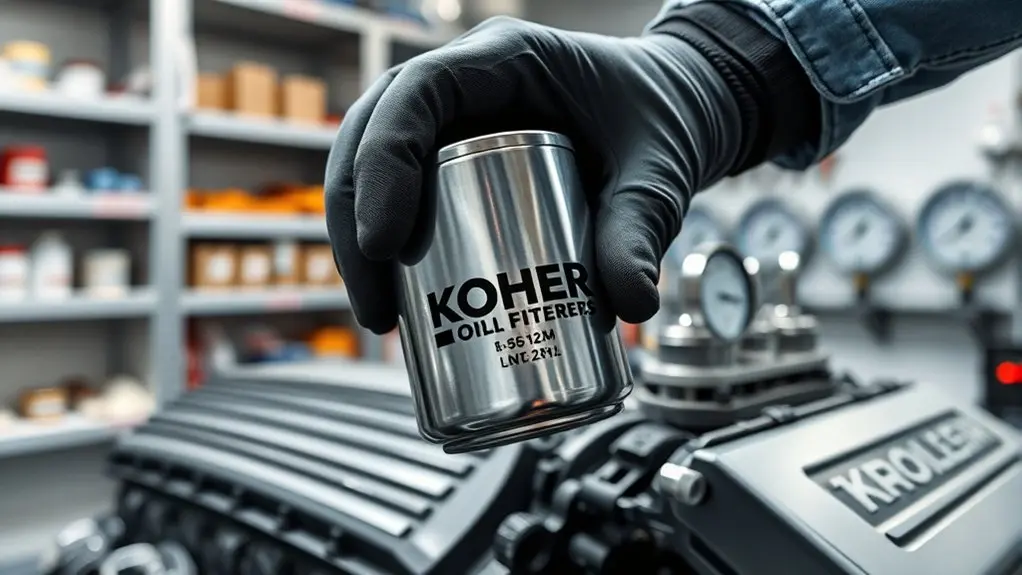
Kohler guarantees oil filter quality and compatibility by engineering each filter with precise bypass pressure settings, such as 16 psig and 20 psig. These are tailored to maintain peak oil flow under varying engine loads.
When you choose Kohler oil filters like models 12-050-01 or 12-050-08, you get components rigorously tested for seamless integration with Kohler engines. Kohler uses durable materials and exact gasket sealing surfaces combined with thread sizes designed specifically to prevent leaks and improper fitment.
These filters undergo strict performance assessments aligning with industry standards, guaranteeing reliable engine protection. Kohler also stresses the risks of non-OEM filters, which often lack the precise engineering and quality control necessary for peak function.
Key Kohler Oil Filter Specifications You Should Understand
You need to understand the critical specifications of Kohler oil filters, including size variations that range from 2.25″ to 3.5″. Along with the size, it’s important to know the corresponding model numbers to ensure a proper fit.
Also, pay close attention to the bypass valve pressures, which are typically around 16 or 20 psig. These pressures play a key role in influencing oil flow and protecting your engine.
On top of that, make sure to verify the thread size and the gasket sealing surfaces. This helps guarantee a secure installation and prevents any leaks down the line.
Filter Size Variations
Anyone selecting an oil filter must carefully consider size variations to guarantee proper fit and function. Kohler offers Small (2.25″), Medium (2.75″), and Large (3.5″) filters, accommodating diverse engine models.
For example, the 2005 Cub 1050 uses the 12-050-01 filter, but the taller 12-050-02 may not fit all engines. You must verify seal and threading specifications to ascertain compatibility and avoid engine damage from improper fitment.
Recommended filters for Kohler Command engines include models 12-050-01 and 12-050-08. Selecting the correct filter size variation is critical, as using an incorrect dimension can compromise oil flow and filtration efficiency.
Always prioritize OEM filters with verified specifications rather than aftermarket options lacking proper equivalence to maintain engine reliability.
Bypass Valve Pressure
After confirming the correct filter size for your engine, the next key specification to evaluate is the bypass valve pressure. This pressure setting dictates when oil bypasses the filter element, guaranteeing uninterrupted oil flow if the filter becomes clogged.
Kohler oil filters commonly feature bypass valve pressures of 16 or 20 psig, calibrated to maintain ideal oil circulation without compromising filtration. Selecting a filter with an incorrect bypass valve pressure can disrupt oil pressure, risking engine wear or failure.
For Kohler engines, filters like the 12-050-01 and 12-050-08 are engineered with precise bypass valve pressures to match operational requirements.
Understanding and matching the bypass valve pressure to your engine guarantees proper lubrication, protects against oil starvation, and sustains engine performance and longevity.
Thread And Seal Details
Though bypass valve pressure is essential, thread size and seal details are equally important to confirm a proper fit and reliable sealing on Kohler oil filters. You must ascertain the filter’s thread matches your engine’s specifications to avoid installation damage or oil starvation risks.
Equally important is the seal: the gasket sealing surface must align perfectly with the engine to prevent leaks and maintain filtration integrity.
When selecting a Kohler oil filter, focus on these key points:
- Verify the exact thread dimensions for your model, such as those on part numbers 12-050-01 and 12-050-08.
- Confirm the seal gasket’s condition and compatibility to guarantee a leak-free installation.
- Check filter height variations to confirm they fit without compromising the seal or thread engagement.
This technical attention prevents operational failures and guarantees peak engine protection.
Comparing Kohler Oil Filters With OEM Alternatives
How do Kohler oil filters stack up against OEM alternatives regarding performance and compatibility? Kohler oil filters are engineered specifically to meet Kohler engine specifications, ensuring precise gasket sealing surfaces, thread sizes, and bypass pressure settings.
OEM filters typically cost around $12, while some aftermarket options may offer lower prices. However, you must weigh cost savings against potential risks: improper fit or substandard filtration can compromise engine longevity.
While brands like Wix and Fram have been used successfully, not all aftermarket filters match the reliability or compatibility of genuine Kohler oil filters.
If you want superior engine protection and assured compatibility, sticking with Kohler’s filters is advisable. Deviating requires thorough verification of technical specs to avoid mechanical issues and maintain performance integrity.
User Experiences With Kohler Oil Filters
You’ll notice that filter performance can really vary depending on who you ask. Some users point out durability issues that might impact how well the engine is protected.
When it comes to balancing cost and quality, a lot of people wonder if Kohler’s prices are worth it compared to aftermarket filters. It’s definitely a good idea to double-check warranty details and make sure the filter is compatible—especially if you’re thinking about going with non-OEM options or taller filter models.
Filter Performance Insights
When selecting Kohler oil filters, you should evaluate user feedback highlighting both strengths and weaknesses in their performance.
Filter performance insights reveal mixed reports; some users praise the OEM Kohler oil filter 12-050-01 for compatibility and reliability, while others note occasional defects impacting engine efficiency.
Incorrect filter design, especially bypass valve settings, can cause oil starvation, so filter selection is critical.
Many users opt for aftermarket alternatives like Wix 51348 and AC Delco PH53, finding them dependable substitutes without compromising filtration quality.
To optimize engine longevity, regular maintenance and timely oil and filter changes remain essential.
Key points to evaluate:
- Verify filter model compatibility (preferably Kohler 12-050-01).
- Assess bypass valve specifications to prevent oil flow issues.
- Weigh OEM versus trusted aftermarket filter performance insights.
Cost Versus Quality
Balancing cost and quality plays a significant role in your choice of Kohler oil filters. Users report that while Kohler filters offer cost savings compared to OEM options, concerns about quality affecting engine performance persist.
The cost versus quality debate centers on whether initial savings justify potential risks like oil starvation and reduced engine longevity. Many recommend prioritizing filter quality to avoid costly repairs, despite higher upfront expenses.
| Filter Type | Price Range | Reported Reliability |
|---|---|---|
| Kohler | Low | Mixed |
| OEM | High | High |
| Wix | Medium | Variable |
| Fram | Medium | Variable |
| Alternative Brands | Low to Medium | Cautioned |
You must weigh these factors carefully to guarantee superior engine maintenance.
Warranty And Compatibility
Although alternative oil filters may seem like a cost-effective choice, using Kohler-specified filters is essential to maintain your engine’s warranty coverage. Deviating from OEM filters can lead to warranty disputes and claim denials. Kohler’s guidelines explicitly require their filters for peak engine performance and warranty validity.
Consider these points to protect your warranty and guarantee compatibility:
- Always consult your engine manual for the exact Kohler filter specifications.
- Understand that using non-OEM filters may cause complications during warranty claims.
- Recognize that user experiences highlight risks of voided warranty when alternative filters are used.
Adhering strictly to Kohler’s recommended filters safeguards your warranty and engine reliability, preventing costly disputes and performance issues.
Where to Buy Genuine Kohler Oil Filters
Where can you find genuine Kohler oil filters to confirm peak engine performance? You can purchase authentic Kohler oil filters through local lawn mower dealers or authorized small engine parts retailers.
Online, Kohler’s official website and reputable e-commerce platforms provide convenient access. Verify your filter’s model number, like 12-050-01 or 12-050-08, to ascertain precise compatibility with your engine.
Buying in bulk from local service centers often reduces costs by cutting shipping fees.
| Purchase Location | Price Range | Notes |
|---|---|---|
| Local Dealers | ~$12 | Immediate availability |
| Authorized Retailers | ~$12 | Specialized small engine parts |
| Kohler Official Site | ~$12 | Guaranteed authenticity |
| E-commerce Platforms | ~$12 | Convenient, fast shipping |
| Local Service Centers | Variable | Bulk discounts available |
Who Makes Kohler Oil Filters and Why It Matters
Understanding who manufactures Kohler oil filters is essential for maintaining your engine’s reliability and performance. Kohler oil filters are specifically made to meet the exacting standards required by Kohler engines, ensuring compatibility and ideal function.
You should know:
You should know the importance of using genuine Kohler oil filters for optimal engine performance and warranty protection.
- Genuine Kohler filters feature precise specifications, including model numbers like 12-050-01 and 12-050-02. These define size and bypass pressure critical to engine operation.
- OEM manufacturing guarantees correct seal and threading designs, preventing leaks and engine damage.
- Using authentic filters protects your warranty, as Kohler mandates OEM components for claims.
Choosing non-original filters risks oil starvation, decreased efficiency, and voided warranties.
For Kohler engines, relying on manufacturer-approved oil filters sustains performance and engine longevity.
Frequently Asked Questions
Can Kohler Oil Filters Be Recycled?
Yes, you can recycle Kohler oil filters since they contain metal and plastic components.
Before recycling, make sure you drain any residual oil to prevent contamination during processing.
Check with your local waste management facility for specific disposal guidelines, as some offer designated drop-off points.
What Is the Warranty Period for Kohler Oil Filters?
The warranty period for Kohler oil filters is one year from the purchase date.
You need to use only OEM Kohler filters to keep this warranty valid.
If you use non-approved or alternative filters, you risk voiding your equipment’s warranty.
Distributors may check for proper filter use during maintenance claims, so keep documentation proving you used genuine filters.
This safeguards your warranty claims won’t be denied due to filter issues.
Are Kohler Oil Filters Suitable for Use in Marine Engines?
Kohler oil filters aren’t ideal for marine engines because they’re designed mainly for lawn and garden equipment.
You’ll find they mightn’t handle high humidity or saltwater exposure well. Their bypass pressure settings could also mismatch marine engine needs.
To protect your marine engine reliably, you should use filters specifically rated for marine environments.
Always follow your engine manufacturer’s guidelines to guarantee maximum filtration and engine longevity.
How Often Should Kohler Oil Filters Be Replaced?
You should replace Kohler oil filters at least every 50 hours of operation or with every oil change for standard use.
If you’re running your engine under heavy loads or commercial conditions, change them more frequently, around every 25 to 30 hours.
For high-performance engines, monitor filter and oil condition closely and replace sooner if needed.
Always follow your specific model’s manufacturer guidelines to maintain peak engine health and warranty coverage.
Do Kohler Oil Filters Come With a User Installation Guide?
Kohler oil filters typically don’t come with a user installation guide in the packaging. You’ll find detailed installation instructions in your engine or equipment owner’s manual, which guarantees proper fit and function.
To install correctly, you should verify filter specifications like gasket size and threading.
For additional help, check Kohler’s website or local dealer resources. You can also consider community forums for practical tips to avoid common installation issues.
Conclusion
When it comes to Kohler oil filters, knowing who makes them isn’t just trivia. It’s vital for ensuring quality and compatibility. You can trust these filters because they’re crafted by trusted manufacturers adhering to strict specifications.
Choosing genuine Kohler filters means you’re protecting your engine with precision-engineered parts. After all, why settle for less when your engine’s health is on the line? Remember, the right filter isn’t just a choice. It’s your engine’s lifeline.