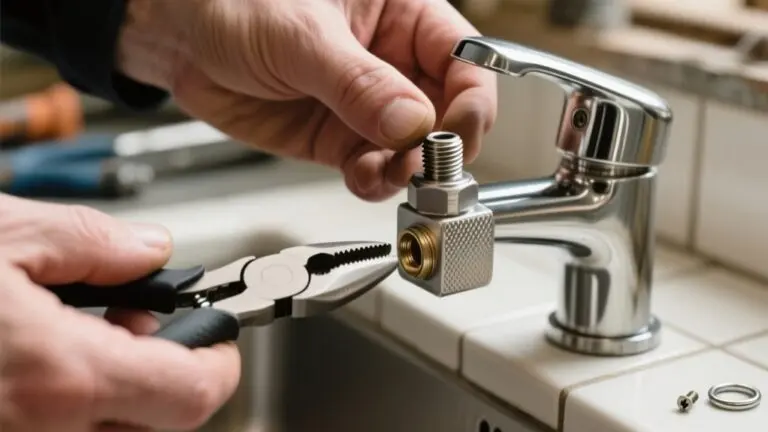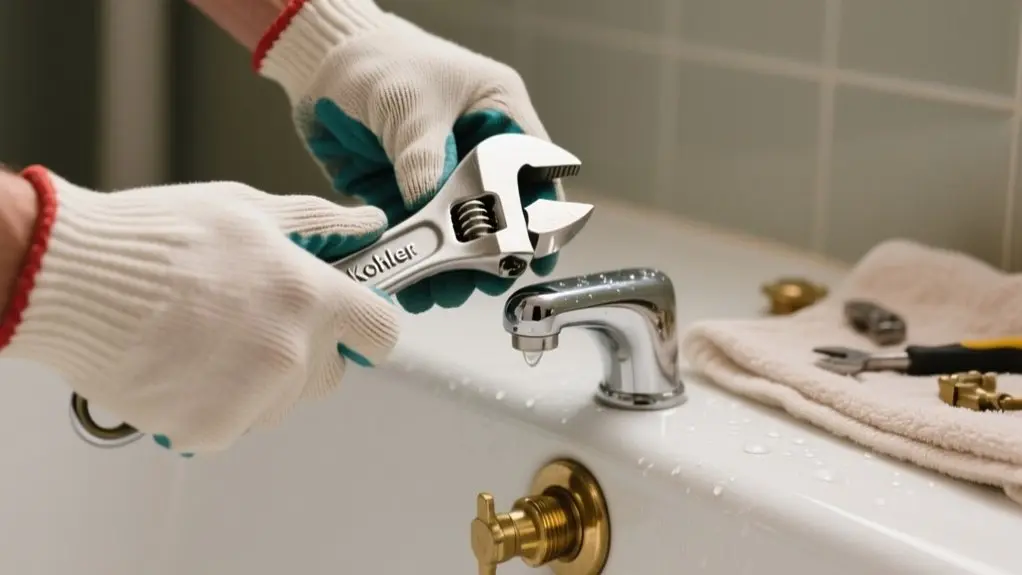
How To Remove Kohler Bathtub Faucet – Full Guide
To remove your Kohler bathtub faucet, start by gathering the right tools like a 12 mm hex socket and wrench. Carefully disconnect the handshower hose from the diverter without forcing it.
Loosen the diverter by turning it counterclockwise using the hex socket, avoiding cross-threading. If parts are stuck, apply penetrating oil and use gentle heat or a rubber mallet to loosen them.
Clean the area and inspect components before reinstalling new parts. Keep following for detailed steps and troubleshooting tips.
Get the Right Tools for Removing Your Kohler Faucet
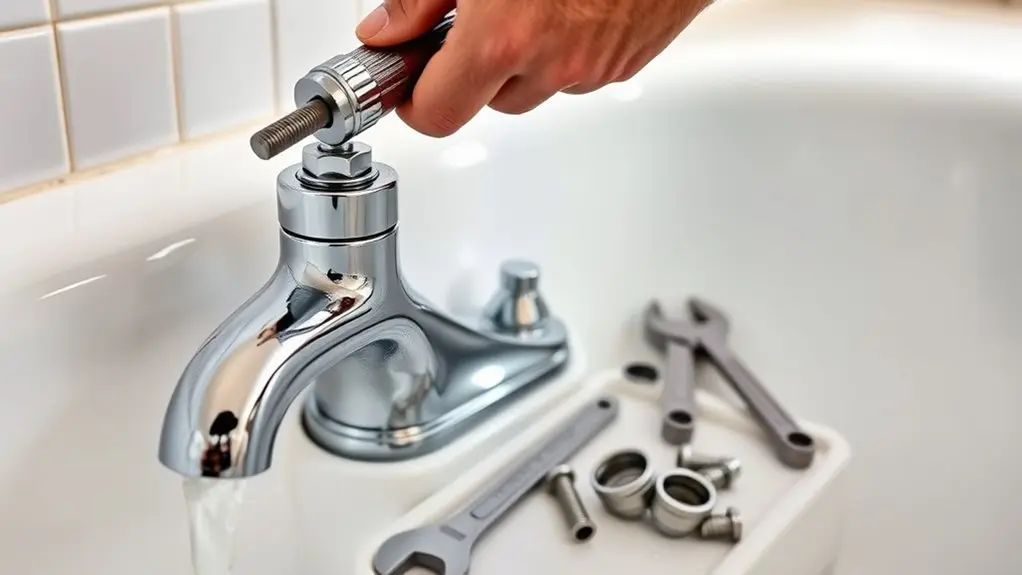
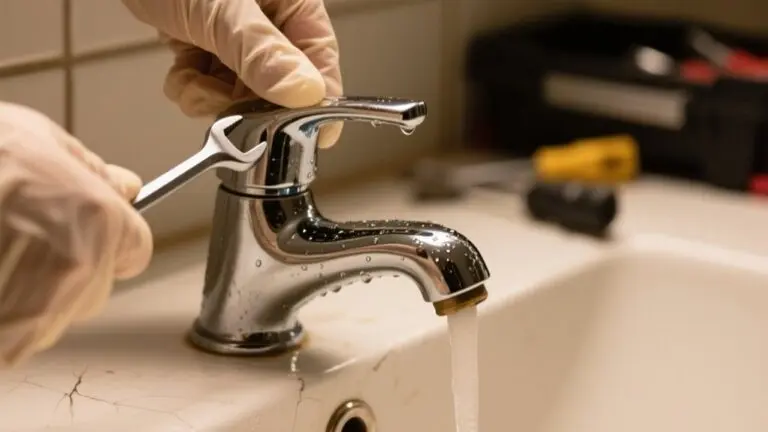
To remove your Kohler bathtub faucet efficiently, start by gathering the right tools. You’ll need a hex wrench or screwdriver, depending on your faucet model. For Stillness®, Purist®, and Margaux® series, a 12 mm hex socket is essential to loosen the diverter and other components.
Have a wrench handy to tackle any stubborn fasteners that resist loosening. Using the correct tool size is critical to avoid stripping screws or damaging parts, ensuring a smooth removal process.
Organize all your tools upfront to save time and prevent misplacing items during the job. Proper preparation with well-maintained, appropriately sized tools will make your faucet removal straightforward and efficient, minimizing frustration and potential damage.
Disconnecting the Handshower Hose From Your Kohler Faucet
Start by carefully disconnecting the handshower hose from your Kohler faucet to gain clear access to the diverter. Locate the fitting where the hose attaches to the diverter. Unscrew it gently without pulling down on the diverter itself to avoid damage.
Use moderate force to prevent stripping threads or harming the hose. Once detached, set the hose aside safely.
| Step | Action | Caution |
|---|---|---|
| 1 | Locate hose connection | Don’t pull diverter down |
| 2 | Unscrew fitting carefully | Avoid excessive force |
| 3 | Remove hose | Prevent damage to threads |
| 4 | Set hose aside | Guarantee no kinks or bends |
This guarantees unobstructed access for servicing or replacing the diverter.
Loosening the Diverter on Your Kohler Faucet
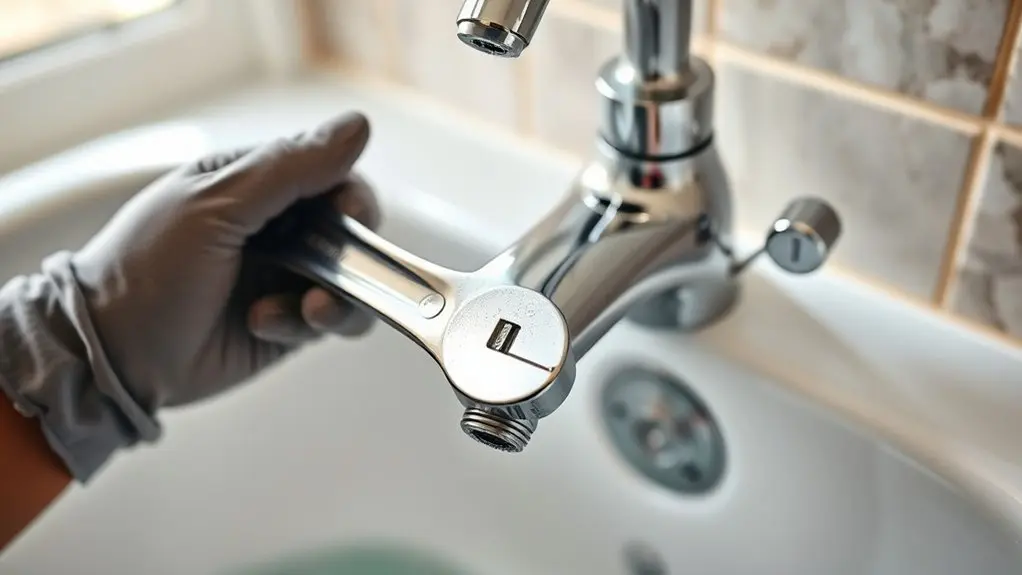
Although you’ve already disconnected the handshower hose, you’ll need a 12 mm hex socket and wrench to securely grip the diverter for loosening.
Position the socket firmly over the diverter to avoid slipping. Turn it counterclockwise with steady force to unthread it smoothly, taking care not to damage the fittings.
Keep the diverter aligned properly throughout to prevent cross-threading, which could complicate reinstallation. Avoid pulling on the diverter or the hose connections to maintain integrity.
Once the diverter loosens, lift it out carefully, keeping all components organized for later reassembly. This guarantees a clean removal process without risking damage to the faucet assembly or surrounding parts.
Proper tool use and technique are key to an efficient, damage-free removal.
How to Remove the Faucet Handle
When you’re ready to remove the faucet handle, begin by locating the set screw, which is typically hidden underneath or at the back of the handle. Use a suitable screwdriver or Allen wrench to unscrew it carefully.
Check for any caps that might cover the screw and pry them off gently if needed.
Once the set screw is removed, grasp the handle firmly and wiggle it while pulling upward to dislodge it from the faucet stem. If the handle remains stuck, tap it lightly with a plastic or rubber mallet to avoid damaging the finish. Avoid using excessive force to prevent damage.
After the handle comes free, set it aside for cleaning or replacement as needed.
What to Do When Faucet Parts Won’t Budge
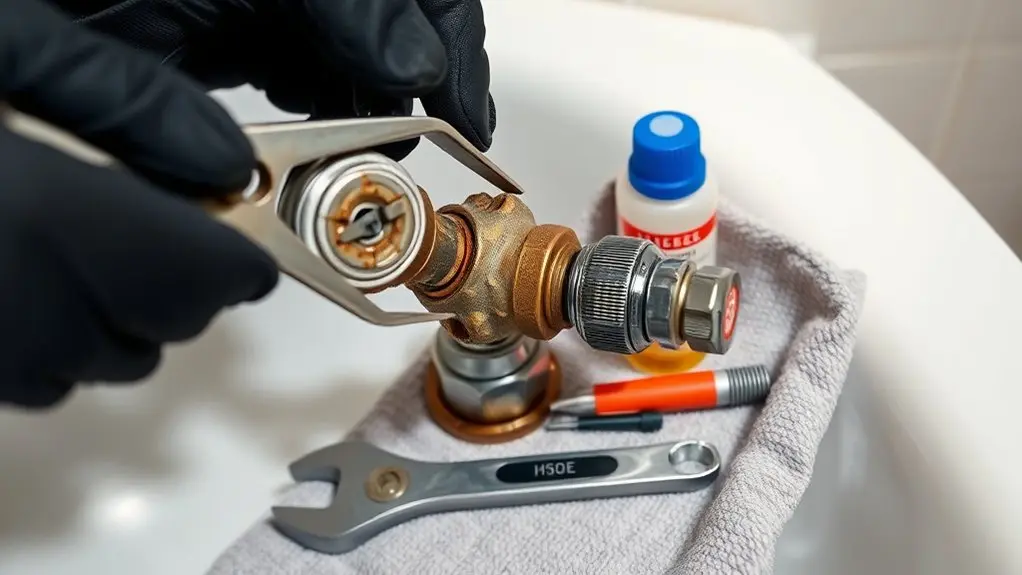
If faucet parts won’t budge despite your efforts, applying penetrating oil can effectively loosen corrosion and grime buildup. After soaking the parts, use a wrench or pliers wrapped with a cloth to prevent scratching while turning stubborn components.
If they remain stuck, gently heat the area with a hairdryer to expand the metal slightly, aiding in loosening the bond. For persistent parts, consider tapping lightly with a rubber mallet to break the seal without damage.
Key steps to try include:
- Applying penetrating oil and allowing time to work
- Using protective grips on tools to prevent finish damage
- Gently heating stuck parts before attempting removal
If these methods fail, cutting the part may be necessary, so have replacements ready.
Cleaning and Preparing the Faucet Area for Reinstallation
After loosening and removing stubborn faucet parts, focus on thoroughly cleaning the faucet area to prepare for reinstallation.
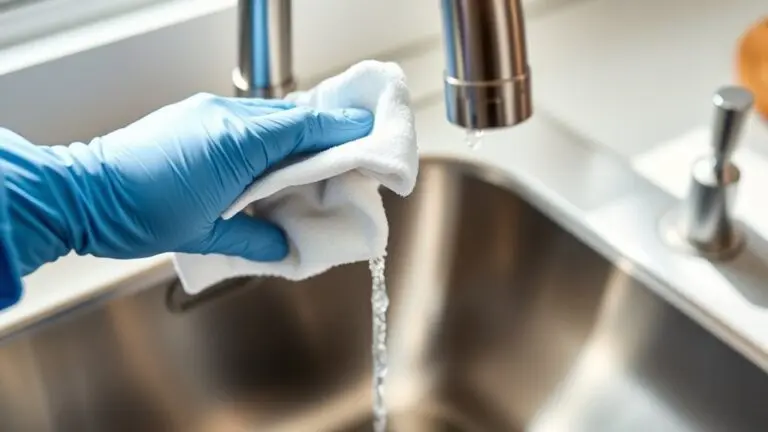
Use a soft cloth with a vinegar-and-water solution to gently remove mineral deposits and old sealant without damaging the finish.
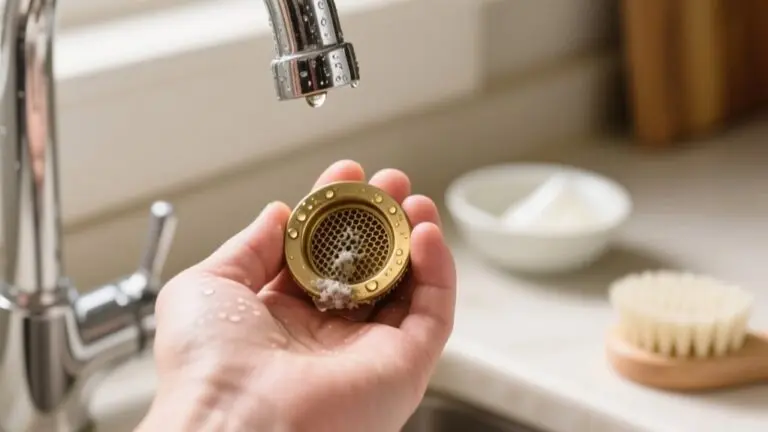
Clear all debris to guarantee proper adhesion of new sealants. Inspect components for wear or damage, replacing any faulty parts to prevent leaks and maintain performance.
Once cleaned, dry the area completely to avoid moisture interfering with sealant or gasket adhesion.
Before reinstalling, apply plumber’s grease to O-rings and gaskets to enhance their durability and sealing effectiveness.
This careful preparation guarantees your Kohler bathtub faucet will function reliably and reduce the likelihood of future issues after reassembly.
Contact Kohler Support for Faucet Removal Help
Three key pieces of information will streamline your interaction with Kohler support: your faucet model, any troubleshooting steps you’ve tried, and your warranty details.
Having these ready guarantees Kohler can provide targeted, manufacturer-specific removal instructions efficiently.
Kohler offers multiple support channels to fit your needs:
- Phone and email access for direct, personalized assistance
- Online resources including FAQs and detailed documentation
- Warranty verification to clarify available service options
Before calling, review Kohler’s website for basic guidance that might resolve your issue faster.
When you contact support, clearly describe your removal challenges and prior attempts. This approach lets Kohler tailor advice precisely, saving you time and preventing damage during faucet removal.
Final Tips for a Smooth Kohler Faucet Removal
Although removing your Kohler bathtub faucet can seem straightforward, following a few final tips will help you avoid common pitfalls and complete the job efficiently.
First, verify you have all necessary tools ready, including a 12 mm hex socket and a wrench.
Ensure you have all required tools on hand, such as a 12 mm hex socket and wrench.
Always disconnect the handshower hose from the diverter before loosening it. Turn the diverter counterclockwise with steady force to prevent cross-threading and damage.
Keep your workspace clean and organized to avoid losing small parts like set screws and washers, which are essential for proper reinstallation.
After removal, consult Kohler’s official resources for troubleshooting any issues encountered.
These steps will streamline the process and protect your faucet components throughout the removal.
Frequently Asked Questions
How Do I Identify My Kohler Faucet Model?
To identify your Kohler faucet model, start by checking for markings near the base or spout, where model numbers or branding often appear.
Consult your faucet’s owner’s manual or packaging for model details.
You can also use Kohler’s online tool by inputting specific features or dimensions to narrow down the model.
If you’re still unsure, contact Kohler support with photos and descriptions. They can help you pinpoint the exact model efficiently.
Can I Remove the Faucet Without Turning off the Water Supply?
You shouldn’t remove the faucet without turning off the water supply. Doing so risks significant water leakage or flooding during removal.
Locate and shut off the valves under the sink or near the bathtub’s water line. If those aren’t accessible, turn off your home’s main water supply.
Always prepare towels or a bucket for residual water, and wear protective gear to avoid injury from sudden water bursts or slippery surfaces.
What if My Diverter Handle Is Broken or Missing?
If your diverter handle is a ghost, broken or missing, you’ll need to peek inside the faucet’s heart to identify the exact parts.
Reach out to Kohler support; they’re your compass for finding the perfect replacement.
Meanwhile, a universal handle can act as a stand-in.
Don’t forget to check your warranty; it might cover a free fix.
When installing, follow instructions precisely to keep everything flowing smoothly.
Are There Any Special Lubricants Recommended for Reinstallation?
You should use plumber’s grease or a silicone-based lubricant when reinstalling your Kohler bathtub faucet.
Apply a thin layer on threads and seals to reduce friction and prevent corrosion.
Food-grade silicone grease works well if water quality is a concern.
Avoid petroleum-based lubricants since they can damage rubber seals and O-rings.
Always clean off old lubricant or debris before applying new grease to guarantee a proper, long-lasting seal.
How Do I Prevent Leaks After Reinstalling the Faucet?
You absolutely can’t afford leaks after reinstalling your faucet. They’re like tiny waterfalls waiting to ruin your day.
To prevent them, make sure all washer seals and O-rings are perfectly seated and in great shape. Wrap threaded connections with plumber’s tape tightly but neatly.
Tighten screws just enough, not so much that you strip the threads. Finally, test the faucet slowly for drips.
If leaks show up, recheck part alignment immediately to stop water betrayal.
Conclusion
Removing your Kohler bathtub faucet doesn’t have to be an overwhelming task. With the right tools and a steady approach, you’ll gently untangle each component, like peeling back layers to reveal a fresh start.
If parts resist, don’t force it. Seek support or use patience as your ally. Clean and prepare the area thoroughly to guarantee a smooth changeover.
Following these steps, you’ll breeze through the process and set the stage for a flawless reinstallation.