How To Get Rid Of Pink Mold In Shower – Beginner’s Guide
To get rid of pink mold in your shower, start by identifying it as Serratia marcescens, a bacterium thriving in warm, moist areas. Use EPA-registered disinfectants like diluted bleach or hydrogen peroxide and scrub with a stiff brush after applying a baking soda and dish soap paste.
Rinse and dry thoroughly to prevent regrowth. Maintain proper ventilation and clean regularly to stop its return. Keep following these guidelines to understand effective prevention and safe cleaning techniques.
What Is Pink Mold and Why It Appears
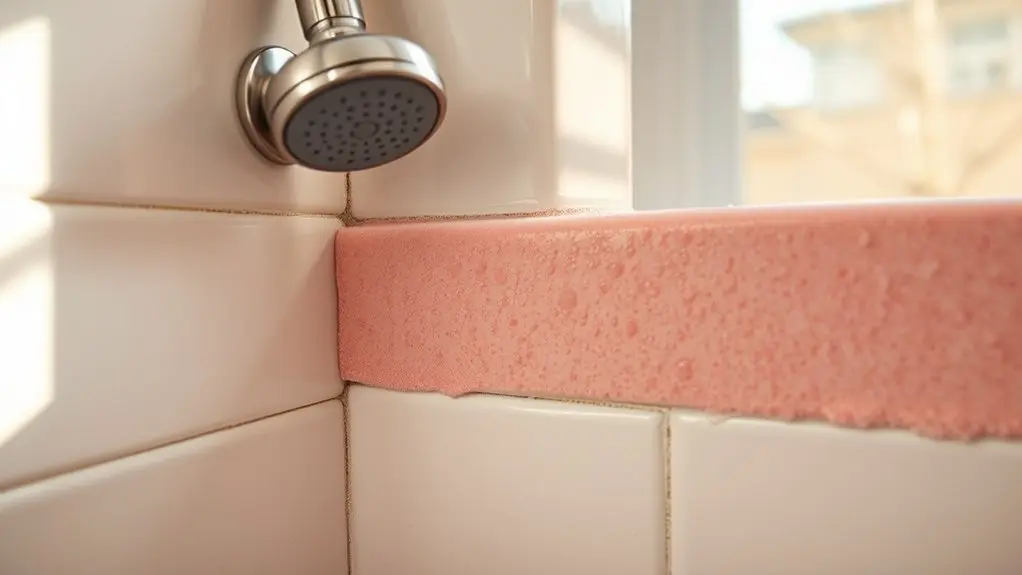
Although often mistaken for a fungus, pink mold is actually Serratia marcescens, an airborne bacterium that thrives in warm, moist environments like your shower.
This bacterium produces a distinctive pink to reddish-orange biofilm, feeding on soap scum, shampoo residue, and other organic materials.
You’ll typically find it in areas where moisture lingers, especially in poorly ventilated bathrooms with damp surfaces.
Ideal growth occurs at temperatures between 37°C and 40°C (98°F to 104°F), conditions often met in showers and tubs.
While pink mold generally poses minimal threat to healthy individuals, you should be cautious if you or household members are immunocompromised, elderly, or infants, as Serratia marcescens can cause infections.
Understanding these factors helps you recognize why pink mold appears and why controlling moisture is essential.
Identifying Pink Mold vs. Other Stains
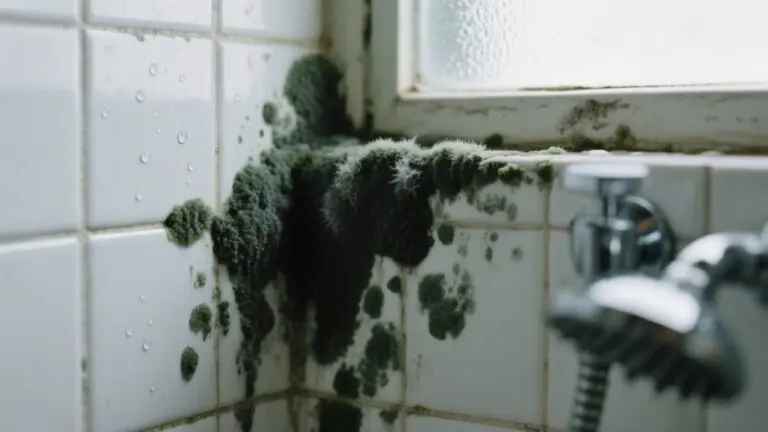
How can you tell pink mold apart from other common bathroom stains? Pink mold, scientifically known as Serratia marcescens, forms a slimy pink film that distinguishes it from black mold’s fuzzy texture or hard water deposits.
When identifying stains, focus on the color and consistency. Pink mold appears as a slimy pink to reddish-orange biofilm often growing on organic material like soap scum in warm, damp areas.
Unlike mildew or mineral stains, pink mold can quickly recolonize surfaces due to airborne bacteria. Recognizing these traits helps you confirm whether you’re dealing with Serratia marcescens or another stain type.
Accurate identification is essential for effective removal, as pink mold requires specific cleaning approaches compared to typical mildew or water stains.
Choosing the Best Disinfectants and Tools
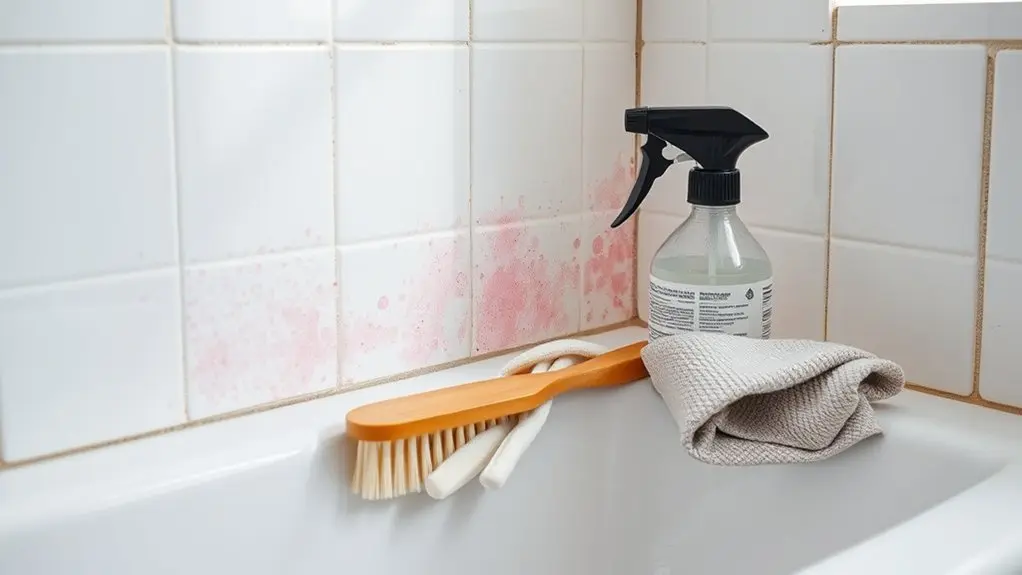
You’ll want to pick EPA-registered disinfectants that have bleach or hydrogen peroxide in them. These ingredients are great because they effectively kill Serratia marcescens and can get through biofilms on non-porous surfaces.
Just a heads-up: avoid antifungal mold cleaners since they don’t work on the bacterial nature of pink mold.
To make your cleaning even more effective, use a stiff brush along with a spray bottle. This combo helps ensure you scrub thoroughly and apply the disinfectant evenly.
Effective Disinfectant Types
Three highly effective disinfectants for tackling pink mold in showers include diluted bleach solutions, hydrogen peroxide, and EPA-registered disinfectants targeted at bacteria.
Bleach solutions (1 cup per gallon water) rapidly kill Serratia marcescens on non-porous surfaces. Hydrogen peroxide (3%) breaks down mold when left for 10–15 minutes before scrubbing. EPA-Registered Disinfectants guarantee efficacy against bacterial biofilms.
While vinegar effectively dissolves soap scum, it lacks disinfectant registration and is less reliable against mold.
To maximize mold removal, consider these essentials:
- Use bleach solutions for strong, immediate disinfection
- Apply hydrogen peroxide for safe, mold-targeted treatment
- Select EPA-Registered Disinfectants for proven bacterial control
- Employ scrubbing tools to disrupt biofilm and enhance disinfectant penetration
- Utilize vinegar for cleaning but not as a primary disinfectant
Essential Cleaning Tools
Because pink mold thrives in moist environments and forms resilient biofilms, selecting the right disinfectants and cleaning tools is crucial for effective removal. Choose EPA-registered disinfectants specifically formulated to kill Serratia marcescens, as typical antifungals won’t suffice.
Use scrub sponges or stiff-bristle brushes to mechanically disrupt biofilms and debris on shower surfaces. Applying cleaning solutions with a spray bottle guarantees targeted treatment and minimizes waste.
After cleaning, dry surfaces thoroughly with microfiber cloths, which absorb moisture effectively and help prevent mold regrowth.
Finally, incorporate a squeegee into your post-shower routine to remove excess water from tiles and glass, reducing water accumulation that encourages pink mold recurrence.
Using these precise cleaning tools and disinfectants will notably improve your shower’s hygiene and prevent persistent contamination.
Cleaning Pink Mold Step-by-Step
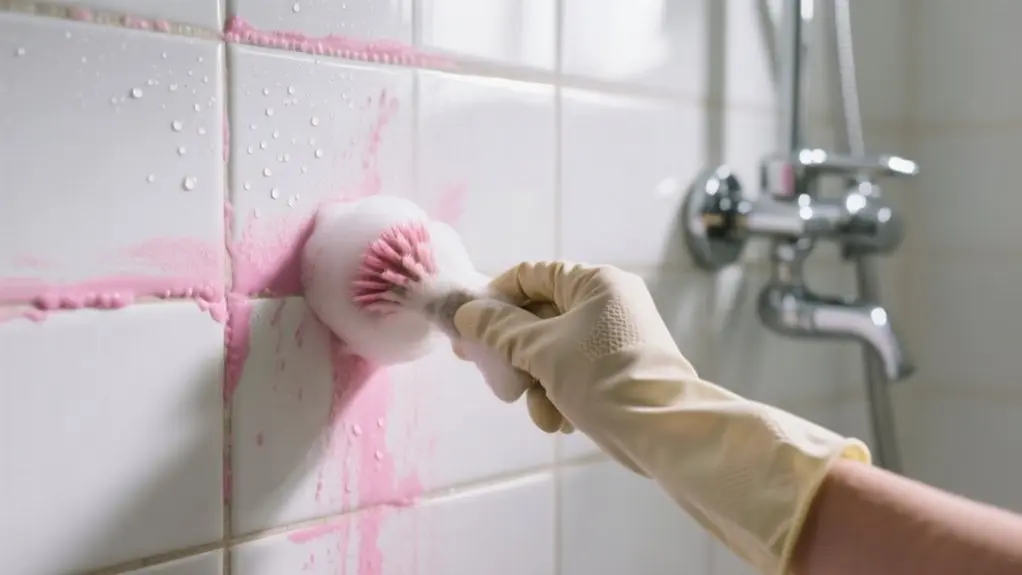
To effectively remove pink mold from your shower, start by making a cleaning paste combining baking soda and dish soap.
Apply this paste on the shower walls, scrubbing with a stiff brush to lift the mold.
Next, use a disinfectant solution, either a 1:1 white vinegar and water mix or bleach, to spray the affected area.
Let it sit for 10-15 minutes to kill bacteria embedded in the biofilm. Then, scrub again to guarantee thorough cleaning.
Finally, rinse thoroughly with water and dry the surfaces completely to prevent mold regrowth.
Remember, you must clean it promptly to stop the mold from spreading.
- Create paste with baking soda and dish soap
- Scrub shower walls with a stiff brush
- Apply disinfectant solution and wait 10-15 minutes
- Rinse surfaces thoroughly with clean water
- Dry completely to eliminate moisture
Cleaning Pink Mold on Curtains, Tiles, and Shower Heads
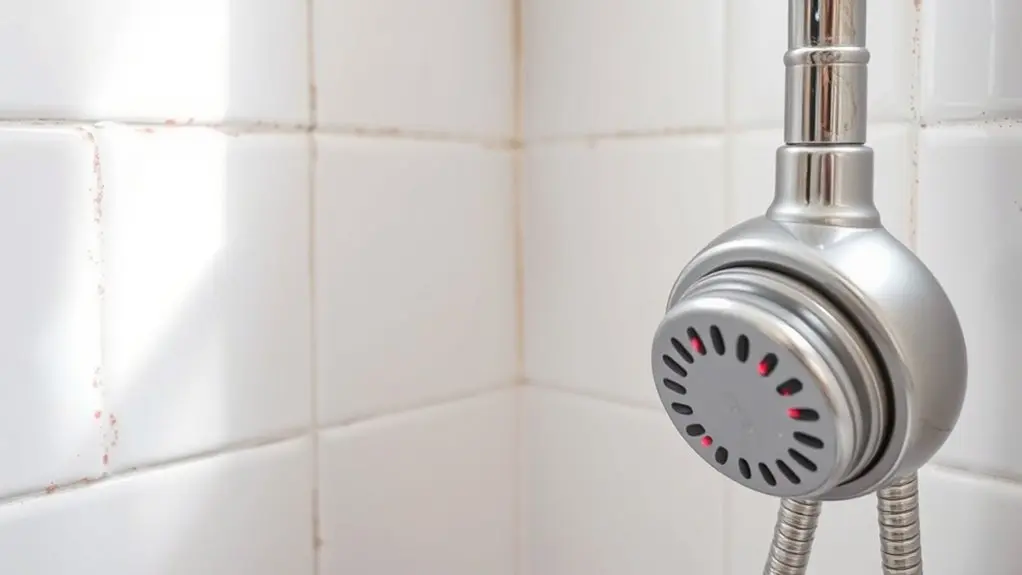
To get rid of pink mold on your shower curtains, start by pre-treating the stains with undiluted white vinegar. Just pour it right on the spots before tossing the curtains into the washing machine on a hot cycle.
When it comes to tiles and shower heads, you can use vinegar or a bleach solution to disinfect them. After applying, make sure to scrub thoroughly and rinse well to get rid of any leftover residue.
Keeping these surfaces clean and dry on a regular basis really helps stop the mold from coming back. A little routine maintenance goes a long way!
Curtain Cleaning Techniques
Three effective methods target pink mold on shower curtains, tiles, and shower heads, addressing each surface with tailored cleaning techniques.
For curtains, pre-treat pink mold stains with undiluted white vinegar for 10-15 minutes. Then, machine wash on the hottest setting using laundry detergent and add vinegar during the rinse cycle.
Implement regular cleaning to prevent mold recurrence and inspect curtains frequently, replacing them if mold returns within two weeks.
Key curtain cleaning techniques include:
- Pre-treat stains with white vinegar
- Machine wash on hottest setting
- Add vinegar during rinse cycle
- Regularly inspect and replace curtains
- Maintain consistent cleaning schedules
These steps effectively reduce mold presence and inhibit bacterial growth, promoting a hygienic shower environment.
Tile And Showerhead Care
Maintaining a mold-free shower involves more than just cleaning curtains; tiles and shower heads also need targeted care to eliminate pink mold effectively. For tiles, apply 3% hydrogen peroxide, let it sit 10-15 minutes, then scrub and rinse to disrupt Serratia marcescens biofilm.
To clean shower heads, submerge the nozzle in undiluted vinegar for 30+ minutes, scrub with a toothbrush, and disinfect with an EPA-registered product. Always dry surfaces thoroughly to prevent moisture buildup.
| Surface | Cleaning Agent | Method |
|---|---|---|
| Tile | 3% Hydrogen Peroxide | Apply, wait 10-15 mins, scrub, rinse |
| Shower Head | Undiluted White Vinegar | Soak 30 mins, scrub, disinfect |
| Grout Lines | Baking Soda + Dish Soap | Make paste, scrub, rinse |
Preventing Pink Mold From Returning
Although pink mold thrives in moist environments, you can considerably reduce its recurrence by controlling humidity and eliminating its food sources.
Preventing pink mold from returning involves maintaining proper ventilation and keeping surfaces clean to disrupt its growth cycle.
Maintaining ventilation and cleanliness is key to breaking the growth cycle of pink mold.
Focus on removing soap scum and organic residues that nourish the mold. Use mold-resistant caulk to seal gaps, preventing moisture buildup that encourages bacterial colonies.
Here’s how to effectively prevent pink mold:
- Wipe down shower walls with a squeegee or towel after each use to keep surfaces dry.
- Guarantee proper ventilation by running exhaust fans or opening windows during and after showers.
- Regularly clean shower walls and fixtures with antibacterial cleaners to remove soap scum.
- Apply mold-resistant caulk to seal joints and cracks.
- Fix plumbing leaks promptly to avoid persistent dampness.
How Bathroom Ventilation Impacts Pink Mold Growth
Controlling moisture levels plays a key role in stopping pink mold from coming back, and ventilation directly influences those levels. Effective bathroom ventilation reduces humidity, a critical factor for preventing growth of Serratia marcescens, the pink mold bacterium.
You should run an exhaust fan during and after showers to lower moisture levels, keeping surfaces dry and unsuitable for mold proliferation. Opening windows after bathing also promotes air circulation, accelerating water evaporation.
Installing a high-capacity exhaust fan helps maintain humidity below 50%, a threshold that discourages mold formation.
Regular maintenance and inspection of your ventilation system guarantee it efficiently removes damp air, sustaining ideal moisture control.
When to Replace Caulking and Shower Liners to Prevent Pink Mold
If you notice cracks, peeling, or mold growth on your shower caulking, it’s time to replace it. These defects trap moisture and promote pink mold development.
Shower liners also need replacement if you see persistent stains or sliminess, which means their protection against mold is compromised.
Regular inspection every six months helps you catch wear early. When replacing caulking, choose mold-resistant products to enhance durability and keep pink mold at bay.
Opt for shower liners made from washable materials so they can handle frequent cleaning and minimize mold buildup.
- Replace caulking with visible cracks, peeling, or mold growth
- Inspect shower liners for stains or slimy texture
- Perform replacement every 6 months or as needed
- Use mold-resistant caulking for sealing
- Select washable, durable shower liners to reduce mold growth
Health and Safety Tips for Cleaning Pink Mold
Three essential precautions guarantee your safety when cleaning pink mold in the shower. First, protect yourself by wearing gloves, a mask, and goggles to prevent respiratory irritation and skin contact with cleaning agents.
Second, verify proper ventilation by opening windows or using an exhaust fan to reduce inhalation of fumes. Third, keep children and pets away during and after cleaning to avoid exposure to harmful chemicals and bacteria.
If you have a compromised immune system, consult a healthcare professional before starting.
| Health and Safety Tips | Details |
|---|---|
| Protective Gear | Gloves, mask, goggles |
| Ventilation | Open windows, use exhaust fans |
| Cleaning Tools Disinfection | Sanitize sponges and brushes post-use |
Frequently Asked Questions
Can Pink Mold Spread to Other Areas of the House?
Yes, pink mold can spread to other areas of your house because airborne particles thrive in mold-friendly conditions like damp, low-light spaces.
Prioritize preventing pink mold by improving bathroom ventilation with exhaust fans and windows.
Use effective scrubbing techniques with cleaning products like bleach or specialized mold removers.
Compare options to find what works best for you.
Regular cleaning and moisture control are essential to stop pink mold from colonizing multiple surfaces beyond your shower.
Does Pink Mold Affect the Water Quality in Showers?
Pink mold doesn’t directly cause water contamination or degrade water quality in your shower, but it signals unsanitary conditions that could increase health risks.
You’ll want to prioritize mold prevention through regular shower maintenance and using effective cleaning products to remove buildup.
This helps limit bacterial growth and keeps your environment safer. Staying vigilant with hygiene reduces potential indirect effects on water and protects your overall health.
Are There Natural Alternatives to Bleach for Removing Pink Mold?
Think of pink mold as a stubborn stain you can’t scrub away with harsh chemicals alone. You can tackle it using natural cleaners like a vinegar solution, which breaks down mold’s hold.
Combine baking soda’s gentle abrasiveness with vinegar for a powerful scrub.
Tea tree oil’s antifungal properties also make it a precise weapon, while hydrogen peroxide kills mold cells on contact.
These alternatives work scientifically to remove pink mold safely and effectively.
How Long Does It Take for Pink Mold to Reappear After Cleaning?
Pink mold can reappear within just a few days after cleaning if you don’t follow pink mold prevention tips.
Since pink mold causes include humidity and soap scum, maintaining shower cleaning frequency of at least twice a week helps.
Use effective mold removers to eliminate residues, and apply humidity control methods like ventilation fans or dehumidifiers.
Consistent cleaning and moisture control are key to delaying pink mold’s return.
Can Pets Be Harmed by Pink Mold in the Bathroom?
Yes, pets can be harmed by pink mold in the bathroom. You need to prioritize pet safety by minimizing mold exposure, as it may cause skin irritations, respiratory issues, or worsen pet allergies.
Using appropriate, non-toxic cleaning products helps reduce health risks.
Regularly cleaning pet areas and keeping the bathroom dry will protect your pets from potential mold-related problems and ensure a safer environment for their well-being.
Conclusion
Getting rid of pink mold isn’t just a chore. It’s an essential step to safeguard your health and home. Like a persistent unwelcome guest, it thrives in damp corners but yields to your careful cleaning and prevention efforts.
By using the right disinfectants, ensuring proper ventilation, and knowing when to replace shower liners or caulking, you’ll keep your bathroom fresh and mold-free. Remember, consistent care turns this battle into a lasting victory.