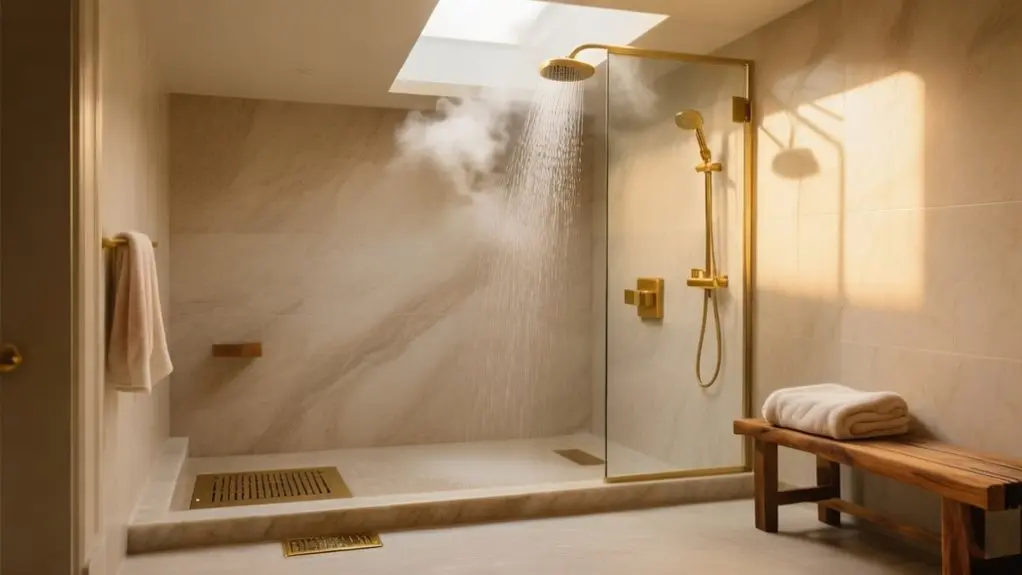
What Is A Roman Shower – What It Really Means
A Roman shower is an open, doorless design that offers a seamless, continuous tiled floor sloped for efficient drainage. This creates a spacious, spa-like environment.
You’ll benefit from easier access and integrated features like built-in seating and handheld showerheads. It also gives a luxurious feel that blends style with functionality.
However, it demands careful waterproofing, splash control, and regular upkeep. If you explore further, you’ll uncover how it compares to other shower types and key installation tips.
What Is a Roman Shower?
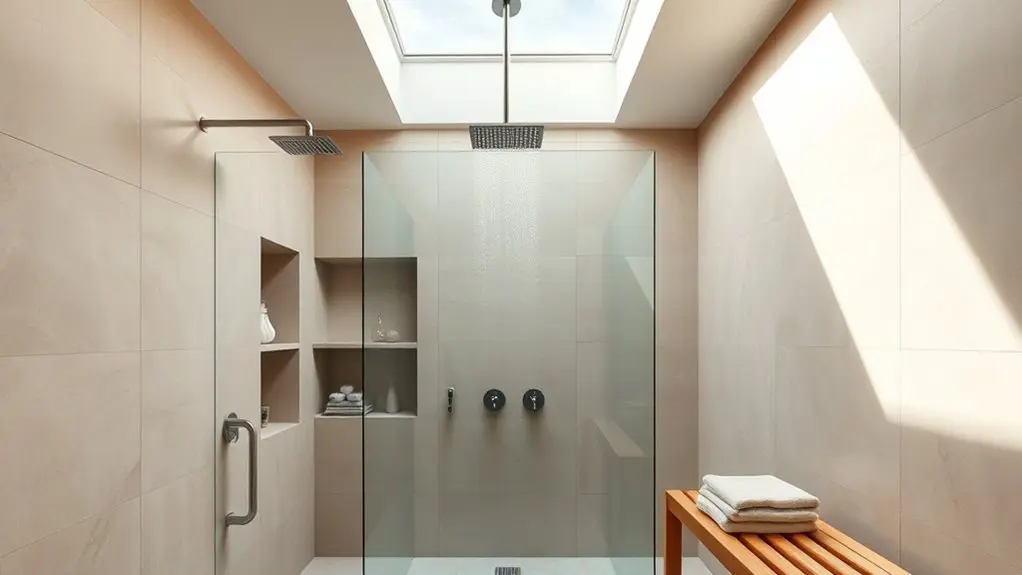
A Roman shower eliminates doors and curtains, creating an open, seamless space with a sloped floor to guarantee efficient drainage. You’ll notice this design prioritizes a continuous surface, often tiled, allowing water to flow directly toward the drain without pooling.
The Roman shower’s open layout enhances spatial perception, providing a luxurious, spa-like atmosphere. Integrated features such as built-in seating and handheld showerheads increase functionality and comfort.
The open design of a Roman shower creates a spacious, spa-like feel with added comfort features.
However, since there’s no enclosure, you’ll need to address potential water splashing beyond the shower area through precise waterproofing and floor tiling.
Installing a Roman shower demands technical accuracy and can be costlier than traditional setups due to these requirements.
Roman Showers vs. Standard and Walk-In Showers
Choosing between a Roman shower and more traditional options like standard or walk-in showers comes down to balancing design preferences with functional needs.
Roman showers emphasize design aesthetics with an open, doorless layout that creates a spacious, luxurious feel. This is ideal if your user preferences lean toward accessibility and style.
However, this openness may lead to water splashing beyond the shower area, demanding more frequent cleaning.
In contrast, standard showers prioritize efficient space considerations and water containment through enclosed designs, making them practical for smaller bathrooms.
Walk-in showers strike a balance, offering easy maintenance and accessibility without the full openness of Roman showers.
Ultimately, your choice should reflect how you weigh design aesthetics, spatial constraints, and your daily functional requirements to optimize both form and function.
Benefits of Roman Showers
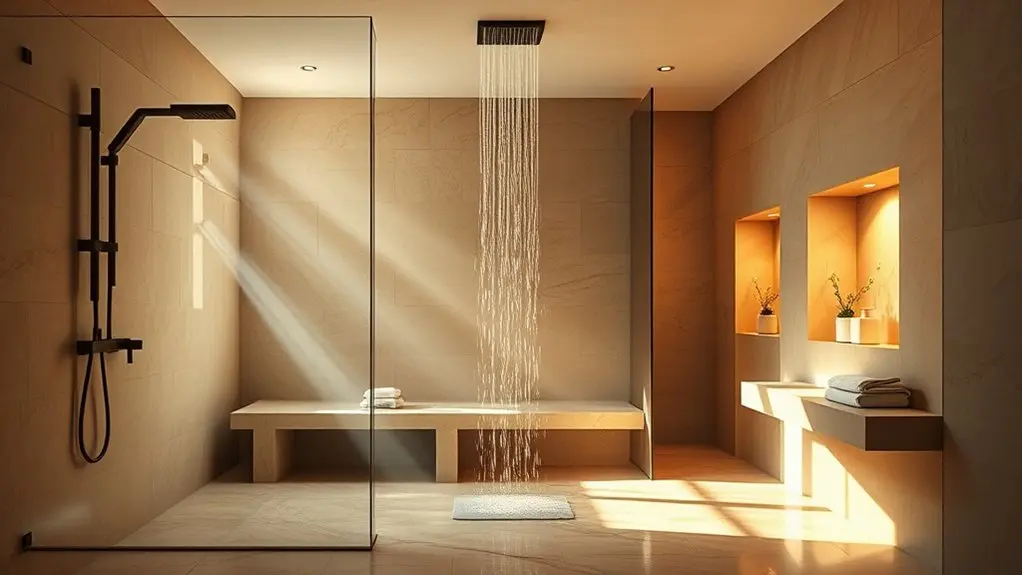
Although Roman showers emphasize an open, doorless layout, they enhance both luxury and functionality by offering a spacious environment that improves comfort and accessibility. You’ll appreciate their design inspiration rooted in minimalist elegance combined with practical accessibility features, such as sloped floors for efficient drainage and easy entry for mobility assistance.
Material choices are versatile, allowing you to customize surfaces with stone, tile, or concrete, elevating both aesthetic and durability. Handheld shower attachments add usability, simplifying cleaning and pet care. This blend of form and function guarantees Roman showers deliver a spa-like experience tailored to your needs.
| Feature | Benefit |
|---|---|
| Open Layout | Enhances spaciousness |
| Sloped Floor | Efficient water drainage |
| Accessibility Design | Easier entry for all users |
| Material Choices | Customizable durability & style |
| Handheld Attachments | Improved usability and cleaning |
Roman Shower Challenges and Solutions
Roman showers offer an elegant and spacious bathing experience, but they also come with specific challenges you need to address to maintain functionality and comfort.
Splash control is critical; you’ll need expertly designed drainage systems and precise tiling to prevent water from escaping the shower area.
The open layout can compromise design privacy, so consider adding partial dividers or strategically placed fixtures to create discreet zones without sacrificing openness.
Temperature comfort often requires enhancements like heated flooring or adjustable showerheads to maintain warmth in the exposed space.
Moreover, meticulous waterproofing and regular cleaning are essential since dust and moisture accumulate more readily than in enclosed showers.
Addressing these technical details guarantees your Roman shower remains both stylish and practical over time.
Is a Roman Shower Right for You?
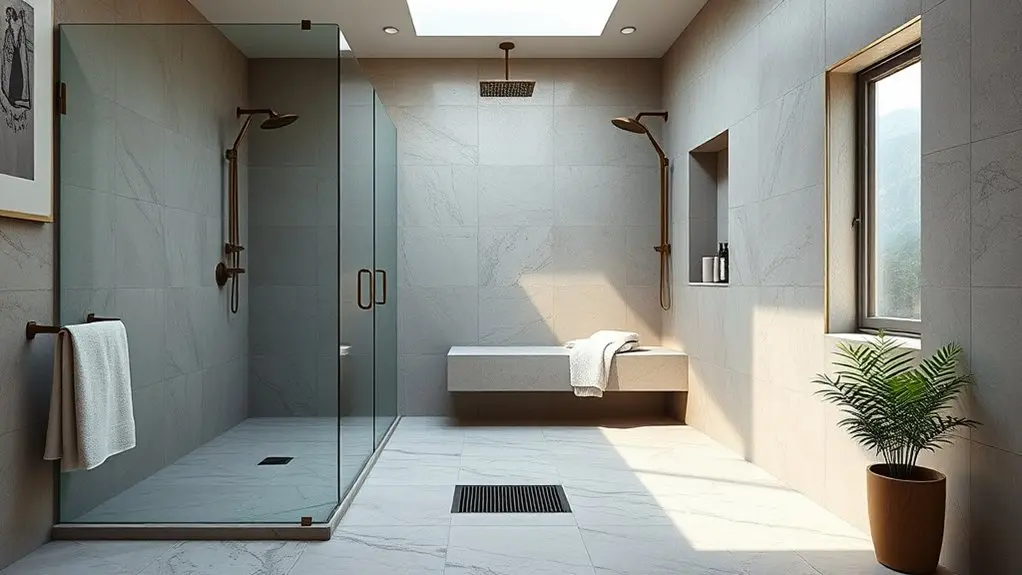
How do you determine if a Roman shower fits your bathroom and lifestyle? Start by evaluating space considerations. Roman showers demand ample room due to their open design. If your bathroom is compact, this style mightn’t be practical.
Next, assess your mobility needs. Roman showers excel with mobility features like bench seating and barrier-free access, enhancing comfort and safety.
Consider design aesthetics carefully. Their minimalist, doorless layout elevates luxury but requires a consistent, waterproof finish to prevent water damage.
Also, factor in maintenance demands due to water splashing inherent in the open plan.
If you value spaciousness, accessibility, and sleek design, and have adequate space, this shower type aligns well with your needs.
Otherwise, weigh these technical aspects against your lifestyle before deciding.
Tips for Installing and Maintaining a Roman Shower
You’ll want to prioritize meticulous waterproofing and use durable, moisture-resistant materials to protect your Roman shower from leaks and mold. It’s really important to get this right from the start to avoid any costly repairs down the line.
Also, make sure the floor is properly sloped. This helps with effective drainage and stops water from pooling or escaping the shower area. Without the right slope, you might end up with unwanted water buildup, which no one wants.
And don’t forget about regular cleaning. Using the right products will keep your shower looking great and working perfectly. Keeping up with maintenance is the best way to ensure your Roman shower stays in peak condition for years to come.
Waterproofing Best Practices
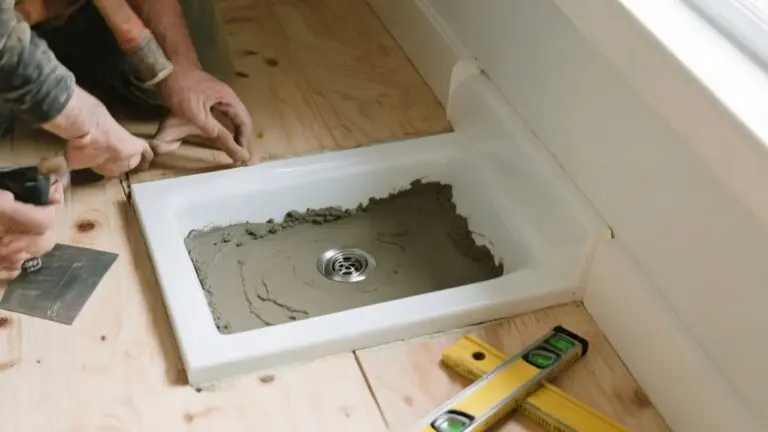
Since water damage can compromise both structure and aesthetics, installing a robust waterproofing membrane beneath the tiles is essential for any Roman shower. Proper membrane installation and moisture management prevent leaks and extend the shower’s lifespan.
Use water-resistant materials like porcelain or ceramic tiles and maintain a slight floor slope toward the drain for effective water flow. Regularly inspect grout and sealants to avoid moisture penetration.
| Waterproofing Techniques | Membrane Installation |
|---|---|
| Use high-quality waterproof membranes | Guarantee full coverage beneath tiles |
| Select water-resistant tiles | Overlap seams to prevent leaks |
| Maintain floor slope toward drain | Seal all joints meticulously |
| Inspect grout & sealants regularly | Employ professional installation |
These steps help you achieve a durable, leak-free Roman shower.
Optimal Drainage Solutions
Although proper waterproofing is essential, achieving ideal drainage is just as important for maintaining a Roman shower’s functionality and longevity.
You’ll need to focus on precise drainage techniques and strictly follow slope requirements to guarantee effective water management.
- Guarantee the shower pan has a minimum slope of 1% to direct water efficiently toward the drain and prevent pooling.
- Opt for a linear drain instead of a traditional round drain. This enhances water flow management and complements the shower’s sleek design.
- Install a high-quality waterproof membrane beneath tiles to protect structural elements from moisture intrusion while supporting drainage performance.
Cleaning And Maintenance
When installing a Roman shower, ensuring proper waterproofing is critical to prevent leaks and water damage that could compromise the structure over time.
Establish consistent cleaning routines using non-abrasive cleaners to protect surfaces and inhibit mold growth, especially in grout lines.
Employ a squeegee after each use to reduce soap scum and water spots on glass and tile.
Develop maintenance schedules that include periodic inspections of the drainage system to verify unobstructed water flow within the sloped floor design.
For enhanced safety and easier upkeep in moisture-prone areas, select slip-resistant flooring materials.
The History of the Roman Shower Term
You’ll find that the term “Roman shower” actually comes from ancient Roman bathing traditions. Back then, bathing wasn’t just about hygiene—it was a social event held in large public baths where people gathered and relaxed together.
Nowadays, though, the phrase has taken on a new meaning. It’s used to describe open, barrier-free shower designs rather than those old historical practices.
Knowing how this term evolved over time helps clear up common misunderstandings. Plus, it shows how cultural context can really change the way we use certain words.
Origins of Roman Shower
Since the term “Roman shower” draws from ancient Roman bathing traditions, understanding its origins requires examining the historical context of Roman hygiene and architecture. The phrase stems from ancient bathing practices, particularly misunderstandings around the vomitorium, which was an architectural feature, not related to bathing.
You’ll find the term’s origin influenced by:
- Architectural design: Romans created open, communal bathing spaces emphasizing fluid water flow and accessibility.
- Ancient bathing practices: Their baths combined hygiene with social ritual, shaping modern perceptions.
- Cultural influences: The term evolved to reflect luxury and openness, contrasting with enclosed modern showers.
Cultural Meaning Evolution
Although the term “Roman shower” originally stems from a misconception linking it to the ancient Roman vomitorium, its meaning has greatly evolved. You’ll observe that cultural shifts have redefined this term from historical inaccuracies to a symbol of modern luxury.
The change reflects broader privacy norms, where bathing moved from enclosed, private spaces to open, accessible designs. Architectural trends have embraced these open-concept showers, emphasizing seamless integration with the bathroom environment for both functionality and aesthetics.
References dating back to 1922, like “The Radio Girls on Station Island,” highlight early recognition of open bathing spaces, underscoring the term’s gradual semantic shift.
Understanding this evolution helps you appreciate how language adapts alongside society’s changing values and design innovations in personal hygiene spaces.
Frequently Asked Questions
Can Roman Showers Be Customized With Modern Technology?
Yes, you can customize Roman showers with advanced technology integration and custom features like digital thermostatic controls for precise temperature control.
Design flexibility allows you to incorporate smart shower systems, enabling programming via apps or voice commands.
You’ll also find options for LED lighting to enhance ambiance and advanced drainage to manage water efficiently.
Plus, you can add water-saving fixtures, ensuring a sustainable yet luxurious shower experience tailored exactly to your preferences.
Are Roman Showers Eco-Friendly Compared to Other Types?
You might think Roman showers are relics, but they excel in water conservation thanks to their open design and sloped floors that enhance drainage.
Their design aesthetics blend durability with waterproof materials, reducing frequent maintenance requirements.
This combination means you get an eco-friendly option that minimizes water waste and upkeep.
Compared to traditional showers, Roman showers offer a modern, efficient solution that aligns with sustainable bathroom practices without sacrificing style.
What Materials Are Best for Building a Roman Shower?
You should choose shower materials like ceramic tiles, natural stone, or fiberglass for durability and waterproofing in a Roman shower.
Prioritize slip-resistant surfaces for safety and use mold-resistant grout to maintain design aesthetics over time.
Incorporate custom benches made from teak or composite wood.
For ideal water drainage, install stainless steel linear or central drains.
These technical choices guarantee your Roman shower combines function, durability, and modern style seamlessly.
How Much Space Is Required for a Roman Shower Installation?
You might think a Roman shower fits anywhere, but shower sizes demand respect: at least 36 by 36 inches for basic plumbing considerations.
For real comfort, you’ll want 48 inches wide or more, plus ceiling height near 84 inches, ensuring proper drainage and spaciousness.
Layout options vary, but remember, the sloped floor needs extra height of 1 to 2 inches for water flow.
If you want accessibility, plan for a 60-inch diameter minimum.
Do Roman Showers Affect Home Resale Value?
Roman showers can positively affect your home’s resale value if you align with current design trends emphasizing open, luxurious spaces.
Market demand favors innovative bathroom layouts, making such showers a strong resale factor in urban and contemporary markets.
However, you should consider that traditional buyers might find them less appealing, potentially narrowing your buyer pool.
Proper installation and high-quality finishes guarantee you leverage these design trends to maximize your home’s market attractiveness.
Conclusion
Now that you know what defines a Roman shower, with its open design, seamless glass panels, and minimalist thresholds, are you ready to upgrade your bathroom experience? With benefits like enhanced accessibility and sleek aesthetics, it’s a smart choice if you prioritize both function and style.
Just remember to plan for drainage and waterproofing carefully. Installing and maintaining it properly guarantees you enjoy the luxury and practicality of a Roman shower for years to come.