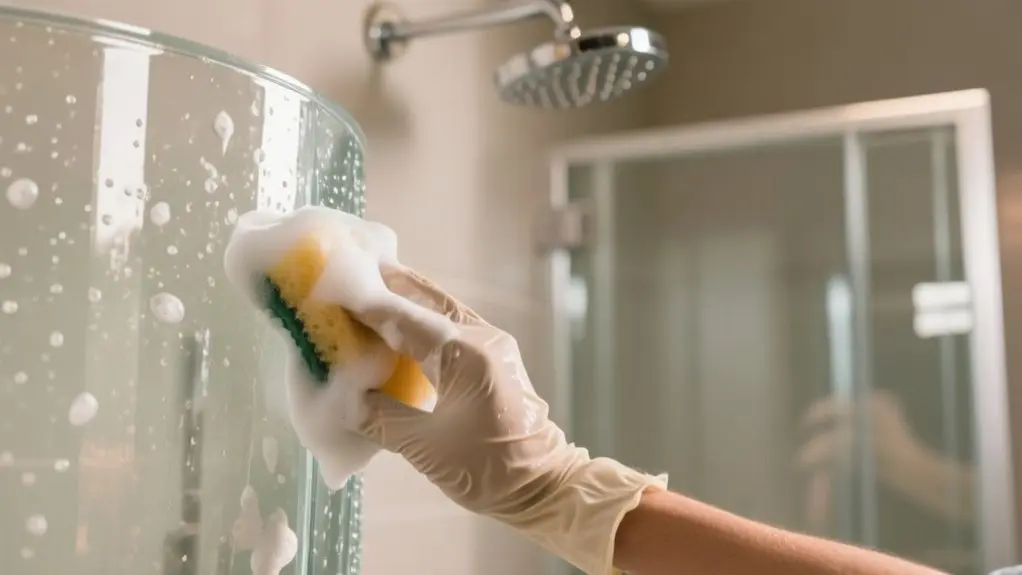
How To Clean Fiberglass Shower – Made Easy
To clean your fiberglass shower easily, start by mixing equal parts baking soda and white vinegar to make a gentle paste. Apply it to stains, let it sit for 15 minutes, then scrub lightly with a soft cloth to avoid scratches.
Rinse well with warm water and dry with a soft towel to prevent water spots. Use a squeegee after each shower and ventilate your bathroom to reduce buildup.
For thorough care, there are simple tips and tricks to help keep your shower spotless and damage-free.
Why Fiberglass Shower Walls Need Special Cleaning
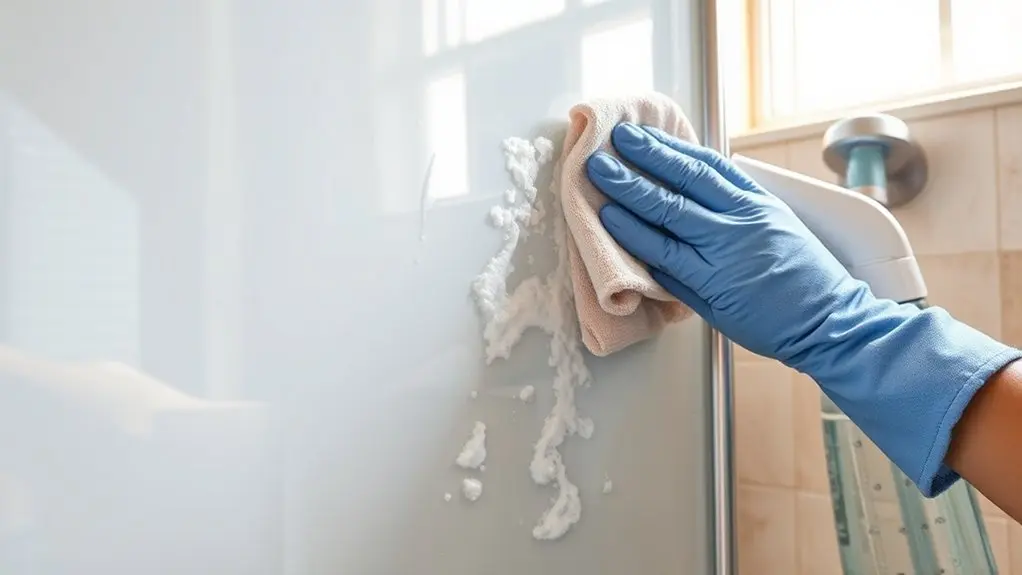
Because fiberglass shower walls are more prone to staining and discoloration from soap residue and hard water deposits, you need to clean them with special care.
Fiberglass shower walls require gentle cleaning to prevent stains from soap residue and hard water deposits.
Unlike tile or glass, fiberglass shower surfaces can easily scratch if you use harsh chemicals or abrasive scrubbers.
To maintain your shower walls’ appearance and prevent mold or mildew buildup, regular cleaning is crucial. You should deep clean at least every six months, especially if you have hard water.
While DIY solutions like vinegar and baking soda work well, sometimes the buildup is stubborn. If that happens, consider hiring a professional to avoid damaging the fiberglass surface.
Taking these precautions guarantees your fiberglass shower stays clean and lasts longer without unsightly stains or damage.
Best Cleaners for Fiberglass Shower Walls
Keeping your fiberglass shower walls clean means choosing the right products that won’t damage the surface. Use gentle, non-abrasive cleaners made specifically for fiberglass to protect its finish.
You can also try natural alternatives like a mix of white vinegar and baking soda, which remove stains effectively without harsh chemicals.
Always check the product label for fiberglass compatibility to avoid any cleaners that might cause discoloration or damage. Commercial fiberglass cleaners work well to tackle soap scum and hard water stains, but avoid bleach or ammonia-based products since they degrade fiberglass and create unsightly marks.
When searching for the best cleaners, respect the manufacturer’s Privacy Policy to guarantee safe use.
This careful selection keeps your shower looking fresh and lasting longer.
DIY Cleaning Paste for Fiberglass Shower Walls
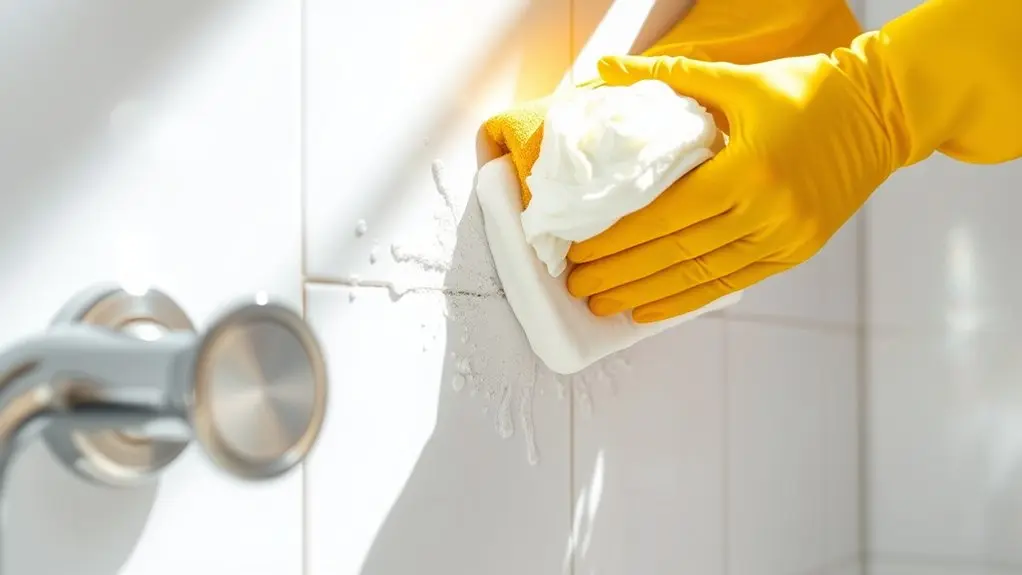
You can easily make a great cleaning paste for your fiberglass shower using natural ingredients like white vinegar and baking soda.
Just mix them together with a little bit of water until you get a thick paste.
Then, apply the paste to any stained areas and let it sit for about 15 minutes.
After that, give it a gentle scrub and rinse everything off thoroughly with warm water.
This way, you’ll remove all the residue and keep your shower looking spotless!
Natural Cleaning Ingredients
When tackling stains on your fiberglass shower walls, mixing equal parts baking soda and white vinegar creates a thick, effective cleaning paste. This DIY solution highlights the natural ingredients benefits and serves as an eco friendly alternative to harsh chemicals.
Adding a few drops of lemon juice boosts the citrus cleaning power, enhancing stain removal.
To visualize, imagine:
- Baking soda’s gentle abrasive action lifting grime without scratching.
- Vinegar’s acidity breaking down soap scum and mineral deposits.
- Lemon juice amplifying the paste’s stain-fighting ability with natural acid.
- The thick paste clinging to vertical surfaces, allowing deeper cleaning.
Using these natural ingredients protects your shower’s finish while supporting a greener cleaning routine.
Application And Rinse Steps
The thick paste made from baking soda, vinegar, and a bit of water works best when applied generously to stained areas on your fiberglass shower walls.
Spread it evenly and let it sit for at least 15 minutes to break down soap scum and water spots.
Using soft cleaning tools like a sponge or cloth, scrub gently in circular motions to avoid scratching the surface and guarantee an even clean.
Focus on all stained spots for thorough results.
After scrubbing, rinse the walls thoroughly with warm water to remove all paste residue, preventing buildup.
Finally, dry the walls with a soft towel to minimize water spots.
For best results, follow this cleaning frequency weekly or biweekly, depending on your shower’s usage.
Step-by-Step Fiberglass Shower Cleaning
Start by gathering all your cleaning materials. You’ll want to have something gentle on hand, like vinegar and baking soda, plus a soft cloth or sponge.
Once you’ve got everything ready, go ahead and apply the solution carefully to the fiberglass surfaces. Use circular motions as you work to lift dirt and stains effectively.
When you’re done, rinse everything thoroughly with water. Finally, dry the shower walls with a soft towel to keep them spotless and shiny. Easy, right?
Preparing Cleaning Materials
Gather at least five essential cleaning materials before you begin tackling your fiberglass shower. Using gentle, non-abrasive supplies is key to preserving the surface and applying safe cleaning techniques.
Consider eco-friendly options like white vinegar and baking soda for effective stain removal without harsh chemicals. Prepare these items:
- A soft sponge and microfiber cloth to avoid scratching.
- A bucket or spray bottle for even solution application.
- A soft-bristled brush to target stubborn soap scum and mold.
- A squeegee or soft towel for drying and preventing water spots.
Always follow safety precautions by wearing gloves and ensuring proper ventilation. Having these materials ready sets the stage for an efficient, thorough cleaning process.
Applying Cleaning Solutions
Begin by rinsing your fiberglass shower walls with warm water to loosen and remove any surface debris. Next, mix equal parts white vinegar and baking soda to create an effective cleaning paste. Apply it to stained areas using a soft cloth or sponge, moving in gentle circular motions to avoid scratching.
Let it sit for 15 minutes to break down grime. Remember, using the right scrub techniques and maintenance tools is key for lasting results. Regular cleaning frequency prevents stubborn buildup, making your job easier each time.
| Cleaning Frequency | Every 1-2 weeks |
|---|---|
| Scrub Techniques | Circular, gentle |
| Maintenance Tools | Soft cloth, sponge |
Rinsing And Drying
Once you’ve applied and worked in your cleaning solution, thoroughly rinse the fiberglass shower walls with warm water to wash away loosened dirt and cleaner residue. Proper rinsing techniques are essential to avoid streaks or dullness.
Follow these steps for effective rinsing and drying:
- Use a handheld showerhead or a cup to rinse the entire surface evenly.
- Verify all cleaning product traces are removed by rinsing multiple times if necessary.
- Immediately dry the walls with a soft, absorbent towel to prevent water spots.
- Wipe down corners and crevices where moisture can linger.
For maintenance tips, rinse and dry your shower after each use to minimize soap scum buildup and keep your fiberglass looking fresh longer.
Tips to Prevent Fiberglass Stains and Soap Scum
Although regular cleaning is essential, you can prevent fiberglass stains and soap scum buildup by taking proactive steps. Implement preventive maintenance by using a squeegee after each shower and sticking to a consistent cleaning schedule.
Ventilation fans reduce humidity, which helps prevent mold and mildew. Avoid leaving soap bars on surfaces to minimize residue. Applying a protective coating creates a barrier against water spots and makes cleaning easier.
Choose gentle, non-abrasive cleaners to maintain fiberglass integrity.
| Tip | Benefit |
|---|---|
| Use squeegee after shower | Reduces soap scum and stains |
| Install ventilation fan | Minimizes humidity and mold growth |
| Apply protective coating | Prevents water spots, eases cleaning |
Daily Habits to Keep Fiberglass Showers Looking New
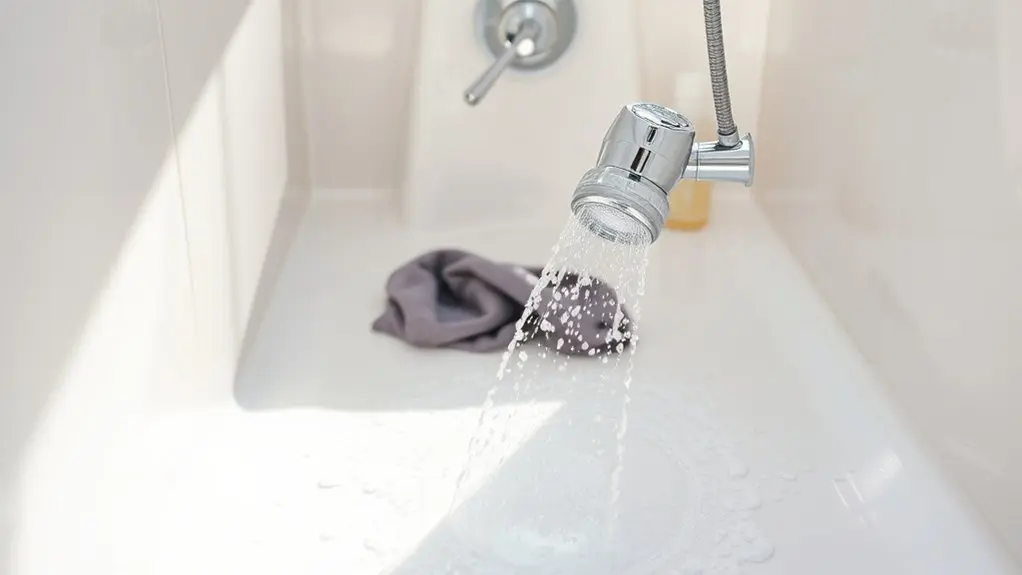
You’ll want to make it a habit to wipe down your fiberglass shower walls with a soft cloth after every use. This simple step helps prevent water spots and soap scum from building up.
Using a squeegee is another great trick—it quickly removes excess water, keeping the surfaces dry and looking spotless.
Plus, don’t forget to keep your bathroom well-ventilated. Good airflow helps control moisture and stops mold from taking hold.
Daily Wiping Techniques
Three simple daily wiping techniques can keep your fiberglass shower looking fresh and new.
Start with the squeegee technique. Right after you shower, run a squeegee over the walls to remove excess water and prevent soap scum buildup.
Next, use a microfiber cloth for daily maintenance. Wipe down surfaces gently to clear away any soap residue or water spots before they set in.
Then, lightly mist a gentle, non-abrasive cleaner on the fiberglass daily to maintain its shine and prevent stains.
Finally, inspect your shower regularly for any signs of mold or discoloration, and address issues immediately to keep the surface pristine.
Following these steps consistently guarantees your fiberglass shower stays spotless and inviting every day.
Ventilation and Moisture Control
Daily wiping helps reduce buildup, but controlling moisture and ensuring proper ventilation play a big role in keeping your fiberglass shower looking new. Use ventilation strategies like installing a fan or opening windows during and after showers to improve humidity control.
After each use, squeegee excess water and wipe surfaces dry to aid moisture management and prevent mold or stains. Also, check fixtures regularly for leaks to avoid persistent dampness that damages fiberglass.
| Task | Benefit |
|---|---|
| Use ventilation fan | Reduces humidity, prevents mold |
| Squeegee after shower | Removes excess water, limits buildup |
| Regular leak checks | Prevents moisture damage |
Adopting these habits keeps your shower fresh and extends its lifespan effectively.
How Often to Deep Clean Fiberglass Showers for Best Results
Cleaning your fiberglass shower thoroughly at least twice a year helps prevent stubborn soap scum and mold buildup that can damage the surface.
To maintain your shower’s appearance and longevity, stick to a consistent cleaning frequency and maintenance schedule.
Here’s how to keep mold prevention and upkeep on track:
- Deep clean every six months to tackle soap scum and mold effectively.
- Increase cleaning frequency to every three months if hard water stains appear.
- Wipe down surfaces after each use to reduce moisture and slow grime buildup.
- Scrub soap scum regularly after showers to keep the fiberglass looking fresh.
Following this routine helps you avoid costly repairs and keeps your fiberglass shower sparkling clean.
How to Remove Hard Water Stains From Fiberglass Showers
Although hard water stains can be stubborn, you can remove them effectively from your fiberglass shower by targeting the mineral deposits left behind after water evaporates.
Start by making a paste of baking soda and vinegar, apply it to the stains, and let it sit for 15 minutes before gently scrubbing with a soft cloth. This method balances cleaning product efficacy with safe mineral deposit management.
For tougher stains, use a non-abrasive commercial descaler designed for fiberglass to avoid surface damage. To aid hard water prevention, wipe down your shower with a squeegee after each use to reduce buildup.
If stains persist despite your efforts, consider hiring a professional cleaning service specializing in fiberglass to restore your shower’s appearance and guarantee thorough mineral deposit removal.
Troubleshooting Common Fiberglass Shower Issues
What can you do when your fiberglass shower shows persistent stains, scratches, or mold that simple cleaning won’t fix?
Avoid common mistakes like using abrasive cleaners that worsen scratches or believing cleaning myths about harsh chemicals solving all problems.
Instead, follow these maintenance tips:
- Use a baking soda and vinegar paste to lift tough stains effectively.
- Apply an equal mix of vinegar and water to dissolve hard water deposits, leaving it for 15 minutes before rinsing.
- Treat scratches with a non-abrasive polish to reduce dirt buildup and improve appearance.
- Remove stubborn mold with hydrogen peroxide or rubbing alcohol for deeper cleaning.
Professional Refinishing: When and Why to Consider
When should you consider professional refinishing for your fiberglass shower? If regular cleaning can’t remove stubborn stains or discoloration, it’s time to think about it.
Professional refinishing benefits include restoring your shower to near-original condition by stripping the old surface, repairing damage, and applying a new protective coat. This process not only enhances appearance but also improves surface longevity by preventing moisture damage.
Restores your shower’s look and durability by stripping, repairing, and applying a protective finish.
Compared to a full replacement, refinishing is a cost-effective option that saves you money while extending your shower’s life.
Plus, professionals use specialized products and techniques, ensuring a seamless finish without risking further damage.
Frequently Asked Questions
Can I Use Bleach to Clean Fiberglass Shower Walls Safely?
You shouldn’t use bleach on fiberglass shower walls if you want to avoid damage. Bleach can discolor and degrade the surface, stripping protective coatings. This is a common cleaning mistake.
For safe cleaning techniques, stick to gentle options like vinegar and baking soda.
Following fiberglass maintenance tips will keep your shower looking great without risking harm. If stains persist, consider professional help instead of harsh chemicals.
How Do I Repair Small Scratches on Fiberglass Shower Surfaces?
Imagine you notice small scratches after a weekend DIY cleaning session. For effective scratch repair methods, start by cleaning the fiberglass surface thoroughly.
Then, gently sand the scratched area with fine-grit sandpaper.
Apply a fiberglass repair kit’s resin and hardener, letting it cure as instructed.
Finally, sand and polish the spot for a smooth finish. These DIY cleaning solutions and repair steps keep your fiberglass shower looking fresh and well-maintained.
What Causes Fiberglass Shower Walls to Discolor Over Time?
Your fiberglass shower walls discolor over time mainly because of mold growth and hard water deposits. When you don’t clean frequently enough, soap scum and minerals build up, causing stains and dullness.
Moisture encourages mold to thrive, further darkening the surface.
To prevent discoloration, increase your cleaning frequency and use gentle, non-abrasive cleaners. This keeps your shower looking fresh and avoids damage from harsh chemicals or neglect.
Are There Eco-Friendly Cleaning Products Suitable for Fiberglass Showers?
You know what they say: “A penny saved is a penny earned.”
When it comes to cleaning your fiberglass shower, eco-friendly alternatives like vinegar, baking soda, and citrus-based cleaners offer natural cleaning power without harsh chemicals. These sustainable products break down soap scum and stains effectively.
Look for green cleaners with eco-certifications to guarantee safety and biodegradability.
Using these options keeps your shower sparkling while protecting both your health and the environment.
Can Steam Cleaners Be Used on Fiberglass Shower Walls?
Yes, you can use a steam cleaner on fiberglass shower walls. The steam cleaner benefits include breaking down soap scum and grime without harsh chemicals.
To protect your fiberglass, follow fiberglass maintenance tips: use low-pressure settings and keep the nozzle a few inches away.
For effective cleaning techniques, always wipe the surface with a soft cloth after steaming to remove debris and avoid water spots.
This method complements your regular cleaning routine perfectly.
Conclusion
Keeping your fiberglass shower clean is easier than you think, especially since 75% of shower grime is soap scum buildup. By using the right cleaners and a simple DIY paste, you can maintain that fresh look without harsh chemicals.
Regular deep cleaning every few weeks prevents stains and damage, saving you time and money. Follow the steps and tips we’ve shared, and your fiberglass shower will stay spotless and durable for years to come.