Is Black Mold In Shower Dangerous – Fact Check
Black mold in your shower is dangerous because it releases mycotoxins that harm your respiratory system and worsen indoor air quality. You’ll notice dark patches, musty odors, and possible allergy symptoms, signaling persistent moisture issues that need fixing.
Exposure can especially affect children and those with health problems, causing serious effects over time. Proper removal and prevention are essential to protect your health and home.
Learn how to identify, remove, and stop black mold from coming back.
What Is Black Mold?
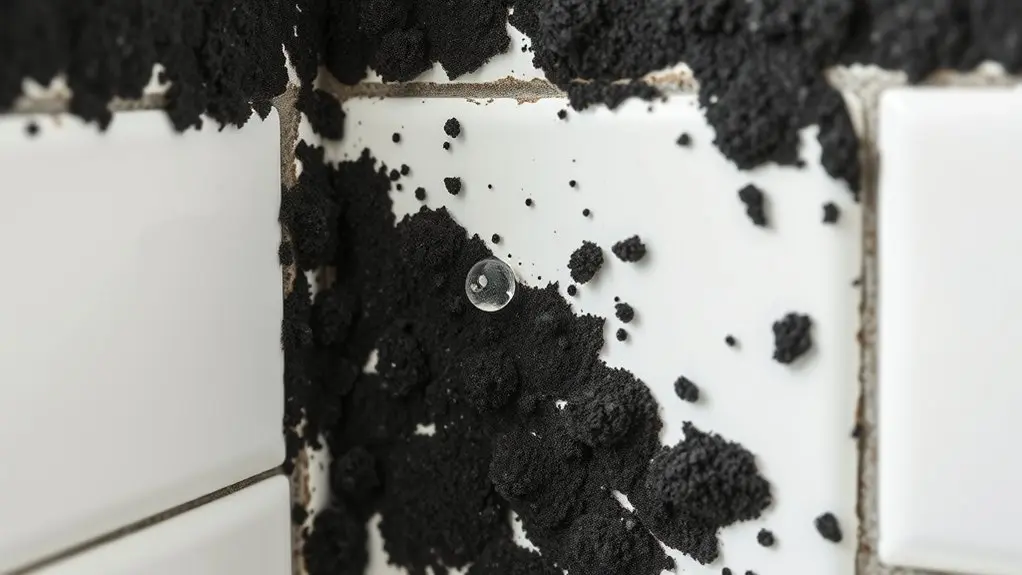
Black mold, scientifically known as *Stachybotrys chartarum*, appears as dark green, brown, or black patches that thrive in damp environments. You’ll find it reproducing through microscopic spores that settle on wet, porous surfaces like drywall and grout.
Black mold prefers warm temperatures between 77°F and 86°F and needs humidity levels above 70% to grow effectively. When you notice black mold, it often signals underlying moisture issues that require prompt remediation to prevent further spread.
Exposure to this mold can cause health risks, especially if you have allergic reactions, asthma, or a weakened immune system.
Understanding the conditions that favor *Stachybotrys chartarum* growth helps you act quickly to control humidity and moisture, reducing potential harm to your health and home.
How to Identify Black Mold in Your Shower
How can you tell if your shower harbors mold that poses health risks? To identify black mold, focus on these key signs:
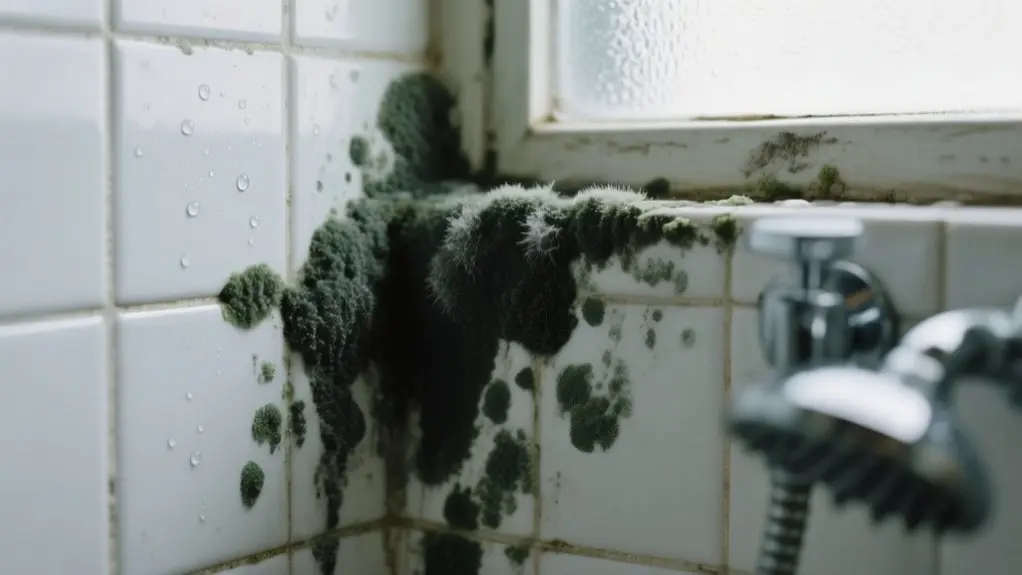
1. Visual Inspection: Look for dark green, brown, or black patches on tiles or grout. These are often confused with soap scum or dirt.
Also, check for discoloration or peeling paint.
2. Musty Odor: A persistent musty smell signals mold thriving in damp environments.
3. Allergy Symptoms: Notice increased allergy symptoms or respiratory irritation during or after shower use.
4. Moisture Sources: Inspect for leaky shower heads, poor ventilation, and moisture-absorbing materials that promote mold growth.
Why Is Black Mold in Showers a Health Concern?
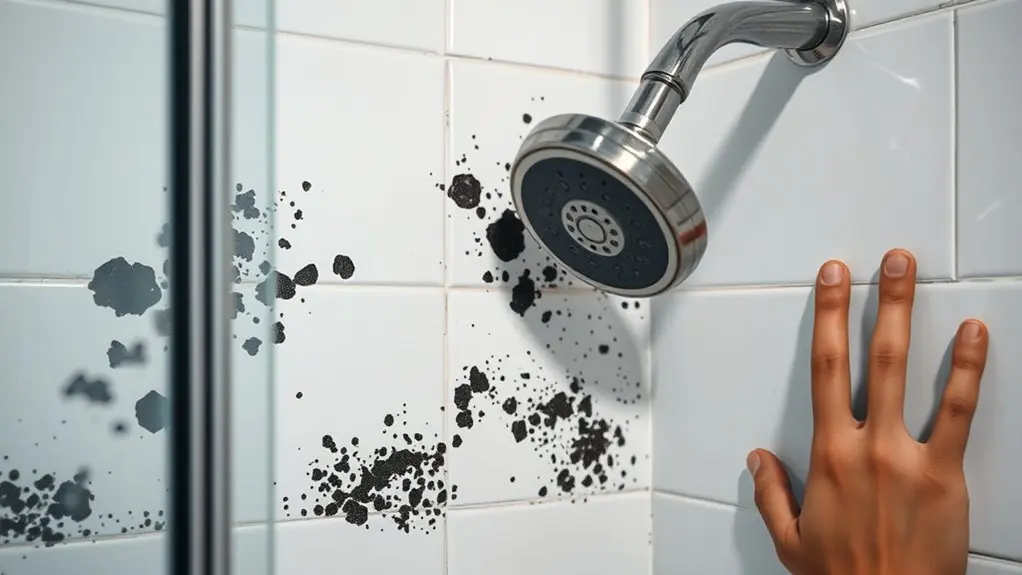
Because showers provide the damp, poorly ventilated conditions mold needs to thrive, you should be aware that certain types, like *Stachybotrys chartarum*, release mycotoxins harmful to your respiratory system.
Black mold in showers can greatly degrade indoor air quality, leading to respiratory problems such as asthma attacks, chronic coughing, and increased allergic symptoms.
Mold exposure in these damp environments poses particular risks to sensitive individuals, including children and those with pre-existing conditions. Prolonged contact with toxic mycotoxins may even result in severe health issues like neurological effects.
To minimize these risks, it’s essential to prevent mold growth by controlling moisture and ensuring proper ventilation.
Addressing black mold early reduces health concerns and limits the need for extensive mold removal, protecting both your living environment and well-being.
How to Remove Black Mold From Your Shower
Effectively removing black mold from your shower requires a targeted approach using appropriate cleaning solutions and safety measures.
To safely remove mold and protect your health, follow these steps:
- Wear personal protective equipment like gloves and goggles to avoid contact with mold and bleach solution.
- Mix 1 cup bleach with 1 gallon water; apply this solution to black mold using a scrub brush.
- Maintain proper ventilation during cleaning to reduce inhalation of mold spores and toxic fumes.
- Don’t rinse immediately; wait 3-4 days to confirm mold elimination and prevent regrowth.
This precise method disrupts mold growth and supports effective cleaning.
Following safety protocols and using a bleach solution will help you remove mold efficiently while minimizing health risks.
How to Prevent Black Mold From Returning in Showers
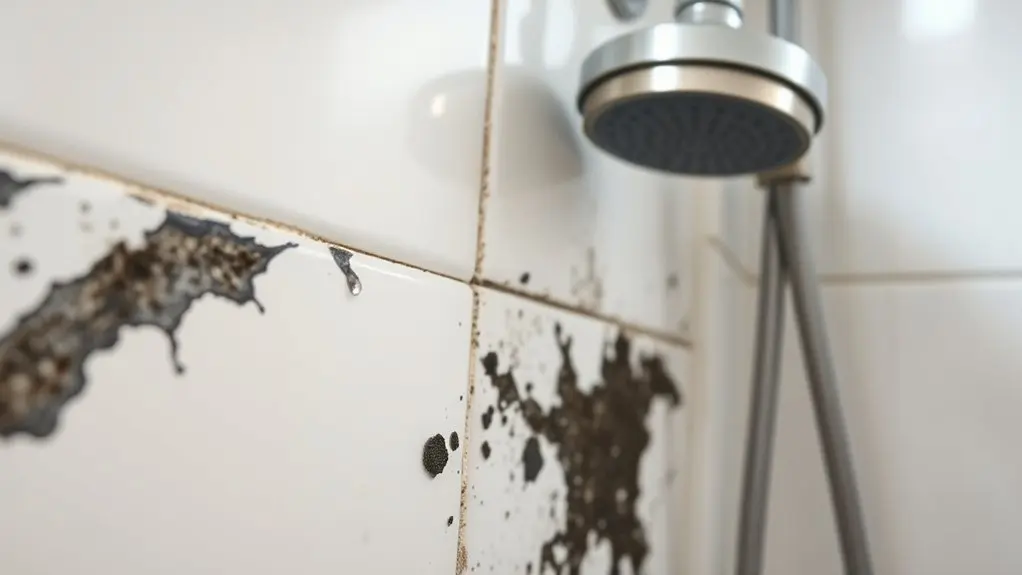
To keep black mold from coming back in your shower, the first thing you want to do is improve the bathroom’s ventilation.
Using exhaust fans really helps by bringing the humidity down below 50%. This makes the environment less friendly for mold to grow.
It’s also a good idea to stick to a regular cleaning routine.
Use products that are designed to fight mold—that way, you’re actively stopping it from taking hold on your shower surfaces.
And don’t forget to fix any leaks as soon as you notice them.
Even small drips can create the moisture mold loves, so dealing with leaks quickly is key to keeping your shower mold-free.
Improve Bathroom Ventilation
When you improve bathroom ventilation, you considerably reduce the risk of black mold returning in your shower.
Controlling humidity levels and airflow is essential to prevent mold growth on shower surfaces.
Here are four effective ways to improve bathroom ventilation:
- Install an exhaust fan to lower humidity below 50%. This helps minimize moisture accumulation that promotes black mold growth.
- Open windows during and after showers to enhance airflow and speed up drying of damp surfaces.
- Use dehumidifiers regularly in bathrooms lacking proper ventilation. They help maintain ideal humidity levels.
- Apply mold-resistant materials like specialized paints and caulks to create barriers against mold regrowth.
Regular Cleaning Routine
Although black mold thrives in damp environments, you can considerably reduce its recurrence by maintaining a consistent cleaning routine in your shower.
Use a bleach solution, 1 cup bleach per gallon of water, to regularly clean surfaces. This effectively eliminates mold spores and prevents regrowth.
After each shower, wipe down walls and doors to minimize moisture that encourages mold growth.
Guarantee proper ventilation by using exhaust fans and opening windows to keep humidity levels below 50%.
Regularly inspect caulking and grout for cracks or deterioration, repairing or replacing as needed to avoid water retention.
During bathroom renovations, consider mold-resistant materials like specialized paints and tiles to provide a durable barrier against mold.
This proactive approach helps maintain a mold-free shower environment.
Fix Leaks Promptly
Maintaining a regular cleaning routine considerably reduces mold growth, but addressing leaks promptly is equally important to keep your shower mold-free.
To prevent black mold, fix leaks promptly to minimize moisture accumulation, which fuels mold development.
Implement these steps:
- Conduct routine checking of showerheads, faucets, and pipes to identify leaks early.
- Perform regular inspection of caulking and grout, repairing areas with cracks to stop water retention.
- Use water-resistant materials like silicone-based caulk to seal vulnerable spots effectively.
- After repairs, eliminate residual moisture by thoroughly drying affected areas before shower use.
When to Call a Professional for Black Mold Removal in Showers?
How do you determine if black mold in your shower requires professional removal? If black mold covers more than 10 square feet, it’s best to contact certified specialists for safe removal and mold remediation.
Visible mold is concerning, but hidden mold growth behind walls or under tiles demands professional assessment.
Persistent health problems like respiratory issues or allergic reactions linked to mold exposure also signal the need for expert intervention.
Furthermore, if mold persists despite thorough cleaning, it often indicates an underlying moisture problem that professionals must address.
Certified specialists possess the equipment and training to manage toxic black mold safely, minimizing health risks during removal.
Frequently Asked Questions
Can Black Mold Spread to Other Areas of My Home?
Yes, black mold can spread to other areas of your home, especially where moisture control is lacking. Spores travel through the air and settle on damp surfaces, which can cause health risks like allergic reactions.
To address homeowner concerns, use effective cleaning methods and prevention tips such as fixing leaks and improving ventilation.
For extensive infestations, professional removal guarantees better indoor air quality and safety, minimizing ongoing risks associated with black mold exposure.
Does Black Mold Affect the Value of My Property?
Black mold can reduce your home valuation by 10-25%, directly impacting your investment.
During property inspections, buyer concerns about health risks and mold presence often lead to requests for mold remediation. This can delay selling strategies and increase costs.
Addressing mold with effective cleaning techniques not only aligns with current market trends but also supports smoother transactions and better property insurance terms.
Proactively managing mold safeguards your property’s worth and appeal.
Are There Natural Remedies to Kill Black Mold Effectively?
Yes, natural solutions like vinegar are effective in surface cleaning and can kill black mold by disrupting its cell structure.
Baking soda not only eradicates mold but also helps control moisture, preventing regrowth.
Essential oils, especially tea tree, offer antifungal benefits along with health and prevention tips.
Hydrogen peroxide (3%) is another potent option that breaks down mold spores effectively.
Using these remedies with proper ventilation enhances health benefits and supports long-term mold prevention in damp areas like showers.
Can Pets Be Harmed by Black Mold Exposure?
Yes, black mold exposure can harm your pet’s health by causing symptoms like coughing, sneezing, and respiratory issues.
These allergy triggers may worsen existing conditions and lead to toxic exposure.
Watch for pet reactions closely and implement preventive measures such as thorough cleaning tips and maintaining safe environments.
If mold persists, seek professional help promptly to protect both you and your furry companions from ongoing health risks.
How Long Does It Take for Black Mold to Grow in Showers?
Black mold can start growing in your shower within 24 to 48 hours when shower humidity exceeds 70%. Mold spores settle on wet surfaces and thrive under ideal conditions like moisture and poor ventilation.
To interrupt the mold life cycle, you need consistent maintenance routines. This includes thorough cleaning methods and drying surfaces promptly.
Prevention tips focus on controlling humidity, fixing leaks, and improving ventilation. These steps help minimize health symptoms linked to mold exposure.
Conclusion
Dealing with black mold in your shower is like tackling a stubborn weed in a garden. It spreads quietly but can cause significant harm. You need to identify it early, remove it thoroughly, and prevent its return through proper ventilation and cleaning.
While small patches you can handle yourself, don’t hesitate to call a professional if it’s widespread or persistent. Protecting your health means staying vigilant and proactive against this hidden threat.