How To Adjust Valves On Kohler V Twin – Step-by-Step Guide
You usually won’t need to adjust valves on a Kohler V Twin since it uses hydraulic lifters that self-regulate clearance. To check, disconnect the spark plug wire, remove the valve cover, and inspect for lifters or adjustable rocker arms. Most models lack these.
If noise persists, verify lifter function rather than clearance. For a thorough process, you’ll set the engine to TDC, measure clearances with a feeler gauge, and perform post-maintenance tests. Keep following for detailed steps and tips.
How To Tell If Your Kohler V Twin Valves Are Adjustable
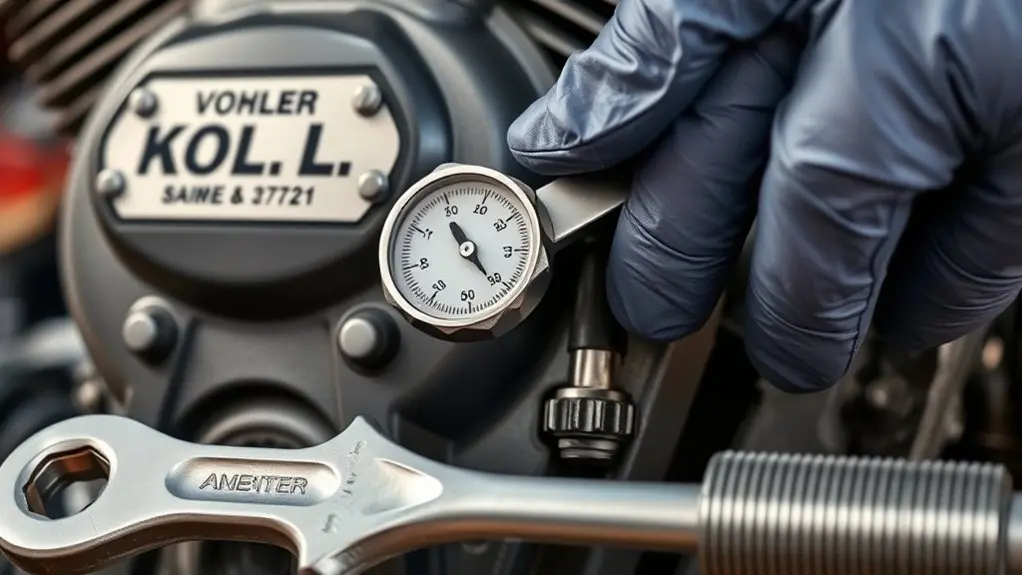
How can you tell if your Kohler V Twin valves are adjustable? Start by consulting the manufacturer’s specifications or your engine’s service manual.
Most Kohler V Twin engines use hydraulic lifters, meaning the valves are non-adjustable and don’t require you to adjust valves for clearance.
Most Kohler V Twin engines feature hydraulic lifters, so valve clearance adjustments are typically unnecessary.
If your valve cover has adjustable rocker arms, check the manual to see if your model supports valve adjustments. This is pretty rare.
Also, look for any mention of hydraulic lifters in your documentation; their presence confirms that valve clearance adjustments aren’t necessary.
If you hear tapping noises from the valves, don’t assume adjustment is the solution because hydraulic systems self-regulate clearance.
Always confirm adjustability before attempting any valve modifications to avoid unnecessary work or damage.
Tools You Need To Adjust Kohler V Twin Valves
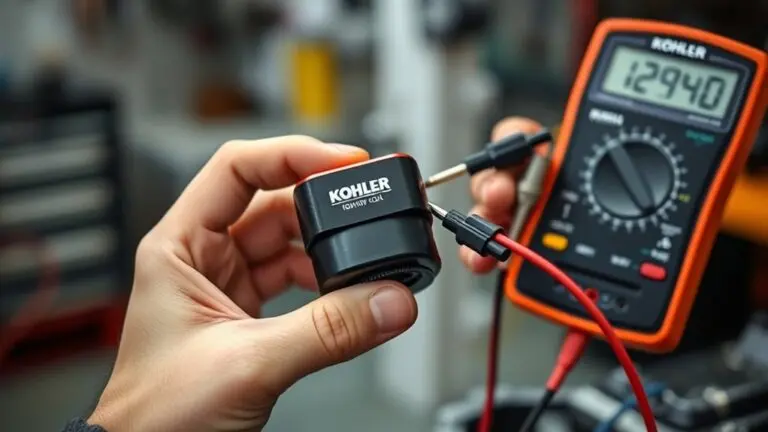
To adjust the valves on your Kohler V Twin, you’ll need several key tools to guarantee accuracy and efficiency. First, a feeler gauge set is essential to precisely measure valve clearance, ensuring peak engine performance.
A socket wrench set and screwdrivers allow you to safely remove the valve cover and access the valves on a Kohler. Keep a clean rag handy to wipe surfaces and remove debris that could interfere with valve operation.
Moreover, have high-quality engine oil ready to lubricate the valves during and after adjustment, preventing premature wear.
Finally, a torque wrench is necessary to secure bolts to the manufacturer’s specifications, streamlining the entire valve adjustment process on your Kohler V Twin engine.
Access Valves On Your Kohler V Twin Engine
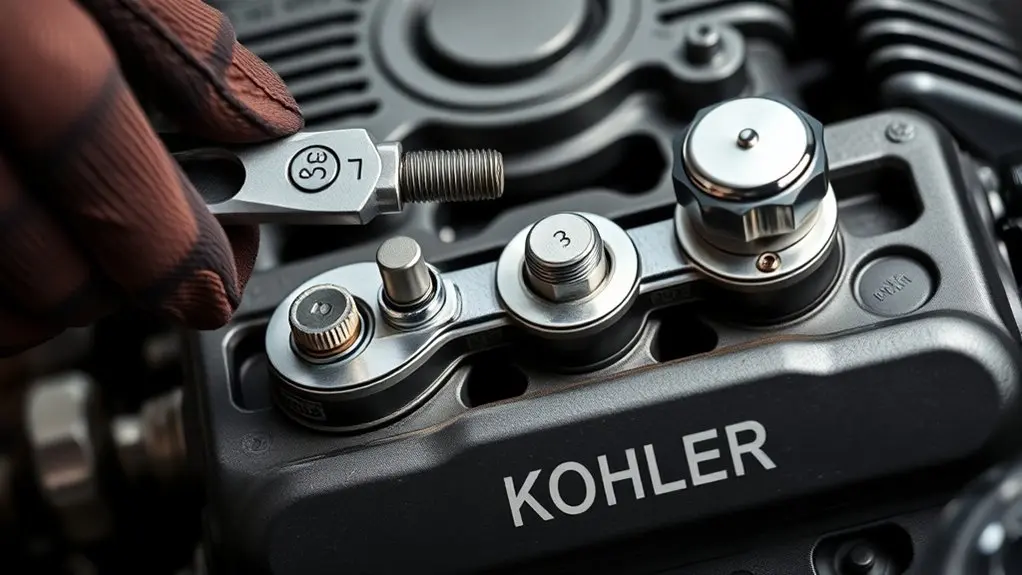
First, go ahead and disconnect the spark plug wire—this is important to keep the engine from accidentally starting while you’re working.
After that, remove the engine cover.
Then, use a socket wrench to take off the valve cover bolts so you can get to the valves.
Make sure to keep all the parts organized as you go, and double-check that you’re working safely before making any adjustments.
Valve Cover Removal
Before you can adjust the valves on your Kohler V Twin engine, you’ll need to remove the valve cover carefully. Proper valve cover removal guarantees unobstructed access to the valves for accurate adjustments.
Follow these steps for effective valve cover removal:
- Disconnect the spark plug wire to prevent accidental engine starts.
- Remove any engine covers or shrouds blocking access to the cylinder head.
- Use a socket wrench to unscrew valve cover bolts cautiously to avoid damage.
- Gently lift the valve cover to expose the valves beneath.
- Inspect and clean the exposed area with a rag to remove dirt or debris.
Completing valve cover removal precisely sets the stage for flawless valve adjustments on your Kohler V Twin.
Safety Precautions
While accessing the valves on your Kohler V Twin engine, always disconnect the spark plug wire to prevent accidental starts. This key safety precaution eliminates the risk of the engine firing unexpectedly during maintenance.
Next, remove the engine cover or shroud carefully to expose the cylinder head and valve assembly. When unscrewing the valve cover bolts, use the correct tools and apply steady pressure to avoid stripping screws.
Gently lift the valve cover and inspect the area for dirt, debris, or oil leaks that could signal other issues. Maintain a clean workspace to organize removed parts efficiently, reducing the chance of losing components.
Following these safety precautions guarantees a secure, effective valve adjustment process on your Kohler V Twin engine.
Set Your Kohler V Twin To Top Dead Center (TDC)
To set your Kohler V Twin to Top Dead Center (TDC), rotate the crankshaft clockwise until the piston reaches its highest point in the cylinder.
Confirm TDC by aligning the timing marks on the flywheel with the fixed reference point using a socket wrench on the crankshaft bolt.
Make sure the engine is at TDC on the compression stroke by feeling for air pressure at the spark plug hole as the piston rises.
Also, disconnect the spark plug wire to prevent accidental starts during adjustment.
Achieving precise Top Dead Center is essential for accurate valve clearance measurements and adjustments.
- Rotate crankshaft clockwise to piston’s highest point
- Use socket wrench to check flywheel timing marks
- Verify compression stroke via spark plug air pressure
- Disconnect spark plug wire for safety
- Confirm exact Top Dead Center before proceeding
Measure Valve Clearance On Your Kohler V Twin
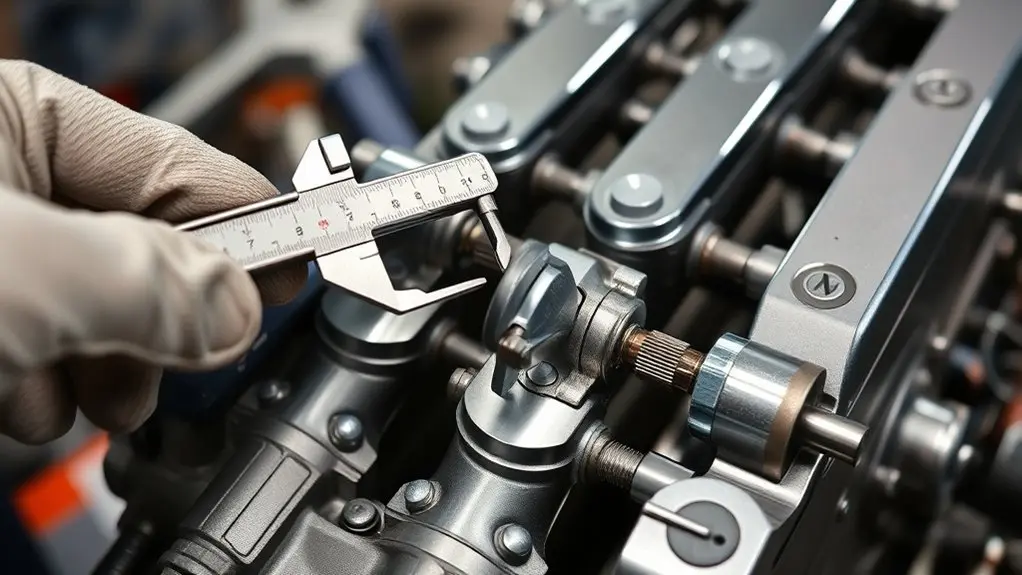
First, go ahead and remove any covers so you can easily access the valve components.
Then, grab a feeler gauge to check the gap between the valve stem and the rocker arm. Make sure to pick the size that your manual recommends.
After you make the adjustment, double-check the clearance again once the lock nut is tightened to be sure everything stays just right.
Accessing Valve Components
Accessing the valve components on your Kohler V Twin requires careful preparation to guarantee safety and accuracy. Before you start, disconnect the spark plug wire to prevent accidental engine starts. This is a vital step when working on Kohler Generators.
Next, remove the engine cover or shroud to expose the cylinder head. Then, unscrew the valve cover bolts and lift off the valve cover to reveal the valves. Inspect the area for dirt or debris to avoid contamination.
Finally, rotate the engine to Top Dead Center (TDC) to position the piston at its highest point. This ensures correct valve clearance measurement later.
- Disconnect spark plug wire for safety
- Remove engine cover or shroud
- Unscrew and remove valve cover bolts
- Clean surrounding valve area
- Position piston at Top Dead Center (TDC)
Using Feeler Gauges
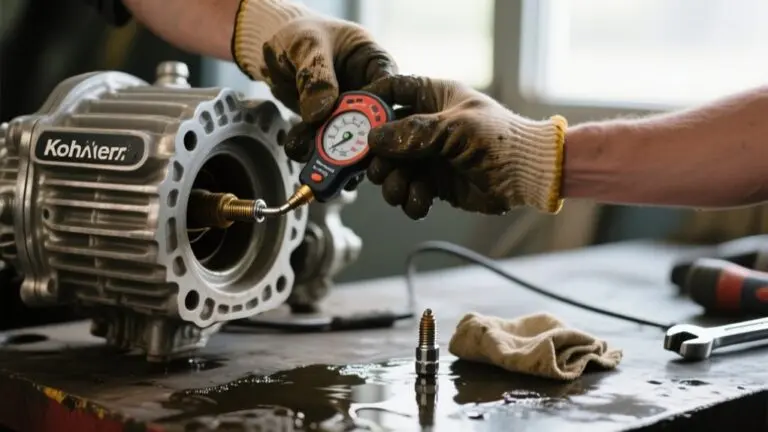
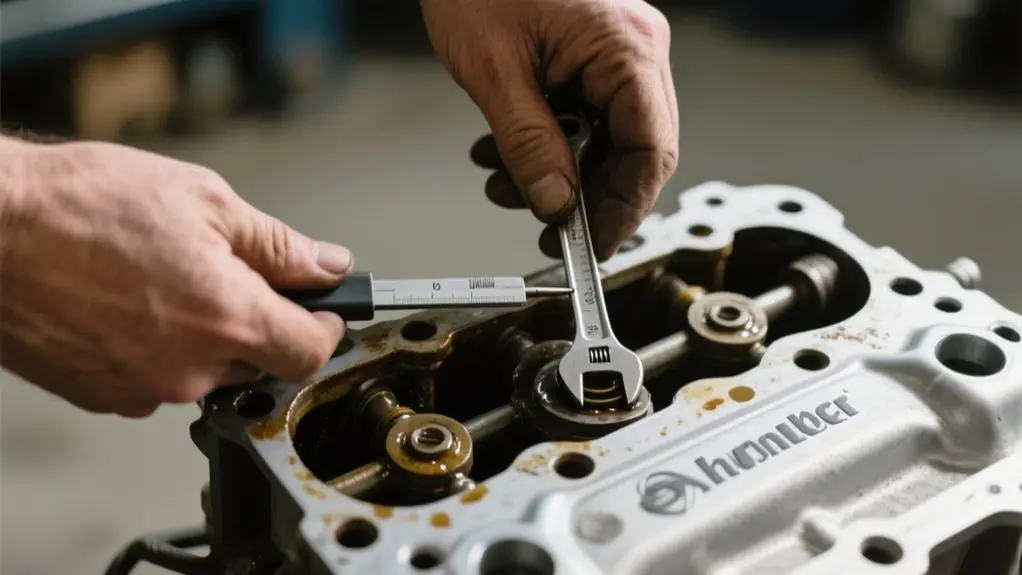
A feeler gauge is essential for accurately measuring valve clearance on your Kohler V Twin. First, confirm the engine is at Top Dead Center (TDC) with the piston at its highest point.
Select the appropriate feeler gauge blade size specified in your engine manual. Insert the feeler gauge between the valve stem and rocker arm to check the gap.
If the clearance is outside the specified range, adjust the valve screw carefully to achieve proper spacing. After adjustment, reinsert the feeler gauge to verify accuracy.
Once correct, tighten the lock nut, but be sure to recheck the clearance afterward, as this can alter the gap.
Throughout the process, apply high-quality engine oil to valve components to minimize wear and guarantee smooth operation.
Using a feeler gauge precisely ensures reliable valve function.
Confirming Proper Clearance
After using the feeler gauge to check the valve gap, you need to confirm the clearance falls within the specifications outlined in your Kohler V Twin manual. Proper clearance guarantees the Flush Valve operates efficiently and prevents engine damage.
To confirm:
Position the engine at Top Dead Center (TDC) on the compression stroke. Select the correct feeler gauge size from the manual for intake and exhaust valves.
Measure the gap between the valve stem and rocker arm precisely. Adjust the clearance if it’s out of spec by loosening the adjustment screw, repositioning, then retightening.
Re-check the clearance after tightening the lock nut, as this can alter the gap.
Following these steps assures your valve clearance is accurate, maintaining peak engine performance.
Maintaining Valves On Kohler V Twin With Hydraulic Lifters
Make certain your Kohler V Twin hydraulic lifters are functioning properly to maintain peak valve performance without manual adjustments. These lifters use engine oil pressure to automatically adjust valve clearance, ensuring consistent valve operation and reducing noise.
Since Kohler V Twin valves are non-adjustable, your focus should be on maintaining hydraulic lifters. Regular oil changes with high-quality engine oil are essential; contaminated or low oil impairs lifter function and risks engine damage.
If you notice persistent noise or performance issues, inspect the hydraulic lifters and related components immediately. Proper maintenance of hydraulic lifters preserves engine efficiency and longevity, preventing costly repairs.
Test Your Kohler V Twin Engine After Valve Maintenance
Proper maintenance of your Kohler V Twin’s hydraulic lifters sets the stage for reliable valve operation, but confirming their effectiveness requires testing the engine right after any valve-related work.
To make sure your engine is running smoothly, follow these steps:
Start the engine and listen for unusual noises that could indicate valve issues. Check idle speed against manufacturer specs to verify stability.
Observe exhaust flow for smooth, consistent output, which confirms proper combustion. Gently rev the engine to assess throttle response and spark timing accuracy.
If the engine runs rough or stalls, recheck valve clearances for accuracy.
Performing these tests guarantees your Kohler V Twin runs smoothly and reliably after valve adjustments, preventing damage and optimizing performance.
Frequently Asked Questions
How Often Should I Adjust the Valves on My Kohler V-Twin?
You should adjust the valves on your Kohler V-twin every 100 hours of operation or at least once a year, whichever comes first.
If you notice unusual engine noises, performance drops, or operate in harsh conditions, check them sooner.
Regular adjustments keep your engine running efficiently and prevent premature wear.
Always follow your specific model’s manual for exact specifications to guarantee ideal valve clearance and engine longevity.
Can I Use Aftermarket Parts for Valve Adjustment?
You can use aftermarket parts for valve adjustments, but you must guarantee they’re compatible with your Kohler V Twin model. Quality varies, so research thoroughly and read reviews to avoid performance issues.
Always follow detailed installation and torque specs precisely. Sticking to manufacturer guidelines helps prevent engine damage.
If you’re uncertain, OEM parts remain the safest choice to maintain engine reliability and longevity.
What Symptoms Indicate a Valve Adjustment Is Urgently Needed?
If your engine starts tapping or clicking persistently, that’s a major red flag you can’t ignore.
You might also notice rough idling, misfires, or increased valve noise. Each of these signals your valves need urgent adjustment.
Oil leaks around the valve cover gasket can worsen the problem, so don’t delay.
Catching these symptoms early lets you fix valve clearance issues before they cause severe engine damage or costly repairs.
Is It Safe to Adjust Valves Without Prior Mechanical Experience?
It’s generally not safe to adjust valves without prior mechanical experience. Incorrect adjustments can cause engine noise, poor performance, or damage.
You’ll need proper tools like a feeler gauge and socket wrench, plus knowledge of specific clearance specs. If you’re unsure, seek guidance from experts or manuals first.
Persistent issues after adjustment should be handled by a professional to avoid worsening engine problems.
Always prioritize safety and accuracy.
How Does Valve Adjustment Affect Engine Performance and Fuel Efficiency?
Valve adjustment directly impacts your engine’s performance and fuel efficiency by ensuring proper clearance for valves to open and close at precise times.
When you maintain correct valve clearance, combustion improves, leading to smoother idling, better throttle response, and reduced engine noise.
Incorrect clearance causes poor combustion and wasted fuel, which lowers efficiency.
Conclusion
Adjusting your Kohler V Twin valves is like tuning a finely crafted instrument. Precision guarantees peak performance. By carefully measuring and setting clearances at TDC, you keep your engine humming smoothly and avoid costly damage.
With the right tools and steady hands, you’ll maintain ideal valve function, especially if hydraulic lifters are involved. After adjustments, test your engine thoroughly to confirm everything’s in harmony.
This routine care extends your engine’s life and keeps power flowing like a well-oiled machine.