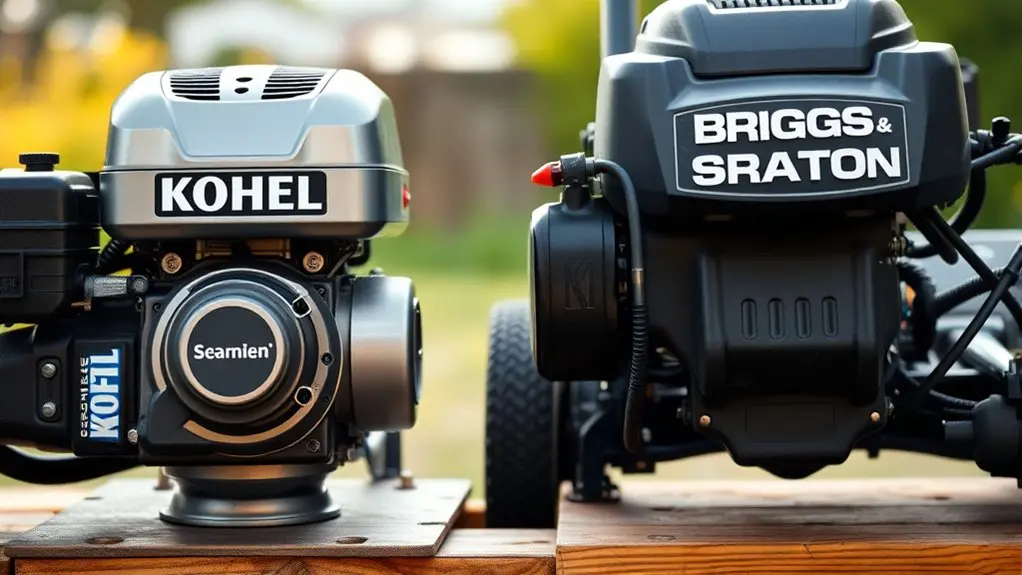
Is Kohler Better Than Briggs And Stratton – Yes or No?
Yes, if you need a durable, high-performing engine for heavy-duty use, Kohler generally outperforms Briggs & Stratton. Kohler’s cast iron and all-metal construction guarantee better longevity and torque. It handles demanding workloads with fewer breakdowns.
Briggs & Stratton offers affordability and easier maintenance but uses more plastic parts, which can wear faster. For light residential tasks, Briggs suits well. But for reliability under stress, Kohler is the smarter choice.
Explore further to understand which fits your specific needs best.
Kohler vs Briggs & Stratton Engine Build Quality and Materials
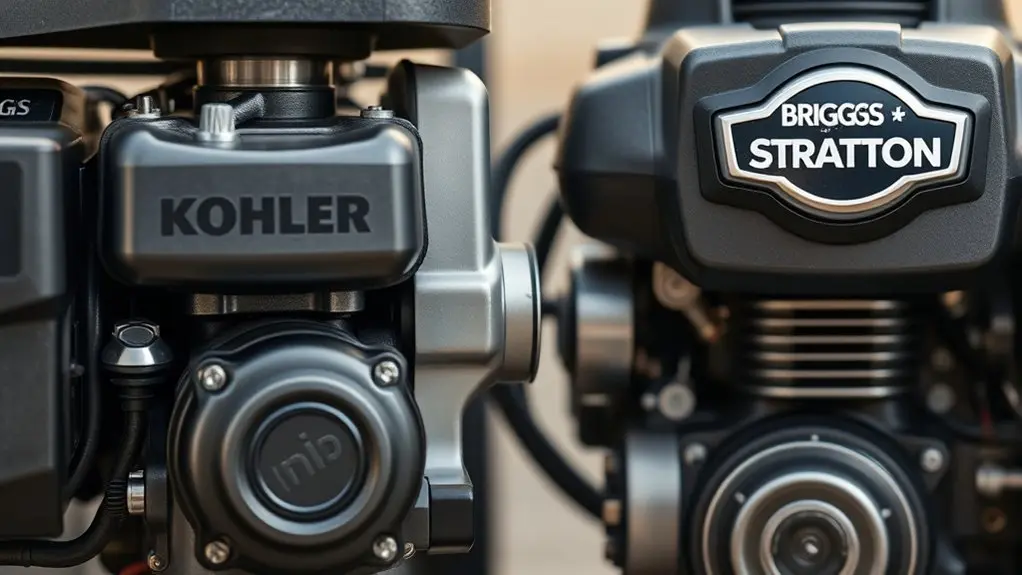
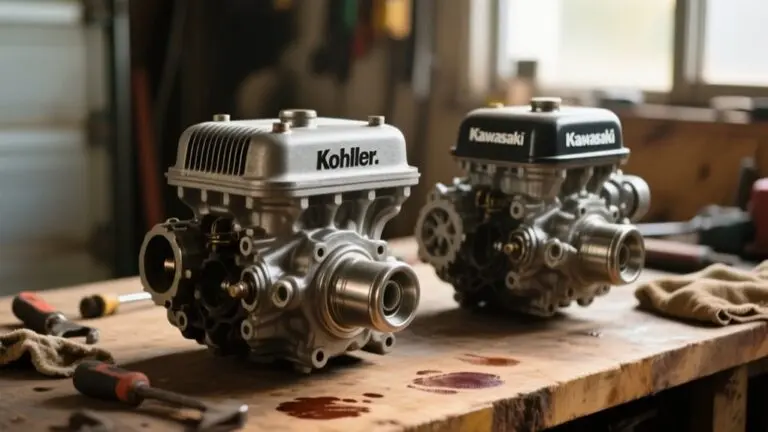
Although both Kohler and Briggs & Stratton produce widely used small engines, Kohler clearly outperforms Briggs & Stratton in build quality and materials.
When you look at engine build quality, Kohler consistently uses cast iron bores and all-cast aluminum or cast iron blocks. This guarantees superior durability and strength.
Their Magnum series is a great example, featuring cast iron liners and robust blocks designed for heavy-duty applications.
On the other hand, Briggs & Stratton often uses nylon components like oil slingers and starter rings. These parts tend to wear faster and reduce structural integrity.
Recent Briggs & Stratton models also include plastic parts that compromise engine robustness.
Long-Term Reliability and Durability: Kohler vs Briggs & Stratton
You’ll find Kohler engines, especially the Magnum series, offer superior longevity thanks to their cast iron bores and solid all-cast blocks. These features really boost durability, especially if you’re putting the engine through heavy use.
On the other hand, Briggs & Stratton engines can vary quite a bit in how long they last. Some of the older models tend to wear out faster, partly because they use cost-saving materials like nylon components.
When you look at how design and maintenance affect each engine’s reliability, it becomes clearer which brand really stands out for long-term performance.
Engine Longevity Comparison
When evaluating engine longevity, Kohler stands out due to its robust construction, particularly in the Magnum series. These engines feature cast iron bores and all-cast blocks that enhance durability and reliability over time. These design choices guarantee Kohler engines maintain structural integrity under heavy use.
This contributes to decades of reliable operation, as seen in models from the 1960s and 1970s.
In contrast, Briggs & Stratton engines show more variability in engine longevity. Some models fail after only hundreds of hours, partly because of the introduction of nylon components and cost-driven materials in recent designs.
While Briggs & Stratton can last with proper care, Kohler’s consistent use of durable materials generally offers superior longevity. This makes Kohler more suitable for long-term, heavy-duty applications where sustained performance is critical.
Maintenance Impact Factors
Because maintenance directly influences engine longevity, understanding the specific impact of upkeep on Kohler and Briggs & Stratton models is essential.
Kohler engines benefit from durable engine parts like cast iron bores and all-cast blocks. They require consistent oil changes to prevent wear on these robust components.
On the other hand, Briggs & Stratton engines incorporate plastic engine parts, such as nylon oil slingers and plastic oil drain caps, which demand vigilant maintenance to avoid premature failure.
It’s also important to address design-specific issues, like valve seat loosening in Briggs & Stratton engines. Doing so is critical for sustaining engine reliability.
While both brands perform well with proper care, Kohler’s heavier-duty engine parts typically tolerate extended intervals between intensive maintenance.
So, your maintenance strategy directly impacts the long-term durability and reliability of these engines.
Kohler’s construction offers a greater margin for error in upkeep, making it a bit more forgiving when maintenance isn’t perfect.
Design and Construction
Although both Kohler and Briggs & Stratton produce engines designed for reliability, Kohler’s use of cast iron bores and all-cast blocks clearly sets a higher standard for long-term durability. Kohler’s Magnum series, leveraging cast iron and cast aluminum, prioritizes strength and wear resistance.
In contrast, Briggs & Stratton often incorporates nylon and plastic parts, such as oil slingers and starter rings, which can compromise longevity.
When evaluating design and construction, consider these points: Kohler’s cast iron components resist wear and deformation over extended use. Briggs & Stratton’s plastic elements may degrade faster under stress and heat.
Also, Kohler’s heavier-duty materials translate to fewer breakdowns and longer engine life.
Power and Performance Differences Between Kohler and Briggs & Stratton
How do Kohler and Briggs & Stratton engines differ in power and performance? Kohler engines consistently deliver higher torque and maintain stable power across a broader RPM range. This is thanks to advanced features like cast iron sleeves and all-cast blocks.
Their Magnum series really shows off this robust construction. It excels in heavy-duty, demanding workloads where peak performance is critical. So, if you need an engine that can handle tough jobs, Kohler is a solid pick.
On the other hand, Briggs & Stratton engines focus more on reliability and affordability. They offer solid performance that’s great for light to medium tasks but generally don’t match the raw power and durability Kohler provides under high-stress conditions.
Briggs & Stratton engines are also easier to maintain, which is a big plus. However, their power output tends to plateau earlier, making them less suitable for more rigorous applications.
At the end of the day, if you care most about engine power and consistent performance under load, Kohler stands out as the better choice.
Starting Ease and Common Troubleshooting Tips
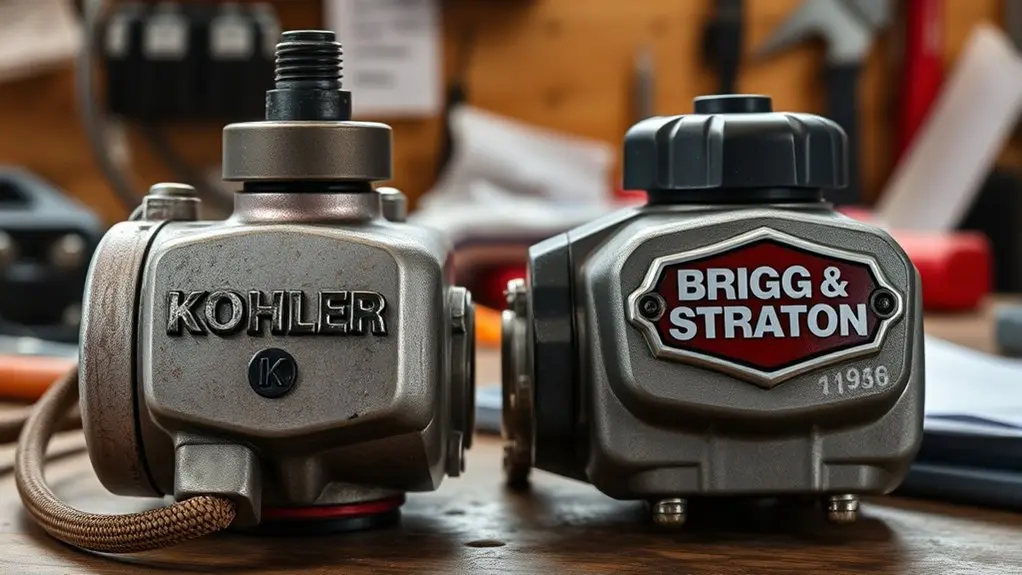
You’ll find that both Kohler and Briggs & Stratton engines start up reliably when they’re properly maintained. That said, Kohler engines sometimes need specific types of oil to keep running at their best.
A lot of common issues that cause starting problems—like stale fuel or dirty carburetors—can affect either brand. So, it’s a good idea to check these regularly.
Keeping an eye on things like oil changes, spark plug condition, and fuel quality will go a long way in helping you troubleshoot and keep your engine starting smoothly every time.
Starting Reliability Comparison
When comparing starting reliability, what sets Kohler and Briggs & Stratton engines apart? Kohler engines excel in dependable starts, even after long idle periods and cold weather exposure.
Briggs & Stratton engines generally start quickly but may struggle in freezing temperatures.
Consider these factors affecting starting reliability:
- Kohler’s robust design ensures consistent ignition, reducing your frustration in harsh conditions.
- Briggs & Stratton demands more frequent maintenance, like carburetor cleaning and spark plug replacement, to sustain reliable starts.
- Both brands require correct oil types and routine inspections to minimize starting failures.
You’ll find Kohler’s starting reliability superior in challenging environments. Meanwhile, Briggs & Stratton performs well with diligent upkeep.
This distinction helps you choose based on your operational conditions and how much maintenance you’re willing to do.
Common Engine Troubleshooting
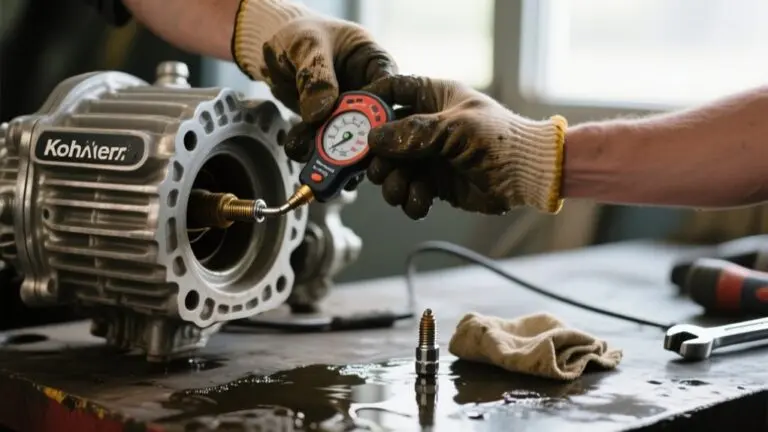
Although both Kohler and Briggs & Stratton engines generally start smoothly, troubleshooting common issues can help you maintain peak performance. If your engine struggles to start, begin by inspecting the spark plugs. They must be clean and properly gapped. Dirty or worn spark plugs often cause weak ignition, making it harder for the engine to start.
Next, check the fuel quality. Old or contaminated fuel can clog carburetors and filters, which reduces engine responsiveness. Take a look at the fuel filter to see if it’s blocked, and make sure the carburetor is clean.
Also, confirm that oil levels meet manufacturer specifications. Insufficient oil can trigger safety shutdowns. Taking care of these factors quickly can restore your engine’s starting reliability.
Both brands benefit equally from these checks, letting you spot and fix problems without replacing parts unnecessarily.
Maintenance Tips For Starting
To guarantee your engine starts smoothly every time, maintain key components like the spark plug, air filter, and fuel system in perfect condition. A clean, properly gapped spark plug ensures reliable ignition, while a debris-free air filter prevents unnecessary engine strain during startup.
Using fresh, high-quality fuel avoids issues caused by stale gas. Focusing on these critical maintenance tasks really helps make starting easier and keeps your engine running well.
Here’s what you should do:
- Regularly inspect and replace the spark plug to maintain ideal ignition performance.
- Clean or replace the air filter to ensure unrestricted airflow to the engine.
- Check the fuel system and recoil starter for wear or damage, and fix any problems quickly.
If you keep an eye on these elements, your engine will start reliably and you’ll spend less time troubleshooting.
Maintenance Costs and Parts Availability Compared
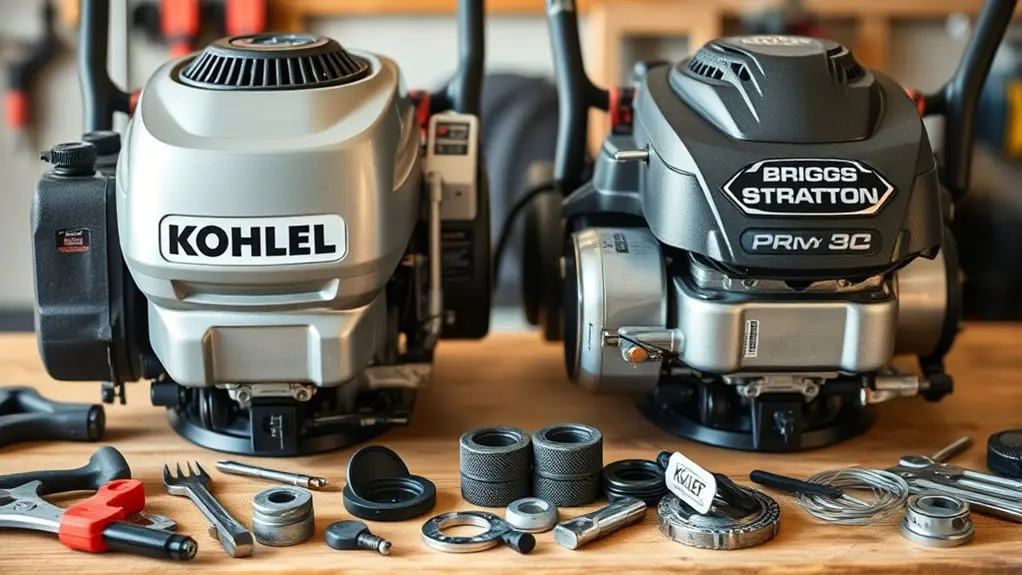
How do maintenance costs and parts availability compare between Kohler and Briggs & Stratton engines? Kohler parts are typically pricier and less accessible. This reflects their premium, commercial-grade quality.
In contrast, Briggs & Stratton offers extensive parts availability through a wide distribution network. This lowers your overall maintenance expenses, especially for residential use.
| Aspect | Kohler | Briggs & Stratton |
|---|---|---|
| Parts Availability | Limited, specialized | Extensive, widely distributed |
| Maintenance Costs | Higher, justified by quality | Lower, cost-effective |
| Replacement Part Access | Moderate, less common | Easy, multiple retail outlets |
You’ll find Briggs & Stratton parts easier to source, especially for older models. This makes maintenance more straightforward and affordable.
Kohler vs Briggs & Stratton in Zero-Turn Mowers
Understanding maintenance costs and parts availability provides valuable context when evaluating engines for zero-turn mowers. Kohler engines, especially the Command series, deliver superior durability and performance in heavy-duty applications.
Maintenance costs and parts availability are key when choosing engines like Kohler’s durable Command series for zero-turn mowers.
Briggs & Stratton engines offer affordability and ease of maintenance but may have shorter lifespans under rigorous use. So, it really depends on how you plan to use your mower.
When choosing between Kohler and Briggs & Stratton in zero-turn mowers, consider:
- Durability: Kohler engines excel in commercial-grade mowers, enduring demanding conditions longer.
- Cost Efficiency: Briggs & Stratton engines reduce upfront expenses, fitting residential budgets.
- Performance: Kohler engines provide robust power output, enhancing mower efficiency and reliability.
If you prioritize long-term resilience and power, Kohler engines are the better option for zero-turn mowers. For lighter, cost-conscious use, Briggs & Stratton remains a viable, reliable choice.
Best Choice for Commercial vs Residential Use
Although both Kohler and Briggs & Stratton produce reliable engines, your choice should hinge on the intended application, commercial or residential.
For commercial use, Kohler engines excel due to their robust construction. They feature cast iron bores and all-cast blocks in models like the Magnum series. This design guarantees durability and consistent performance under heavy workloads, making Kohler ideal for critical operations that demand maximum reliability.
On the other hand, Briggs & Stratton engines suit residential use. They offer affordability, simplified design, and easy maintenance. Plus, their widespread parts availability supports routine upkeep efficiently.
If your focus is commercial use requiring long-term durability and power, Kohler stands out. But for light-to-moderate residential applications where cost-effectiveness and ease of service are key, Briggs & Stratton provides a practical solution without compromising basic reliability.
Pricing and Value: Is Kohler Worth the Extra Cost?
When deciding between Kohler and Briggs & Stratton engines, price often plays a crucial role in your choice. Kohler engines come with a 20-30% higher pricing due to superior construction, including cast iron bore and all-cast block. This design extends lifespan and boosts reliability.
This premium pricing translates into tangible value, especially for demanding or commercial use. So, it’s worth thinking about what you really need from your engine.
Consider these points to evaluate if Kohler is worth the extra cost:
- You get longer service life and reduced maintenance frequency.
- Performance consistency under heavy workloads is markedly better.
- The initial higher investment can lead to lower total cost of ownership.
While Briggs & Stratton suits budget-conscious buyers, Kohler’s pricing offers technical advantages that justify the expense for durable, reliable power. It really comes down to what fits your priorities and budget.
What Real Users Say About Kohler and Briggs & Stratton Engines
Since real-world performance often shows strengths and weaknesses beyond what specs tell us, user feedback gives great insights into Kohler and Briggs & Stratton engines.
Kohler engines get a lot of praise for being durable and reliable, especially in lawn mowers and lawn tractors used for heavy-duty or commercial work. Many users mention how well Kohler engines start even after sitting unused for a long time, which really shows their robust design.
On the other hand, Briggs engines are popular because they’re easy to maintain and have lots of parts available, making repairs simpler. Some users do mention issues like valve seat wear and shorter lifespans when the engines are pushed hard.
Frequently Asked Questions
Are Kohler and Briggs & Stratton Engines Environmentally Friendly?
Yes, both Kohler and Briggs & Stratton engines are environmentally friendly to a degree. You’ll find they meet strict emissions standards, including EPA regulations, which helps reduce environmental impact.
Kohler focuses on efficient combustion and fuel economy, lowering emissions.
Briggs & Stratton incorporates advanced technologies like catalytic converters and fuel-saving modes.
When choosing, consider specific engine models and their designed emissions controls to evaluate their environmental impact accurately.
Do Kohler or Briggs & Stratton Offer Extended Warranties?
Imagine a sturdy shield guarding your investment. That’s what extended warranties from Kohler and Briggs & Stratton symbolize.
In this warranty comparison, both brands offer up to 3 years of coverage, especially for commercial-grade models.
You’ll need to register and keep proof to activate these protections.
Optional plans are also available if you want to extend your shield even further.
This way, you’re covered against unexpected engine issues and can enjoy peace of mind during operation.
Which Brand Has Better Customer Service Support?
You’ll find Kohler offers better customer service support focused on customer satisfaction, especially if you need specialized, technical assistance. Their network provides prompt, personalized help, excelling in commercial and high-end equipment scenarios.
Briggs & Stratton, while reliable and widely accessible, leans more on quick warranty resolutions and general support.
Can Kohler and Briggs & Stratton Engines Run on Alternative Fuels?
Yes, both Kohler and Briggs & Stratton engines can run on alternative fuels, but fuel compatibility varies.
Briggs & Stratton offers factory-approved propane conversion kits for select models, which means they meet manufacturer guidelines.
Kohler engines usually need custom or third-party kits, so modifications have to be done carefully.
It’s a good idea to check your engine’s design and model year since newer engines handle conversions better.
Always keep in mind the warranty implications and how performance might change when you switch fuel types.
Better to be safe than sorry!
How Do Kohler and Briggs & Stratton Engines Compare in Noise Levels?
When you consider the noise comparison, Kohler engines often offer a more serene operation. This is thanks to advanced mufflers and vibration dampers that reduce sound levels.
Briggs & Stratton engines, while improved, usually emit a bit more audible presence, especially under heavy loads.
If you prioritize quieter performance, Kohler’s focus on sound-dampening technology typically means you’ll experience less noise disruption during use.
Conclusion
When you choose between Kohler and Briggs & Stratton, think of it like picking a marathon runner versus a sprinter. Kohler’s robust build and long-term durability are your steady marathoner. It consistently powers through tough conditions with less downtime.
Briggs & Stratton offers solid performance but may need more frequent tune-ups. If reliability and low maintenance are your finish line, Kohler is the engine that keeps running strong, mile after mile.