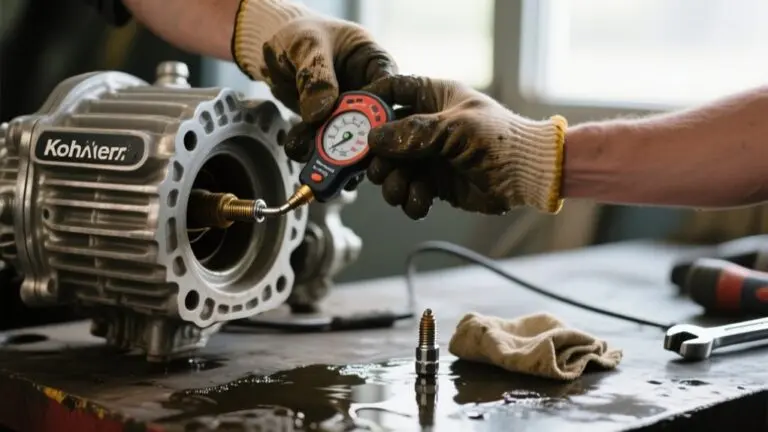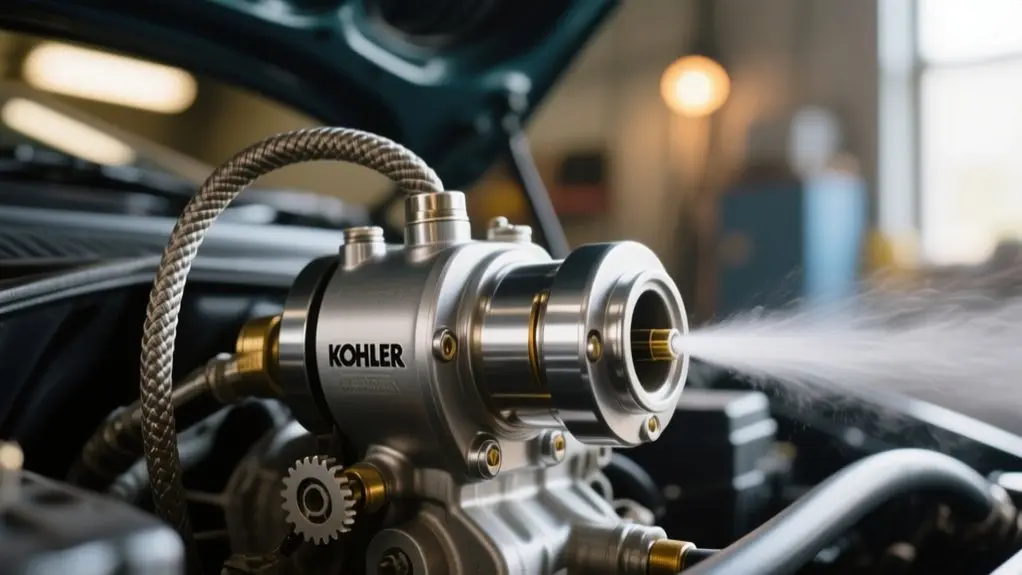
How Does A Kohler Fuel Pump Work – Quick Facts
Your Kohler fuel pump uses engine vacuum pulses to power a flexible diaphragm, drawing fuel from the tank to the carburetor without electricity. As the piston moves, it alternates pressure in the crankcase, opening and closing one-way check valves that control fuel flow direction.
This cyclic action guarantees steady fuel delivery even at varying speeds. Signs of failure include starting trouble or power loss. Keep exploring to understand key components, vacuum roles, failure signs, and testing methods.
How a Kohler Fuel Pump Moves Fuel to Your Engine
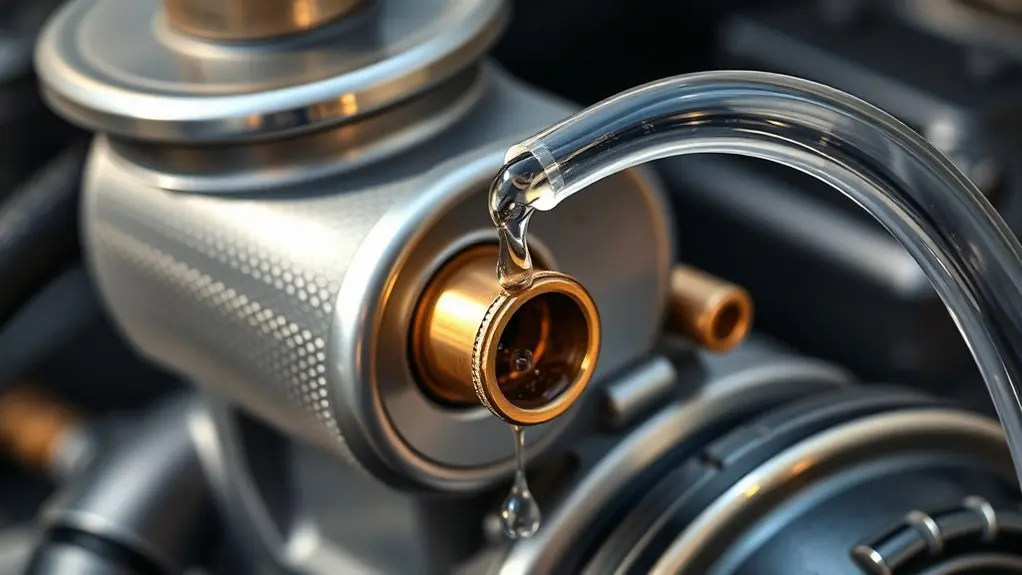
When the engine runs, a Kohler fuel pump moves fuel to your carburetor by creating a vacuum and pressure change within the crankcase, eliminating the need for electrical power.
The fuel pump uses a diaphragm actuated by pressure pulses from the crankcase, drawing fuel through an intake hose.
Check valves control flow direction, ensuring fuel moves efficiently from the tank to the carburetor without backflow.
During the piston’s upward stroke, the diaphragm creates suction, pulling fuel in, while the downward stroke pressurizes fuel output.
This cyclical action replaces the fuel continuously as the engine operates, maintaining steady delivery even at higher speeds.
You should regularly check for diaphragm integrity and clear blockages to avoid performance issues and know when to replace the fuel pump components.
Key Parts Inside a Kohler Vacuum Diaphragm Pump
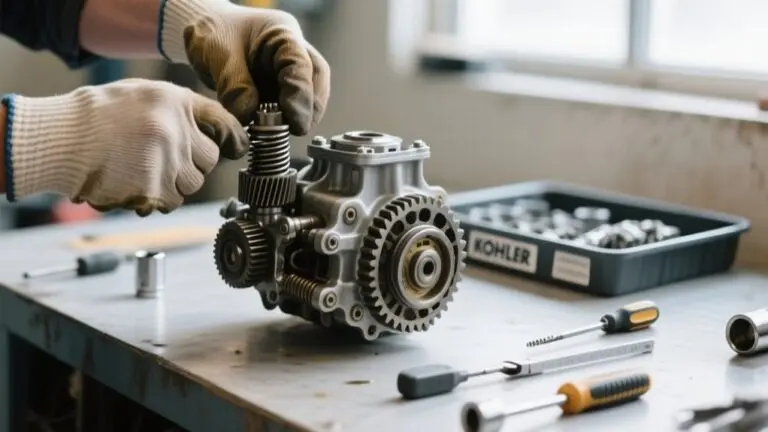
The core components inside a Kohler vacuum diaphragm pump include a flexible rubber diaphragm, positioned to separate the fuel chamber from the pulse chamber. This setup enables efficient fuel transfer. The diaphragm flexes in response to pressure fluctuations, which drives fuel movement.
Integral to the fuel pump’s operation are the one-way check valves at the IN and OUT ports. They prevent backflow and maintain consistent fuel delivery. Three hoses—IN for fuel intake, OUT for delivery, and PULSE for diaphragm actuation—connect the system.
Maintaining the integrity of the diaphragm and check valves is critical. Any damage impairs fuel flow and engine performance.
| Component | Function |
|---|---|
| Diaphragm | Separates chambers; flexes to pump fuel |
| IN Check Valve | Allows fuel into pump; prevents backflow |
| OUT Check Valve | Allows fuel out; prevents return flow |
| IN Hose | Channels fuel from tank |
| PULSE Hose | Transmits engine vacuum to actuate diaphragm |
How Your Engine’s Vacuum Powers the Fuel Pump
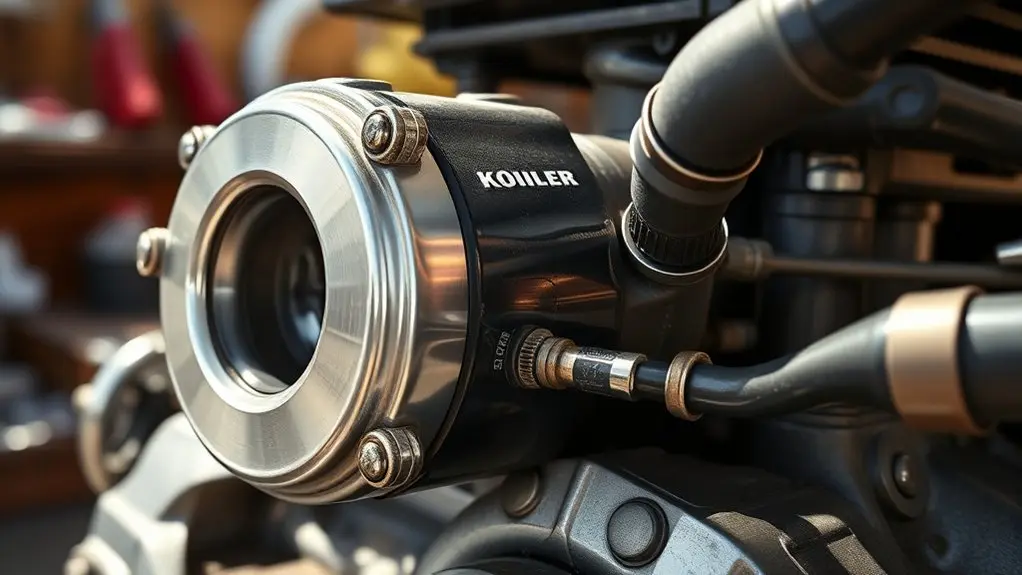
Understanding how the diaphragm and check valves function inside the fuel pump sets the stage for examining the engine vacuum’s role in powering the system.
As your engine runs, the piston’s movement creates alternating pressure and vacuum within the crankcase.
During the upward stroke, the vacuum diaphragm generates suction, drawing fuel into the pump’s intake chamber through a one-way check valve.
On the downward stroke, increased pressure forces the diaphragm to push fuel out through the delivery port toward the carburetor.
This cyclical process relies entirely on the engine’s vacuum pulses, eliminating the need for electrical power.
The fuel pump’s efficiency increases with engine speed because faster piston cycles amplify vacuum changes, ensuring consistent and reliable fuel delivery as your engine runs under varying loads.
Signs Your Kohler Fuel Pump Is Failing
If your Kohler engine struggles to start or demands excessive priming, you might be facing early signs of fuel pump failure.
Fuel pumps experience wear and tear over time, which leads to compromised fuel delivery.
You’ll notice power loss under load and engine bogging—these indicate insufficient fuel flow.
Moreover, surging at high or low RPMs during idle points to inconsistent fuel supply caused by pump degradation.
Detecting gasoline odor in the oil or elevated fuel content signals potential leaks, often from a ruptured diaphragm.
The presence of fuel in the pulse line confirms diaphragm failure, meaning you’ll need to replace the fuel pump immediately.
Monitoring these signs helps you address fuel pump issues promptly and maintain your Kohler engine’s performance and reliability.
Simple Ways to Test and Fix Your Kohler Fuel Pump
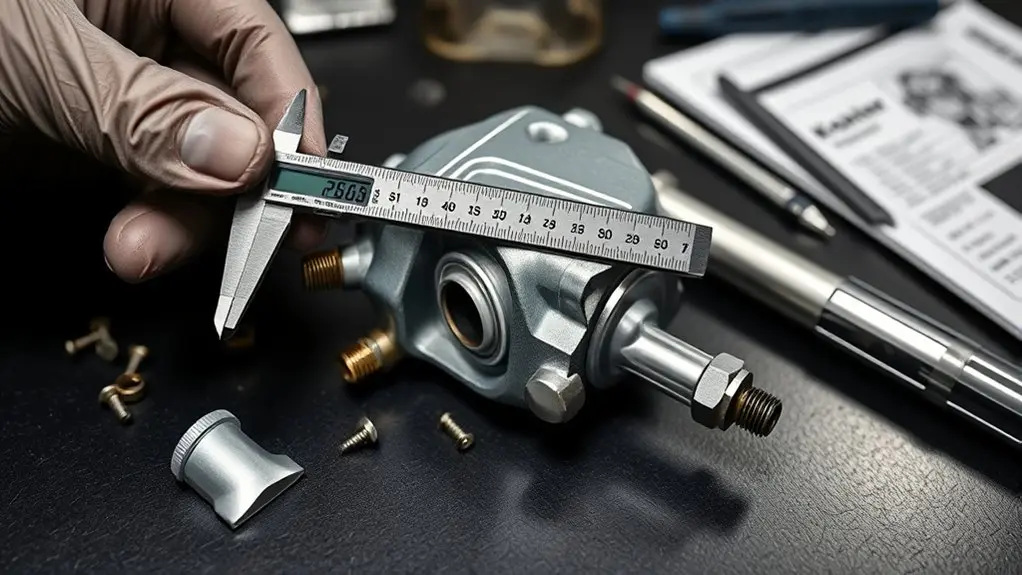
Recognizing signs of fuel pump failure sets the stage for effective diagnostics and repairs. To test your Kohler mechanical fuel pulse pump, perform a Quick Puff Test by blowing into the pulse port; you should feel resistance if the pump operates correctly.
Next, suck on the IN port while blowing into the OUT port to confirm one-way resistance, verifying the check valves’ integrity. If you detect fuel in the pulse line when disconnected, the diaphragm is ruptured and must be replaced immediately.
Check one-way resistance by sucking IN and blowing OUT; fuel in the pulse line signals a ruptured diaphragm.
Also, listen for unusual noises during operation, as they signal internal component issues. Regularly inspect the diaphragm for wear or cracks to maintain peak performance.
Prompt replacement of faulty parts guarantees your pulse pump functions reliably and extends its service life.
Frequently Asked Questions
What Types of Fuel Are Compatible With Kohler Fuel Pumps?
You can use regular gasoline with Kohler fuel pumps since they’re designed for that type. Some models handle ethanol blends like E10 safely, but you should avoid higher ethanol concentrations because they might degrade the pump over time.
Diesel isn’t compatible, as Kohler pumps for gasoline engines aren’t built for diesel’s properties.
Always check your engine’s manual to confirm fuel compatibility and avoid damage by steering clear of contaminated or low-quality fuels.
How Often Should I Replace My Kohler Fuel Pump?
You should replace your Kohler fuel pump approximately every two years, depending on usage and operating conditions.
Watch for hard starting, excessive priming, or power loss under load as clear signs it’s time for replacement.
Regular inspections and testing help you identify wear early.
If you detect fuel contamination in the oil or other abnormal symptoms, replace the pump immediately to avoid engine damage and maintain peak performance.
Can a Kohler Fuel Pump Be Used With Aftermarket Carburetors?
Of course, you can’t just slap any aftermarket carburetor onto a Kohler fuel pump and expect perfection.
You’ll need to make sure the fuel pump’s pressure and flow match the carburetor’s specs precisely. Otherwise, you risk poor performance or damage.
Expect to adapt fittings or lines and regularly check compatibility. Some carburetors let you fine-tune settings to sync well, but skipping these steps invites trouble.
What Are Common Causes of Kohler Fuel Pump Diaphragm Damage?
You’ll find Kohler fuel pump diaphragm damage commonly caused by fuel contamination, which degrades the diaphragm material.
Regular wear over about two years weakens the diaphragm’s integrity.
Pressure imbalances, especially from pulse line obstructions, can rupture it.
Improper installation stresses the diaphragm, leading to premature failure.
Also, exposure to harsh chemicals or incorrect fuels degrades the diaphragm, causing leaks and inefficient pump operation.
You need to address these to guarantee durability.
Are Kohler Fuel Pumps Covered Under Warranty?
Think of your Kohler fuel pump as a fortress shielded by warranty walls. Yes, Kohler fuel pumps are generally covered under warranty, typically lasting 1 to 3 years.
This protection guards against defects in materials and workmanship but doesn’t extend to damage from improper maintenance or installation. To claim coverage, you’ll need proof of purchase and must follow maintenance guidelines precisely.
Check your specific engine’s warranty details for exact terms and exclusions.
Conclusion
Now that you understand how your Kohler fuel pump uses engine vacuum to draw fuel through its diaphragm, you can better spot the subtle signs of wear like sputtering or fuel leaks that signal trouble.
Picture the pump as a finely tuned heart, rhythmically pulsing fuel to keep your engine alive. By testing pressure and inspecting key parts, you’ll guarantee this essential component runs smoothly.
This helps prevent costly breakdowns and keeps your engine performing at peak efficiency.