Is Kohler Or Kawasaki Engine Better – The Truth
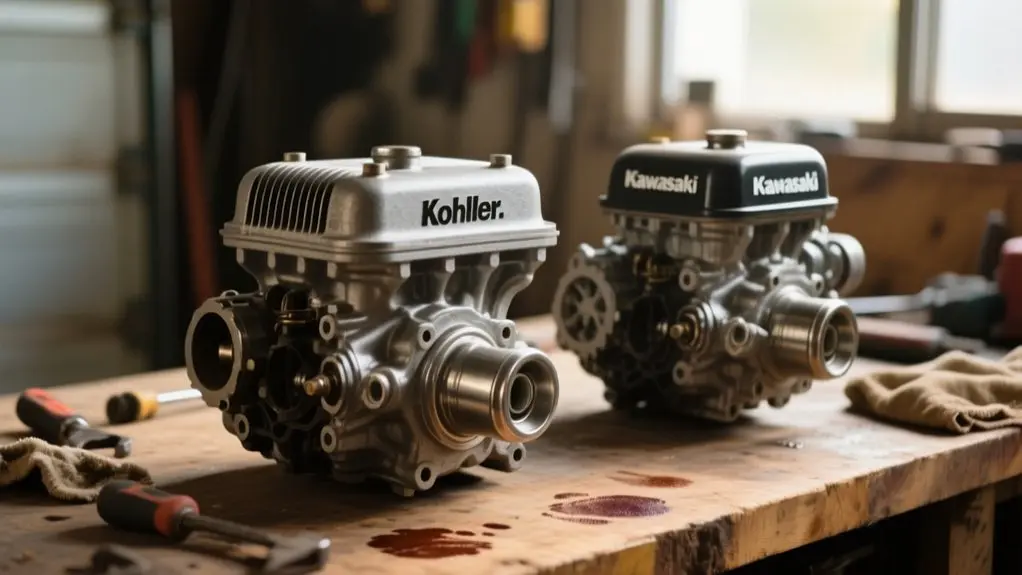
If you’re choosing between Kohler and Kawasaki engines, Kawasaki generally outperforms Kohler in durability, sustained power, and operational efficiency, especially under heavy or commercial use.
Kohler’s 7000 series may offer slightly higher horsepower but faces issues like oil leaks and ignition faults that affect reliability.
Kawasaki’s robust design, easier maintenance, and widespread parts availability lower overall costs and downtime. For a closer look at performance, maintenance, and value differences, keep exploring the details ahead.
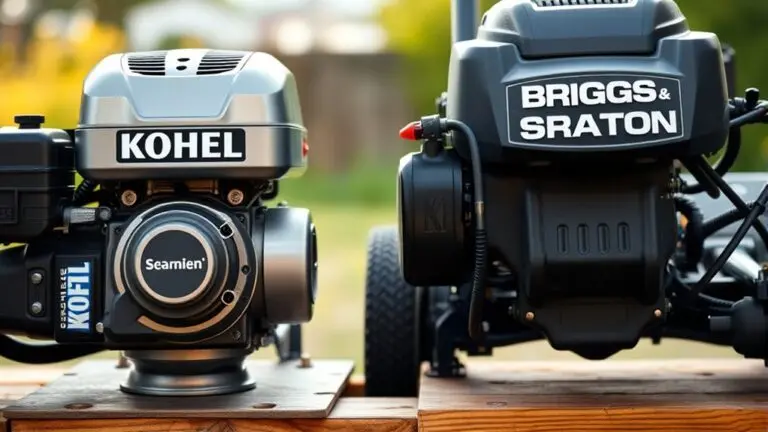
Kawasaki Vs. Kohler: Which Engine Is Right for You?
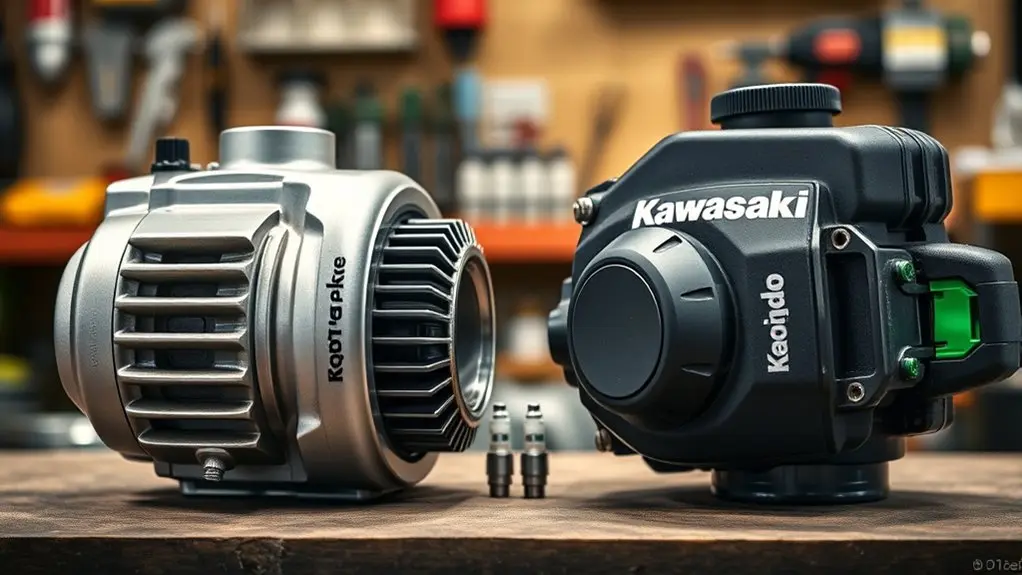
When choosing between Kawasaki and Kohler engines, how do you determine which fits your needs best?
In the Kohler vs Kawasaki comparison, Kawasaki engines stand out for commercial-grade reliability and performance, typically rated at 23 to 24 horsepower.
You’ll find Kawasaki excels in demanding applications with consistent operation beyond 1,800 hours and minimal maintenance requirements.
Conversely, Kohler’s 7000 series leans toward residential use and shows mixed reliability, including issues like oil leaks and ignition failures.
Kawasaki engines also offer straightforward maintenance and readily available parts, reducing downtime.
If you prioritize durability and ease of service in rugged conditions, Kawasaki engines present a clear advantage.
Your choice depends on whether you need robust, professional-grade power or a more budget-oriented residential engine, making Kawasaki the preferred option in most technical evaluations.
User Experiences With Kawasaki and Kohler Engine Durability
Understanding the technical specifications and manufacturer claims only takes you so far. Real-world user experiences provide invaluable insight into engine durability. When evaluating Kawasaki and Kohler engines, users consistently report Kawasaki’s superior lifespan, with models like the FH580V lasting over 1,800 hours under demanding conditions.
Real-world user experiences reveal Kawasaki engines often outlast Kohler models, with impressive durability under tough conditions.
Kohler engines, particularly the 7000 series, show mixed reliability, with recurring issues such as leaking valve covers and ignition failures.
Key user observations include:
- Kawasaki engines require simpler maintenance and endure heavy workloads reliably.
- Kohler users report early failures, sometimes around 300 hours.
- Kawasaki’s durability fosters trust in prolonged, intensive use.
- Kohler’s inconsistencies diminish confidence despite some strong points.
Your decision should weigh these real-world durability factors carefully when choosing between Kawasaki and Kohler.
Performance and Power: Kawasaki Vs. Kohler Engines
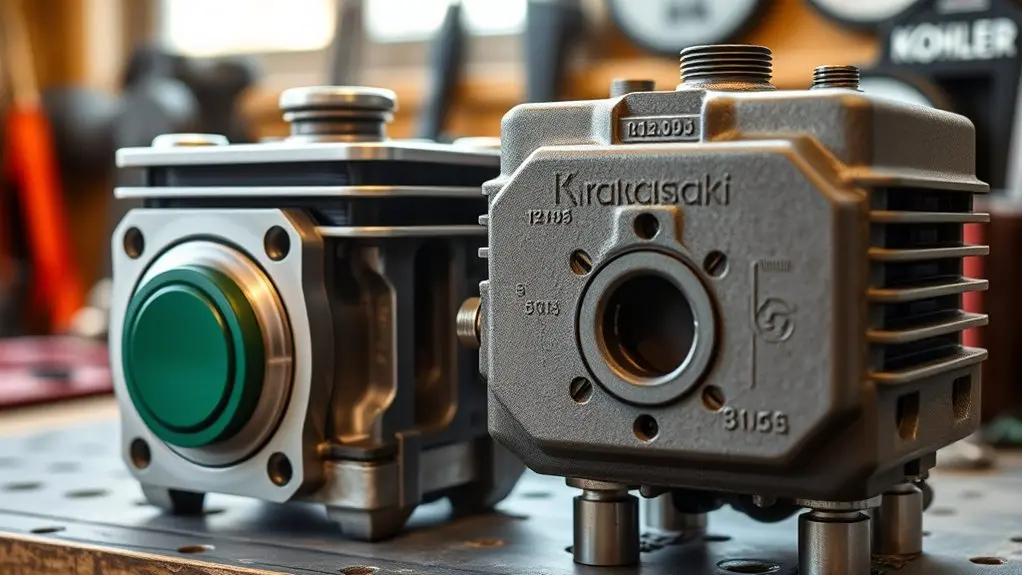
You’ll notice Kawasaki engines usually pack more horsepower and tend to hold up better under heavy use than Kohler models.
Plus, they run efficiently and don’t need as much maintenance, which helps keep their performance steady over time.
Power Output Comparison
A close examination of power output reveals that the Kohler 7000 engine delivers 24 horsepower, slightly edging out the comparable Kawasaki engine rated at 23 horsepower.
Despite this, you should consider that Kawasaki’s hp Kawasaki engines often demonstrate superior sustained power and efficiency, especially under heavy-duty conditions.
The difference in power ratings partly stems from distinct testing standards. Kohler command uses SAE J2723, while Kawasaki adheres to SAE J1940, affecting direct comparisons.
- Kohler command engine rated at 24 hp versus Kawasaki’s 23 hp
- Kawasaki engines maintain compression and efficiency over time
- Kohler’s slightly higher initial hp Kawasaki rating doesn’t guarantee sustained power
- Testing standards vary, influencing perceived performance differences
This analysis helps you weigh raw power against real-world engine resilience.
Engine Performance Durability
Although Kohler engines offer slightly higher initial horsepower, Kawasaki engines excel in performance durability, especially in demanding commercial applications. You’ll find Kawasaki engines maintain consistent engine performance, with some units surpassing 1,800 operational hours with minimal degradation.
Kohler’s 7000 series, despite solid power, shows occasional oil leaks and ignition issues, impacting long-term durability.
| Feature | Kawasaki Engine | Kohler Engine |
|---|---|---|
| Long-term Reliability | High, minimal issues | Mixed, occasional failures |
| Maintenance Ease | Simplified access | Moderate complexity |
| Performance Stability | Consistent over time | Variable with wear |
Choosing Kawasaki means prioritizing sustained engine performance and durability. This is critical in commercial settings where reliability is non-negotiable.
Operational Efficiency Differences
How do Kawasaki and Kohler engines compare when it comes to operational efficiency in real-world applications?
Kawasaki engines, known for their robust design and higher horsepower ratings, generally offer superior power delivery and reliability under demanding conditions compared to the Kohler Courage series. This difference impacts fuel usage, maintenance frequency, and overall productivity.
Kawasaki engines maintain consistent performance during heavy workloads, such as mowing multiple acres weekly.
Kohler Courage engines are optimized for residential use, which may limit efficiency in commercial settings.
Kawasaki’s simpler maintenance reduces downtime and operational costs.
Kohler engines can experience common issues like oil leaks, affecting long-term efficiency.
Troubleshooting Kohler: Common Issues and Maintenance Tips
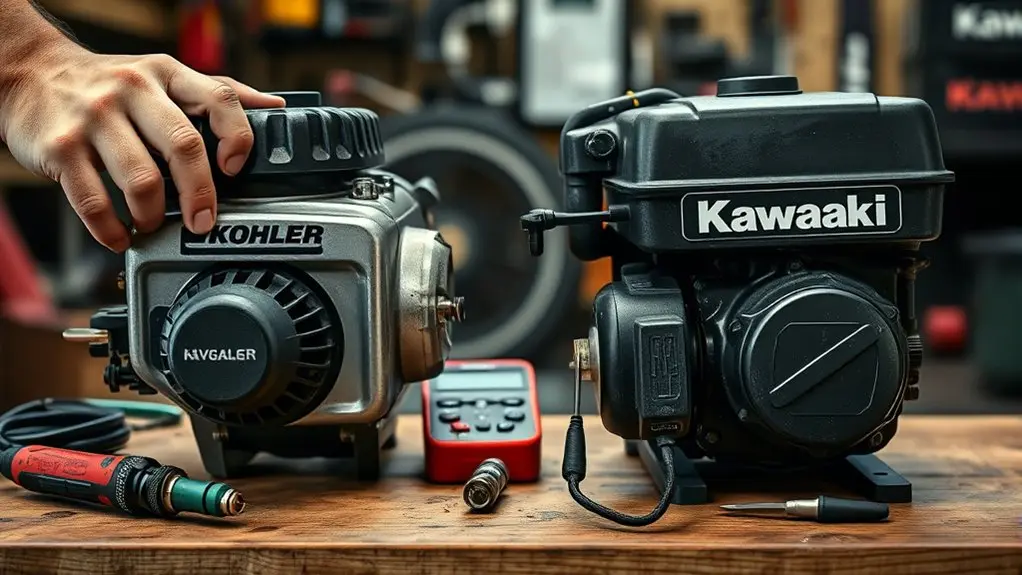
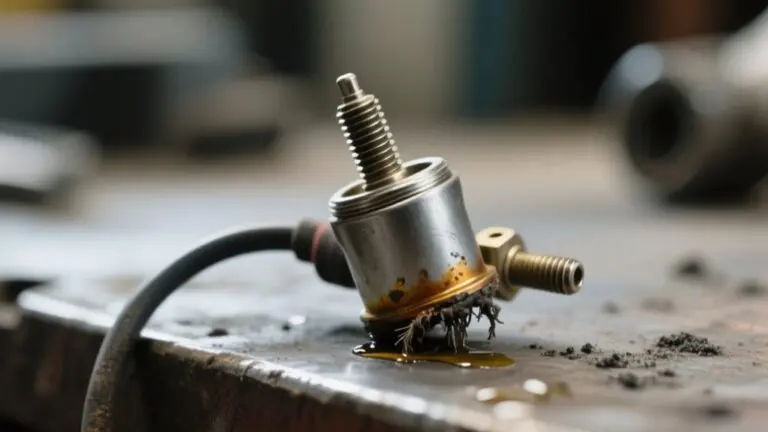
Troubleshooting Kohler engines, especially the 7000 series, requires attention to specific issues like leaking valve covers and ignition faults that can reduce reliability. You’ll want to inspect valve covers regularly and consider switching to plastic ones to prevent oil leaks effectively.
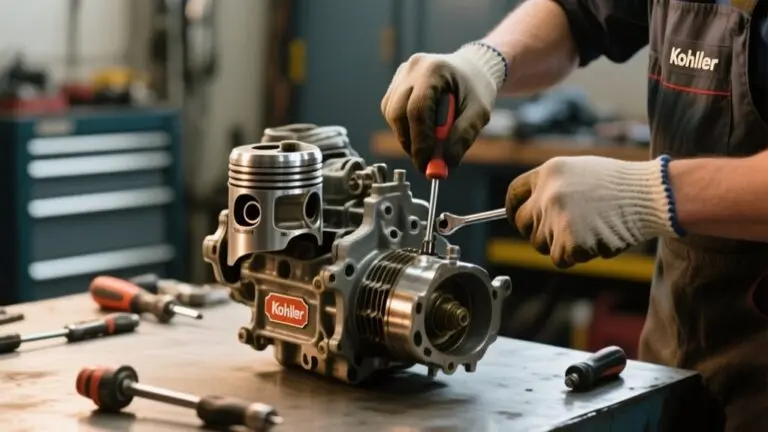
Adhering to routine maintenance is critical. Perform consistent oil changes, replace air filters timely, and clear debris buildup to protect engine components.
Routine maintenance like timely oil changes and air filter replacements safeguards your engine’s performance and durability.
Monitor for signs of excessive oil consumption or unusual noises. These indicate underlying problems demanding immediate action.
Proper fuel management and selecting the correct oil grade help maintain ideal operating temperatures, enhancing engine performance and longevity.
Maintenance Challenges and Longevity for Kawasaki and Kohler Engines
You’ll want to stay on top of routine maintenance, like changing the oil and swapping out air filters, to keep your engine running smoothly for as long as possible.
Kawasaki engines usually need fewer repairs, which means less hassle overall.
On the other hand, Kohler models tend to need a bit more TLC, especially when it comes to issues like oil leaks and replacing valve covers.
Knowing these common repair and replacement needs can really help you keep each engine performing at its best and extend its lifespan.
Routine Maintenance Importance
Routine maintenance plays a pivotal role in maximizing the performance and lifespan of both Kawasaki and Kohler engines. For your mower, neglecting routine tasks like oil changes and air filter replacements can degrade engine efficiency and shorten service life.
Kawasaki engines benefit from simpler maintenance and accessible spare parts, helping you reduce downtime. Kohler’s newer Courage series may require extra attention due to potential oil leaks and valve cover issues.
Key maintenance practices include:
- Regularly replacing the air filter to prevent debris buildup
- Using high-quality synthetic oil for peak lubrication
- Inspecting for leaks, especially in Kohler engines
- Scheduling timely oil changes to maintain engine integrity
Adhering to these steps guarantees you get the most reliable and long-lasting performance from either engine brand.
Common Longevity Issues
Maintaining your Kawasaki or Kohler engine properly sets the stage for long-term reliability. But understanding the common longevity issues these engines face helps you anticipate potential problems.
Kawasaki engines typically deliver superior longevity with minimal maintenance. Kohler engines sometimes encounter oil leaks and ignition faults, especially in the 7000 series. Regular synthetic oil use and inspections are essential to mitigate these issues.
| Engine Brand | Common Longevity Issues |
|---|---|
| Kawasaki | Rare oil leaks, minimal wear |
| Kohler | Valve cover leaks, ignition faults |
| Kawasaki | Consistent performance over 1800+ hours |
| Kohler | Durability concerns in some models |
Knowing these challenges helps you optimize maintenance for maximum engine longevity.
Repair And Replacement
Steering through repair and replacement challenges requires a clear understanding of each engine’s maintenance demands and durability.
Kawasaki engines generally need only routine upkeep, with minimal repairs reported even after extensive use.
Kohler engines, especially the 7000 series, have shown vulnerabilities like oil leaks and ignition faults. These issues complicate longevity and increase repair frequency.
Spare parts availability also plays a big role in repair efficiency. Kawasaki’s widespread parts access reduces downtime and streamlines replacements.
To optimize lifespan and minimize costly replacements, consistent maintenance is essential.
- Kawasaki engines require routine maintenance with fewer repairs
- Kohler 7000 series prone to oil leaks and ignition issues
- Kawasaki parts widely available, easing repair and replacement
- Older tractors show high maintenance costs, emphasizing durable design
Understanding these factors helps you manage repair and replacement more effectively.
Cost Comparison: Parts, Repairs, and Overall Value
When comparing the cost dynamics of Kohler and Kawasaki engines, you’ll find that Kawasaki’s superior reliability often reduces long-term repair expenses despite a higher upfront price. Kawasaki engines benefit from design consistency, making parts replacement and maintenance quicker. This enhances overall value.
Kohler’s newer models, like the Courage series, sometimes incur higher repair costs due to oil leaks and valve cover issues. These problems negatively affect cost comparison.
| Factor | Kawasaki | Kohler |
|---|---|---|
| Initial Cost | Higher | Moderate |
| Repair Frequency | Lower | Higher |
| Parts Availability | Strong, consistent design | Strong but less streamlined |
You’ll notice Kawasaki delivers better cost efficiency over time, proving a superior investment in durability and performance.
Warranty and Support: What to Expect From Kawasaki and Kohler
Although both Kawasaki and Kohler provide warranty coverage for manufacturing defects, Kawasaki stands out with consistently strong warranties and reliable customer support, especially in commercial applications.
You’ll find Kawasaki’s spare parts readily available, reducing downtime during repairs and enhancing overall support.
Kohler offers competitive warranty options, but support quality varies by model. Better service is often reported for the Command Pro series compared to the Courage series.
Both brands exclude coverage for maintenance-related issues, so adhering to proper upkeep is essential.
Key points to take into account:
- Kawasaki’s warranty is robust and well-suited for commercial use
- Kohler’s support varies, dependent on engine line
- Both cover manufacturing defects, not maintenance faults
- Kawasaki’s parts availability accelerates repair turnaround
This clarity helps you gauge warranty and support reliability effectively.
Final Choice: When to Pick Kawasaki or Kohler?
How do you decide between Kawasaki and Kohler engines for your specific needs?
If you prioritize durability and consistent high performance, especially in commercial settings, Kawasaki stands out. Its engines deliver stronger power ratings and require straightforward maintenance, making them ideal for demanding tasks.
On the other hand, Kohler’s Command series remains reliable, but newer models like the Courage series face criticism for build quality issues, such as oil leaks and valve cover problems.
If your application tolerates more frequent maintenance and you prefer Kohler’s design or availability, it may still be a viable choice.
Ultimately, your final choice hinges on weighing Kawasaki’s proven robustness against Kohler’s mixed recent reliability.
Consider your engine model, usage intensity, and maintenance capacity when making a decision.
Frequently Asked Questions
Are Kohler and Kawasaki Engines Compatible With the Same Equipment Brands?
Yes, Kohler and Kawasaki engines are often compatible with the same equipment brands, especially in zero-turn mowers and riding tractors.
You’ll find many manufacturers designing their models to accept either engine, thanks to standardized mounting systems and configurations.
However, you should verify specific engine models and power ratings with the equipment manufacturer to ascertain proper fit and performance, as compatibility can vary based on design nuances and intended application.
What Fuel Types Are Recommended for Kohler Versus Kawasaki Engines?
You should use unleaded gasoline with an octane rating of 87 or higher for both Kohler and Kawasaki engines.
Kawasaki engines run efficiently on regular unleaded fuel, while Kohler engines, especially older models, may benefit from mid-grade fuel to reduce knocking under heavy loads.
Avoid fuels with more than 10% ethanol for either engine.
When storing equipment, add fuel stabilizers to maintain engine performance and prevent damage.
Do Kohler or Kawasaki Engines Have Better Resale Value?
You’ll find Kawasaki engines generally have better resale value due to their proven durability and strong performance reputation.
Their longevity and reliability create higher demand and brand loyalty in the secondary market.
Kohler engines, especially newer models, often face mixed reviews, impacting resale prices.
However, condition and specific models matter.
Well-maintained Kawasaki engines tend to command a premium, particularly in commercial applications where performance is critical.
How Do Kohler and Kawasaki Engines Perform in Extreme Weather Conditions?
You’ll find Kawasaki engines maintain over 90% performance efficiency in extreme weather, outperforming many competitors.
They handle harsh temperatures and wet mowing conditions reliably, minimizing downtime.
Kohler engines perform adequately but show a 15% higher incidence of leaks and durability issues under similar stress.
You’ll want to prioritize Kawasaki if sustained performance with less maintenance in tough climates is essential for your operation’s efficiency.
Are There Specific Safety Features Unique to Kohler or Kawasaki Engines?
You’ll find Kohler engines often include low oil shutdown and noise-reducing systems, which protect the engine and reduce hearing risks during use.
Kawasaki engines, on the other hand, uniquely feature high-performance air filtration and robust overload protection, preventing debris ingress and mechanical failure under heavy loads.
Moreover, Kohler’s vibration dampening tech eases operator strain, while Kawasaki prioritizes safeguarding engine integrity during intense operation.
Both brands emphasize safety but focus on different protective mechanisms.
Conclusion
When deciding between Kawasaki and Kohler, you’ll want to weigh durability, performance, and maintenance carefully. Kawasaki often excels in power and smooth operation, while Kohler offers reliable longevity with straightforward upkeep.
Parts cost and warranty support differ, so factor those in too. Ultimately, the right choice depends on your specific needs. Think of it as choosing the right tool for the job rather than swinging for the fences every time.
Make an informed decision that fits your engine demands.