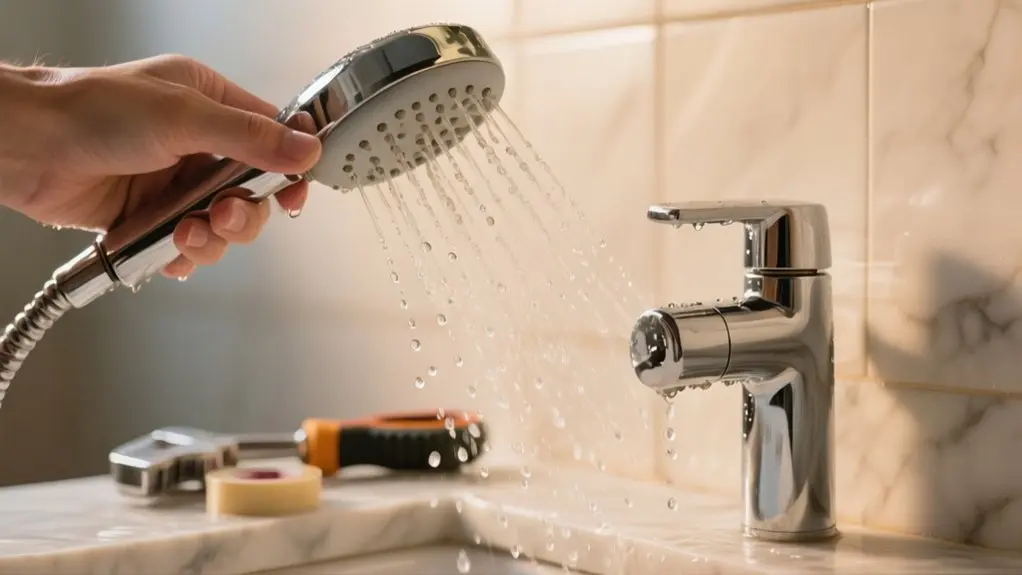
How To Fix Hot Water Pressure In Shower – Smart Tips
To fix low hot water pressure in your shower, first check for sediment buildup in the showerhead and water heater. Then clean or descale as needed.
Confirm all valves, especially the inlet supply and pressure regulators, are fully open and properly adjusted. Inspect pipes for leaks and replace malfunctioning shower valves.
Adjust your water heater temperature between 120°F and 140°F to optimize flow. If problems persist, consider upgrading your showerhead or consulting a professional.
More practical tips can help you restore strong pressure efficiently.
Why Is My Hot Water Pressure Low?
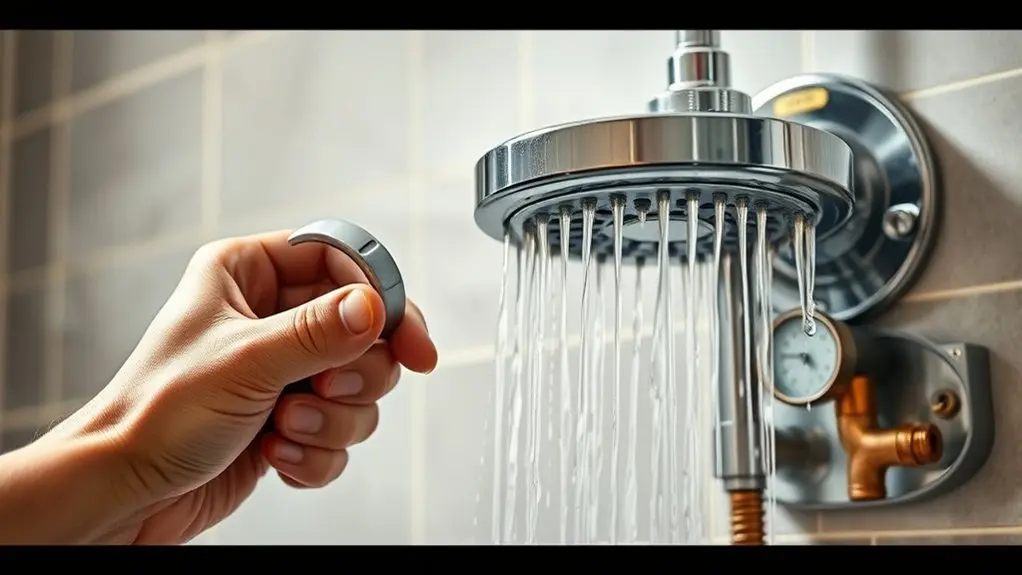
Why is your hot water pressure low in the shower? Several factors within your plumbing systems can cause pressure reduction.
Sediment buildup in the water heater restricts water flow, directly lowering hot water pressure.
A malfunctioning shower valve may fail to mix hot and cold water correctly, diminishing the hot water supply. Closed or partially opened valves along the hot water supply line also reduce pressure by limiting flow.
Furthermore, if you have a low-flow showerhead installed, it restricts water volume, impacting perceived pressure.
Don’t overlook leaks in pipes; even small leaks divert water, causing noticeable pressure loss.
Addressing these issues requires systematic inspection of valves, shower valve function, and potential sediment accumulation to restore ideal hot water pressure in your shower.
How to Test Your Shower’s Hot Water Pressure
First, grab a pressure gauge and attach it to your showerhead to measure the hot water flow. If you don’t have one, no worries—just time how long it takes to fill up a one-gallon bucket.
Once you have that number, do the same test with the cold water.
Comparing the two readings is super helpful because it shows whether the problem is just with your hot water or if it’s something affecting your entire plumbing system.
This way, you can figure out exactly where the issue is coming from.
Measuring Hot Water Flow
Although measuring your shower’s hot water pressure might seem straightforward, it requires specific tools and methods to get accurate results. Start by attaching a pressure gauge rated for standard household pressure (40-60 psi) to the showerhead or nearby faucet. This lets you directly measure hot water pressure.
Next, perform a flow rate test by timing how long it takes to fill a 1-gallon container; 24 seconds equals a normal flow rate of 2.5 gallons per minute. Test at different times to account for household pressure variations.
If pressure or flow rate is low, inspect the showerhead for sediment buildup and clean the showerhead and its cartridge. Sediment can restrict flow and reduce hot water pressure, so maintaining clear fixtures guarantees accurate measurement and peak performance.
Comparing Hot And Cold
When you compare hot and cold water pressures in your shower, you can pinpoint issues affecting hot water flow. Start by running both hot and cold water simultaneously and observe the flow rate. A significant drop in hot water pressure compared to cold often indicates problems in your water heater or plumbing.
Use a pressure gauge attached to the showerhead to measure hot water pressure directly, aiming for 45-60 psi for peak performance.
Inspect the water heater for sediment buildup, which can restrict flow and reduce pressure.
Furthermore, check the shower valve for wear or damage, as a faulty valve may require repair or replacement to restore proper hot water pressure.
This method guarantees accurate diagnosis and effective fixes for your shower’s hot water issues.
How to Clean and Descale Your Showerhead
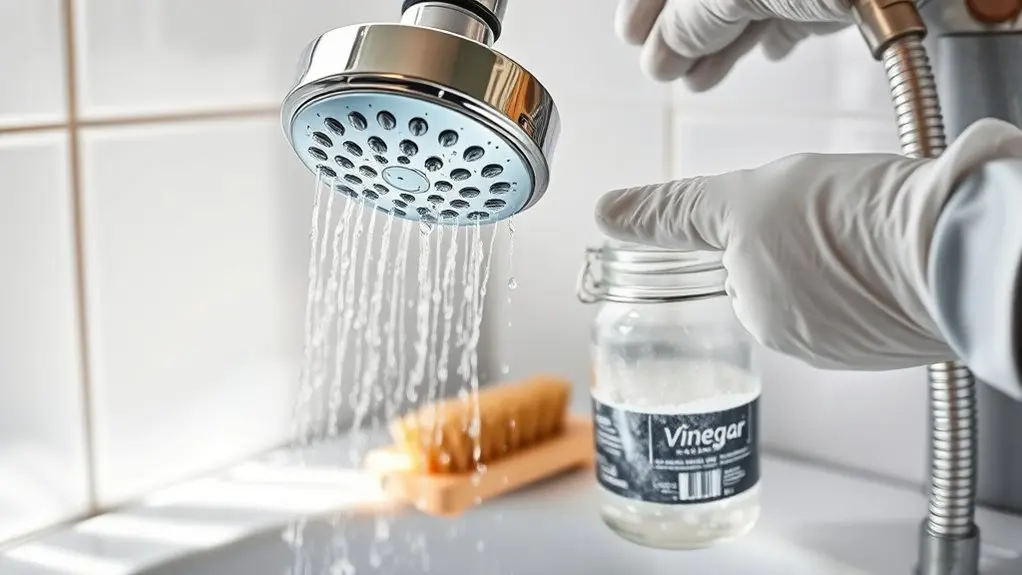
Start by taking off your showerhead and soaking it in a 50/50 mix of white vinegar and water.
Let it sit for at least 30 minutes so the vinegar can work on dissolving those stubborn mineral deposits. This vinegar soak really helps break down the buildup that’s been restricting your water flow.
Once it’s done soaking, you’ll be all set to scrub away and clear out any leftover blockages.
This step ensures you get the best water pressure possible.
Removing Mineral Deposits
If you want to restore your shower’s water pressure, you need to remove mineral deposits that clog the showerhead.
Begin by soaking the shower head in a solution of equal parts white vinegar and water for at least 30 minutes to dissolve buildup.
After soaking, use a toothbrush or soft cloth for thorough cleaning, targeting clogged spray holes to guarantee ideal water flow.
For stubborn blockages, carefully use a safety pin to clear nozzles.
Mineral deposits accumulate over time, reducing water pressure and efficiency.
Performing regular maintenance every few months prevents extensive clogging.
If deposits persist and cleaning fails to restore pressure, consider replacing your shower head with a high-pressure model designed to minimize mineral buildup and maintain consistent water flow.
Vinegar Soak Method
One effective way to remove mineral deposits from your showerhead is by soaking it in white vinegar for at least 30 minutes. Vinegar’s acidity dissolves scale buildup that restricts water flow, restoring ideal pressure.
For stubborn clogs, soak the showerhead overnight to guarantee thorough cleaning. After soaking, use a soft brush or toothbrush to scrub nozzles and openings, removing any remaining debris.
Rinse the showerhead thoroughly with hot water to eliminate vinegar residue before reattaching it.
Regular vinegar soaking every few months prevents mineral deposits from accumulating, maintaining consistent water flow and pressure.
This practical cleaning method extends your showerhead’s lifespan and guarantees efficient operation without harsh chemicals, making vinegar soaking a reliable solution to keep your showerhead free of scale buildup and functioning at peak performance.
How to Adjust Your Water Heater for Better Pressure
Several adjustments to your water heater can greatly improve your shower’s hot water pressure. Start by ensuring the temperature setting is between 120°F and 140°F for ideal pressure and safety.
Next, confirm the inlet supply valve is fully open to allow maximum flow into the water heater.
Regularly flush the unit to remove sediment buildup, which restricts water flow rates and decreases hot water pressure.
Inspect the pressure relief valve; if it’s malfunctioning, replace it to maintain proper pressure.
If your water heater includes a pressure regulator, carefully adjust it to boost pressure without exceeding safe limits, typically 60 PSI.
How to Inspect Hot Water Pipes and Valves for Leaks
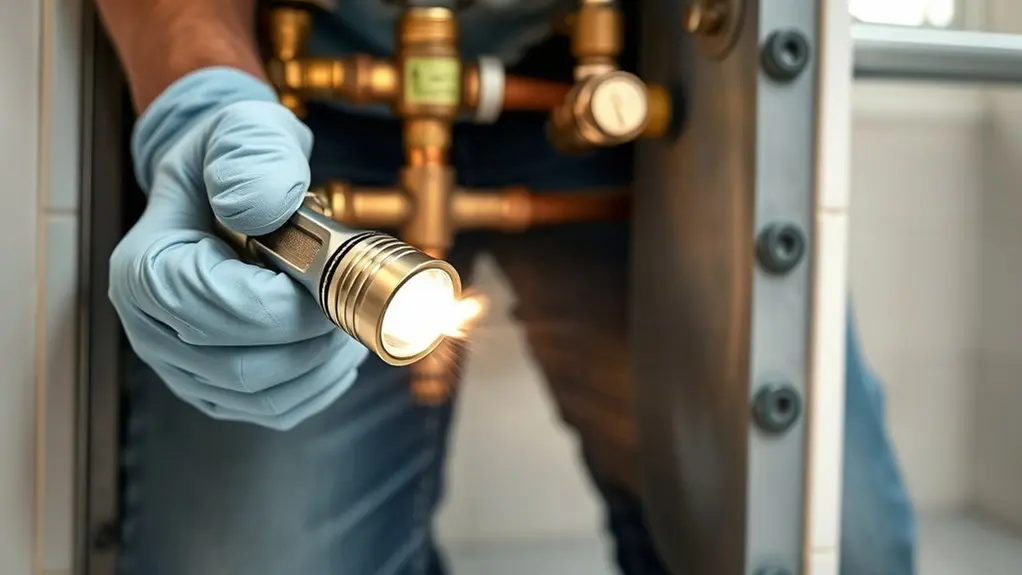
Improving your water heater settings can only do so much if leaks or blockages exist in the hot water pipes and valves. To maintain ideal hot water pressure, you must inspect the plumbing system carefully.
Start by examining visible pipes for corrosion or moisture, and verify the shutoff valve is fully open to avoid restricting flow. Use a pressure gauge to confirm the pressure is within 40-60 psi.
Check joints and fittings for leaks that reduce pressure and increase water bills. Monitor the water heater for sediment buildup, which can impair pressure delivery.
| Component | What to Inspect | Effect on Hot Water Pressure |
|---|---|---|
| Pipes | Corrosion, leaks, moisture | Pressure loss, damage |
| Shutoff Valve | Fully open status | Flow restriction |
| Joints/Fittings | Leaks, drips | Pressure drops |
| Pressure Gauge | Pressure reading | Confirms adequate pressure |
| Water Heater | Sediment buildup | Reduced pressure delivery |
Flush Sediment to Improve Hot Water Pressure
Although your water heater works continuously to supply hot water, sediment buildup inside the tank can restrict flow and reduce pressure. To improve hot water pressure, you need to flush sediment regularly, removing mineral buildup that causes sediment accumulation.
Start by turning off the water heater and attaching a garden hose to the drain valve. Drain the tank completely, then refill it to clear out deposits. This process supports efficient operation and prevents damage caused by overheating.
Flushing sediment every six months helps maintain peak performance.
Always consult the manufacturer’s instructions or hire a professional plumber to guarantee you follow the best flushing practices tailored to your water heater model. Proper sediment flushing is essential to improve water pressure and prolong your system’s lifespan.
How to Remove or Modify the Showerhead Flow Restrictor
Flushing sediment from your water heater can enhance overall flow, but if your hot water pressure remains low, the showerhead’s flow restrictor might be limiting output. The flow restrictor is a small plastic disk inside the showerhead that limits water flow to 2.5 gallons per minute (GPM) to conserve water and energy.
To improve flow, first remove the showerhead using pliers. Wrap a cloth around the connection to avoid scratches. Then locate and remove or modify the restrictor carefully.
Before proceeding, check local regulations to verify compliance, as some areas prohibit altering flow restrictors to conserve water.
Once reassembled, test the water pressure to confirm improved flow without exceeding the recommended household pressure range of 40-60 psi. This practical step can boost your shower’s water pressure effectively.
Upgrade Your Showerhead or Add a Booster Pump to Boost Hot Water Pressure
When you want a noticeable boost in your hot water pressure, upgrading to a high-pressure showerhead or installing a booster pump offers effective solutions.
Upgrade your showerhead to a high-pressure model that uses smaller nozzles and air infusion technology to enhance flow rate while maintaining peak performance at around 2.5 gallons per minute. This guarantees a strong, consistent flow without wasting water.
If your municipal supply pressure is low or your plumbing is outdated, adding a booster pump can increase pressure levels up to 60 psi, delivering robust hot water pressure even during peak usage.
Don’t forget to address sediment buildup in your hot water heater regularly, as this complements these upgrades by improving system efficiency and sustaining consistent flow throughout your shower system.
When to Call a Plumber for Persistent Hot Water Pressure Issues
Why does your hot water pressure remain low despite your efforts to clean clogs and open valves?
Persistent issues often indicate a malfunctioning water heater or sediment buildup restricting flow.
If you notice fluctuating pressure or if hot water pressure is consistently lower than cold, the problem might lie within the internal shower valve or mixing valve.
Unusual noises from the heater also signal mineral buildup affecting performance.
At this point, you need a plumber’s professional assessment to diagnose and fix the root cause.
Attempting repairs without expertise can worsen issues.
When persistent hot water pressure problems continue despite basic troubleshooting, calling a plumber guarantees accurate diagnosis, safe flushing of sediment buildup, and repair or replacement of faulty components to restore ideal water pressure.
Frequently Asked Questions
Can Cold Water Pressure Affect My Hot Water Pressure?
Yes, cold water pressure directly affects your hot water pressure by impacting the overall pressure balance in your plumbing system.
Low cold water pressure reduces water flow into your heater, causing temperature fluctuations and weak hot water output.
Showerhead restrictions, pipe diameter, and clogged faucet aerators can make this worse.
Regular fixture maintenance and checking pressure regulators help prevent plumbing issues.
Making sure cold water pressure is proper helps maintain consistent hot water pressure and ideal shower performance.
Does Water Pressure Affect Water Heater Lifespan?
Think of your water heater as a heart pumping against pressure tides. Yes, water pressure directly affects your water heater’s lifespan factors.
High pressure strains components, causing wear and plumbing issues, while pressure fluctuations force temperature regulation systems to work harder, reducing energy efficiency.
Following installation guidelines and regular maintenance tips, like installing a pressure-reducing valve, helps keep pressure stable, extending lifespan and minimizing costly repairs or replacements.
How Does Hard Water Impact Shower Water Pressure?
Hard water causes mineral buildup inside your pipes and showerhead, leading to pressure fluctuations and reduced flow rate.
This buildup restricts water flow and can accelerate pipe corrosion, which further impacts pressure.
Regular showerhead maintenance and plumbing inspections help identify blockages early.
Using appropriate cleaning solutions and considering fixture upgrades improve water quality and restore pressure.
Addressing hard water effects is essential to maintain consistent hot water flow and extend your system’s lifespan.
Are Tankless Water Heaters Better for Pressure Issues?
Think of a tankless water heater like a high-performance sports car. It delivers power precisely when you need it.
You’ll notice tankless benefits in pressure comparisons, as their consistent flow rate avoids drops common in tank systems.
While installation challenges and cost analysis matter, their energy efficiency, size options, and longer lifespan differences often outweigh them.
Just follow maintenance tips to prevent mineral buildup. User experiences confirm they’re a smart fix for pressure issues.
Can Water Softeners Improve Hot Water Pressure?
Yes, water softeners can improve hot water pressure by reducing mineral buildup that restricts water flow.
To optimize pressure, check pressure regulators, valve issues, and pipe diameter.
Also, inspect showerhead types and faucet aerators, as clogged fixtures reduce flow.
Address plumbing leaks and drainage problems promptly.
Integrate filter systems to maintain cleaner pipes, and follow maintenance tips regularly.
This thorough approach guarantees steady hot water pressure in your shower.
Conclusion
Low hot water pressure can feel frustrating, yet with clear steps, it’s fixable. You might start by cleaning your showerhead or flushing sediment—small tasks with big impact.
If pressure still lags, adjusting your water heater or inspecting pipes can make a world of difference. Sometimes, a simple upgrade or calling a plumber is the smartest move.
Balancing DIY fixes with professional help guarantees your shower flows strong and steady every time.