How Does A Kohler Toilet Fill Valve Work – Overview
Your Kohler toilet fill valve regulates water flow by opening right after a flush. It’s controlled by an adjustable float mechanism that senses the tank’s water level. As water rises, the float signals the valve to shut off, ensuring efficient refills without overflow.
It includes a flow restrictor for consistent pressure and adjustable height for different tanks. Proper maintenance, including flushing the valve, prevents leaks and running water. Explore further to understand troubleshooting, installation, and replacement essentials.
How Your Kohler Fill Valve Controls Water Flow
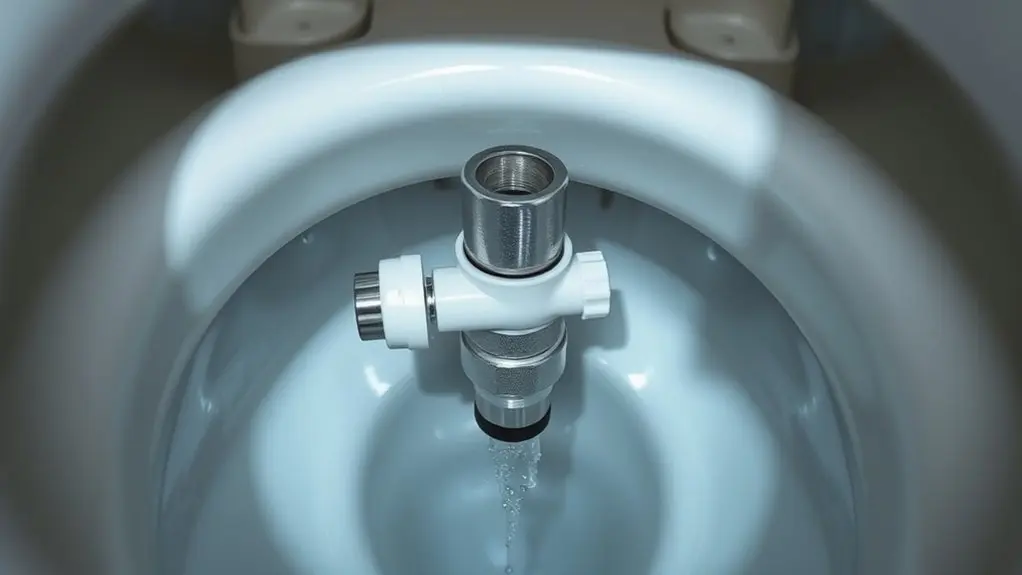
A Kohler fill valve precisely controls the water inflow into your toilet tank after each flush, guaranteeing the tank refills efficiently to the correct level. It regulates water flow by opening immediately post-flush, allowing water to enter the toilet tank at a controlled rate.
The fill valve incorporates a flow restrictor, maintaining consistent pressure and preventing excessive water use. You can adjust the valve height to suit different tank designs or preferred water levels, optimizing refill speed and functionality.
For reliable operation, regular maintenance is essential. Flushing the fill valve removes debris or sediment that can impair water flow, cause slow refills, or continuous running.
Proper upkeep guarantees the fill valve consistently delivers precise water control, enhancing your toilet’s performance and conserving water.
How the Float Mechanism Refills the Tank
When the water level in the toilet tank drops after a flush, the float mechanism detects this change and signals the fill valve to activate. As the water drains from the tank, the float, either a ball or cup type, lowers accordingly.
This movement triggers the fill valve to open, starting the refill process. Water flows into the tank, raising the water level and the float. The float mechanism’s buoyancy makes sure it rises in direct relation to the water level.
This precise feedback loop lets the fill valve maintain effective refilling without overflow. You can adjust the float’s height to customize the tank’s water level for specific needs, ensuring ideal performance tailored to your Kohler toilet model.
How Your Kohler Fill Valve Knows When to Stop
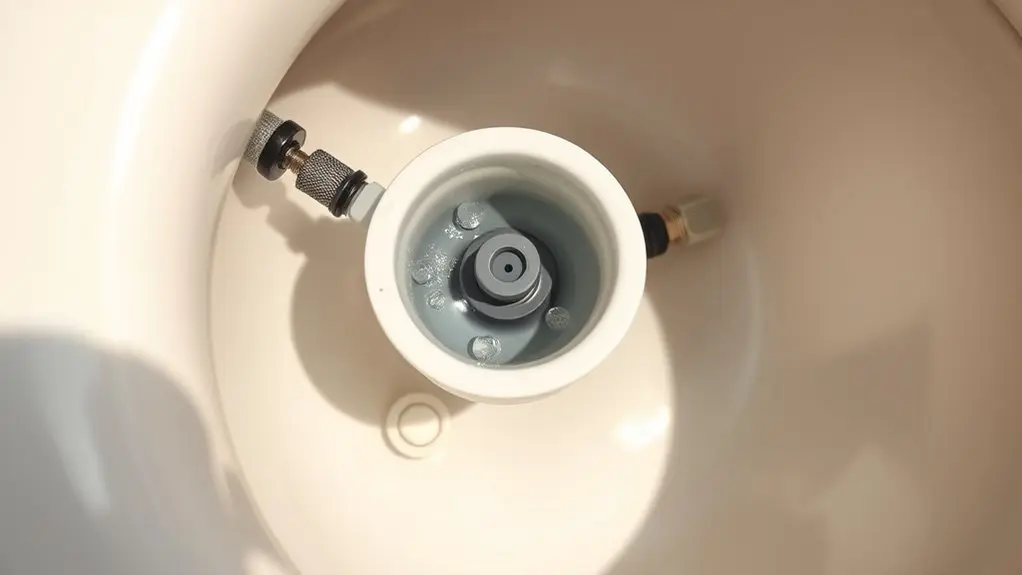
You rely on the float mechanism to tell you when the tank has reached its perfect water level. As the water rises, so does the float, and when it gets high enough, it signals the fill valve to shut off. This stops the tank from overfilling.
It’s a simple but smart system that helps make sure water is used efficiently and the tank works just right every time.
Float Mechanism Function
The float mechanism controls the water level in your Kohler toilet tank by monitoring its height during refill. As the tank empties, the float drops, activating the fill valve to admit water.
When the water level reaches a preset height, the float rises, signaling the fill valve to shut off, stopping water flow precisely.
You can adjust the float’s position to calibrate the water level for ideal performance and to prevent overflow. Proper maintenance of the float mechanism is essential; debris or wear can impair its responsiveness, causing constant running or incomplete tank refill.
Water Level Control
Maintaining the proper water level within your Kohler toilet tank relies on the precise interaction between the float mechanism and the fill valve. As water refills the tank post-flush, the float rises with the increasing water level, signaling the fill valve to cease water flow at the predetermined point, thereby preventing overflow.
You can adjust the fill valve’s height to suit your tank’s specifications, ensuring ideal performance.
Key aspects of water level control include:
- Float mechanism movement triggers fill valve activation and shutoff.
- Adjustable fill valve height sets the target water level.
- Routine maintenance sustains fill valve responsiveness and accuracy.
Troubleshooting Common Kohler Fill Valve Issues
Anyone troubleshooting common Kohler fill valve issues will quickly notice that persistent running water, unusual noises, or improper tank refilling often indicate underlying valve malfunctions.
To troubleshoot, first verify the water supply is fully open and check for debris obstructing the fill valve.
Cleaning the valve components can restore proper function. Next, inspect and adjust the trip lever chain to prevent overfilling or continuous water flow.
Regular maintenance, including periodic flushing of the fill valve, minimizes sediment buildup that causes leaks or noise.
If problems persist, identify your Kohler model to source compatible replacement parts, as worn components often require substitution.
How to Flush Your Kohler Fill Valve
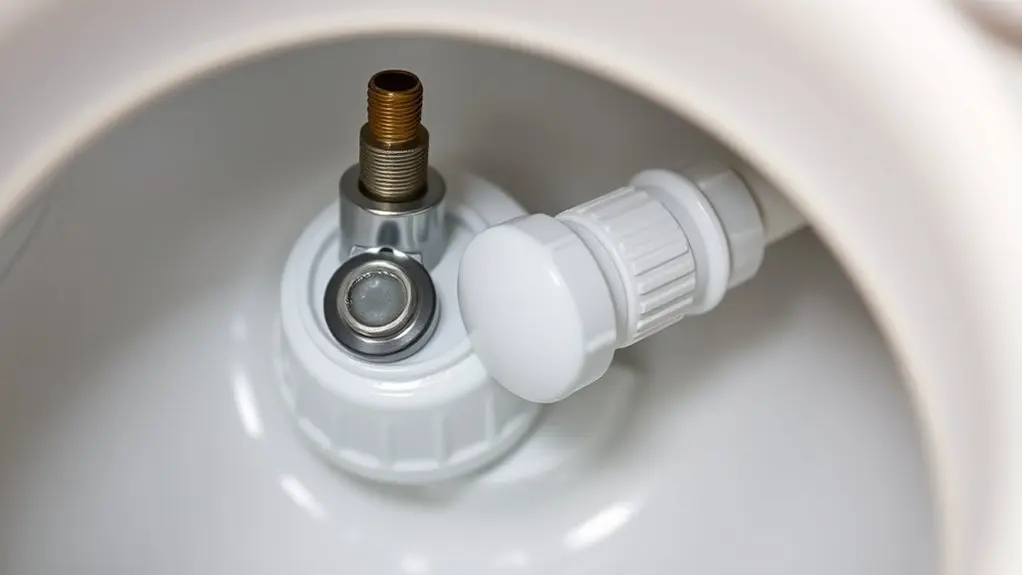
After troubleshooting common fill valve issues, flushing your Kohler fill valve can clear out debris or sediment that hinders proper function. This simple maintenance step boosts water flow and stops improper refilling or continuous running.
To flush the fill valve effectively, follow these steps:
- Turn off the water supply and flush the toilet to empty the tank.
- Use a plastic cup to pour water directly into the fill valve, dislodging trapped sediment.
- Turn the water supply back on and watch the valve’s operation for any irregularities.
This process takes under 10 minutes and requires no specialized tools.
Regularly flushing your Kohler fill valve keeps it working at its best and extends the lifespan of its parts, ensuring efficient water use and reliable toilet function.
How Flushing the Fill Valve Prevents Leaks and Running Toilets
Because sediment and debris can accumulate inside the fill valve, flushing it regularly prevents blockages that lead to leaks or continuous running. When you flush the fill valve, you clear debris that might obstruct water flow from the water supply line, ensuring the valve seats properly.
This maintenance is vital because any blockage can disrupt the coordination between the fill valve and the flush valve, causing water to leak into the bowl or run continuously.
By performing this simple flush valve cleaning, you maintain peak valve function and prevent excessive noise caused by water cycling unnecessarily.
Regular maintenance not only improves efficiency but also extends the lifespan of your Kohler toilet’s components, avoiding costly repairs associated with leaks or malfunctions.
When to Replace Your Kohler Fill Valve
You should replace your Kohler fill valve if you notice continuous running, slow tank refilling, fluctuating water levels, or unusual noises. These signs usually mean the valve isn’t working the way it should.
Before you start, make sure you have the right tools and parts on hand. This includes a fill valve that’s compatible with your model, flow restrictors, and rubber shank washers.
One important step is to find the stamped model number inside the tank. This helps you get the exact parts you need for a smooth and effective repair.
Signs of Replacement
When your Kohler fill valve causes the toilet to run continuously or the tank to refill unusually slowly, it signals a need for replacement. These symptoms indicate the fill valve is malfunctioning and failing to regulate water flow properly, impacting the tank refill efficiency.
You should inspect the valve for these specific signs:
- Constant water flow into the tank, preventing shutoff
- Extended tank refill times after flushing
- Fluctuating water levels or unusual noises like hissing or gurgling
Identifying these symptoms early helps you avoid water waste and potential damage.
Timely replacement guarantees the fill valve maintains peak functionality, preserving your toilet’s performance and preventing further complications.
Keep an analytical approach to monitoring these indicators for effective maintenance.
Replacement Tools Needed
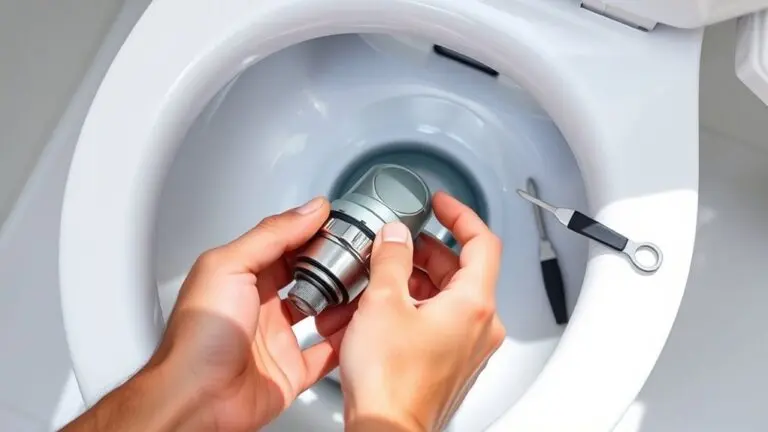
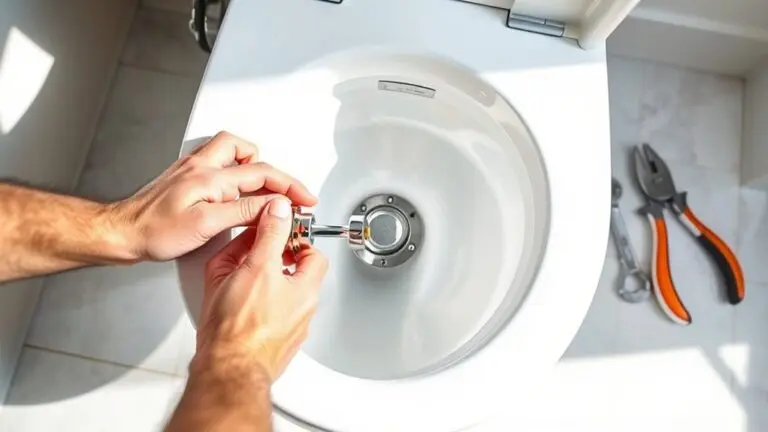
Effective replacement of a Kohler fill valve requires a specific set of tools to guarantee a secure and efficient installation. To replace the valve properly, you’ll need an adjustable wrench to loosen water connections without damaging fittings.
A bucket is essential to catch residual water during the removal process, preventing spills.
Use a sponge or scrub brush to clean the tank before installing the new fill valve, making sure debris doesn’t interfere with valve operation.
Moreover, have a rubber shank washer on hand to create a proper seal and prevent leaks.
Confirm the new valve matches your toilet model by checking the stamped number inside the tank.
These tools and materials streamline maintenance and ensure reliable valve performance after replacement.
Frequently Asked Questions
What Materials Are Kohler Fill Valves Made From?
Kohler fill valves are made from durable materials like plastic and brass to resist corrosion and guarantee longevity.
You’ll find rubber washers and gaskets that create watertight seals, preventing leaks.
The float mechanism usually uses high-density polyethylene, which offers both buoyancy and durability.
Some models incorporate engineered polymers to enhance performance and reduce wear.
These materials allow the valve to handle varying water pressures reliably in your household plumbing.
Can Kohler Fill Valves Be Used in All Toilet Models?
Kohler fill valves aren’t universal, aren’t one-size-fits-all, and aren’t compatible with every toilet model. You need to verify your toilet’s model number and check the fill valve’s height and configuration before purchasing.
While Kohler provides options tailored to various flushing mechanisms and water standards, mismatched designs or specifications can prevent proper installation or function.
Always consult compatibility guidelines and installation instructions to guarantee you select the right fill valve for your toilet.
How Long Does a Kohler Fill Valve Typically Last?
A Kohler fill valve typically lasts between 3 to 5 years, depending on your water quality and usage frequency.
Sediment buildup and corrosion can shorten its lifespan, so you’ll want to perform regular maintenance like cleaning or flushing the valve.
Newer Kohler models offer enhanced durability and efficiency, but once you notice any malfunction, replace the valve promptly to avoid toilet performance issues and unnecessary water waste.
Are Kohler Fill Valves Environmentally Friendly?
Wondering if Kohler fill valves are environmentally friendly? Absolutely.
They’re engineered to reduce water waste with built-in flow restrictors and adjustable water levels, so you control usage efficiently.
Their durable materials resist corrosion, extending lifespan and minimizing replacements, which further reduces environmental impact.
By optimizing each refill, you actively conserve water, supporting sustainability.
Do Kohler Fill Valves Require Professional Installation?
No, Kohler fill valves don’t require professional installation. You can replace them yourself using basic tools like an adjustable wrench and screwdriver. The valves come with clear instructions and all necessary components, making DIY installation straightforward.
However, you should be comfortable with basic plumbing tasks to guarantee proper setup.
If you encounter persistent issues or complications, consulting a professional plumber is advisable to avoid further damage or malfunction.
Conclusion
Understanding how your Kohler toilet fill valve works gives you precise control over water flow and prevents common issues. You might worry that flushing the valve sounds complicated, but it’s actually a quick, straightforward step that clears debris and stops leaks before they start.
Regular maintenance guarantees your toilet operates efficiently, saving water and avoiding costly repairs. Don’t wait for failure. Stay ahead by inspecting and servicing your fill valve promptly.