Can You Shower With A Foley Catheter – Find Out
Yes, you can shower with a Foley catheter, but you must protect the catheter and insertion site. Use a waterproof cover and secure the tubing to avoid tugging or accidental dislodgment.
Clean the area gently with mild soap and water, and avoid submerging the catheter in baths or hot tubs to reduce infection risk. Monitor for any signs of irritation or leaks, and consult your healthcare provider for personalized guidance.
Understanding proper care helps guarantee safe showering practices.
Can You Safely Shower With a Foley Catheter?

How can you safely shower with a Foley catheter in place?
You can shower with a urinary catheter, but avoid submerging the catheter and leg bag in water, such as during baths. Guarantee the urinary catheter and leg bag are securely positioned to prevent pulling or tugging while showering.
Shower safely with a urinary catheter by keeping it secure and avoiding submersion in water like baths.
Using a waterproof cover for the leg bag helps protect it from water exposure.
During your shower, gently cleanse the catheter insertion site with mild soap and water to maintain hygiene and reduce infection risk. Avoid harsh soaps or vigorous scrubbing around the catheter.
Always consult your healthcare provider for tailored advice regarding showering with a Foley catheter, as individual circumstances may require specific precautions to guarantee safety and catheter integrity.
How a Foley Catheter Works
A Foley catheter works by draining urine from your bladder through a tube that’s gently inserted into your urethra. This tube then directs the urine into an external collection bag.
At the tip of the catheter, there’s a small balloon that gets inflated with sterile water. This balloon helps keep the catheter securely in place inside your bladder, so it doesn’t move around.
Knowing how this works can make it easier for you to manage the catheter day-to-day.
It also helps you understand why it’s important during activities like showering, so you can take care of it properly.
Catheter Function Explained
Understanding the function of a Foley catheter is essential for managing urinary drainage effectively. This catheter type is inserted through the urethra into the bladder, allowing continuous urine drainage into a collection bag. It’s commonly used for those with urinary retention, neurological disorders, or post-surgery care.
Maintaining urinary health requires strict adherence to cleaning protocols around the catheter site to prevent infections. Proper handling during daily activities supports infection prevention and catheter function.
Although Foley catheters often remain in place for up to three months, the duration varies based on your medical needs. Familiarity with catheter types and their functions helps you manage care confidently while minimizing complications associated with long-term use.
Balloon Mechanism Role
Proper catheter function relies not only on its placement but also on the balloon mechanism that secures it within the bladder. The Foley catheter features a water-filled balloon at its tip, which is inflated after insertion using precise balloon inflation techniques to prevent displacement.
Typically, balloon sizes range from 5 to 30 milliliters based on patient needs. Following catheter positioning tips guarantees the balloon rests correctly, allowing urine to flow freely into the collection bag without causing discomfort or injury.
Before removal, deflating the balloon is crucial to avoid trauma to the bladder or urethra. Adhering to balloon maintenance practices, including regular integrity assessments, helps prevent complications such as leakage or blockage, ensuring the catheter functions safely and effectively throughout its use.
How to Protect Your Foley Catheter in the Shower
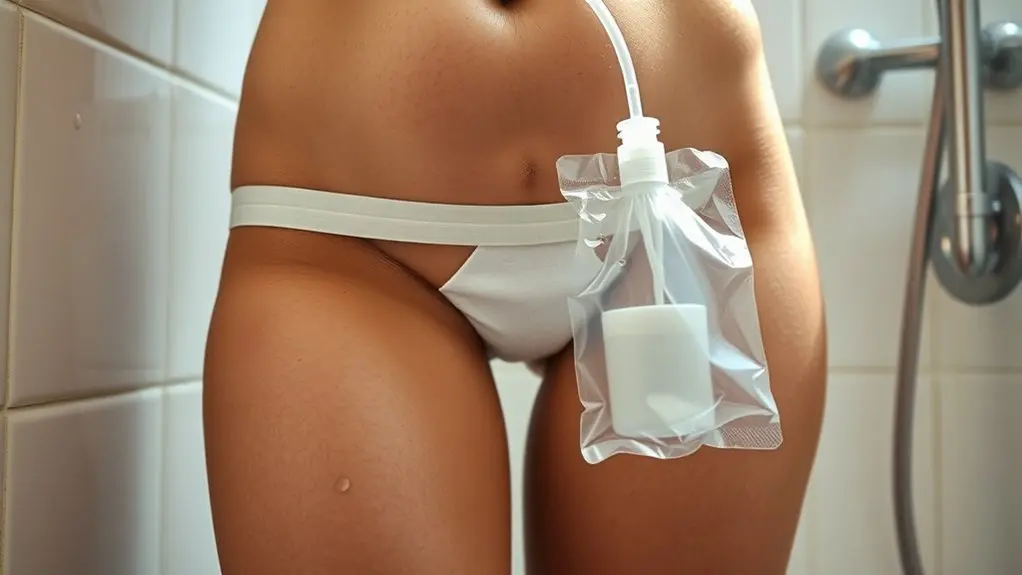
Before you hop in the shower, it’s a good idea to cover your Foley catheter and the connection site with a waterproof dressing. This helps keep water from getting in.
Make sure to secure the catheter tubing so it doesn’t get pulled or accidentally dislodged when you move around.
Once you’re done showering, take a moment to check the site for any signs of irritation.
If needed, replace the waterproof covering to keep everything clean and protected.
Waterproof Covering Options
Although showering with a Foley catheter requires caution, using waterproof coverings can effectively protect the catheter from water exposure. You can use specialized catheter covers made from waterproof materials or plastic wrap to shield the catheter during showering.
Verify the covering is securely fastened to prevent water infiltration, which can increase infection risk. Some manufacturers provide waterproof pouches designed specifically for Foley catheters, combining protection with comfort.
Before each shower, check the integrity of your chosen waterproof covering to confirm it remains intact.
After showering, perform catheter maintenance by inspecting the insertion site for moisture or irritation.
Promptly consult your healthcare provider if you notice any abnormalities. Adopting these showering techniques helps maintain catheter hygiene and reduces complications related to water exposure.
Securing Catheter Tubing
Protecting your Foley catheter during showering involves more than just waterproof coverings; securing the catheter tubing properly is equally important to prevent accidental tugging or dislodgment.
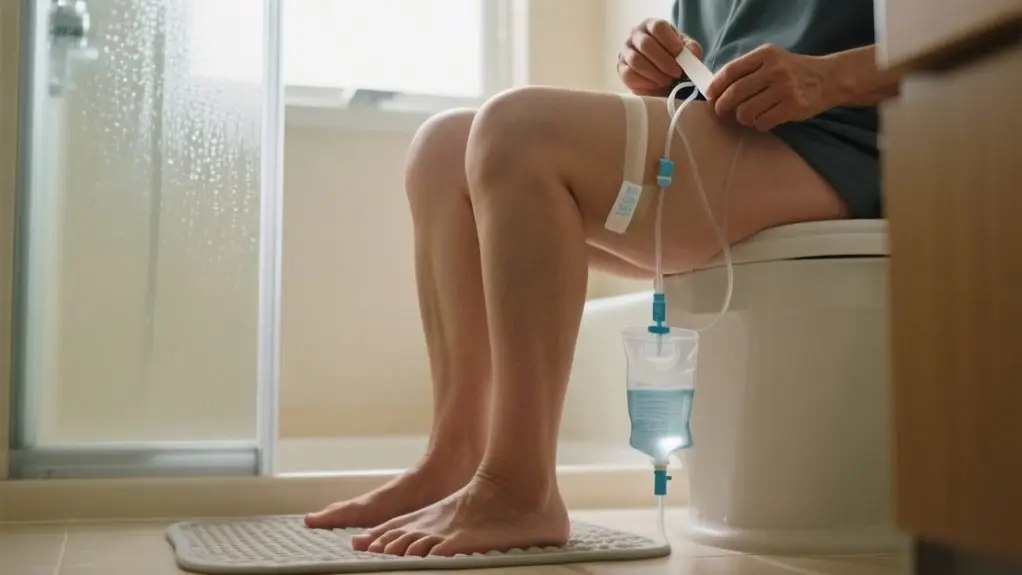
Before you shower, use a securement device or medical tape to fasten the catheter tubing to your leg. This tubing organization reduces the risk of snagging and keeps the tubing close to your body.
Confirm the drainage bag stays below bladder level to promote proper urine flow and prevent backflow.
Avoid letting the tubing hang freely, as this increases the chance of pulling, which compromises catheter maintenance and shower safety.
After showering, recheck the securement and catheter site for irritation or infection to maintain ideal hygiene and catheter function.
Post-Shower Hygiene Tips
When you finish showering, take care to clean the area around your Foley catheter with mild soap and water to reduce the risk of infection.
Effective post-shower care involves thorough hygiene practices that focus on maintaining catheter cleanliness and skin integrity.
After cleaning, inspect the catheter for leaks or blockages and make sure the drainage bag stays positioned below the bladder to help proper drainage.
Avoid soaking in baths or hot tubs since this increases infection risk.
Consistently securing the catheter tubing before showering helps prevent tugging and accidental displacement.
Using a waterproof cover protects the catheter and drainage bag from moisture, which supports catheter maintenance.
Following these post-shower care steps optimizes hygiene and minimizes complications linked to Foley catheter use.
Tips for Keeping Your Foley Catheter Clean and Infection-Free

Maintaining cleanliness around your Foley catheter is crucial to prevent infections. For effective catheter care, clean the skin surrounding the catheter exit site twice daily using mild soap and water.
Always wash your hands thoroughly before and after handling the catheter to uphold strict hygiene practices. After cleaning, gently wipe the area with a clean, dry cloth to keep it moisture-free, which supports infection prevention.
Thoroughly wash hands before and after catheter care; keep the area dry to prevent infection.
Avoid applying antibacterial ointments or creams unless specifically advised by your healthcare provider.
Regularly inspect the catheter site for redness, swelling, or discharge, as these signs may indicate infection.
Following these precise steps helps minimize infection risk and guarantees proper catheter maintenance.
Consistent adherence to these hygiene practices is essential for maintaining your overall health while using a Foley catheter.
Activities to Avoid When Showering With a Foley Catheter
Although showering with a Foley catheter is possible, you need to avoid several activities that increase infection risk or could dislodge the catheter.
Prioritize catheter care by never submerging the catheter or insertion site in water, which compromises infection prevention.
Avoid using bath oils, strongly scented soaps, or lotions, as these can irritate the catheter area or introduce bacteria.
Maintain shower safety by ensuring the catheter is secure; a loose catheter may be pulled or dislodged during washing.
Also, don’t direct the showerhead spray onto the catheter or drainage bag to minimize contamination risk.
If necessary, cover both the catheter and drainage bag with a waterproof barrier to keep them dry and safeguard catheter care throughout your shower.
When Should You Call Your Doctor After Showering?
How do you know if your shower routine has affected your Foley catheter health? Maintaining proper catheter care and shower safety means monitoring symptoms closely. You should call your doctor immediately if you notice any concerning changes after showering.
Key signs to watch for include unusual discharge or foul odor from the catheter site, increased pain or discomfort around the insertion area, presence of blood in your urine, or minimal or absent urine flow for several hours.
Additionally, be alert for systemic symptoms like fever or chills, which may indicate infection. Early symptom awareness is vital to prevent complications and guarantee effective catheter management.
Don’t hesitate to contact your healthcare provider if any of these signs appear after showering.
Adapting Your Shower Routine to Safeguard Your Catheter
To protect your Foley catheter during showers, you should always cover both the catheter and drainage bag with a waterproof barrier to prevent water exposure.
Use shower accessories like a handheld showerhead to control water flow and avoid direct spray on the catheter insertion site.
Maintain a comfortable water temperature, as extremes can cause irritation and affect catheter comfort.
Limit your shower to 10-15 minutes to minimize risks of water infiltration.
After showering, carefully inspect the catheter and drainage system for leaks or blockages to guarantee proper function.
Frequently Asked Questions
Can Swimming Affect a Foley Catheter’s Function?
Yes, swimming can affect a Foley catheter’s function due to water exposure.
When you swim, bacteria from the water may enter the catheter site, increasing infection risk and complicating catheter care.
Chlorinated or saltwater can irritate the urethra and catheter, causing discomfort or malfunction.
For swim safety, you must securely cover the catheter and drainage system to prevent water entry.
Always consult your healthcare provider before swimming to guarantee proper precautions.
Are There Specific Soaps Safe to Use With a Foley Catheter?
You should use mild, unscented soaps when managing catheter hygiene to prevent irritation.
Avoid soaps with harsh chemicals or strong fragrances, as soap ingredient safety is essential in reducing infection risks.
Antimicrobial soaps might be recommended by your healthcare provider for added protection.
When showering, follow proper techniques: gently clean around the catheter site and rinse thoroughly to remove all soap residue, ensuring skin integrity and catheter function.
How Long Can a Foley Catheter Stay in Place Safely?
A stitch in time saves nine: you should keep a Foley catheter in place for up to three months, depending on your healthcare provider’s advice.
Proper catheter maintenance tips, including regular assessments and hygiene practices, are essential to prevent infections.
To enhance patient comfort strategies, monitor for irritation or blockage and report concerns promptly.
Following these steps guarantees safe, effective catheter use and reduces complications during the indwelling period.
Can Foley Catheters Be Used During Exercise or Physical Therapy?
Yes, you can use a Foley catheter during exercise or physical therapy with proper catheter care and exercise safety measures.
Secure the catheter and position the leg bag to prevent tugging or kinks. Wear loose clothing to avoid obstruction and monitor for discomfort or leaks.
Stay hydrated while managing fluid intake.
Always consult your healthcare provider for personalized guidance to guarantee safe participation in physical therapy and exercise while using a Foley catheter.
What Signs Indicate the Catheter Needs to Be Replaced?
You need to replace your catheter if you notice decreased urine output or no flow for over four hours.
Watch for signs of infection like fever, chills, or pain in your back and belly.
Blood in your urine or a foul odor also signals replacement is necessary.
Follow catheter maintenance tips closely and report any visible wear or discomfort.
Prioritizing patient comfort measures helps prevent complications and guarantees proper catheter function.
Conclusion
Showering with a Foley catheter is like traversing a narrow path. You need care and attention to avoid missteps. Just as a tightrope walker uses a balance pole, you must protect your catheter with waterproof covers and gentle handling.
Following these precautions reduces infection risk by up to 50%. By adapting your routine, you maintain hygiene without compromising safety. Always monitor for signs of trouble and consult your doctor promptly if needed.