What Causes A Kohler Engine To Lose Power – Straight Answer
You lose power in your Kohler engine mainly due to fuel issues like clogged filters or contaminated fuel restricting flow. Dirty air filters limit airflow, causing poor combustion.
Faulty ignition parts, such as spark plugs or coils, create misfires and inconsistent sparks. Electrical faults and sensor faults disrupt timing, while engine wear and poor lubrication increase friction and reduce efficiency.
Proper maintenance is essential to avoid these problems. Exploring these causes uncovers how to keep your engine running strong.
Common Fuel Problems That Cause Kohler Engine Power Loss
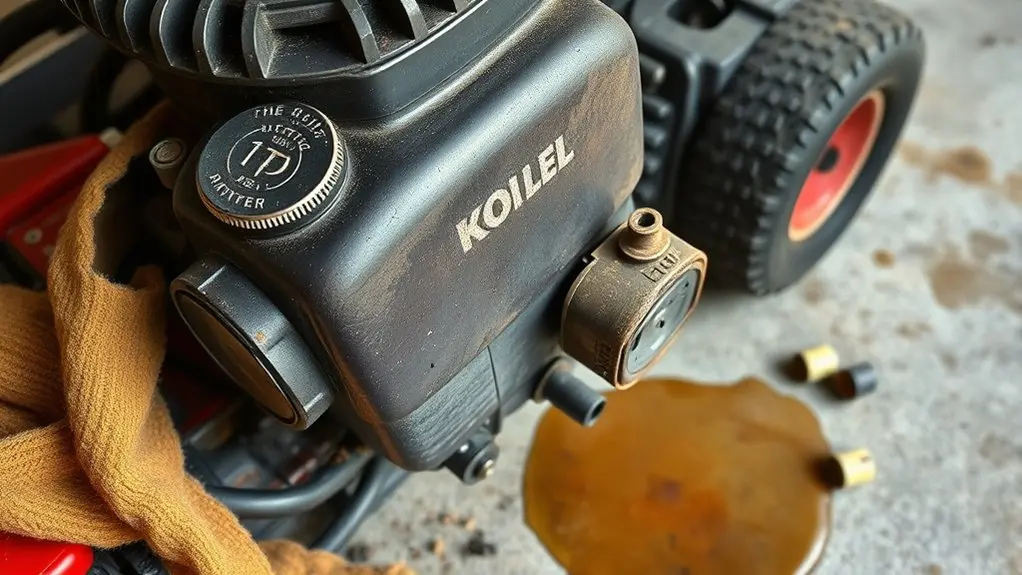
Although Kohler engines are designed for reliability, common fuel-related issues can considerably reduce their power output. You need to inspect fuel filters regularly because clogged filters restrict fuel flow, causing a noticeable drop in engine performance.
Contaminated fuel containing water or debris disrupts combustion efficiency, leading to power loss and potential engine damage. A malfunctioning fuel pump fails to maintain consistent fuel pressure, resulting in erratic power delivery during operation.
Furthermore, an incorrect fuel mixture, especially an improper fuel-to-oil ratio, compromises engine efficiency and reduces power.
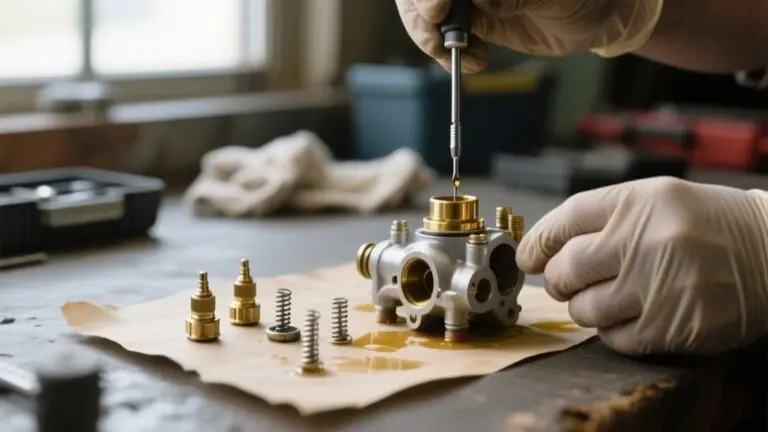
Finally, dirty or poorly adjusted carburetors can alter the air-fuel mixture, directly impacting combustion quality and engine output.
Addressing these fuel system components promptly will help restore and maintain ideal Kohler engine power.
How Dirty Air Filters Affect Kohler Engine Power
When your Kohler engine’s air filter becomes dirty, it restricts airflow, causing a lean fuel mixture that greatly reduces power output.
Dirty air filters limit the volume of air entering the combustion chamber, forcing the engine to work harder and decreasing engine performance. This restricted airflow disrupts ideal fuel combustion, leading to symptoms like sputtering, hard starting, and decreased acceleration.
Dirty air filters reduce airflow, causing sputtering, hard starts, and poor acceleration in your engine.
As the engine struggles, fuel consumption rises, further compromising efficiency. Addressing power loss requires regularly inspecting and cleaning or replacing air filters, especially in dusty environments where contaminants accumulate rapidly.
Maintaining clean air filters guarantees unrestricted airflow, stabilizes the air-fuel ratio, and preserves the Kohler engine’s power and efficiency. Neglecting this essential maintenance step results in notable performance degradation and increased operational costs.
Ignition System Issues That Reduce Kohler Engine Power
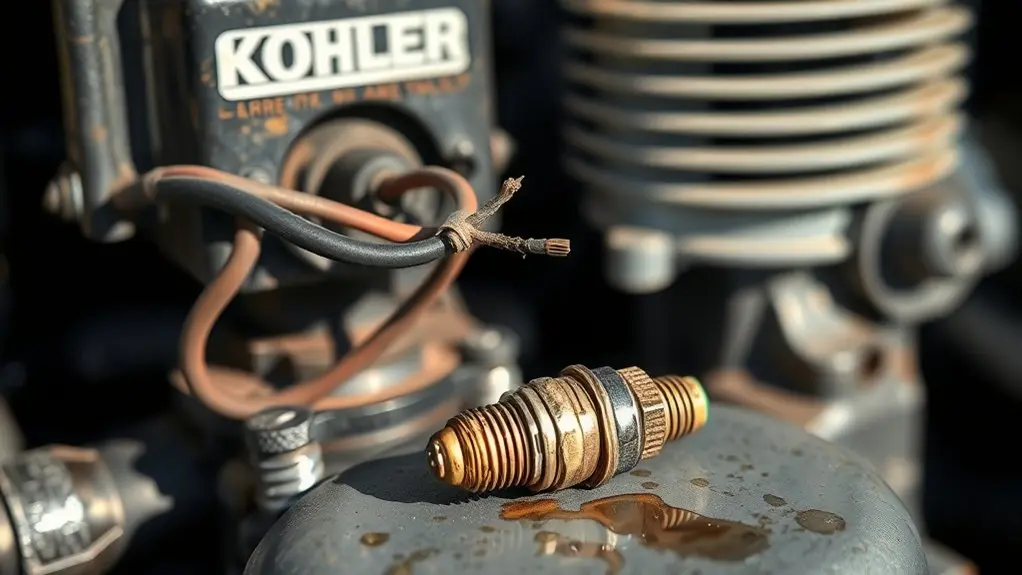
You’ll notice your Kohler engine losing power if the spark plugs misfire or don’t ignite the fuel-air mixture properly. It’s kind of like the engine isn’t getting the right zap at the right time.
A faulty ignition coil can be the culprit behind inconsistent spark delivery, which throws off the whole combustion process. When that happens, your engine just can’t run as smoothly or efficiently.
On top of that, damaged wiring and poor connections can increase resistance. This means the spark isn’t as strong as it should be, which ultimately reduces your engine’s overall performance.
Spark Plug Problems
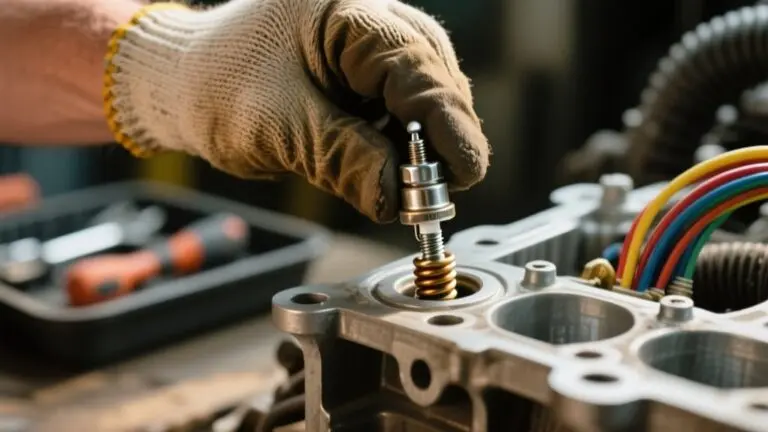
If your Kohler engine is losing power, worn or fouled spark plugs often play a critical role by causing incomplete combustion. When spark plugs accumulate carbon deposits or experience electrode wear, they fail to ignite the air-fuel mixture efficiently, leading to misfire and reduced engine power.
Incorrect spark plug gap makes this worse by disrupting proper ignition timing, causing delayed combustion and engine response lag. These ignition irregularities directly diminish power output and fuel efficiency.
To maintain peak engine performance, you must include spark plug inspection and replacement in your routine maintenance schedule. Ensuring clean, correctly gapped spark plugs preserves consistent ignition timing and prevents misfire, safeguarding your Kohler engine’s power and reliability.
Neglecting these elements inevitably results in a noticeable drop in engine performance.
Faulty Ignition Coil
Although spark plug issues are common culprits, a faulty ignition coil can equally disrupt your Kohler engine’s power by delivering inconsistent sparks. This causes misfiring, rough idling, and difficulty starting, all degrading engine performance.
Testing the coil with a multimeter reveals if resistance values fall outside manufacturer specs, signaling replacement. Overheating, age, and moisture often cause ignition coil failure, reducing spark reliability and power output.
| Symptom | Effect on Engine Performance |
|---|---|
| Misfiring | Interrupts combustion cycles |
| Rough Idling | Causes unstable RPM |
| Difficulty Starting | Prevents efficient ignition |
| Inconsistent Sparks | Reduces power and efficiency |
Regular inspection and timely replacement of a faulty ignition coil maintain peak performance and prevent power loss in your Kohler engine.
Wiring And Connections
When wiring and connections in your Kohler engine’s ignition system suffer from corrosion, looseness, or damage, they disrupt the consistent flow of electrical current needed for reliable spark generation.
Faulty wiring connections create intermittent or weak signals, undermining ignition system performance and reducing engine power. Corroded or loose battery terminals further impede electrical flow, causing voltage drops that lead to ignition failures.
Furthermore, a malfunctioning ignition switch can interrupt stable power delivery to the ignition system, compromising spark timing and engine output.
Faulty wiring combined with worn or damaged spark plugs makes misfires worse, resulting in incomplete combustion and noticeable power loss.
To maintain peak performance, regularly inspect and secure wiring connections, clean battery terminals, verify ignition switch functionality, and replace spark plugs as needed.
How to Diagnose Electrical and Sensor Issues in Kohler Engines
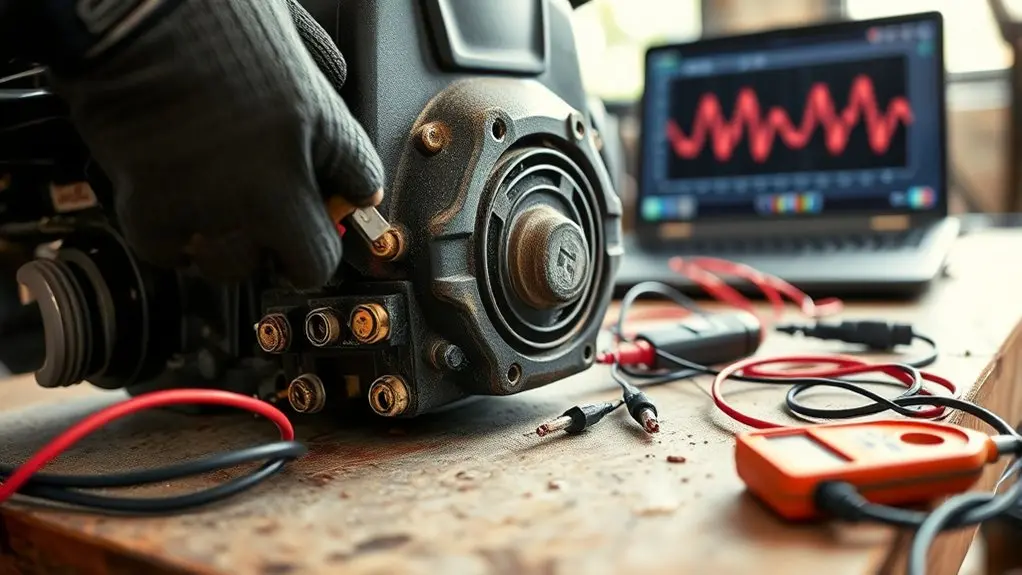
Since electrical and sensor issues often cause power loss in Kohler engines, you should begin diagnosis by thoroughly inspecting battery connections for corrosion or looseness that could disrupt power flow.
Use a multimeter to measure voltage output at the ignition coil, verifying it meets specifications for ideal spark generation.
Next, examine the wiring harness for damaged, frayed, or worn sections that might cause shorts or open circuits.
Assess sensor readings, particularly from the throttle position sensor (TPS), employing diagnostic tools to confirm sensor functionality.
Confirm all electrical connections are clean and ground points secure to prevent intermittent failures.
This systematic approach isolates electrical issues effectively, allowing you to pinpoint faults that degrade engine performance and cause power loss.
Why Engine Wear and Poor Lubrication Reduce Power
You’ll notice that engine wear increases friction between moving parts, which directly lowers power output. It’s kind of like rubbing two rough surfaces together—they just don’t move as smoothly.
That’s why maintaining proper lubrication is so important. It helps prevent overheating and speeds up wear, both of which can really drag down your engine’s performance.
Keep an eye out for signs like oil sludge or unusual engine noises. These are clear hints that your lubrication isn’t doing its job, which can seriously compromise efficiency.
Effects Of Engine Wear
Although engine wear often develops gradually, its impact on power output is immediate and measurable. When you encounter engine wear in key components like piston rings and cylinder walls, you’ll notice increased friction that directly reduces performance.
Poor lubrication accelerates this by causing excessive wear and heat buildup. You should understand these effects:
- Increased friction lowers mechanical efficiency
- Contaminants in oil create abrasive wear conditions
- Worn valve seats and guides reduce compression
- Heat from poor lubrication exacerbates wear
- Lack of regular maintenance accelerates degradation
Importance Of Lubrication
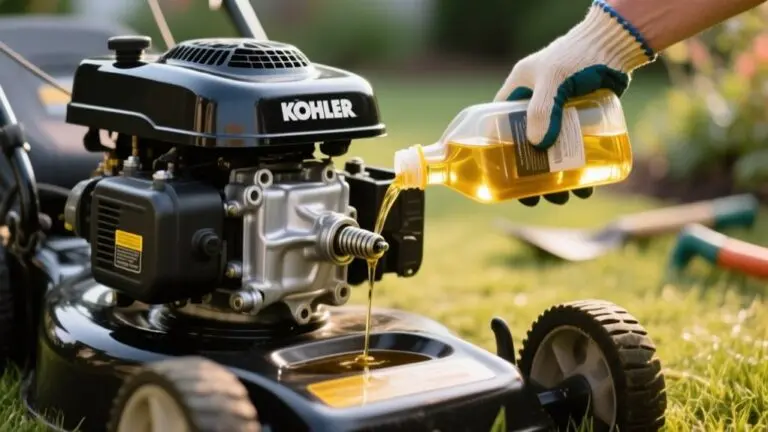
Three key factors determine how well lubrication preserves your Kohler engine’s power output: oil quality, oil quantity, and oil viscosity. Proper lubrication minimizes friction between moving parts, preventing wear that degrades engine performance.
Insufficient oil or incorrect viscosity leads to poor lubrication, causing overheating and power loss. Regular oil changes are critical since degraded oil fails to reduce friction effectively, accelerating engine wear and reducing power output.
| Factor | Impact on Engine | Recommended Action |
|---|---|---|
| Oil Quality | Maintains lubrication | Use manufacturer-approved oil |
| Oil Quantity | Prevents overheating | Check and maintain levels |
| Oil Viscosity | Guarantees flow & coverage | Match engine specifications |
| Oil Changes | Removes contaminants | Perform at regular intervals |
| Friction | Affects power output | Minimize via proper lubrication |
Signs Of Poor Lubrication
When your Kohler engine suffers from poor lubrication, you’ll notice increased friction that accelerates wear on critical components, directly reducing power output.
This decline in engine efficiency stems from insufficient oil supply or a low oil level, which causes overheating and damage.
Signs to watch for include unusual engine noises indicating metal-on-metal contact, a noticeable drop in power during load conditions, overheating due to inadequate lubrication cooling, contaminated or darkened oil suggesting poor maintenance, and frequent need for oil top-ups despite regular oil changes.
Addressing these symptoms promptly is essential.
Maintaining regular oil changes and monitoring oil quality prevents accelerated wear and sustains peak engine performance, minimizing reduced power output caused by poor lubrication.
Essential Maintenance Tips to Prevent Kohler Engine Power Loss
To maintain peak power output from your Kohler engine, you must prioritize regular maintenance tasks that address common sources of performance degradation. Start by conducting routine checks of the engine performance components, including timely oil and air filter changes to prevent dirt accumulation.
Inspect spark plugs regularly and replace them if worn to guarantee efficient combustion and peak power.
Keep the fuel system clean by using high-quality fuel and applying fuel system cleaners periodically to avoid clogging and maintain consistent fuel flow.
Moreover, monitor the cooling system closely; check for coolant leaks and maintain proper coolant levels to prevent overheating, which directly reduces power output.
These targeted maintenance actions will sustain your engine’s efficiency and prevent power loss caused by preventable mechanical issues.
Frequently Asked Questions
Can Altitude Changes Affect Kohler Engine Power Output?
Yes, altitude changes directly affect your Kohler engine’s power output. As you ascend, air density decreases, reducing oxygen available for combustion. This causes your engine to run lean, lowering performance.
To maintain ideal power, you’ll need to adjust the carburetor or fuel injection system, compensating for thinner air.
Different models respond differently, so precise tuning is essential when operating at varied elevations to prevent power loss and guarantee efficient operation.
Do Weather Conditions Impact Kohler Engine Performance?
Just like a sailor battling shifting seas, you face weather conditions that directly impact your Kohler engine’s performance.
Extreme heat can cause overheating, while cold thickens fuel, making startups challenging.
High humidity disrupts the air-fuel mix, and heavy rain risks water intrusion, causing misfires.
Each factor alters combustion efficiency and reduces power output.
Understanding these influences lets you anticipate and mitigate performance drops, keeping your engine running smoothly under varied weather stresses.
How Does Engine Temperature Influence Power Loss?
Engine temperature directly impacts power loss by causing internal components to expand, increasing friction and reducing efficiency.
When your Kohler engine overheats, it risks knock and detonation, which further degrade power output.
If cooling systems fail, safety mechanisms limit power to prevent damage.
Monitoring temperature helps you identify issues like low oil or blockages early, so you can maintain ideal cooling and airflow, preserving your engine’s performance and reliability.
Can Using Incorrect Fuel Types Cause Power Reduction?
Imagine fueling your Kohler engine with the wrong potion, like a knight mistakenly using a blunderbuss instead of a sword. Yes, using incorrect fuel types directly causes power reduction.
Low-octane gasoline or diesel disrupts combustion, lowering efficiency. High ethanol content attracts moisture, contaminating fuel and clogging filters. This impairs injector function, causing knocking and diminished power output.
Always stick to Kohler’s recommended fuel to maintain peak engine performance and prevent power loss.
Does Kohler Engine Model Age Affect Power Efficiency?
Yes, the age of your Kohler engine directly impacts its power efficiency. As your engine gets older, components like piston rings, valves, and carburetors wear down, reducing performance.
You’ll also find older models lack modern fuel delivery and combustion technologies, which further decreases efficiency.
Plus, sourcing replacement parts becomes tougher, making maintenance more challenging.
To maintain power, you’ll need to perform regular, thorough upkeep tailored to your engine’s age and condition.
Conclusion
To prevent Kohler engine power loss, you must address fuel problems, replace dirty air filters, and fix ignition system issues promptly. You need to diagnose electrical and sensor faults accurately and maintain proper lubrication to avoid engine wear.
By following essential maintenance tips consistently, you’ll guarantee peak engine performance, reduce downtime, and extend engine life. Stay proactive, stay precise, and keep your Kohler engine running at peak power efficiently.