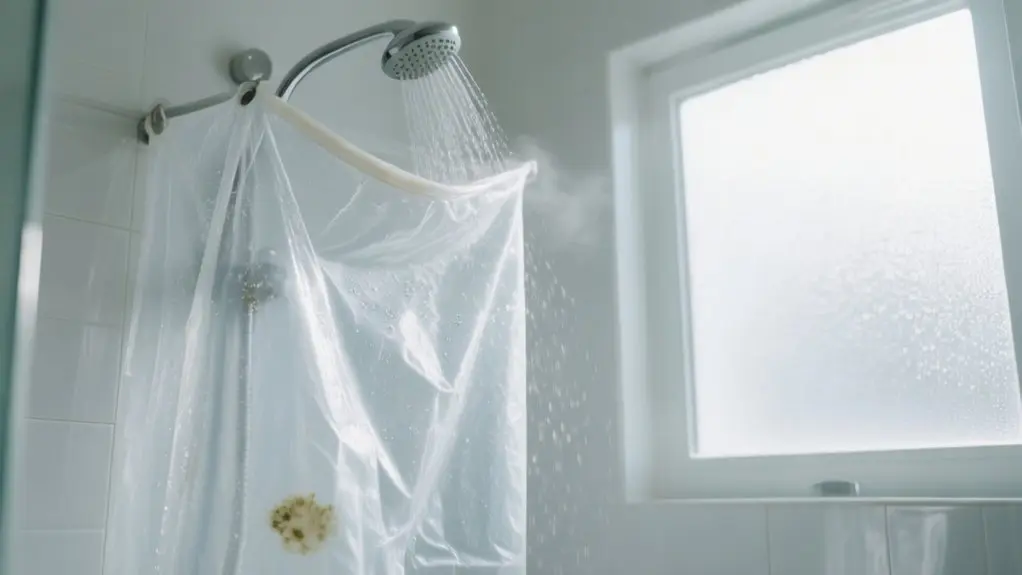
Can You Wash Plastic Shower Liner – Is It Safe?
Yes, you can safely wash your plastic shower liner in a washing machine or by hand using gentle detergents. Machine washing with a gentle cycle, adding towels for agitation, and air-drying prevents damage and mildew.
Hand washing with mild detergent and a soft cloth offers a gentler method for delicate liners. Regular cleaning every few months helps maintain hygiene and avoid mold buildup.
To keep your liner fresh and durable, understanding the best care practices is essential.
Is It Safe to Wash a Plastic Shower Liner?
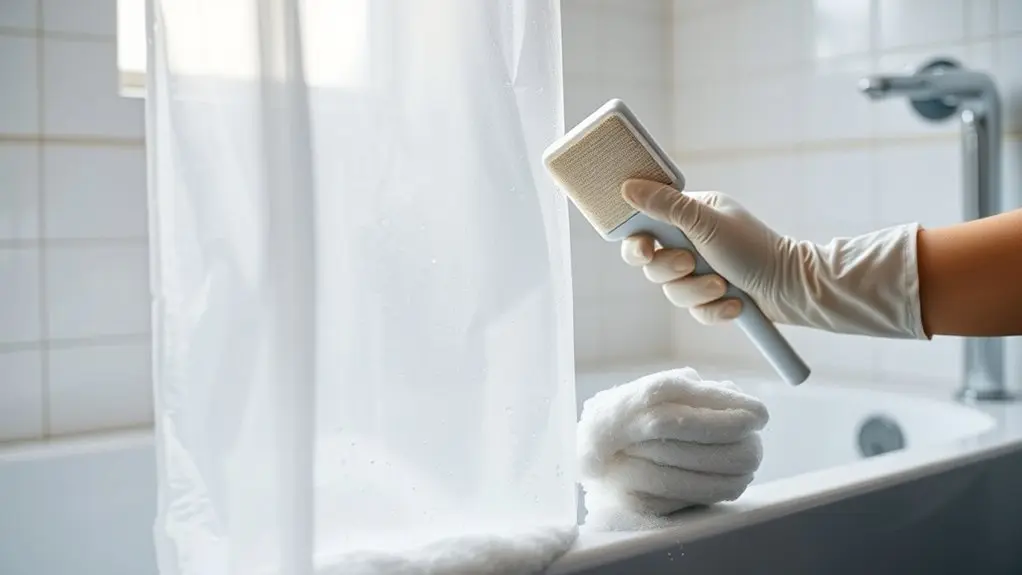
Wondering if you can safely wash a plastic shower liner? Yes, you can clean it effectively in your washing machine. Use a gentle cycle with regular laundry detergent to avoid damaging the liner.
You can safely wash a plastic shower liner in your machine using a gentle cycle and regular detergent.
Adding a few towels to the load helps agitate the shower liner, improving cleaning results. For tougher stains, you might consider diluted color-safe bleach, but always test a small area first to prevent damage.
After washing, hang the liner immediately to air-dry. This step is essential to avoid mildew and maintain its shape.
Following these cleaning tips every few months prevents mold buildup and keeps your shower liner fresh.
With the right approach, machine washing is a safe, convenient way to maintain your plastic shower liner.
Top Cleaning Methods for Plastic Shower Liners
You can clean your plastic shower liner effectively by using certain solutions and the right machine washing techniques.
For example, adding a few towels during a gentle cycle can actually boost the cleaning power.
Plus, if you’re dealing with tough stains, color-safe bleach is a great option that won’t damage your liner.
Knowing these simple tips makes it easier to keep your liner clean and lasting longer.
Effective Cleaning Solutions
Anyone looking to keep a plastic shower liner fresh and clean can rely on several effective methods.
To clean a plastic shower curtain and liner, use a mild laundry detergent combined with color-safe bleach to tackle stains and mildew efficiently.
Adding half a cup of white vinegar during the rinse cycle naturally deodorizes and disinfects the liner.
For spot cleaning, a mixture of washing-up liquid and bleach works well on stubborn marks without damaging the material.
Regular cleaning every few months prevents mold buildup and maintains the liner’s appearance.
These solutions guarantee your plastic shower liner stays hygienic and visually appealing, making routine maintenance straightforward and safe.
Machine Washing Tips
Machine washing offers a convenient and effective way to keep your plastic shower liner spotless. You can safely machine wash the liner using a gentle cycle and regular laundry detergent, which efficiently removes dirt and mildew.
To improve cleanliness, add a few towels to the load. This prevents the liner from crumpling and increases agitation for a thorough clean.
After washing, always air dry the liner rather than using a dryer, as high heat can warp or damage the plastic material.
Regularly machine washed liners, ideally every few months, help prevent mold buildup and maintain a fresh appearance.
Machine Washing Plastic Shower Liners
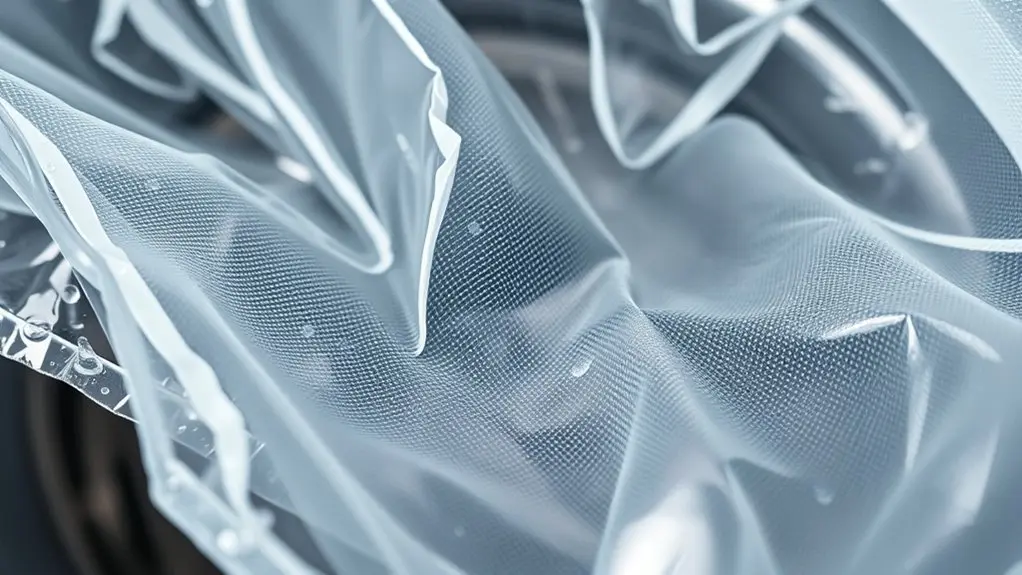
Although plastic shower liners might seem delicate, they can be safely washed in your washing machine by selecting a gentle cycle to prevent damage.
To improve cleaning, add a couple of towels to the wash; they increase agitation and help remove grime from the shower curtains effectively.
Use regular laundry detergent, and for stubborn stains, consider adding a color-safe bleach.
Once the cycle finishes, remove the liner promptly to avoid wrinkles and mildew buildup. Then, hang it back in the shower to air dry completely.
Regularly washing your plastic shower liner every few months helps maintain cleanliness and prevents mold growth.
Following these steps guarantees your liners stay fresh, hygienic, and durable without risking damage in the wash.
Hand Washing Tips for Delicate Plastic Liners
If you prefer a gentler approach than machine washing, hand washing your plastic shower liner offers an effective way to keep it clean without risking damage.
Start by mixing a gentle detergent with warm water, creating a safe cleaning solution that won’t harm the liner.
Use a soft sponge or cloth to scrub any stains gently, avoiding abrasive materials that could tear the plastic.
Rinse thoroughly with clean water to remove all soap residue, which can attract dirt and mildew if left behind.
Hang the liner to air dry completely, steering clear of direct sunlight to prevent fading or warping.
Regularly hand washing your liner every few weeks helps maintain a fresh shower environment, especially important if you’re managing a new account or household.
Best Cleaning Solutions for Plastic Shower Liners
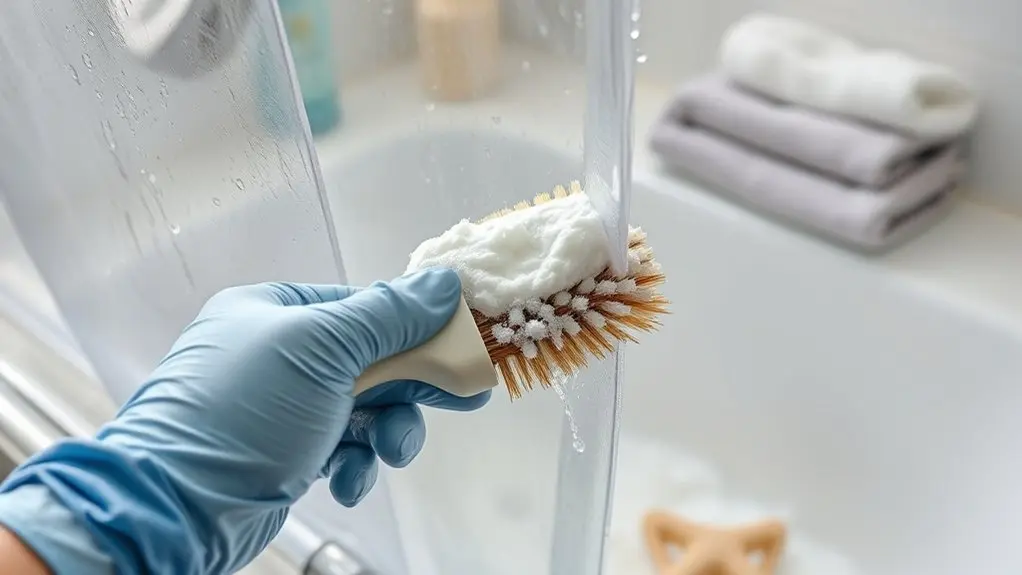
When you want to keep your plastic shower liner spotless and fresh, choosing the right cleaning solutions is crucial. Using the best brands of laundry detergent on a gentle cycle helps protect the liner while removing dirt effectively.
Consider these tips for ideal results:
- Use regular detergent with eco-friendly alternatives like vinegar for a natural boost without harsh chemicals.
- Add towels to the wash to agitate the liner and enhance cleaning.
- For stubborn stains or odors, include color-safe bleach cautiously to avoid damage.
- Remove the liner promptly after washing to prevent wrinkles and musty smells.
Following these longevity tips guarantees your liner remains clean and durable, saving you frequent replacements and maintaining your bathroom’s hygiene.
How to Remove Mold and Mildew From Plastic Liners
Two effective methods can help you remove mold and mildew from plastic shower liners quickly and safely. First, soak the liner in warm water mixed with bleach for 20-30 minutes to eliminate mold spores. Second, scrub stubborn stains with baking soda paste.
Regularly applying a white vinegar and water solution during cleaning supports mold prevention by inhibiting mildew growth factors. To keep things clean, wash liners in the machine with detergent and towels for extra agitation.
| Method | Description |
|---|---|
| Bleach Soak | 20-30 minutes in warm bleach solution |
| Baking Soda Scrub | Scrub stains with baking soda paste |
| Vinegar Solution | Spray regularly to prevent mold buildup |
| Washing Machine Wash | Use detergent plus towels for agitation |
| Air-Dry Immediately | Prevents moisture, stopping mildew growth |
Drying and Caring for Your Plastic Shower Liner
After you wash your plastic shower liner, go ahead and hang it up right away to air-dry. This is a great way to keep mildew and odors from setting in.
If you want to dry it a bit faster, you can gently pat it with a towel—but be sure to avoid using any heat since that can damage the plastic.
When you’re not using it, just store the liner somewhere dry.
And don’t forget to check on it regularly for any signs of damage or mold.
Proper Air-Drying Techniques
Although washing your plastic shower liner removes dirt and mildew, proper air-drying is crucial to maintain its condition and prevent odors.
To optimize drying duration and moisture control, follow these steps:
- Pat your liner dry with a towel immediately after washing to remove excess water and reduce drying time.
- Hang the liner right away in a well-ventilated area to guarantee airflow and prevent wrinkles.
- Avoid machine drying; high heat can warp or damage the plastic material.
- Check for lingering moisture regularly, and use a fan nearby if necessary to boost airflow and speed up drying.
Preventing Mildew Growth
Properly drying your plastic shower liner plays a key role in preventing mildew growth. To implement effective mildew prevention strategies, always hang your liner immediately after use, ensuring it’s spread out to avoid creases where moisture can collect.
Incorporate humidity control tips by keeping your bathroom well-ventilated. Open a window or use an exhaust fan to reduce dampness.
Regularly wipe the liner with a gentle cleaner or vinegar to inhibit mold buildup between washes. Choosing a mildew-resistant liner adds an extra layer of protection.
Storing Shower Liners Safely
When you wash your plastic shower liner, hanging it to air-dry right away helps prevent mildew and warping.
Proper storage solutions are essential for mildew prevention and liner organization. Follow these steps:
- Store the liner in a dry, well-ventilated area to avoid moisture buildup and mold growth.
- Roll the liner instead of folding to reduce creases that trap moisture.
- Confirm the liner is completely dry before re-hanging to prevent musty odors and discoloration.
- Regularly inspect the liner for damage or wear, replacing it when necessary to maintain hygiene.
How Often Should You Wash Your Plastic Shower Liner?
You should typically wash your plastic shower liner every few months to prevent mildew buildup and keep it clean.
Maintaining a consistent cleaning frequency not only supports mildew prevention but also helps preserve the liner’s material durability.
Consistent cleaning prevents mildew and extends the life of your shower liner’s material.
Depending on your bathroom’s moisture levels and liner usage, you might need to wash it multiple times a year.
Before washing, inspect the liner for stains or damage to optimize cleaning results.
Including towels in the washing machine can increase agitation, ensuring a more thorough wash.
Regular cleaning considerably reduces mold growth risks, contributing to a healthier bathroom environment.
Cleaning Mistakes That Damage Plastic Shower Liners
You’ll want to steer clear of harsh chemicals like undiluted bleach because they can actually weaken your plastic shower liner and cause damage over time.
Using too much bleach isn’t a great idea either, as it can lead to cracks and tears, which means your liner won’t last as long.
Also, be careful with how you dry it. High heat can warp the liner, messing with its shape and how well it works.
Harsh Chemicals To Avoid
Although it might seem effective to use strong cleaners on plastic shower liners, harsh chemicals like ammonia and undiluted bleach can weaken and damage the material. To protect your liner, avoid these common pitfalls:
- Using abrasive agents such as scouring powders or pads, which cause surface scratches and premature wear.
- Applying solvents like acetone or paint thinner, which can dissolve or warp the plastic.
- Employing highly concentrated cleaners that trigger chemical reactions, leading to discoloration or degradation.
- Ignoring cleaning frequency. Overuse of harsh products accelerates damage.
Instead, choose mild detergents or natural solutions to preserve the liner’s integrity.
Overusing Bleach Risks
Bleach often appears as a go-to solution for cleaning plastic shower liners, but overusing it can cause significant damage. Frequent use of bleach weakens the plastic fibers, accelerating plastic degradation and leading to tears or holes.
You might also notice unsightly yellowing from repeated exposure. High concentrations release harmful fumes, which pose respiratory risks if not used carefully.
Overuse can disrupt the liner’s structural integrity, making it more vulnerable to mold and mildew buildup.
To maintain your shower liner’s lifespan, limit the cleaning frequency with bleach and explore safer bleach alternatives like vinegar or baking soda solutions.
These options effectively clean without compromising the plastic’s durability or appearance, helping you avoid costly replacements while keeping your liner fresh and safe.
Improper Drying Consequences
When plastic shower liners don’t dry properly, they can warp and lose their shape, making them fit poorly on the rod. To protect your liner and maintain its integrity, consider these drying techniques comparison and shape retention tips:
- Avoid crumpling wet liners, as this promotes mold growth. This is key in mold prevention strategies.
- Skip heat dryers because excessive heat causes cracks and brittleness.
- Always hang liners immediately after washing in a well-ventilated area to speed drying and prevent odors.
- Don’t air-dry liners in damp or closed spaces since this prolongs moisture and increases stain risks.
Following these steps guarantees your liner stays clean, well-shaped, and free from mildew damage.
Frequently Asked Questions About Plastic Shower Liners
How often should you wash your plastic shower liner to keep it fresh and free from mold? Aim to wash it every few months using a gentle cycle with cold water and regular detergent, avoiding fabric softeners.
Wash your plastic shower liner every few months with cold water and regular detergent to prevent mold.
Adding towels to the wash helps improve agitation, enhancing cleanliness.
To maintain shower liner durability, avoid harsh scrubbing and always air-dry it immediately after washing to prevent creases and odors.
If you notice persistent stains, soak the liner in warm water with bleach for 20-30 minutes.
For those seeking eco-friendly alternatives, consider liners made from biodegradable materials that offer similar protection with less environmental impact.
Regarding liner replacement tips, replace your liner when it shows signs of wear or persistent mold that washing can’t remove, ensuring a hygienic shower environment.
Frequently Asked Questions
Can Plastic Shower Liners Be Recycled After Use?
Yes, you can recycle plastic shower liners, but it depends on your shower liner materials and local recycling process guidelines.
Most liners are made from polyethylene, which is recyclable in some areas.
You’ll need to clean the liner thoroughly to avoid contamination that hampers recycling.
Checking the recycling symbol helps you follow proper disposal methods.
Recycling shower liners reduces environmental impact by keeping plastic waste out of landfills and oceans.
Are There Eco-Friendly Alternatives to Plastic Shower Liners?
You can choose bamboo liners, fabric alternatives, or biodegradable options as eco-friendly alternatives to plastic shower liners.
Bamboo liners offer natural mildew resistance. Fabric alternatives like organic cotton are washable and reusable. Biodegradable options such as hemp break down safely in landfills.
These choices reduce plastic waste, promote sustainability, and provide durability.
Do Plastic Liners Release Harmful Chemicals When Heated?
Yes, plastic liners can release harmful chemicals when heated due to chemical leaching concerns, especially if made from PVC.
Their heat resistance properties are limited, so exposing them to high temperatures or steam increases chemical release risks.
To minimize this, use safe cleaning methods like gentle hand washing with mild soap and avoid hot water or heat sources.
Proper bathroom ventilation also helps reduce any potential exposure to released chemicals.
Can Shower Liners Prevent Water Damage to Bathroom Floors?
Think of your shower liner as a loyal guardian. Yes, it can prevent water damage to your bathroom floors. By acting as a reliable barrier, it enhances shower efficiency and protects against leaks.
Keeping it clean is key to bathroom maintenance, ensuring it stays water-repellent and effective.
Investing in quality liners helps you avoid costly repairs, making your bathroom safer and your maintenance routine easier.
How Long Do Plastic Shower Liners Typically Last?
Plastic shower liners typically last between 1 to 3 years, depending on the shower liner materials and how well you maintain them.
High-quality, heavy-duty liners can last up to 5 years with proper maintenance.
To extend their lifespan, follow maintenance tips like regular cleaning and avoid harsh chemicals.
Cleaning frequency should be at least once a month to prevent mold and mildew buildup, keeping your liner durable and safe for longer use.
Conclusion
Washing your plastic shower liner is like renewing a protective shield. It keeps your space fresh and guards against grime. By choosing safe cleaning methods and caring for it properly, you guarantee it remains durable and effective.
Treat your liner with attention, and it will continue to stand strong just as you do when you maintain your daily routines. Regular care transforms a simple liner into a symbol of cleanliness and resilience in your bathroom.