Will Medicare Pay For A Walk In Shower – Here’s the Answer
Medicare generally won’t pay for a walk-in shower since it’s considered a home renovation, not durable medical equipment. You’ll typically need a doctor’s prescription to support any claim related to medical necessity, but Original Medicare excludes bathroom modifications.
Some Medicare Advantage plans might offer limited coverage or supplemental benefits for these installations, depending on your plan. Financial assistance may also be available through other programs.
Understanding your options and approval steps can help you make an informed decision.
Does Medicare Cover Walk-In Showers?
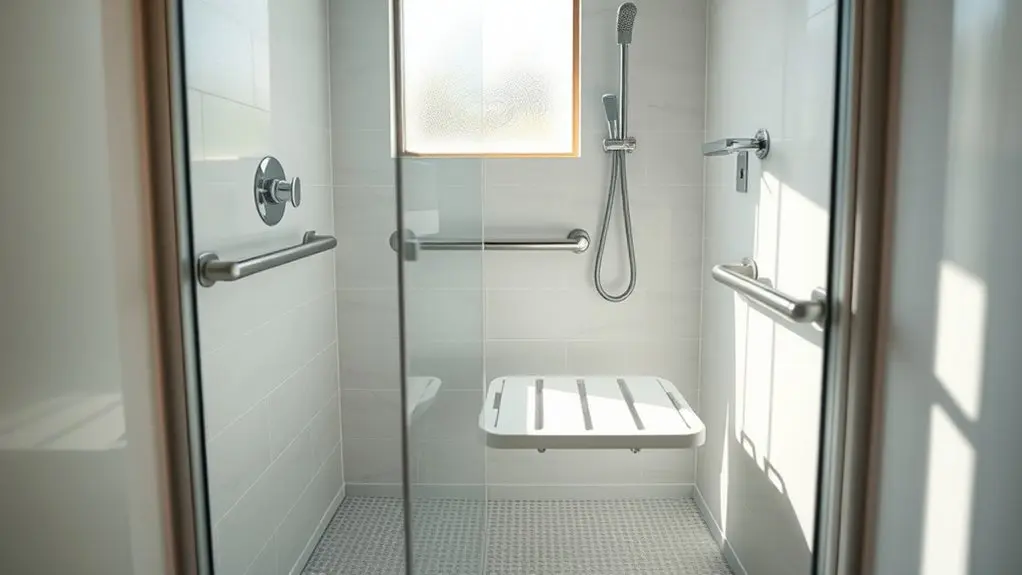
Wondering if Medicare covers walk-in showers? Original Medicare does not, as it classifies walk-in showers as home renovations, not durable medical equipment. This means bathroom modifications like walk-in tubs or showers aren’t covered under standard Medicare.
However, some Medicare Advantage plans may offer supplemental benefits that include home safety improvements. Coverage depends on the specific plan, so you’ll need to review your Medicare Advantage plan’s Evidence of Coverage carefully.
For any potential coverage, a walk-in shower must be medically necessary, which usually requires documentation from your doctor.
While Medicare Advantage might cover certain bathroom modifications, you can’t assume all plans do. Understanding your plan’s benefits and conditions is essential before making decisions about walk-in showers or tubs.
When Is a Doctor’s Prescription Needed for Coverage?
While Medicare generally doesn’t cover walk-in showers, there are situations where a doctor’s prescription can influence coverage for related bathroom safety equipment.
Medicare typically requires a doctor’s prescription for durable medical equipment (DME) such as grab bars or commode chairs, which help improve bathroom safety.
However, walk-in showers themselves are considered home modifications and usually aren’t covered. If a walk-in shower forms part of a medically necessary home modification, your doctor may need to provide documentation, like a letter of medical necessity, to meet Medicare’s coverage requirements.
Walk-in showers are generally not covered by Medicare unless deemed medically necessary with proper documentation.
Always verify your specific coverage requirements, as Medicare Advantage plans may have different policies regarding home modifications and related benefits.
This can impact your eligibility for reimbursement or assistance.
Medicare Advantage Plans and Walk-In Shower Benefits
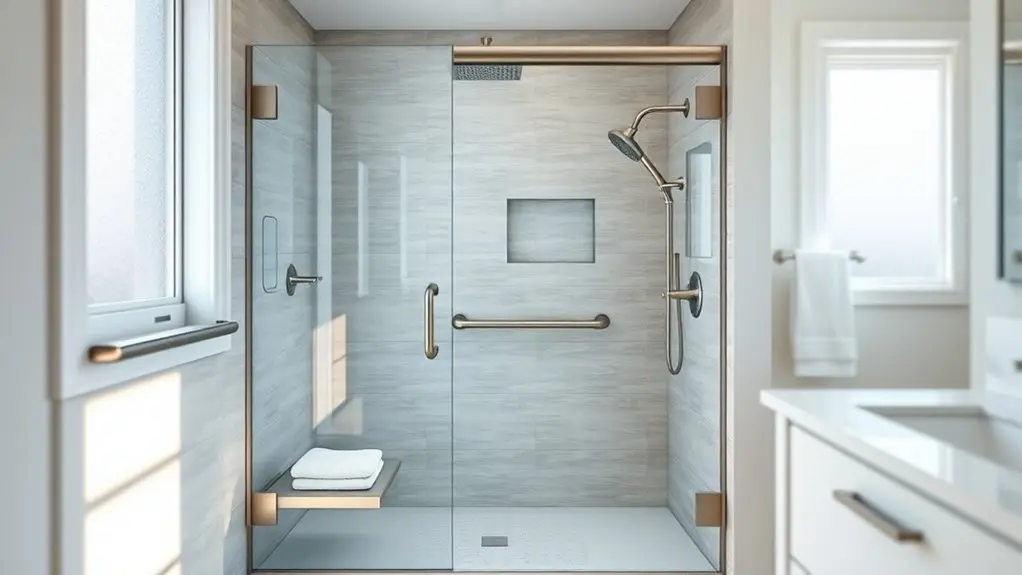
Because Medicare Advantage plans often include expanded home safety benefits, you may find coverage options for walk-in showers that Original Medicare doesn’t offer.
Many Medicare Advantage Plans encourage aging in place by providing supplemental benefits that cover bathroom modifications, including walk-in tubs and showers.
These plans may help with costs related to installation and features designed to improve bathroom safety. However, coverage varies widely, so you’ll need to review your plan’s Evidence of Coverage to understand specific provisions.
Unlike Original Medicare, which typically excludes walk-in showers, some Medicare Advantage Plans actively support these upgrades to enhance safety and accessibility.
Always verify eligibility and costs directly with your plan to confirm whether they cover bathroom improvements like walk-in showers.
Supplemental Benefits That Cover Walk-In Showers
Although coverage for walk-in showers isn’t guaranteed, many Medicare Advantage plans include supplemental benefits that may cover home safety modifications like these.
Supplemental benefits vary by plan and year, so it’s important to review your specific Medicare Advantage plan’s Evidence of Coverage to see if walk-in showers are included.
Coverage often hinges on demonstrating medical necessity, and some plans may require prior authorization before approving home safety modifications.
By consulting your plan, you can clarify eligibility criteria and understand which modifications qualify for reimbursement.
While Medicare Advantage plans can offer valuable supplemental benefits that support walk-in showers, the extent of coverage depends on individual circumstances and plan details.
How to Get Approval and File for Reimbursement
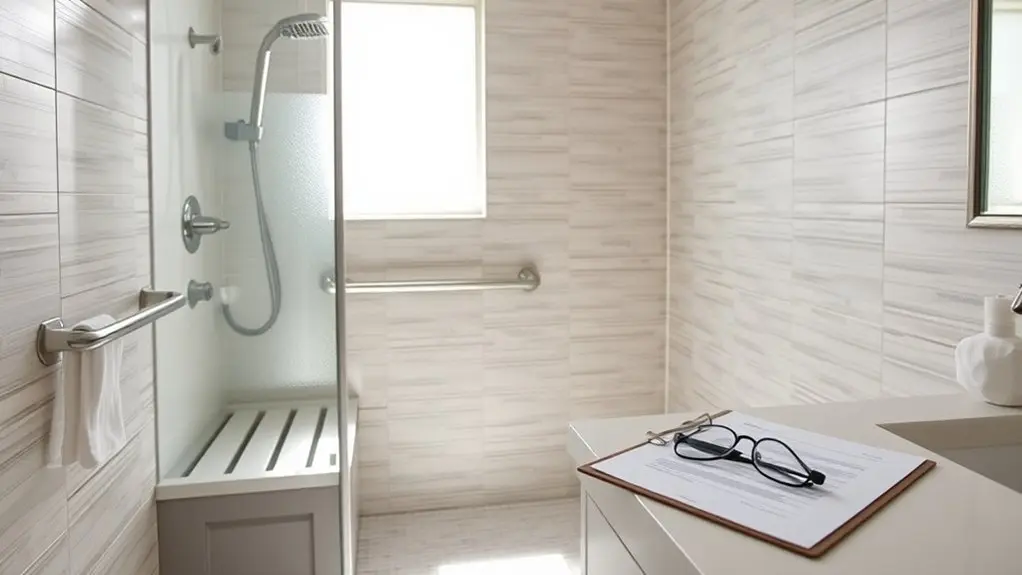
Anyone seeking approval and reimbursement for a walk-in shower through Medicare should start by confirming their specific Medicare Advantage plan’s coverage policies.
Since Medicare generally classifies walk-in showers as home modifications rather than durable medical equipment, coverage varies by plan.
To improve your chances of approval, obtain a doctor’s prescription or letter of medical necessity that clearly states the shower’s role in your health and safety.
Secure a doctor’s prescription or medical necessity letter to strengthen your approval chances.
Next, gather all required documentation, including itemized receipts, installation estimates, and any prior authorizations requested by your Medicare Advantage plan.
Submit these materials promptly and keep copies of everything for your records.
Following these steps makes the reimbursement process more organized and helps resolve potential disputes efficiently, maximizing your chances of receiving financial assistance for your medically necessary home modification.
Other Financial Assistance for Walk-In Shower Installations
You might find financial help for walk-in shower installations through state loan programs that offer low-interest options.
These programs can make the cost a bit easier to manage.
Community grant programs can also provide funds, especially if you meet certain eligibility requirements.
It’s definitely worth looking into these options.
Exploring these resources can really help ease the cost burden beyond what Medicare covers.
State Loan Programs
Since installing a walk-in shower can be costly, many states offer low-interest loan programs to help homeowners manage these expenses. These state loan programs provide financial assistance for accessibility modifications and other home improvements.
You can often find details through local agencies, including Area Agencies on Aging, which help seniors navigate funding options. Eligibility and application processes vary, so checking with your local agency is essential.
| Program Type | Key Feature |
|---|---|
| Low-Interest Loans | Affordable repayment terms |
| Grants | No repayment required |
| USDA Section 504 | Loans and grants for rural homes |
These options support walk-in shower installations, making accessibility upgrades more affordable and manageable.
Community Grant Options
Although funding can be limited, various community grant options exist to help cover walk-in shower installation costs.
Some states offer grants or low-interest loans through community-based services aimed at home modifications for seniors.
Medicaid waivers may also fund walk-in showers, though eligibility and coverage vary by state, so you’ll need to check local regulations.
Area Agencies on Aging can assist you in finding available financial resources, including grants and loans for bathroom accessibility improvements.
Moreover, nonprofit organizations sometimes provide financial aid or free labor for these modifications through community programs.
State assistive technology programs may further support home modifications to help maintain independence.
Exploring these community grant options can greatly reduce your out-of-pocket expenses for walk-in shower installations.
Comparing Walk-In Showers With Other Bathroom Safety Solutions
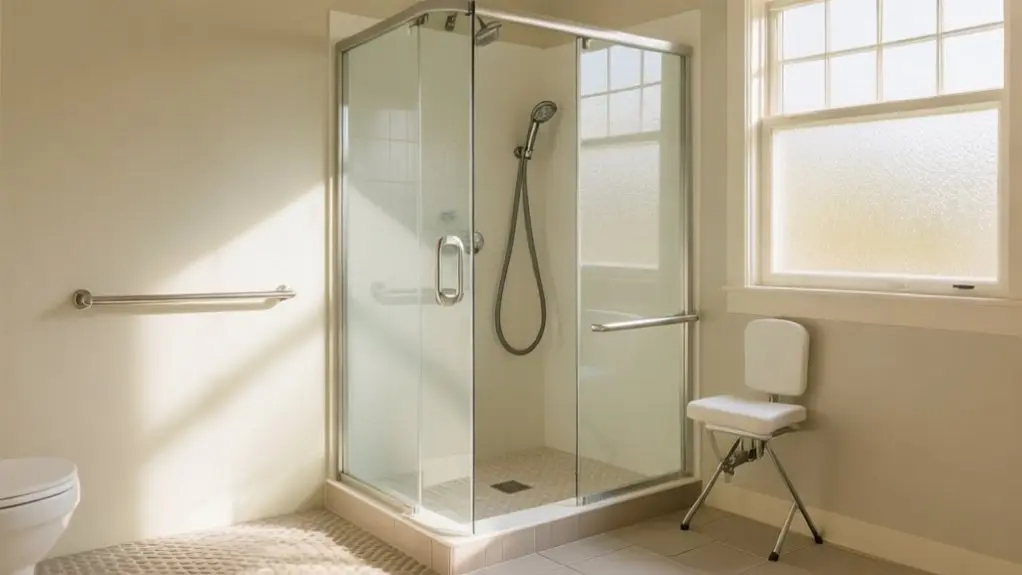
When evaluating bathroom safety solutions, walk-in showers stand out for their barrier-free access, which benefits individuals with mobility challenges more than traditional tubs do.
Compared to grab bars or shower chairs, walk-in showers offer an extensive safety modification by eliminating high thresholds and enabling easier entry.
Walk-in showers enhance safety by removing high thresholds, allowing smoother and safer bathroom access.
You should know Medicare doesn’t cover these installations, though some Medicare Advantage plans may include home safety benefits for bathroom modifications.
While costs range from $3,000 to $12,000 depending on design, walk-in showers can be customized with anti-slip flooring and grab bars, enhancing overall safety.
Other solutions may be less costly but don’t provide the same level of independence.
Balancing budget, safety, and mobility needs will help you decide the best bathroom modifications for your home safety.
Frequently Asked Questions
Can Medicaid Assist With Walk-In Shower Costs?
Yes, Medicaid can assist with walk-in shower costs if you meet Medicaid eligibility requirements.
You should explore home modification programs and accessibility grants available in your state.
Before shower installation, get prior authorization and provide documentation like a doctor’s note to qualify for financial assistance.
Contact your local Medicaid office to learn about application processes and specific funding options for bathroom accessibility improvements.
Are There Tax Credits for Home Modifications Like Showers?
Did you know you could deduct home modifications if they’re medical-related? Yes, you can claim tax deductions for changes like walk-in showers that improve home safety and support aging in place.
Some states offer accessibility grants or financial assistance to help cover costs, especially for seniors or people with disabilities.
To maximize benefits, consult a tax professional who can guide you through eligibility and paperwork, ensuring you get the most out of available programs.
How Long Does Medicare Take to Process Shower Coverage Requests?
Medicare guidelines typically set request timelines between 30 to 90 days for coverage approval of walk-in showers.
You’ll need to meet strict documentation requirements, including a doctor’s prescription and itemized estimates, to avoid processing delays.
If your initial claim lacks necessary paperwork, Medicare may deny it, extending timelines through appeals.
Stay proactive by submitting complete info and tracking your request via the Medicare portal to guarantee timely updates on your coverage approval status.
Do Contractors Offer Discounts for Medically Necessary Installations?
Yes, contractors often offer discounts for medically necessary installations. If you meet specific installation criteria related to accessibility upgrades, you can negotiate pricing and inquire about contractor discounts.
Many contractors participate in financial assistance programs or sliding scale fees based on income or medical needs.
To get the best deal, ask for multiple quotes and clarify available discounts tied to your health requirements and accessibility improvements before committing.
Can Durable Medical Equipment Suppliers Help With Walk-In Showers?
Durable medical equipment suppliers usually don’t assist with walk-in showers because these are home renovations, not standard DME.
While walk-in benefits like enhanced safety features and improved accessibility standards are clear, suppliers focus on items like walkers or lifts.
You’ll likely handle installation costs yourself.
However, checking supplier options for related equipment or consulting with specialists can help you find alternatives that support your mobility and safety needs.
Conclusion
If you’re wondering whether Medicare will pay for a walk-in shower, it turns out coverage depends on your plan and a doctor’s prescription. These are the same factors that influence other bathroom safety upgrades.
Medicare Advantage plans and supplemental benefits might just cover what traditional Medicare doesn’t. So before you install, make sure you explore all options and get proper approval. That way, you’ll avoid surprises and secure the financial help you need.