How To Adjust The Choke On A Kohler Engine – Made Easy
To adjust the choke on your Kohler engine, first locate the choke lever near the carburetor. Pull the choke cable fully to close the choke plate for a cold start, then gradually open it as the engine warms.
Make sure the cable moves smoothly and isn’t installed backward, which can cause stalling. Lubricate linkage for easy movement and check cable tension regularly.
Proper adjustment will improve starts and running, and there’s more guidance on troubleshooting and maintenance ahead.
How To Locate The Choke Lever On Your Kohler Engine
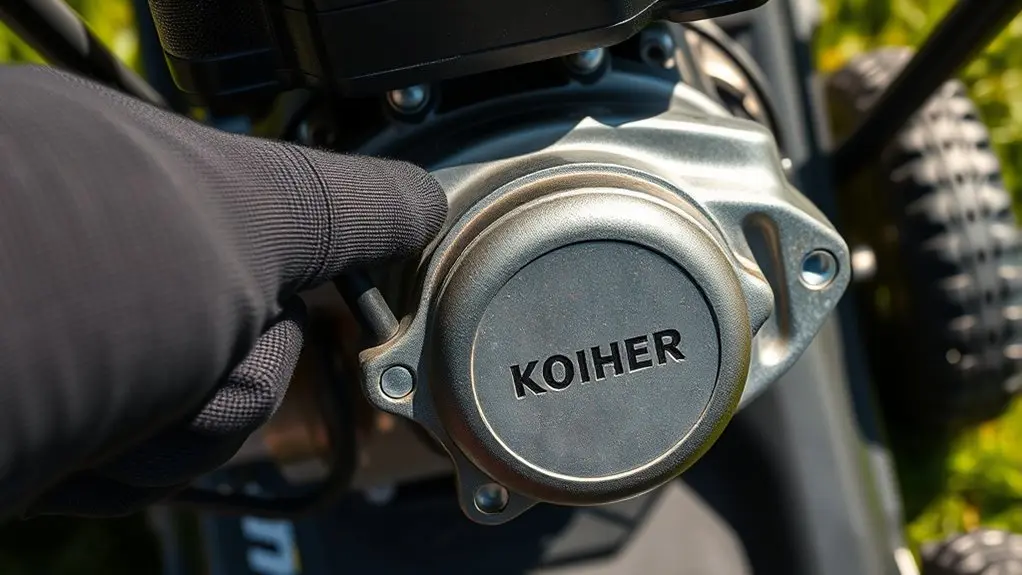
To locate the choke lever on your Kohler engine, start by checking near the carburetor, where it’s often combined with the throttle control for quick access.
Look for a small metal or plastic arm connected to a cable. That’s the choke lever controlling the choke plate inside the carburetor.
Locate the small metal or plastic arm linked to a cable—that’s the choke lever operating the carburetor plate.
Follow the choke cable routing carefully to guarantee it’s connected properly and moves freely. Many models have a spring mechanism on the choke lever, allowing you to manually open or close the choke plate.
If you’re unsure, consult your engine’s service manual to pinpoint the exact choke lever location and understand its setup.
Proper identification of the choke lever near the carburetor is essential before moving on to adjustments or troubleshooting.
How To Adjust The Choke For Smooth Kohler Engine Starts
Start by verifying the choke lever on your Kohler engine is correctly aligned so that pulling the cable fully closes the choke plate.
Check the cable’s connection points and lubricate them to keep the movement smooth and responsive.
Pull the choke to full throttle for initial starts, then gradually open it as the engine warms.
Avoid installing the choke lever backward, as this can cause stalling.
Regularly clean the carburetor and choke components to prevent blockages that hinder smooth starts.
If you’re looking to buy a Chinese replacement choke cable, confirm it fits well and doesn’t compromise performance.
Troubleshooting Common Kohler Engine Choke Problems
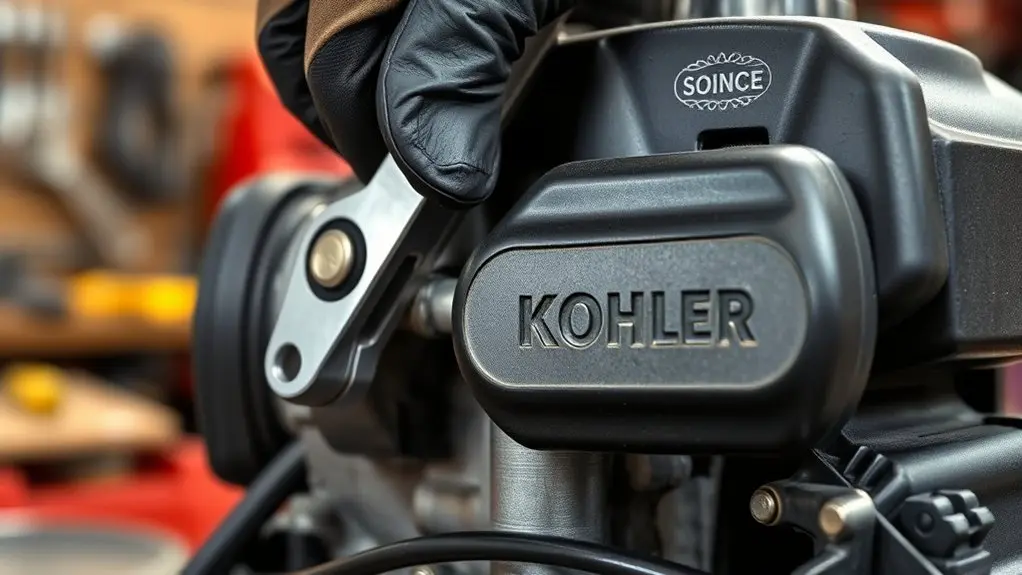
Start by checking the choke cable installation to make sure it’s connected and oriented correctly.
If the choke isn’t working right, it could be due to fuel delivery problems.
Choke Cable Installation
Check that the choke cable is securely connected to the choke lever and moves freely without binding. Inspect the cable for kinks or damage, and lubricate it to guarantee smooth operation.
Adjust the cable tension using the adjustment screw or by slightly moving the cable housing for ideal choke control. Also, verify the choke plate inside the carburetor moves correctly to avoid reverse choking.
| Step | Action |
|---|---|
| Connection Check | Confirm cable hooks firmly to lever |
| Tension Adjustment | Use adjustment screw or housing |
| Lubrication | Apply lubricant to cable and lever |
Following these steps will help your choke function reliably and prevent common installation issues.
Fuel Delivery Issues
Fuel delivery problems often cause choke-related issues on Kohler engines. First, check that the choke cable is correctly routed and that pulling it opens the choke plate; some replacement carburetors have the lever installed backward.
If your engine stalls when engaging blades or runs smoothly only with the choke pulled, suspect fuel supply or vacuum issues. Inspect fuel lines for blockages, and make sure the inline fuel filter is clean to avoid fuel starvation or contamination.
If the engine runs on choke but struggles at full throttle, clean the carburetor’s needle valve and check the intake gasket for leaks.
Finally, verify the fuel pump’s function. It should deliver a steady fuel stream. Irregularities here directly impact choke performance and overall engine operation.
Why Choke Adjustment Matters For Kohler Engine Performance
You want your Kohler engine to start quickly and run smoothly, right?
Well, proper choke adjustment is key to making that happen. It helps control fuel consumption by ensuring the right air-to-fuel mix, so you don’t end up wasting gas.
Plus, adjusting the choke correctly can prevent your engine from stalling, especially when it’s warming up or working hard.
It’s a simple step that makes a big difference in performance.
Engine Starting Efficiency
Although starting a Kohler engine might seem simple, adjusting the choke properly is key to getting it going smoothly, especially in cold weather. The choke controls the air-fuel mixture, ensuring the right balance for efficient ignition.
When you fully close the choke at startup, you increase fuel vaporization, helping the engine fire up quickly. If the choke’s set wrong, the engine may flood or starve for fuel, causing hard starts, stalling, or rough idling.
Regularly check and adjust the choke cable and linkage to maintain ideal response. Understanding how the choke affects engine dynamics lets you troubleshoot issues faster and keep your Kohler engine running reliably from the moment you turn the key.
Fuel Consumption Control
Getting your Kohler engine’s choke adjustment right can make a big difference in how efficiently it uses fuel. When the choke is set properly, it optimizes the air-fuel mixture, especially during startup and warm-up.
A fully closed choke helps when the engine is cold, providing a rich mixture for easy starts. But as the engine warms, you’ll want to partially open the choke to avoid flooding and excessive fuel use.
If the choke is misadjusted, your engine will consume more fuel than necessary, reduce performance, and increase emissions. Regularly checking and adjusting the choke guarantees better engine responsiveness and helps prevent unnecessary wear.
Paying attention to choke settings during different operating conditions keeps your Kohler engine running efficiently and saves fuel in the long run.
Preventing Engine Stalling
Three key factors make proper choke adjustment essential for preventing engine stalling on your Kohler engine: controlling the air-fuel mixture, ensuring smooth idling, and maintaining reliable startup performance.
If the choke is too rich or lean, your engine can stumble, idle inconsistently, or stall during startup and low-speed operation.
By setting the choke correctly, you optimize fuel combustion, which improves responsiveness and keeps the engine running steadily.
Regularly check and adjust the choke to avoid fuel delivery issues caused by inadequate airflow.
Understanding how the choke works lets you intervene early, preventing stalling and prolonging your engine’s lifespan.
Proper adjustment isn’t just about performance; it’s key to reliable operation and avoiding frustrating breakdowns during use.
Fixing A Backwards Choke Cable On Your Kohler Engine
Anyone working on a Kohler engine may encounter a backwards choke cable, which causes the choke plate to open when you pull the cable instead of closing it. To fix this, first check the choke plate’s orientation; if it’s installed incorrectly, the cable will operate in reverse.
Pulling the choke cable should always close the choke plate, so inspect the lever direction thoroughly. When replacing carburetors, review product diagrams carefully. Many come with the choke lever installed backwards.
Adjusting the choke rod may be necessary. Some replacements include extra rods or instructions for this. Be cautious handling small parts like choke rods, and secure the holes to prevent losing any components during adjustment.
Following these steps guarantees your choke cable functions correctly and your engine runs smoothly.
Maintenance Tips For Kohler Engine Choke Cable And Linkage
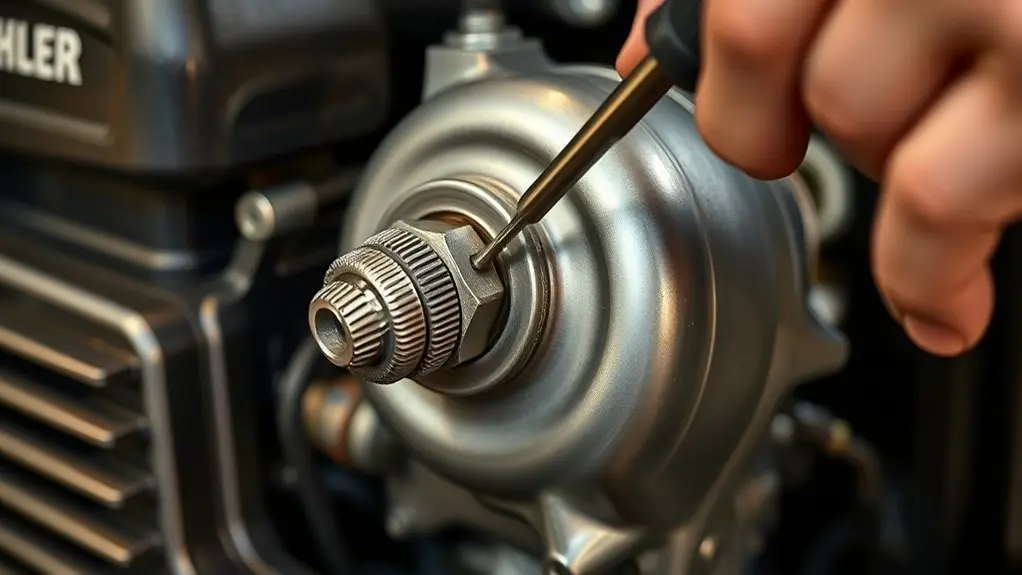
Keep your Kohler engine running smoothly by regularly maintaining the choke cable and linkage. First, verify the choke cable is correctly routed and securely connected to prevent operational issues, like the choke plate sticking or functioning improperly.
Inspect the cable and linkage often for any signs of wear or damage. Frayed cables can hinder choke performance and make starting difficult. Lubricate the linkage periodically to keep movement smooth and responsive during startup.
Also, double-check that the choke lever is oriented correctly. A reversed lever can cause the choke to operate backward, affecting performance.
Always consult your engine’s service manual for specific maintenance steps to keep your choke system in top shape and avoid potential problems down the line.
Signs You Need To Replace Your Kohler Engine Carburetor Or Choke Parts
How can you tell when your Kohler engine’s carburetor or choke parts need replacing? If your engine stalls or idles inconsistently when the choke is off, that’s a clear sign.
A reverse choke function, where pulling the cable opens instead of closes the choke, often means the choke plate is installed wrong and could require a new carburetor.
Watch for fuel levels in the inline filter; if it’s less than half full during operation, there might be an obstruction needing attention.
Also, check for leaks from the carburetor onto nearby parts, which could indicate a failing diaphragm or seal.
Even with regular cleaning and inspection, persistent problems mean it’s time to replace the carburetor or choke components to keep your engine running smoothly.
Best Seasonal Tips For Kohler Engine Choke Adjustment And Storage
Three key seasonal tips can help you maintain your Kohler engine’s choke for peak performance year-round.
First, adjust the choke fully closed for cold starts during winter and gradually open it as the engine warms to optimize running.
Start cold with the choke fully closed in winter, then open it gradually as the engine warms.
Second, before storing your engine for the season, add a fuel stabilizer to prevent carburetor gumming and guarantee smooth choke operation on restart.
Third, regularly lubricate the choke cable and linkage to prevent sticking and maintain responsiveness.
Also, inspect the choke plate to confirm it opens correctly when the cable is pulled, avoiding performance issues. After long storage, check that the choke returns to the closed position for reliable cold starts.
Following these steps keeps your choke functioning smoothly through seasonal changes.
Frequently Asked Questions
Can a Faulty Choke Cause Excessive Fuel Consumption?
Yes, a faulty choke can cause excessive fuel consumption.
If the choke doesn’t close properly, it lets in too much air or too much fuel, messing up the air-fuel mix. This makes your engine run inefficiently, burning more fuel than necessary.
You’ll notice poor performance and wasted fuel. To fix this, you need to regularly check and adjust the choke so your engine runs smoothly and uses fuel efficiently.
How Does Altitude Affect Choke Adjustment on Kohler Engines?
Imagine tuning a steam engine in the Wild West. That’s how important adjusting your Kohler engine’s choke is at altitude.
When you’re up high, air thins out, so you’ll need to open the choke more than at sea level. This prevents a fuel-rich mix that can stall or roughen your engine.
Start fully closed at low altitude and gradually open it as you climb. Check your manual to keep your engine running smooth and efficient.
Are There Specific Kohler Engine Models With Unique Choke Systems?
Yes, some Kohler engine models have unique choke systems. For instance, the K-241 and K-301 use manual choke levers, while newer models like the Command and Magnum series may have self-adjusting or electronic chokes.
Some even feature reverse choke functions, where pulling the cable opens the choke plate, which can be confusing.
Always check your specific model’s manual to understand its choke design and how to adjust it properly.
Can Using the Choke Incorrectly Damage the Engine?
Yes, using the choke incorrectly can damage your engine. Leaving the choke on when the engine is warm wastes fuel and causes carbon buildup. This can foul spark plugs and lead to misfires.
Running with the choke partially engaged reduces performance and strains engine parts. Over time, this inconsistent air-fuel mix increases wear, possibly causing premature engine failure.
Always adjust the choke properly to keep your Kohler engine running smoothly and efficiently.
What Tools Do I Need for Advanced Choke Repairs?
You won’t need a spaceship, but for advanced choke repairs, you’ll want a screwdriver, wrench set, and needle-nose pliers to reach tight spots.
A torque wrench guarantees bolts are snug without overdoing it.
Grab a carburetor adjustment tool for fine-tuning, and a multimeter if your choke has an electric solenoid.
Don’t forget gloves and goggles. Safety isn’t optional when dealing with fuel and chemicals.
Keep it simple, but prepared.
Conclusion
Now that you know how to adjust the choke on your Kohler engine, you’re set for smoother starts and better performance. Remember, a properly adjusted choke prevents stalling and fuel waste.
Don’t ignore signs of wear or cable issues; they’re easier to fix early on. After all, why settle for engine trouble when a simple adjustment can keep your Kohler running like new?
Stay proactive, and your engine will thank you with reliable power every time.