How To Clean A Kohler Carburetor – Easy Guide
To clean your Kohler carburetor, first cool the engine. Then remove the air filter and intake manifold for access. Use screwdrivers and wrenches to carefully disassemble it, labeling parts for reassembly.
Soak jets and passages in carburetor cleaner. Clear blockages with fine wire and blow out debris with compressed air.
After drying, inspect parts and reassemble carefully. Regular cleaning prevents clogs and performance issues. Follow these steps closely, and you’ll find detailed methods to keep your carburetor running smoothly.
Why Kohler Carburetors Need Special Cleaning
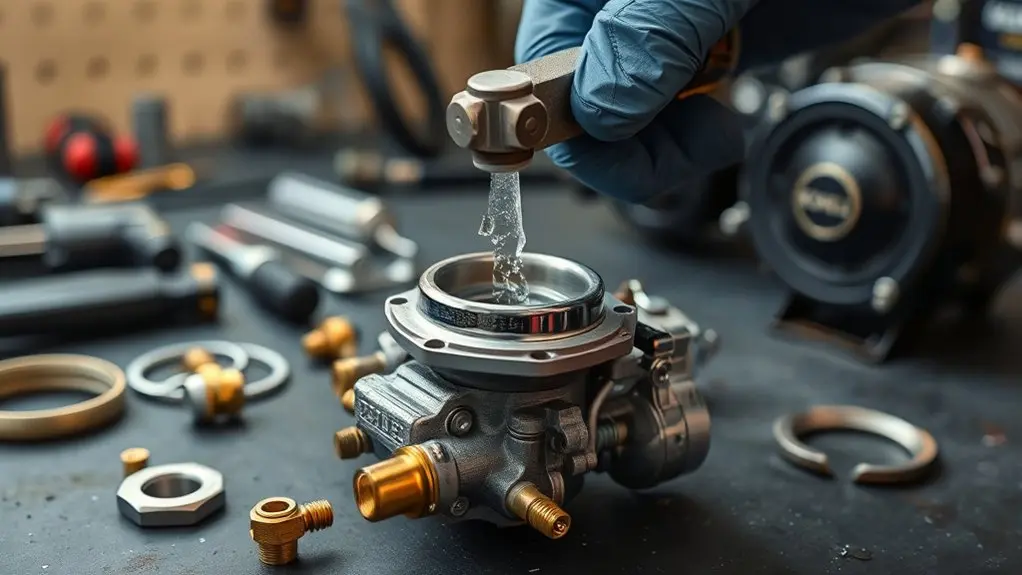
Because Kohler carburetors contain precise jets and narrow passages, you need to clean them carefully to avoid clogs that degrade engine performance. These components, like the idle jet and fuel mixture screw, require thorough attention to guarantee the correct air-fuel mixture.
Residual fuel deposits and dirt buildup often cause starting issues and reduced power, so regular cleaning is essential.
Using the right tools, such as an ultrasonic cleaner, helps you remove contaminants without damaging the delicate calibration.
Fresh fuel is also critical. Stale gasoline leaves residues that worsen clogging.
Signs You Should Replace Instead of Clean Your Kohler Carburetor
When thorough cleaning fails to resolve issues like rough idling, stalling, or power loss, you should consider replacing your Kohler carburetor. Persistent fuel leaks or excessive fuel consumption after cleaning often indicate worn internal components that cleaning can’t fix.
If the throttle plate, jets, or float mechanism show damage or corrosion impacting operation, replacement is more effective than repairs. A heavy buildup of debris or varnish inside the carburetor, resistant to cleaning, also suggests it’s more economical to install a new unit.
Furthermore, if your carburetor is several years old and your engine has been updated, upgrading to a modern carburetor can improve performance and efficiency.
Recognizing these signs helps you avoid wasted effort and guarantees reliable engine function.
How to Prepare and Disassemble Your Kohler Carburetor
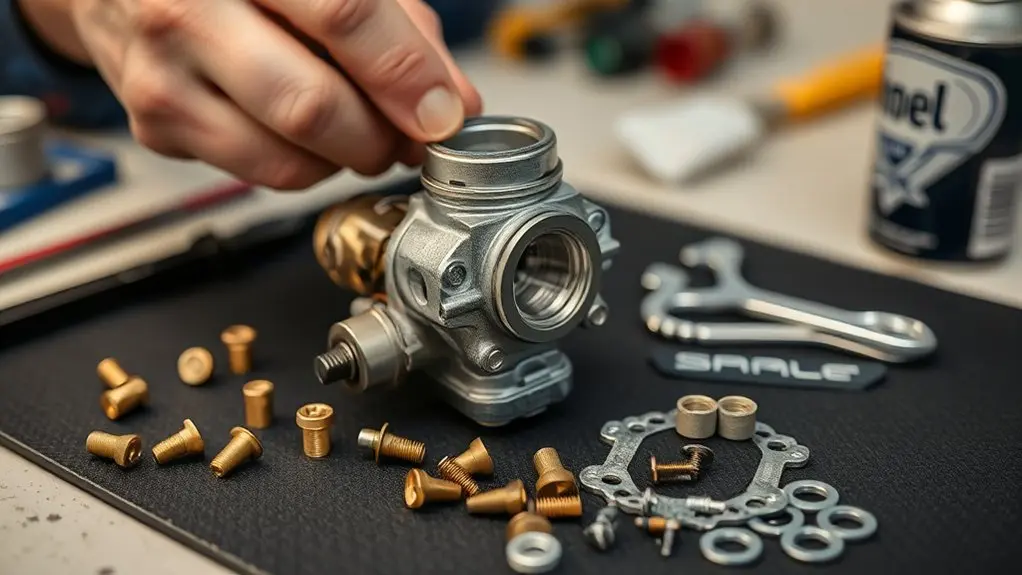
Start by verifying the engine is cool to prevent burns, then remove the air filter and intake manifold to access the carburetor.
Wear safety goggles and gloves to protect yourself from fuel and cleaning chemicals.
Always wear safety goggles and gloves to shield yourself from harmful fuel and cleaning chemicals.
Carefully use screwdrivers and wrenches to detach the carburetor from its mounting surface. Avoid excessive force to prevent damage.
As you disassemble, label and organize all screws, bolts, and parts to avoid loss and guarantee proper reassembly.
Pay close attention to the internal components, such as the float and needle, noting their arrangement.
This detailed preparation and methodical disassembly are essential for a smooth cleaning process and accurate reassembly of your Kohler carburetor.
Essential Tools and Cleaners for Kohler Carburetor Cleaning
You’ll typically need a set of screwdrivers and wrenches to disassemble your Kohler carburetor efficiently.
Alongside these, wire brushes and a soft-bristled brush are vital for scrubbing away buildup without damaging delicate parts.
Always wear safety goggles and gloves to protect yourself from harsh chemical cleaners. Use a quality carburetor cleaner solution to soak components, breaking down grime effectively.
Compressed air is essential. It clears debris from small passages and jets, making certain no blockages remain inside the carburetor.
Having these tools and cleaners ready will streamline your cleaning process and help maintain peak carburetor performance.
Preparing properly with the right equipment prevents damage and guarantees thorough cleaning of all internal components.
Step-by-Step Cleaning of Kohler Carburetor Jets and Passages
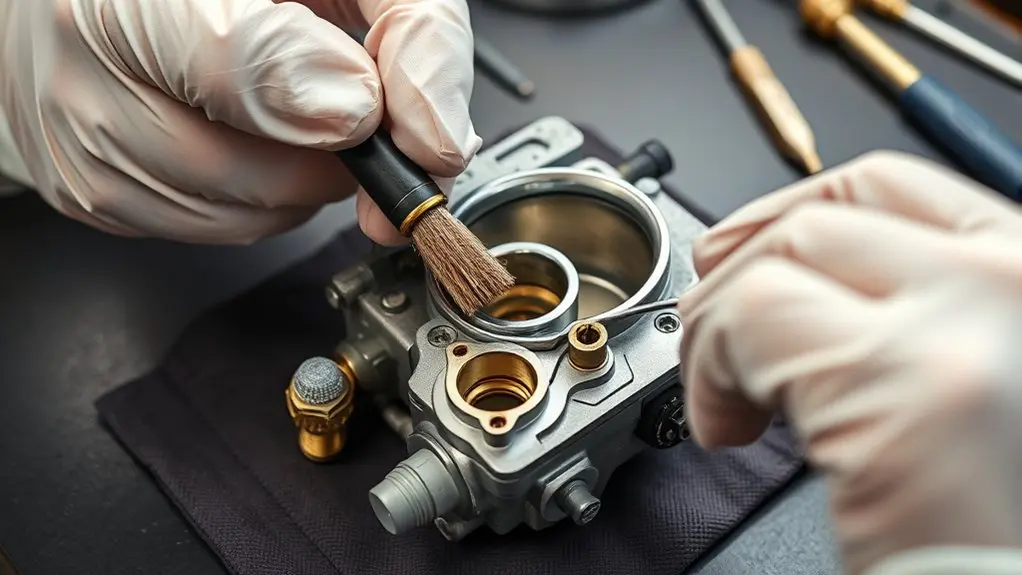
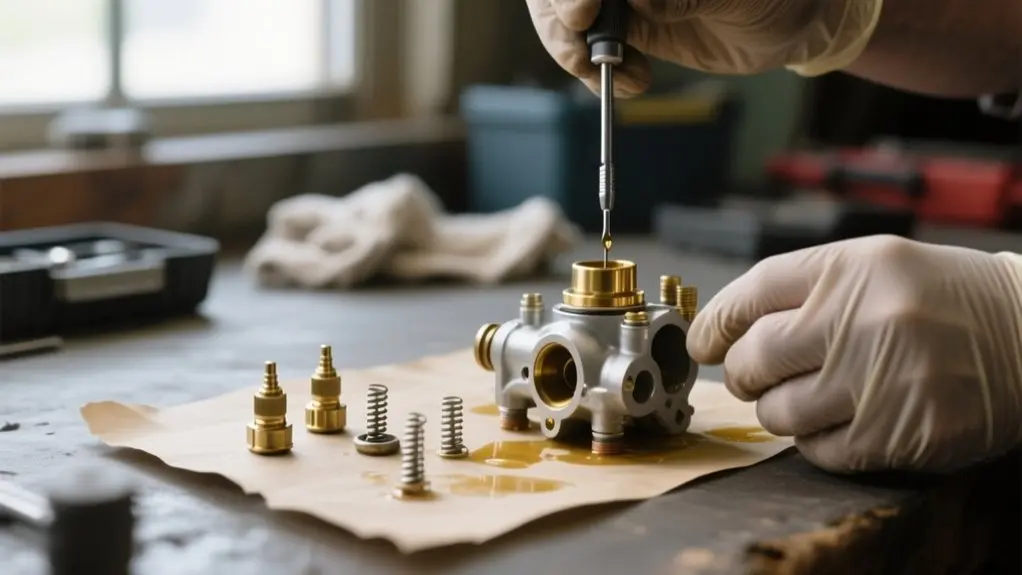
To clean the jets and passages of your Kohler carburetor, carefully disassemble the unit to expose the throttle plate and jets for easy access. Use a fine wire or needle to clear blockages in the idle and main jet passages without altering calibration.
Soak parts in a carb cleaner to dissolve residue, then scrub gently with a soft brush. Rinse with clean water and blow out all passages using compressed air to remove debris.
| Step | Action |
|---|---|
| Disassemble | Expose throttle plate & jets |
| Clear Blockages | Use fine wire/needle |
| Clean & Dry | Soak, brush, rinse, blow dry |
This method guarantees your Kohler carburetor operates efficiently by maintaining clean jets and passages.
How to Rinse, Dry, and Reassemble Your Kohler Carburetor
After clearing blockages and thoroughly cleaning the jets and passages, give every part a final rinse with carburetor cleaner to remove any remaining residue.
Make certain you inspect each component carefully, focusing on jets and small passages to confirm no dirt remains.
Thoroughly inspect jets and small passages to ensure every trace of dirt is removed.
Next, allow all carburetor parts to dry completely to prevent moisture-induced issues during operation.
When reassembling, position all gaskets and seals correctly to avoid air leaks that could compromise engine performance.
Reattach components in the proper order, applying consistent pressure to secure fittings without damage.
Once fully reassembled, adjust the idle and mixture settings to optimize engine smoothness at startup.
Following these steps guarantees your Kohler carburetor operates efficiently and reliably after cleaning.
Maintenance Tips to Extend Your Kohler Carburetor’s Life
Although cleaning your Kohler carburetor thoroughly is essential, regular maintenance plays an important role in extending its lifespan and ensuring reliable performance.
Start by inspecting and cleaning the air filter regularly to prevent debris from entering the carburetor and impairing its function.
Always use fresh fuel and add a fuel stabilizer during extended storage to reduce residue buildup inside the carburetor.
Schedule a full carburetor cleaning at least once a year or every 12,000 to 15,000 miles to avoid clogging and maintain engine efficiency.
Periodically disassemble the carburetor to clear blocked jets and fuel passages, ensuring proper fuel-air flow.
Watch for symptoms like rough idling or difficult starts, which signal the need for more frequent carburetor maintenance to keep your engine running smoothly.
Frequently Asked Questions
Can I Use Household Cleaners Instead of Carburetor Cleaner?
You shouldn’t use household cleaners instead of carburetor cleaner. Household products often lack the solvents needed to dissolve fuel varnish and carbon deposits effectively.
They may leave residues that impair performance or damage sensitive carburetor parts due to harsh chemicals.
Carburetor cleaners are specifically formulated to clean without residue and evaporate quickly, preserving your engine’s function.
For reliable results and to avoid costly damage, always choose a dedicated carburetor cleaner.
How Often Should I Clean My Kohler Carburetor?
You might think cleaning your Kohler carburetor only when problems arise is enough, but regular maintenance beats emergency fixes.
You should clean it at least once a year or every 12,000 to 15,000 miles for peak performance.
If you use your equipment heavily or in dusty conditions, clean it more often.
Keep an eye on symptoms like rough idling or power loss because they signal it’s time to clean sooner.
What Symptoms Indicate a Carburetor Is Clogged?
You’ll notice difficulty starting the engine, rough idling with vibrations, and inconsistent engine performance if your carburetor is clogged.
Reduced acceleration power and engine stalling, especially at low speeds or idle, also signal blockages.
Furthermore, poor fuel economy often indicates restricted fuel flow due to debris.
These symptoms mean your carburetor’s passages or jets need cleaning to restore proper air-fuel mixture and peak engine function.
Is It Safe to Clean the Carburetor Without Disassembly?
Think of your carburetor like a delicate clock. You can dust its surface without opening it, but the intricate gears inside may still hold grime.
Cleaning without disassembly is safe for minor buildup and can offer temporary relief, but it won’t fix deeper blockages.
To guarantee full performance, you’ll need to take it apart and clean each component thoroughly.
Use this method sparingly and prioritize a complete cleaning when possible.
Can Fuel Additives Prevent Carburetor Buildup?
Yes, fuel additives can help prevent carburetor buildup by cleaning fuel lines and dissolving deposits during engine operation.
Using additives with detergents regularly reduces varnish and gum formation, especially if you store your equipment long-term.
However, they don’t eliminate the need for routine carburetor maintenance.
You should still clean and inspect the carburetor periodically to guarantee peak performance and avoid potential issues caused by stubborn deposits.
Conclusion
By giving your Kohler carburetor a thorough cleaning, you’re helping it perform at its best and avoiding unexpected hiccups. While sometimes a fresh start with a new carburetor is the smartest move, routine maintenance keeps things running smoothly and extends its lifespan.
Follow these steps carefully, and you’ll save time and money down the road, keeping your equipment reliable and ready for action whenever you need it.