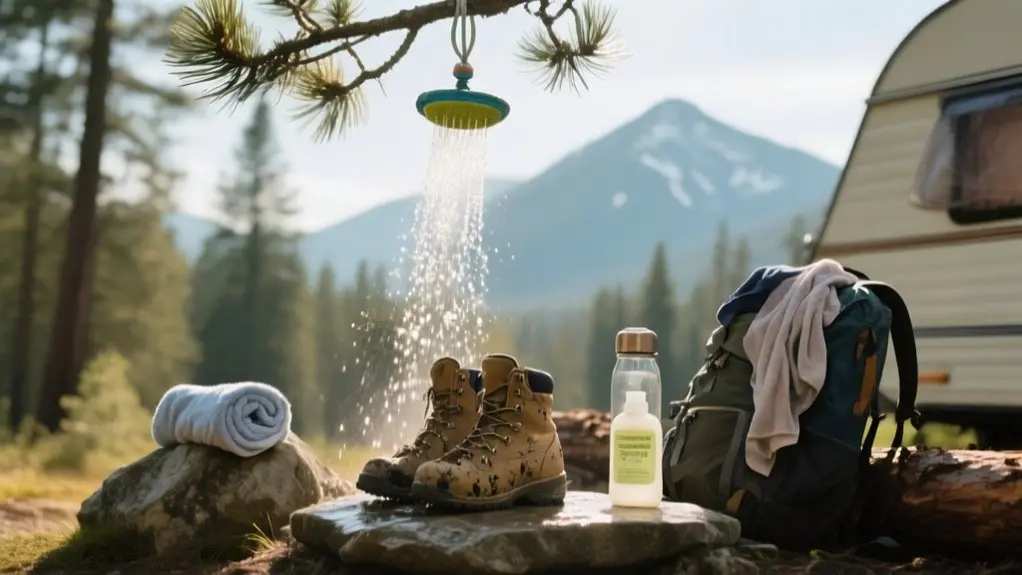
How To Shower While Camping – Pro Tips
When camping, pick a portable shower with the right water capacity and heating method, like solar or propane, based on your trip length and environment. Set it up elevated for good flow, test the water temperature to avoid burns, and limit your shower time to conserve water.
Keep your shower clean and inspect for leaks regularly. Use biodegradable soap for eco safety. Follow these basics and you’ll stay fresh and comfortable. There’s plenty more to help you master the process efficiently.
How to Choose the Right Camping Shower: Key Factors
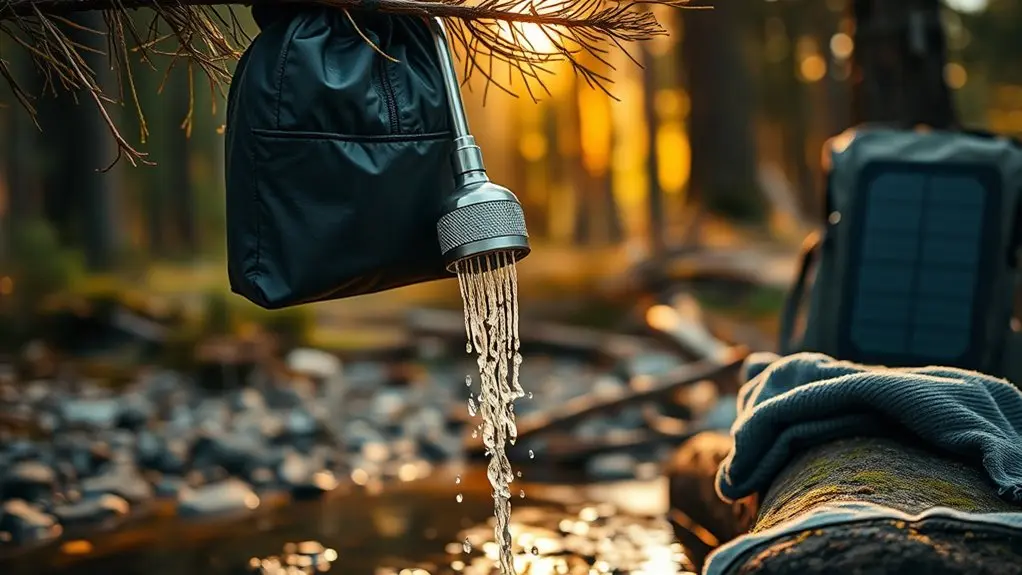
When choosing the right camping shower, you need to take into account several key factors to guarantee it fits your trip’s demands.
First, consider the water capacity. Most camping showers hold between 2 to 5 gallons, so pick one that suits how often and how long you plan to shower.
Next, evaluate the heating method, keeping in mind convenience, weight, and environmental impact.
Also, check the flow rate. A higher gallons-per-minute (GPM) rate delivers a stronger stream but uses more water.
Portability and ease of setup matter too. You want a unit that’s quick to assemble and easy to carry.
Finally, look for extras like adjustable showerheads, privacy tents, or water filters to enhance your camping showers experience without adding hassle.
Using Heated and Solar Camping Showers Effectively
You’ll want to pick the right shower type—solar models save weight and energy, while propane units heat water instantly.
Once you’ve chosen, set up your shower by filling the reservoir, heating the water, and adjusting the flow to conserve every drop.
Make sure to keep your unit clean and dry, and always use biodegradable soap to protect the environment and ensure your shower stays safe and reliable.
Choosing Shower Types
Two main types of heated camping showers can enhance your outdoor hygiene: battery-powered units and propane-fueled models.
Battery-powered portable showers excel in camping setups where lightness and mobility matter, though their heat capacity is limited.
Propane-fueled showers deliver instant hot water but add weight and require fuel, making them better for extended stays or groups.
Solar-heated showers offer an eco-friendly, lightweight alternative, ideal in sunny conditions, but heat water more slowly and depend on weather.
When choosing, consider water capacity, typically 2 to 5 gallons, to guarantee enough supply for your group.
Also, balance flow rate: higher GPM means stronger pressure but faster water use, while lower GPM saves water but reduces pressure.
Selecting the right type based on these factors guarantees efficient, comfortable camping showers.
Setup And Usage Tips
Although setting up a heated or solar camping shower might seem straightforward, proper preparation guarantees a smooth and comfortable experience. For solar showers, fill the bag with water and leave it in direct sunlight for several hours. Battery-powered units must be fully charged before your trip, while propane showers need a fuel check. Always set up your shower elevated to maximize water flow.
Here’s a quick setup guide:
| Shower Type | Setup Step | Key Tip |
|---|---|---|
| Solar | Fill bag, sunbathe hours | Position bag flat in sun |
| Battery-powered | Charge battery fully | Test pump before leaving |
| Propane-fueled | Check fuel levels | Use outdoors only |
| All Types | Elevate shower bag/unit | Use gravity for water flow |
| All Types | Inspect hoses | Prevent leaks, damage |
This setup guarantees effective use and a satisfying shower outdoors.
Maintenance And Safety
When using heated or solar camping showers, maintaining cleanliness and safety is essential to guarantee both performance and your well-being. Proper maintenance extends your shower’s lifespan while preventing hazards.
Regularly clean the unit to avoid mold and mineral buildup. Inspect hoses and connections for leaks or damage before each use.
Follow manufacturer guidelines carefully, especially regarding heating elements and flammable materials.
Drain and dry the shower thoroughly after every use to prevent mildew.
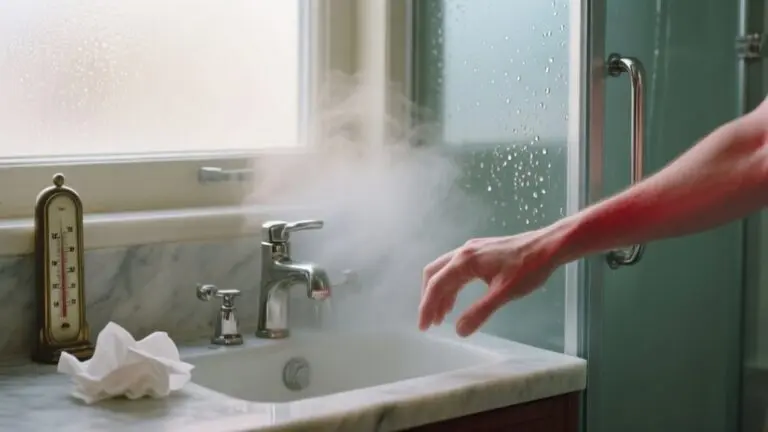
Always test water temperature with your hand first to avoid burns.
Setting Up Your Portable Camping Shower for Privacy
Since privacy is essential for a comfortable camping shower, start by choosing a portable shower tent that provides enough height and ventilation while shielding you from nearby campers or hikers.
Opt for tents with quick-pitch or pop-up designs to save setup time.
Place a waterproof tarp or groundsheet underneath to keep the area clean and mud-free.
Position your tent discreetly away from trails and other camps, yet close enough to your water source for convenience.
Inside, use built-in hooks or pockets to store toiletries and clothes, keeping everything organized during your shower.
These practical steps guarantee your portable showers offer both privacy and ease, letting you refresh comfortably without compromising your campsite’s privacy or cleanliness.
Water Conservation and Eco-Friendly Cleaning Tips
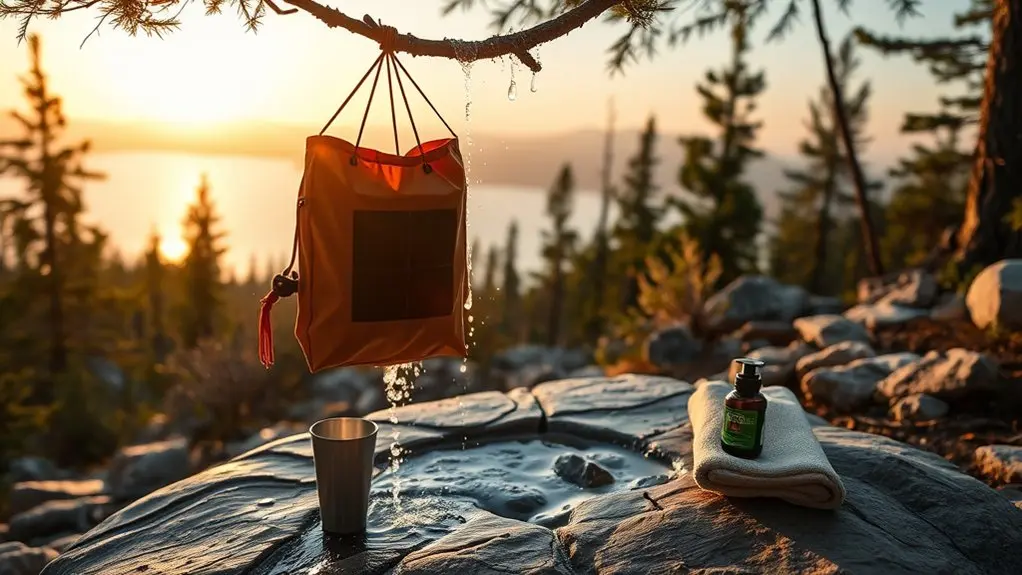
Once you’ve secured your shower setup for privacy, focus on conserving water and minimizing your environmental impact.
Water conservation is essential when camping, so adopt practices that protect local ecosystems and reduce waste.
Protect local ecosystems by conserving water and minimizing waste during your camping experience.
Use biodegradable soaps to keep your cleaning eco-friendly. Limit showers to 5 minutes or less, using no more than 2 gallons.
Collect gray water for watering plants or safely extinguishing fires. Choose solar-heated showers to rely on renewable energy.
Always test water temperature beforehand for safety and efficiency.
Maintaining Your Camping Shower to Prevent Issues
Maintaining your camping shower requires regular attention to keep it functioning smoothly and avoid common issues. Start by cleaning the shower unit and components frequently to prevent mold and mineral buildup, which can reduce performance.
Before each use, inspect hoses and connections for leaks or damage to guarantee consistent water pressure and avoid wastage.
After every trip, drain and dry the system thoroughly to prevent mildew growth and extend its lifespan.
Follow the manufacturer’s maintenance guidelines closely, using recommended cleaning products and techniques for your specific model.
Finally, keep spare shower heads and hoses handy for quick replacements, minimizing downtime during your camping experience.
Consistent maintenance not only protects your investment but also assures a reliable, enjoyable shower every time you camp.
Troubleshooting Common Camping Shower Problems
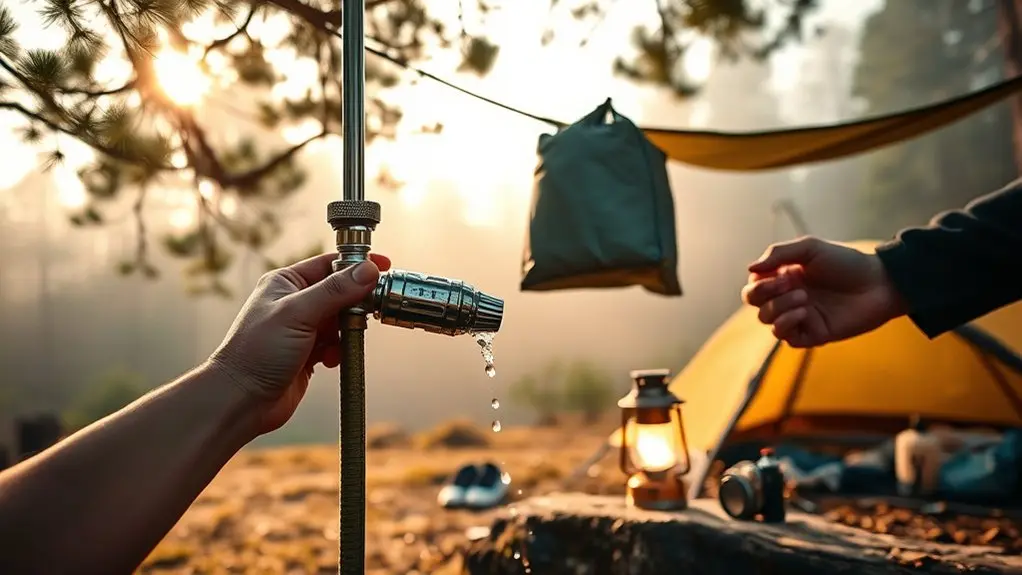
If your camping shower has low water pressure, the first thing to do is check for clogged nozzles or any kinks in the hose.
Also, make sure the water source is elevated—that really helps with the flow.
When it comes to temperature control issues, take a moment to inspect the heating element and power supply before you start using it.
This can save you from a chilly surprise!
And don’t forget to keep an eye out for leaks.
Regularly check all the connections and test the water flow to make sure everything’s working smoothly.
This way, your shower will keep running without any hiccups.
Low Water Pressure
Anyone who’s dealt with low water pressure in a camping shower knows how frustrating it can be. To fix this, focus on optimizing flow and eliminating common obstacles.
Start by inspecting your shower system regularly. Here’s what you need to do:
- Clean clogged nozzles to restore proper water flow.
- Check hoses for kinks or twists that restrict pressure.
- Elevate gravity-fed water sources at least 3 to 5 feet for better pressure.
- Use wider diameter hoses to improve the flow rate.
- Verify battery-powered pump batteries are fully charged and working.
Addressing these points will help you maintain consistent water pressure and enjoy a more effective camping shower experience.
Don’t let low water pressure ruin your outdoor refreshment.
Temperature Control Issues
After ensuring your water pressure is steady, the next challenge is controlling the water temperature during your camping shower. Temperature control issues often stem from improper water source setup or equipment problems.
Elevate your water source to maintain flow and temperature consistency. Before stepping in, test the water with your hand to avoid burns or cold surprises.
Check hoses and nozzles for kinks or blockages that reduce flow and heating efficiency.
If you’re using a solar shower, place it in direct sunlight for the best chance at warm water. Cloudy conditions will cool the water.
Regularly clean your shower to prevent mineral buildup and mold, which can impact performance and temperature.
Addressing these factors helps you maintain steady warm water and avoid temperature control issues.
Leak Detection Methods
Although leaks can seem minor, they quickly disrupt your camping shower experience and waste precious water. Employing effective leak detection methods keeps your system efficient and environmentally friendly.
Start by regularly inspecting hoses and connections for wear or damage, since leaks often start there. Perform a pressure test by filling your shower system and checking for escaping water around seals.
Apply a soapy water solution to suspect areas; bubbles reveal leaks instantly. Confirm your water source is properly elevated for gravity-fed setups to maintain pressure and prevent leaks.
Finally, drain and dry the unit thoroughly after each use to spot residual leaks and avoid mildew buildup. These practical steps save water and keep your camping shower running smoothly.
Alternative Hygiene Tips When You Can’t Use a Shower
When you can’t use a traditional shower while camping, maintaining hygiene requires some creativity and preparation.
Alternative hygiene tips include using biodegradable wet wipes to quickly clean your body without harming the environment.
Pack a one-gallon jug of water for sponge baths to rinse off sweat and dirt efficiently.
Dry shampoo is a smart choice to refresh your hair and absorb oils without water.
Carry a travel-sized bottle of eco-friendly body wash to use sparingly with minimal water, ideal for rinsing in nearby lakes or rivers.
If you want a warmer option, consider a portable shower system that heats water via solar or propane.
These alternative hygiene tips keep you fresh and comfortable when showers aren’t available.
Frequently Asked Questions
Can I Use Tap Water Directly in My Camping Shower?
Yes, you can use tap water directly in your camping shower, but always check the water quality first.
If the tap source is clean and potable, it’s safe to use without additional filtration.
Make sure your shower system can handle the water pressure and heat the water if needed.
Remember to minimize water use and dispose of wastewater responsibly to protect the environment and comply with local regulations.
How Do I Dispose of Used Shower Water Responsibly?
Before you imagine a medieval moat, know this: you should dispose of used shower water at least 200 feet from water sources.
Use water filtration with a fine mesh or cloth to catch soap residues and particles.
Collect gray water for non-potable uses like watering plants or putting out campfires.
Always choose biodegradable soap and, if possible, use designated gray water disposal areas to protect local flora and fauna responsibly.
What’s the Best Way to Dry off Without a Towel?
To dry off without a towel, use effective drying techniques like standing in direct sunlight and letting the wind help evaporate moisture from your skin.
Pat yourself gently with a synthetic chamois or microfiber cloth if you have one.
Wearing a quick-dry changing poncho or robe lets your body air-dry while maintaining modesty.
These methods speed up drying and keep you comfortable without relying on traditional towels.
Can I Shower in Cold Weather With a Portable Shower?
Just like a warrior braving the cold battlefield, you can shower in cold weather with a portable shower.
Use warm water heated by solar bags or camping heaters to keep comfortable. Keep temperatures around 100°F to avoid chills.
Set up a shower tent or windbreak to shield yourself from biting winds, and keep showers quick to preserve warmth.
With these steps, you’ll conquer cold-weather showers confidently and comfortably.
How Do I Keep Bugs Away While Showering Outdoors?
To keep bugs away while showering outdoors, apply a reliable bug repellent on your exposed skin before you start. Use natural repellents like citronella or eucalyptus oil to boost protection.
Set up your shower away from standing water and dense vegetation where bugs breed.
Wearing light-colored clothes helps, and using a portable shower tent can create a barrier against insects, giving you privacy and reducing bug exposure effectively.
Conclusion
Ready to stay clean on your next camping trip? Choosing the right shower, conserving water, and setting up privacy guarantees a comfortable experience.
Don’t forget to maintain your gear and have backup hygiene plans for unexpected situations. After all, who wants to feel grimy when nature’s calling?
With these pro tips, you’ll enjoy clean, revitalizing showers anytime, anywhere, making your outdoor adventure even more enjoyable and stress-free.