Will A Hot Shower Help A Fever – Find Out
You shouldn’t take a hot shower when you have a fever because it raises your core temperature and can make symptoms like discomfort, dehydration, and dizziness worse. Instead, lukewarm water or sponge baths gently cool your body without causing chills.
These methods help manage fever safely while maintaining hygiene. Always monitor your temperature before and after bathing to track how your body reacts. Keep hydrated, and if you want to understand safer, more comfortable fever care, there’s more important information to explore.
When You Should Skip Bathing During a Fever

If you have a high fever or are shivering, you should skip regular baths or hot showers since they can increase your discomfort. Instead, a sponge bath with lukewarm water is a safer choice to help cool your body gradually without triggering shivering.
Skip hot showers with fever; opt for lukewarm sponge baths to cool safely without shivering.
Avoid cold water baths, as they often cause chills and can worsen how you feel. For a child with a high fever, maintaining comfort is essential; a sponge bath can gently reduce temperature toward normal without overwhelming them.
If you’re too weak to bathe safely, it’s perfectly fine to skip full bathing sessions and focus on hygiene with sponge baths instead.
Prioritizing comfort while managing fever guarantees you or your child recover more comfortably and safely.
Why Hot Showers Can Worsen Fever Symptoms
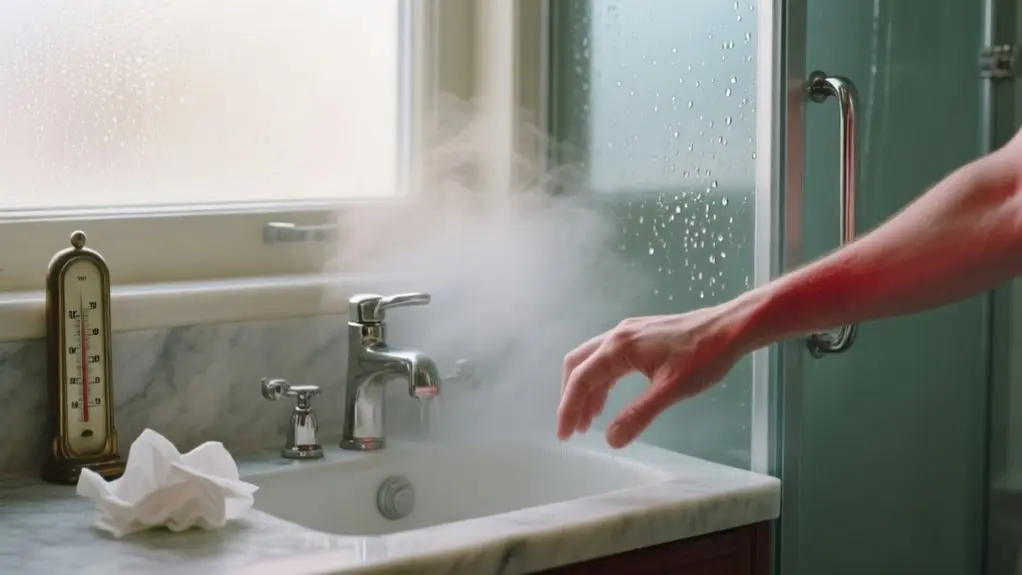
You might think a hot shower will help reduce your fever, but actually, it can raise your body temperature and make your symptoms worse.
The extra heat can lead to dehydration and mess with your body’s natural way of controlling temperature. Because of that, you end up sweating more and feeling even more uncomfortable.
Hot Water Effects
Although hot showers might seem soothing, they can actually raise your body temperature further and worsen fever symptoms.
Hot water increases your core temperature, which can intensify discomfort and make you feel more fatigued.
When you have a fever, your body tries to cool down through sweating, but hot water can interfere with this natural process, preventing effective cooling.
Furthermore, the heat causes blood vessels to dilate, which may lower your blood pressure and lead to dizziness or faintness.
To avoid these issues, it’s best to use lukewarm water when bathing during a fever.
Lukewarm water gently cools your body without causing additional stress, helping to manage your fever more safely and comfortably.
Fever Symptom Aggravation
Because hot showers increase your core temperature and cause excessive sweating, they can worsen fever symptoms and discomfort.
When you take a hot shower, your body temperature rises further, intensifying vasodilation and making you feel hotter and more fatigued. This can lead to chills or shivering afterward, as your body struggles to regulate temperature.
Furthermore, excessive sweating from a hot shower promotes dehydration, complicating fever management and prolonging recovery.
To avoid aggravating fever symptoms, lukewarm baths or sponge baths offer better symptom relief by gently cooling your body without raising your temperature or causing fluid loss.
Choosing these methods helps maintain hydration and supports your body’s natural fever response more effectively than a hot shower.
How Lukewarm Water Helps Reduce Fever Discomfort
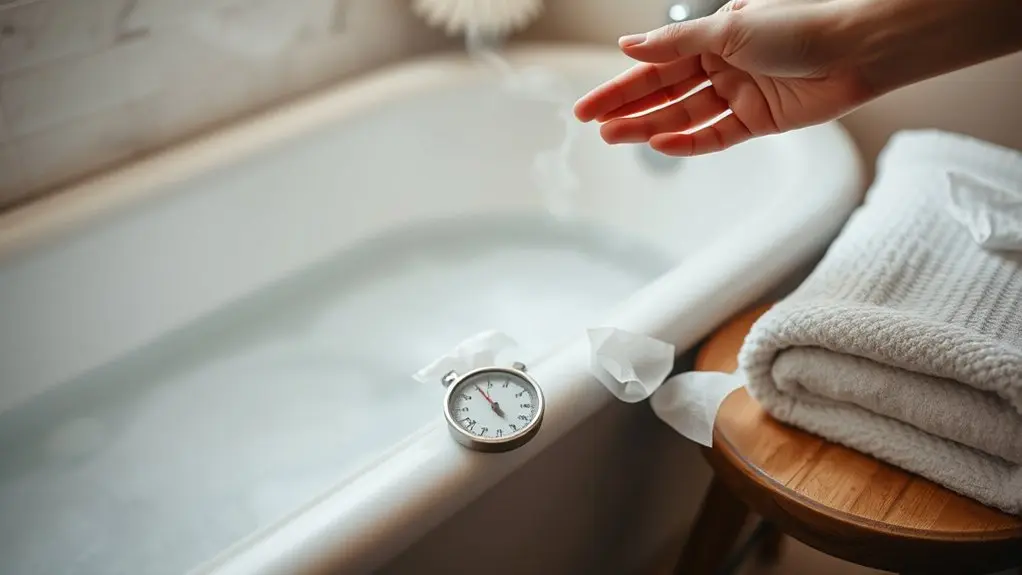
You’ll find that lukewarm water, around 85–90°F, gently cools your body without making you shiver, which can actually make a fever feel worse.
Using it for a sponge bath not only helps clean your skin by washing away sweat and bacteria but also supports good hygiene while easing discomfort.
It’s a simple way to refresh yourself and can really help you feel better when you have a fever.
Cooling Effect Benefits
When you use lukewarm water, typically between 85 and 90°F (29–32°C), it helps cool your body gently. This eases fever discomfort without triggering chills.
This cooling effect is especially helpful during high fevers because it gradually lowers your body temperature without causing shivering.
Sponge baths with lukewarm water are a practical and effective way to provide this relief while keeping hygiene in check. They remove sweat and bacteria that build up during illness.
If you’re too weak for a full bath, wiping your skin with a soft towel soaked in lukewarm water offers a similar cooling benefit.
Avoid cold water, as it may cause discomfort and actually increase your fever. Using lukewarm water ensures you reduce fever-related discomfort safely and support your body’s recovery process.
Gentle Skin Cleansing
Lukewarm water doesn’t just help cool your body gently; it also plays a key role in cleansing your skin during a fever. Bathing with lukewarm water supports gentle skin cleansing by removing sweat and bacteria that build up when your body temperature rises.
This process not only maintains hygiene but also enhances your comfort by providing a revitalizing sensation. For those with higher fevers, sponge baths using lukewarm water are particularly effective, cooling the body without triggering the shock cold water might cause.
Regular bathing with lukewarm water during mild fevers is generally safe and promotes skin health.
Prioritizing gentle skin cleansing when you have a fever helps you feel cleaner and more comfortable, supporting your overall well-being during illness.
Sponge Baths as a Safe Alternative for High Fevers
Although a full bath can be exhausting during a high fever, sponge baths with lukewarm water offer a gentle, effective way to help cool the body.
Using water between 85–90°F (29–32°C), sponge baths target key areas like the forehead, neck, underarms, and groin to maximize cooling effects.
This method helps lower body temperature safely without causing shock or discomfort. You should monitor fever symptoms closely and stop the sponge bath if shivering or chills occur, as these indicate a negative reaction.
Sponge baths are especially helpful for children and the elderly, providing hygiene while managing high fevers.
Checking Your Temperature Before and After Bathing
Before and after taking a bath, checking your temperature helps you track how your body reacts to changes in heat and whether bathing influences your fever. A normal body temperature is around 98.6°F (37°C), while a fever is 100.4°F (38°C) or higher. Use a digital thermometer for accurate readings, ensuring proper placement for reliable results.
After a hot shower, your temperature may temporarily rise between 100.5°F to 103°F. Monitoring these changes lets you assess if bathing worsens fever symptoms or causes discomfort.
For children, closely tracking their temperature before and after bathing is crucial to safeguard a child’s health.
Also, keep them hydrated with fluids such as water to support recovery and prevent dehydration during a fever.
Comfort and Hygiene Tips During a Fever
When you have a fever, taking a lukewarm bath or shower can help you stay clean and feel refreshed without greatly raising your body temperature. Maintaining hygiene during a fever is important to remove sweat and bacteria, promoting comfort and preventing skin irritation.
For children and those with high fevers, lukewarm sponge baths are especially beneficial, as they provide comfort without causing chills. Avoid cold water bathing, since it may trigger shivering and increase body temperature.
Regular bathing during mild fevers is generally safe, but always monitor how you or your child respond. Adjust bathing practices based on personal comfort and health status to guarantee safety and effective fever management.
Prioritizing lukewarm water and gentle bathing supports both hygiene and comfort throughout your fever.
Frequently Asked Questions
Can Certain Foods Help Reduce a Fever Naturally?
Yes, certain foods can help reduce a fever naturally by acting as immune boosters and hydration methods.
You should focus on nutrient-rich diets that include cooling foods like watermelon and cucumber to keep hydrated.
Herbal remedies such as ginger and garlic offer anti-inflammatory benefits.
Don’t underestimate soup benefits; chicken soup provides essential nutrients and fluids that support recovery.
Incorporating these foods helps your body fight infection and manage fever symptoms more effectively.
How Long Does a Typical Fever Last in Children?
A typical fever duration in children usually lasts 3 to 7 days, reflecting their immune response fighting infection.
You should monitor your child’s symptoms closely, focusing on hydration importance and overall behavior rather than just the fever itself.
Fever management includes ensuring they rest and stay hydrated.
If the fever lasts longer than 3 days or worsens, parental concerns should prompt you to seek medical advice to rule out serious issues.
Are There Over-The-Counter Medications Best for Fever Relief?
You might wonder if over-the-counter fever reducers are your best bet. They often are, with acetaminophen and ibuprofen leading the way, especially for kids over two and six months, respectively.
But don’t overlook the importance of hydration and temperature monitoring to track progress.
Herbal remedies might seem tempting, yet pediatric considerations and potential side effects mean you should consult a healthcare professional before trying them.
Stay informed and cautious for your child’s safety.
When Should I Seek Emergency Care for a Fever?
You should seek emergency care for fever symptoms if your child has a high temperature with emergency signs like difficulty breathing, bluish lips, unresponsiveness, or seizures.
Hydration importance can’t be overstated; severe dehydration or no wet diapers for 12 hours also require prompt pediatric care.
While home remedies help mild fevers, don’t delay medical attention if your child’s condition worsens or unusual symptoms appear.
Act quickly to guarantee safety.
Can Fever Affect Sleep Quality in Children?
Sleep disturbances during a child’s fever can feel like battling a hurricane!
Fever symptoms like chills and body aches disrupt temperature regulation, making it tough for your child to stay comfortable.
You can ease this by sticking to consistent bedtime routines and using soothing techniques like gentle massage or a cool, damp cloth.
Prioritizing child comfort helps manage fever’s impact on sleep, promoting better rest despite the discomfort.
Conclusion
When you have a fever, taking a hot shower might actually raise your body temperature and make you feel worse. Studies show that lukewarm water can help reduce fever discomfort by gently cooling your skin without causing chills.
Remember, if your fever is above 102°F, skip bathing and try a sponge bath instead. Always check your temperature before and after to monitor changes. Prioritize comfort and hygiene to support your recovery safely and effectively.