How To Adjust Carburetor On Kohler 7000 Series – Pro Tips
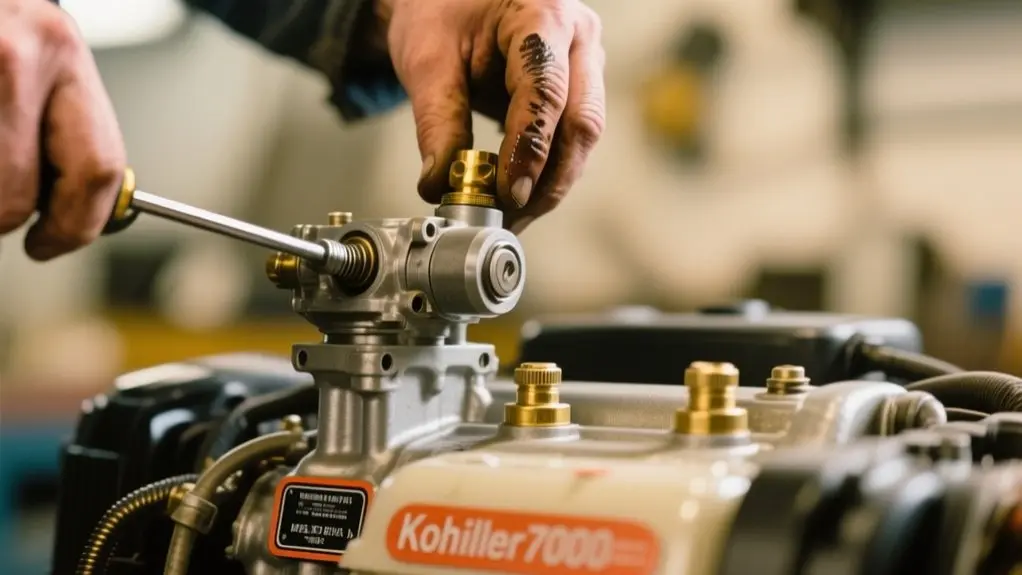
To adjust the carburetor on your Kohler 7000 Series, first identify the high-speed screw near the engine bore and the low-speed (idle) screw above the float bowl. Clean the carburetor thoroughly, inspecting throttle shaft play and gasket condition.
Use a tachometer to make small, precise adjustments. Turn the idle screw for a stable idle and the high-speed screw to achieve max RPM under load. Ensuring smooth throttle linkage helps prevent damage.
Keep following for detailed steps and troubleshooting tips.
Identifying High-Speed and Low-Speed Screws on Your Kohler 7000 Carburetor
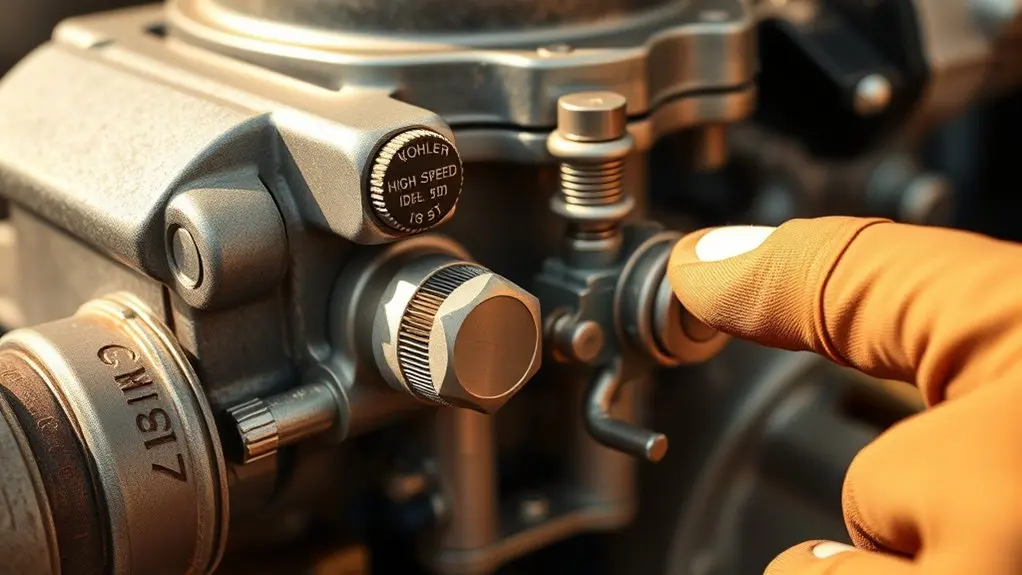
When adjusting your Kohler 7000 series carburetor, you’ll first need to identify the high-speed and low-speed screws accurately. The high-speed screw controls engine performance at full throttle and is usually located near the engine within the carburetor bore, making it easily accessible.
The low-speed screw manages idle and low RPM behavior and sits above the float bowl. It’s distinguishable by its distinct placement. Misidentifying these screws can lead to improper adjustments, causing poor engine performance or damage.
The low-speed screw controls idle and low RPM, positioned above the float bowl for easy identification.
Always refer to your service manual or trusted online sources to verify the exact locations and functions of these screws on your specific Kohler 7000 model.
Accurate identification guarantees targeted adjustments and peak engine function.
Cleaning and Inspecting Your Kohler 7000 Carburetor
Before you adjust the carburetor on your Kohler 7000, thoroughly clean it to remove dirt and debris that can restrict fuel flow and reduce engine efficiency.
Use carburetor cleaner and compressed air to clear passages and jets.
Inspect the throttle shaft for wear or excessive play, which signals the need for a rebuild.
Examine gaskets for cracks or damage to prevent leaks.
Check both adjustment screws, one controls idle speed, the other high speed, to guarantee they turn freely.
Also, regularly assess the fuel filter in the tank and replace it if clogged to maintain proper fuel supply.
Always refer to your Kohler 7000 Series service manual for detailed cleaning and inspection guidelines, ensuring you maintain peak carburetor functionality before proceeding to adjustments.
Adjusting Your Kohler 7000 Carburetor: Step-by-Step Instructions
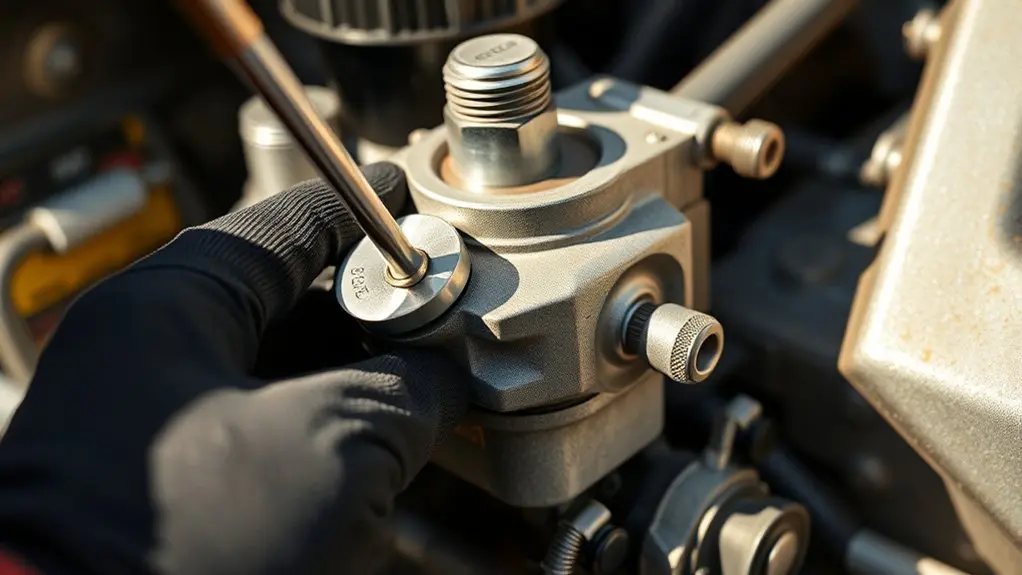
Although adjusting your Kohler 7000 carburetor requires precision, following these step-by-step instructions will help you fine-tune your engine for peak performance.
First, locate the two adjusting screws, one near the engine bore (high-speed) and one over the float bowl (idle).
Begin by identifying the two key screws: high-speed near the engine bore and idle over the float bowl.
Begin by adjusting the idle screw to achieve a smooth, steady idle. Next, adjust the high-speed screw to reach maximum RPM under load, making sure the throttle linkage moves freely.
Always use a tachometer to measure RPM accurately before and during adjustments to prevent engine damage.
Keep the carburetor clean, as dirt buildup can hinder performance regardless of screw settings.
For model-specific variations, consult your service manual or trusted online tutorials to guarantee precise adjustment tailored to your Kohler 7000 Series engine.
Measuring and Adjusting Engine RPM Safely
Fine-tuning your carburetor involves carefully measuring and adjusting the engine RPM to guarantee peak performance.
Always start by using a tachometer for precise RPM readings before making any adjustments. Identify the correct adjustment screw near the throttle linkage to avoid unintended performance issues.
Make incremental changes, monitoring RPM stability closely to prevent engine damage. To optimize settings, consult online resources or community feedback for the recommended RPM range specific to your Kohler 7000 Series model.
Key steps to follow:
- Use a reliable tachometer for accurate RPM measurement.
- Locate and adjust only the designated carburetor screw.
- Adjust RPM in small increments, observing engine response.
- Research your engine’s ideal RPM range before tuning.
If you’re unsure, seek professional guidance to ensure safety and accuracy.
When to Rebuild: Checking Throttle Shaft Play and More
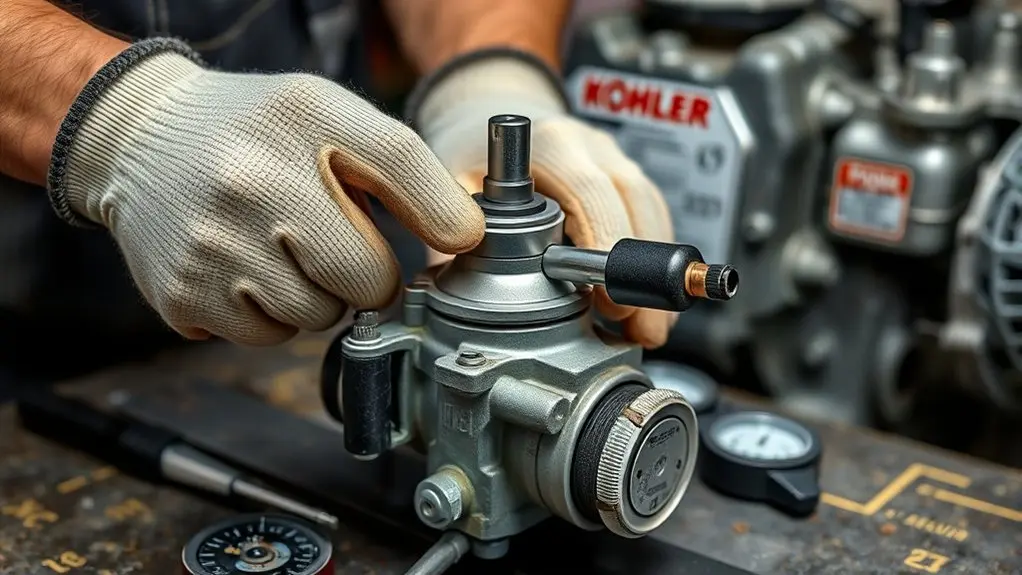
How do you know when it’s time to rebuild your carburetor? Start by checking throttle shaft play. Excessive movement here indicates wear, signaling a rebuild is needed to restore proper function.
Next, observe engine behavior. Fluctuating RPMs or hard starting often point to blockages or degraded components requiring cleaning or rebuilding.
Fluctuating RPMs or difficulty starting often signal blockages or worn parts needing cleaning or rebuilding.
Inspect the throttle linkage for tight connections and smooth operation. Misalignments can impair performance and suggest carburetor issues.
Also, watch for fuel leaks or poor idle quality, as worn gaskets and seals may need replacement.
Regularly rebuilding the carburetor addresses fuel mixture problems, improving efficiency and engine longevity.
Frequently Asked Questions
What Type of Fuel Is Best for Kohler 7000 Series Engines?
You should use unleaded gasoline with an octane rating of 87 or higher for your Kohler 7000 Series engine.
Avoid fuels with more than 10% ethanol to prevent damage and performance issues.
Don’t use premium fuel, as it won’t improve performance.
Always use fresh gas stored in clean, sealed containers to avoid contamination and water absorption, which can cause hard starting and poor engine function.
How Often Should I Service the Carburetor on My Kohler 7000?
Wondering how often you should service your Kohler 7000 carburetor? You need to do it every 50 to 100 hours of operation, depending on your usage and environment.
Regular checks keep dirt and debris from clogging essential parts.
Don’t forget to inspect the fuel filter too, replacing it when necessary.
If your engine runs rough or needs choke assistance, it’s time for a carburetor rebuild or detailed cleaning.
Can I Use Aftermarket Parts for My Kohler 7000 Carburetor?
Yes, you can use aftermarket parts for your Kohler 7000 carburetor, but you need to guarantee they’re compatible and high quality.
Poorly made parts can harm performance or cause damage.
Always research user reviews and forums to confirm reliability.
Remember, using non-OEM parts might void your engine’s warranty.
Choose replacements carefully to maintain efficiency, avoid issues, and keep your Kohler running smoothly.
What Safety Gear Is Recommended When Adjusting the Carburetor?
You should always wear safety goggles to shield your eyes from debris and fuel splashes.
Use nitrile gloves to protect your skin from chemicals and fuel exposure. A dust mask or respirator helps prevent inhaling harmful fumes.
Wear closed-toe shoes to guard your feet and dress in long sleeves and pants to minimize burn risks from hot engine parts.
This gear guarantees your safety throughout the carburetor adjustment process.
How Do Weather Conditions Affect Carburetor Performance?
Weather conditions directly impact your carburetor’s air-fuel mixture. Cold, dense air enriches the mixture, so you’ll need to reduce fuel flow to avoid flooding.
High humidity lowers oxygen levels, causing a leaner mix. You should increase fuel delivery.
Moisture or rain can introduce water, risking misfires or stalling.
So, check fuel quality and clean the carburetor regularly.
Adjustments based on weather guarantee your engine runs smoothly and efficiently.
Conclusion
Adjusting your Kohler 7000 series carburetor isn’t just about performance. It can extend engine life by up to 30%. By correctly identifying the high and low-speed screws, thoroughly cleaning the carburetor, and carefully adjusting the RPM, you guarantee smooth operation and fuel efficiency.
Don’t overlook checking throttle shaft play; it’s a key factor before considering a rebuild. Follow these steps precisely to keep your engine running reliably and efficiently.