
Should You Brush Your Hair In The Shower – Quick Facts
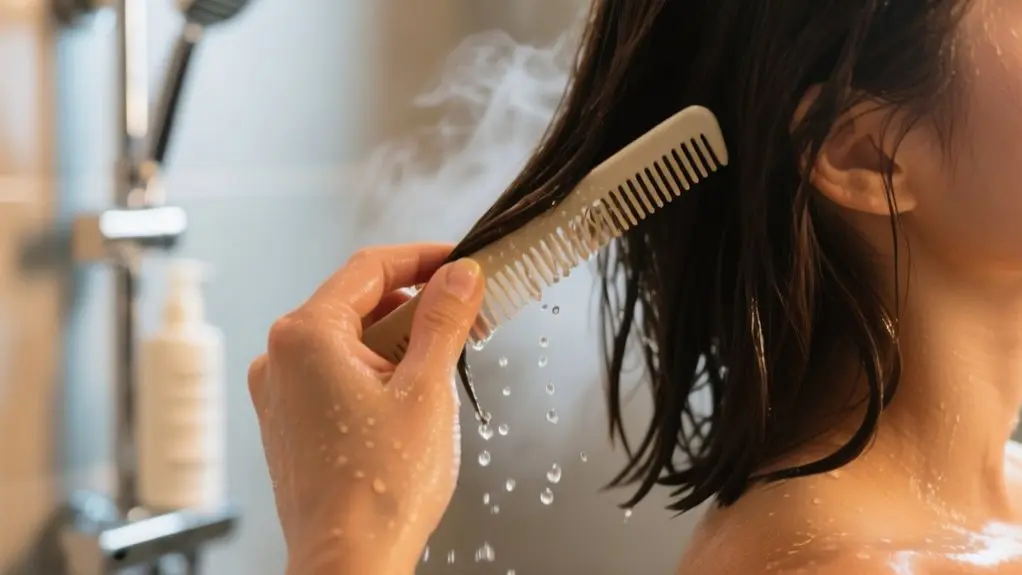
You should brush your hair in the shower while conditioner is applied to reduce tangles and minimize breakage. Using a wide-tooth comb or wet brush helps protect fragile strands and evenly distributes conditioner for better absorption.
Start detangling from the ends upward, working in sections to maintain your hair’s natural texture and prevent damage. Brushing wet hair carefully can keep it healthier and more manageable.
Exploring the right timing, tools, and techniques will enhance your hair care routine even further.
How Brushing Hair in the Shower Affects Your Hair
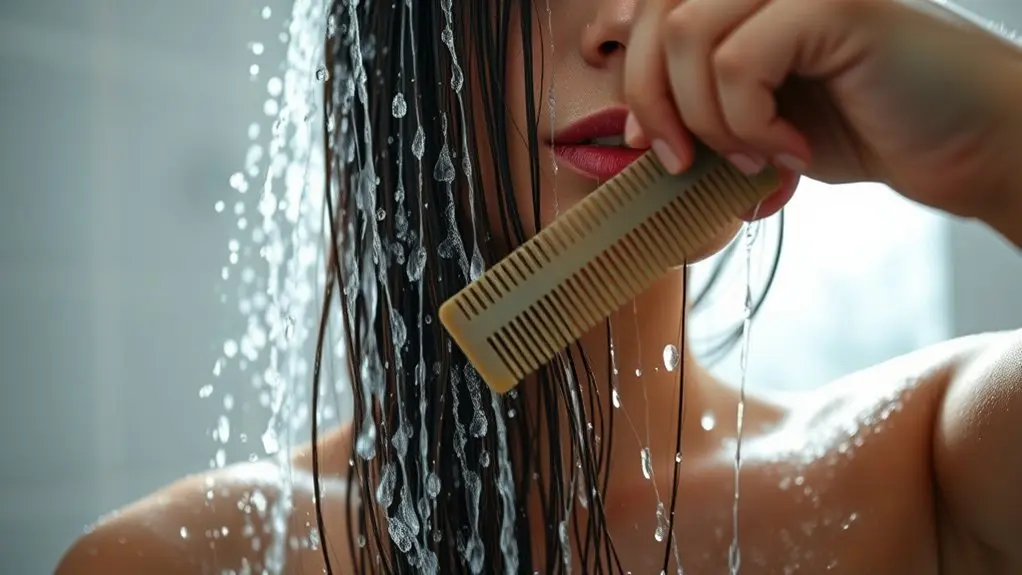
Brushing your hair in the shower, especially while conditioner is applied, can greatly reduce tangles and minimize breakage thanks to the added slip from the product.
When you brush wet hair, it’s essential to use a wide tooth comb or a wet brush designed for delicate strands.
Using a wide-tooth comb or wet brush is key to gently detangling wet, delicate hair strands.
Start detangling from the ends, working your way upward to avoid unnecessary tugging and breakage. This method also enhances the absorption of conditioners and treatments, maximizing their effectiveness.
For curly or coily hair, detangling in the shower helps maintain natural texture and reduces frizz.
Moreover, regular brushing in the shower stimulates scalp circulation, which may promote hair growth and improve overall scalp health.
Adopting these techniques will keep your hair healthier and more manageable.
When Is the Best Time to Brush Hair in the Shower?
You should brush your hair while the conditioner is still in. It softens your strands and makes detangling way easier, which means less breakage.
Just start brushing from the ends and slowly work your way up to avoid pulling too hard on your wet hair.
Doing it at this stage really helps keep your hair healthier and stops knots from forming after you rinse.
Optimal Brushing Timing
Although it might seem convenient to brush your hair at any time during your shower, timing plays a crucial role in preventing damage and tangles. The ideal moment for brushing is while the conditioner is in your hair, as the conditioner provides slip that minimizes breakage.
After rinsing out shampoo, you can gently detangle with a wide-tooth comb or brush before applying conditioner, but be careful to avoid tugging wet hair.
Avoid brushing hair before applying conditioner, since wet hair is more vulnerable and brushing then can cause damage.
Finally, a gentle pass-through with a wide-tooth comb or brush before rinsing conditioner helps eliminate leftover knots. By brushing at these key points, you protect your hair’s integrity and reduce tangles effectively.
Conditioner Brushing Benefits
Knowing when to brush your hair in the shower can make a significant difference in maintaining its health and preventing damage. The conditioner brushing benefits are most effective when you brush your hair after applying conditioner, as it provides the necessary slip to gently detangle wet strands.
Using a wide-tooth comb or a wet brush at this stage helps minimize breakage by easing out knots without tugging. This method also promotes even conditioner distribution, ensuring better absorption and enhanced hair health.
For curly or coily hair, detangling from the ends upward while conditioner is in keeps frizz at bay and preserves natural texture.
Avoid brushing before conditioning, as wet hair is fragile and more prone to damage without the protective slip conditioner provides.
Best Tools for Brushing Wet Hair
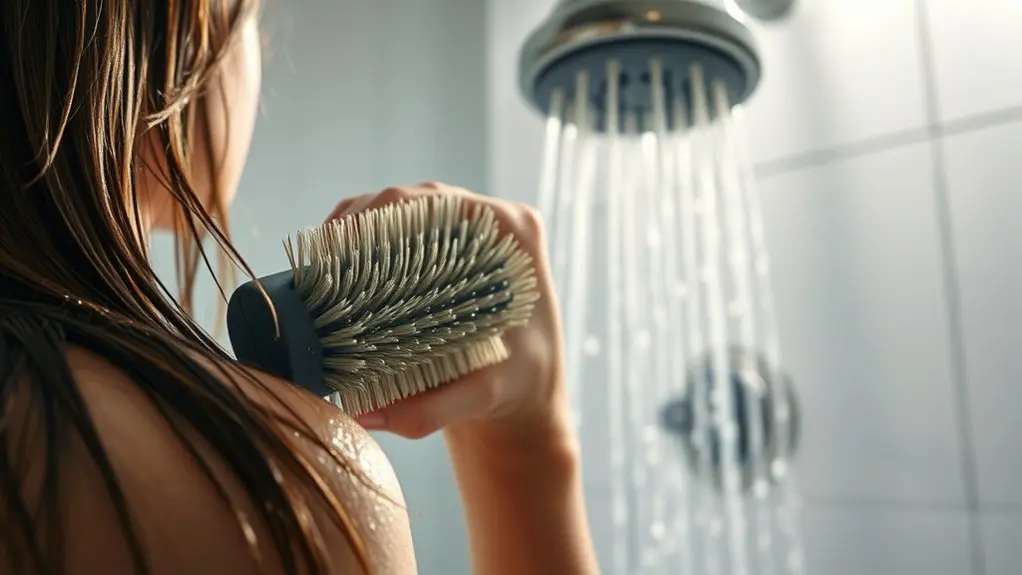
Choosing the right tools for brushing wet hair is super important to avoid damage and make detangling easier. You’ll want to reach for a wide-tooth comb, a wet brush, or a detangling brush—depending on your hair type, of course.
These tools are specially designed to be gentle on wet hair, which is more fragile.
And don’t forget, cleaning your brushes and combs regularly is key. It helps keep them working well and keeps your hair healthy and happy.
Ideal Wet Hair Tools
When you brush your hair while it’s wet, using the right tools makes all the difference in preventing damage. A wide-tooth comb is excellent for gently detangling wet hair, minimizing tugging and breakage.
If you have straight to wavy hair, consider a wet brush with flexible bristles that glide smoothly through damp strands.
For curly or coily hair, a detangling brush is specifically designed to reduce frizz and avoid damage during brushing.
Choosing tools made for wet hair is essential to maintain hair health and prevent unnecessary breakage compared to traditional brushes.
Remember to clean your wide-tooth comb or detangling brush regularly to promote hygiene and peak performance, keeping your hair strong and healthy with every brush.
Tool Types Explained
Different types of brushes and combs serve unique purposes when it comes to brushing wet hair, and understanding their specific benefits can help you maintain healthy strands.
For wet hair, choosing the right tool minimizes breakage and tangling.
The Wide-Tooth Comb is perfect for gently detangling without causing damage, especially for straight and wavy hair. Meanwhile, the Wet Brush uses flexible bristles to reduce tugging, making it ideal for similar hair types.
For curly or coily hair, a detangling brush separates curls smoothly without frizz.
Here are the best tools for brushing wet hair:
- Wide-Tooth Comb: gentle detangling, reduces breakage
- Wet Brush: flexible bristles, prevents damage
- Detangling Brush: designed for curls, minimizes frizz
Selecting Damage-Free Brushes
Understanding three key types of brushes designed for wet hair can greatly reduce damage and make detangling more efficient.
First, wide-tooth combs gently glide through wet strands, minimizing breakage.
Wet brushes feature flexible bristles specifically made for damp hair, reducing tugging and protecting your hair’s integrity.
Detangling brushes work best for curly or coily textures, allowing you to detangle without disrupting your natural pattern.
Always opt for tools designed for wet hair, as traditional brushes create excess friction that can lead to damage.
Furthermore, regularly cleaning your brushes prevents product buildup, maintaining both hygiene and effectiveness.
Why Use a Silkie Brush for Brushing Wet Hair
Because wet hair is more prone to breakage, choosing the right brush is essential, and a Silkie brush excels in this role.
Silkie brushes feature soft, flexible bristles that glide through wet hair, reducing tugging and minimizing damage. Their design detangles gently, making them suitable for all hair types, especially straight and wavy textures.
When brushing wet hair with a Silkie brush, you benefit from:
- Even distribution of conditioner, improving absorption and hair health
- Gentle detangling during conditioning to prevent breakage
- Easy cleaning, ensuring hygiene and maintaining brush effectiveness
Using a Silkie brush in the shower supports your hair care routine by protecting fragile strands while enhancing product performance.
Hair Type Considerations for Brushing Wet Hair
When brushing wet hair, tailoring your approach to your specific hair type guarantees better results and minimizes damage.
If you have straight hair, brush in sections using a wide-tooth comb while conditioner is in to avoid clumping and maintain smoothness.
For straight hair, use a wide-tooth comb in sections during conditioning to prevent clumping and keep hair smooth.
For wavy hair, a wide-tooth comb helps preserve wave structure and reduce frizz during detangling in the shower.
Curly hair requires starting from the ends and working upward to prevent breakage and keep curl definition intact, ideally while conditioner is applied.
Coily hair benefits from dividing strands into smaller sections and using a specialized detangling brush to minimize tugging.
Regardless of your hair type, always use tools designed for wet hair to reduce damage and improve your detangling experience.
Step-by-Step Guide to Brushing Wet Hair in the Shower
You should brush your hair in the shower only after you’ve applied conditioner. This helps reduce breakage and makes detangling a lot easier.
Grab a wide-tooth comb or a brush that’s made for wet hair.
Start detangling from the ends and slowly work your way up. Be gentle as you go.
Also, keep in mind your hair type—choosing the right tool and technique for your hair will protect your strands and make your hair easier to manage.
Optimal Timing For Brushing
Although brushing wet hair can be risky if done at the wrong moment, timing it correctly in the shower can protect your strands and improve manageability.
To brush hair effectively, wait until after you rinse out shampoo and apply conditioner. The conditioner provides much-needed slip, reducing breakage when detangling.
Use a wide-tooth comb or a wet brush to gently work through knots, starting at the ends and moving upward.
For ideal timing, follow these tips:
- Brush while conditioner is still in your hair to minimize damage.
- Avoid brushing before applying conditioner, as wet hair is fragile.
- Work in sections to maintain texture and prevent tangling, especially for wavy or curly hair types.
This approach guarantees your hair stays healthy and manageable.
Best Tools And Techniques
Because wet hair is more vulnerable to damage, selecting the right tools and following proper techniques is essential for detangling while showering. Use a wide-tooth comb or a wet brush to minimize tugging and breakage.
Begin brushing from the ends and gradually work your way up to the roots to prevent knots from tightening. It’s best to detangle after rinsing out shampoo, while conditioner remains in your hair for added slip.
For curly or coily hair, divide your hair into sections and gently brush each from the ends upward to maintain texture and reduce frizz.
Avoid brushing before applying conditioner, as wet strands are fragile and prone to breakage without adequate slip and protection.
Following these steps guarantees safe, effective detangling in the shower.
Mistakes to Avoid When Brushing Wet Hair
When brushing wet hair, taking the wrong approach can cause significant damage and breakage. To protect your strands, avoid common mistakes that compromise hair health.
First, never brush your hair before applying conditioner; wet hair is fragile and needs slip to prevent tugging.
Brushing hair before conditioner can cause breakage—wet strands need slip to avoid tugging.
Second, don’t start from the roots—instead, begin at the ends and work upward to gently detangle knots without pushing them deeper.
Third, avoid traditional brushes; opt for wide-tooth combs or brushes designed specifically for wet hair to minimize friction and breakage.
By steering clear of these errors, you’ll maintain stronger, healthier hair and reduce damage during your routine.
How Brushing in the Shower Prevents Tangles
Brushing your hair in the shower while conditioner is applied takes advantage of the product’s slip to reduce friction and prevent breakage. Using a wide-tooth comb or wet brush lets you detangle more gently and evenly distribute conditioner for better absorption.
For straight hair, brushing in sections prevents clumping. Wavy hair retains its natural structure, and curly or coily hair benefits from detangling from ends upward to avoid frizz and preserve curls. This method minimizes post-shower tangles, making hair smoother and easier to manage.
| Hair Type | Brushing Method |
|---|---|
| Straight | Section and brush |
| Wavy | Gentle wide-tooth comb |
| Curly | End-to-root detangling |
| Coily | Use wide-tooth comb |
| All types | Brush during conditioning |
Risks of Brushing Wet Hair
Although wet hair may feel softer and easier to manage, it’s actually more vulnerable to damage due to its weakened structure. When your hair is wet, the cuticle opens, making strands fragile and prone to breakage.
Brushing wet hair improperly can cause significant harm, including split ends and hair loss.
To protect your hair, keep these points in mind:
Use a wide-tooth comb or a specialized wet brush to reduce friction.
Always start detangling from the ends, working upward gently to avoid tugging.
Avoid over-brushing, as excessive friction weakens hair strands and increases breakage.
Recommended Frequency for Brushing Hair in the Shower
Since conditioner softens and smooths your hair, you should brush it primarily during your shower after applying conditioner to minimize breakage and improve detangling.
For curly or highly textured hair, limit brushing hair in the shower to this point to prevent frizz and preserve healthy hair.
If you have long hair, brushing three times daily—including in the shower—helps prevent mats and tangles, supporting manageability.
Straight hair benefits from sectional brushing during the shower to avoid clumping and guarantee even conditioner distribution.
Overall, consistent brushing hair during your shower routine promotes healthy hair by maintaining moisture balance and reducing damage.
Tailor the frequency to your hair texture and length for best results, making brushing in the shower a strategic part of your hair care regimen.
How to Protect Hair While Brushing in the Shower
To keep your hair healthy while brushing in the shower, you need to take specific precautions that minimize breakage and damage. Using the right tools and techniques is essential for maintaining your hair health.
Start by applying a generous amount of conditioner to provide slip, which helps detangle your hair gently.
Apply plenty of conditioner first to create slip and gently detangle your hair without damage.
Always use a wide-tooth comb or a wet brush designed for damp hair to reduce tugging. When brushing, begin at the ends and gradually work your way up to the roots to avoid moving knots and causing breakage.
Furthermore, keep your brushing tools clean to guarantee both hygiene and effectiveness.
Follow these steps to protect your hair while brushing in the shower:
- Use a wide-tooth comb or wet brush
- Apply plenty of conditioner before brushing
- Brush from ends to roots gently
Frequently Asked Questions
Can Brushing Hair in the Shower Improve Scalp Health?
Yes, brushing your hair in the shower can improve scalp health by enhancing scalp stimulation.
When you gently brush your hair while applying hair products like conditioner, you boost blood flow to your scalp, promoting nutrient delivery to hair follicles. This increased circulation supports healthier hair growth.
Plus, brushing helps distribute hair products evenly, ensuring your scalp gets the full benefit.
It also removes loose hairs and debris, keeping your scalp cleaner and healthier.
Does Brushing Hair in the Shower Affect Hair Growth?
Brushing your hair in the shower can positively affect hair growth by boosting scalp circulation and enhancing nutrient delivery to follicles.
Your shower habits, like using a wide-tooth comb or wet brush while conditioning, help detangle hair gently, reducing breakage and supporting healthy strands.
This careful approach distributes natural oils, improving hair resilience.
Just avoid over-brushing, as too much friction can damage hair and hinder growth.
Is It Safe to Brush Color-Treated Hair in the Shower?
Think of brushing color-treated hair like carefully untangling a delicate necklace in water. You need gentle hands.
Yes, it’s safe to brush your hair in the shower if you use a wide-tooth comb or wet brush while conditioner is applied. This prevents hair damage and helps with color preservation by minimizing tugging on fragile strands.
Avoid brushing dry or before conditioning to keep your color vibrant and your hair healthy.
Can Brushing Hair in the Shower Reduce Dandruff?
Yes, brushing your hair in the shower can help reduce dandruff by addressing common causes like dry scalp and buildup.
When you gently brush while conditioning, you spread moisture evenly and remove loose flakes. This also boosts scalp circulation and stops dead skin cells from piling up.
Just make sure to use a gentle brush made for wet hair to avoid irritation and keep your scalp healthy.
Should Children Brush Their Hair in the Shower?
About 70% of parents find brushing hair in the shower helps reduce tangles and breakage for kids. You should encourage children to include hair care in their shower routine by brushing gently with a wide-tooth comb or wet brush while using conditioner.
Start at the ends and work up to prevent pulling. This method makes detangling easier, teaches good habits, and keeps their hair healthy and manageable with less discomfort.
Conclusion
You might think brushing your hair in the shower is a game-changer, and honestly, it almost is if done right. It can transform your routine by preventing tangles and minimizing breakage, but only if you pick the right tools and timing.
Ignore the risks, though, and you could end up with a tangled disaster. So, brush wisely, protect your strands, and turn your shower into the ultimate hair-care haven. Your locks will thank you!