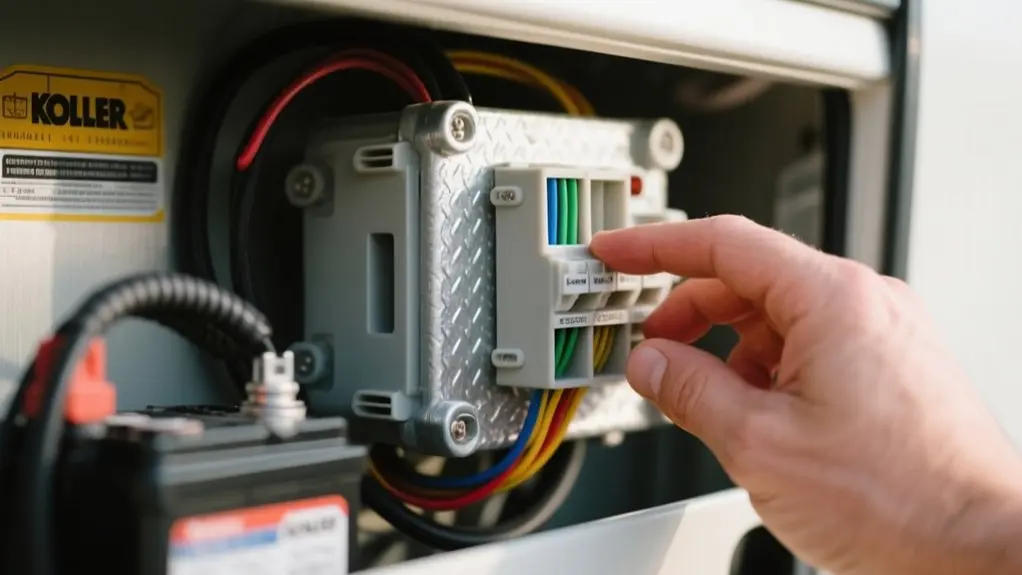
Where Is The Fuse Kohler Genarator Rv – Buying Guide
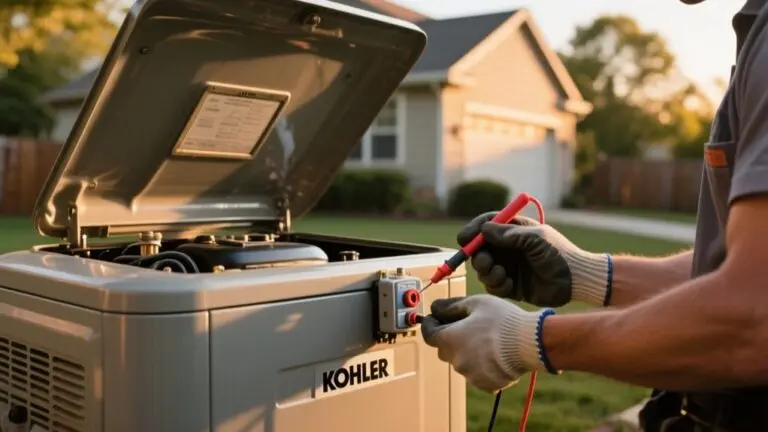
You’ll find the fuse on your Kohler RV generator usually inside the control panel or near the battery, accessible by removing the panel cover. Identify the exact fuse type by checking amperage and voltage specs in your manual, and always test with a multimeter before replacing.
Turn off the generator and disconnect power for safety. Proper fuse maintenance prevents start-up issues caused by corrosion or loose connections.
Keep following to understand fuse replacement and troubleshooting in detail.
Where to Find the Fuse on a Kohler Generator RV
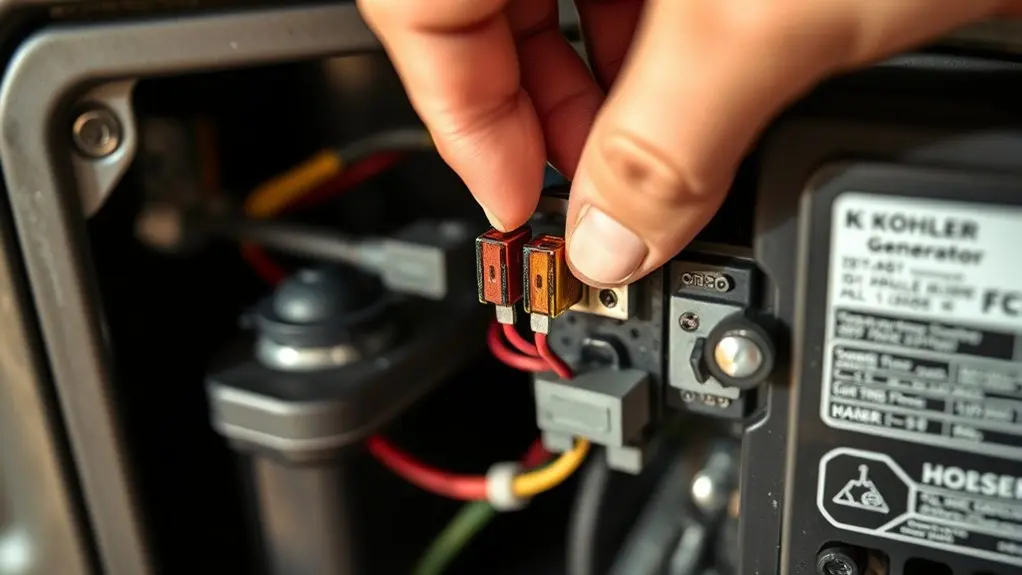
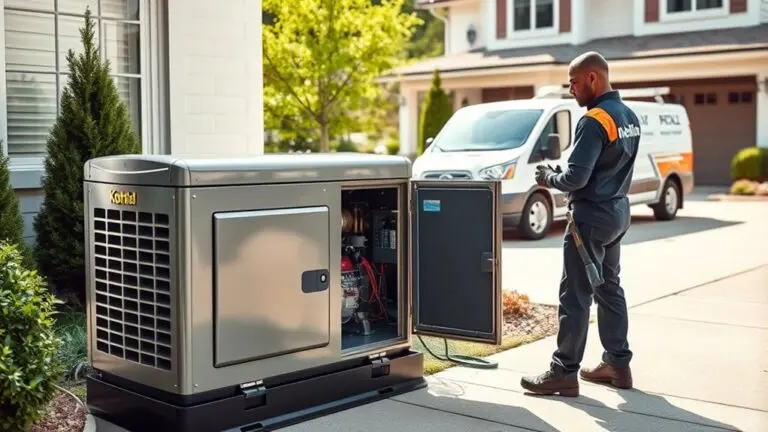
Where exactly do you find the fuse on a Kohler generator RV? Typically, it’s located within the control panel, which means you’ll need to remove the panel cover to access it.
Some models also position the fuse near the battery or starter motor for easier maintenance.
Before replacing, consult your generator’s owner’s manual to pinpoint the exact fuse location and specifications. When installing a new one, verify it matches the required amperage and type. This is critical to protect the generator’s electrical system from overloads and short circuits.
Always check your owner’s manual and match fuse specifications to ensure safe generator operation.
Using an incorrect fuse can compromise safety and operation.
How to Identify the Correct Fuse Type for Replacement
You’ll want to start by checking your Kohler generator’s manual to find the exact fuse specifications, like the amp rating and the type.
After that, take a look at any markings on the fuse holder or the fuse itself to double-check those details.
It’s really important to match the replacement fuse’s ratings exactly to keep everything running safely and reliably.
Fuse Specification Identification
Identifying the correct fuse type for your Kohler generator requires careful examination of the existing fuse and reference to the generator’s specifications.
Start by locating the fuse compartment using the manual’s diagram if needed. Then, follow these steps to pinpoint the right fuse:
- Check Amperage Rating: Read the amperage printed on the old fuse. This must align exactly with the generator’s requirements to prevent electrical faults.
- Inspect Fuse Type: Note the fuse’s physical type—glass, ceramic, or automotive blade—as mismatched shapes can cause improper fit or failure.
- Consult Documentation: Verify specifications in the owner’s or service manual to confirm voltage and amperage ratings before purchasing a replacement.
Using a fuse with precise specs guarantees protection and maintains your generator’s operational integrity.
Matching Fuse Ratings
Although selecting a replacement fuse for your Kohler generator might seem straightforward, you must carefully match both the amperage rating and physical dimensions to the original.
Begin by consulting the owner’s manual to identify exact specifications for your model.
Examine any labeling or coding on the circuit board or adjacent fuses to verify voltage and amperage requirements. Use a multimeter to test continuity and confirm if the existing fuse is functional.
When replacing, make certain the new fuse matches the original’s amperage rating and size precisely to maintain electrical compatibility and safety. Furthermore, select fuses made from similar materials, such as glass or ceramic, to uphold performance standards and reliability.
Accurate matching prevents damage and guarantees the best generator operation.
How to Access the Fuse Compartment
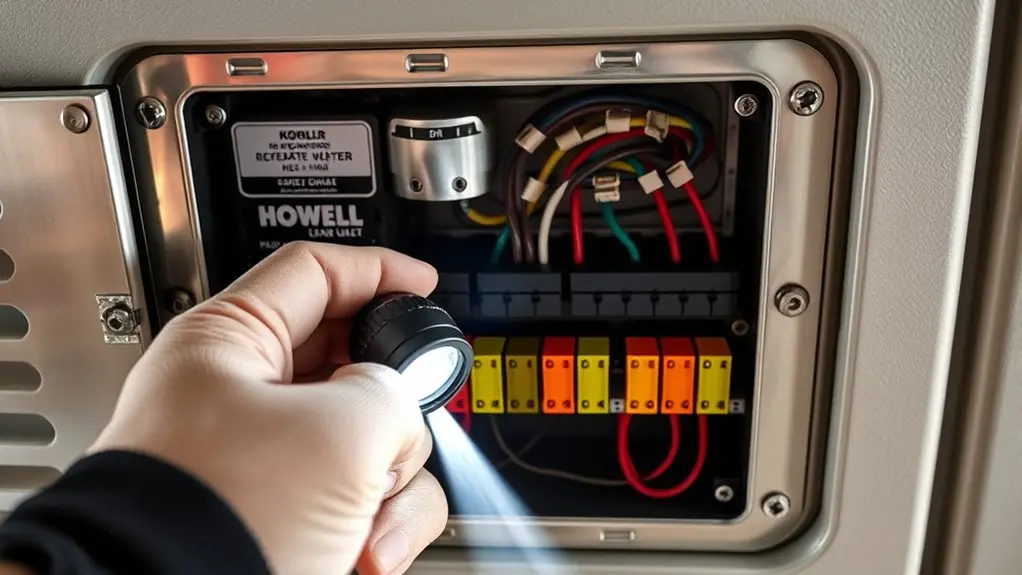
Locate the fuse compartment on your Kohler generator. It’s typically near the power or control panel on models like the 5E/4EF. To access it safely and efficiently, follow these steps:
- Power Down and Cool: Disconnect the generator from all power sources. Then, allow it to cool completely to avoid electric shock or burns.
- Remove Cover: Use the correct tools to unscrew or unfasten the panel or cover that secures the fuse compartment. Check your generator’s manual for specifics.
- Inspect Fuses: Once open, visually inspect the fuses. Take note of their ratings if you need to replace them.
Always consult the Kohler installation and operation manual for detailed instructions tailored to your specific model. This ensures precise handling every time.
Common Fuse Problems Preventing Generator Start
A blown fuse in your Kohler generator can immediately stop the engine from starting. This signals a need for quick inspection and replacement. Corrosion often weakens fuse connections, disrupting power flow to critical components.
Since fuses protect against electrical overloads, ignoring a faulty fuse risks further damage. You’ll typically find the fuse box near the electrical panel or control module. Regular checks remain essential, especially after long inactivity.
| Problem | Cause | Impact |
|---|---|---|
| Blown Fuse | Overload or short-circuit | Prevents engine start |
| Corrosion | Moisture ingress | Weakens connection, disrupts power |
| Loose Fuse | Vibration or poor fit | Intermittent power loss |
Address these issues promptly to maintain reliable generator operation.
How to Safely Replace the Fuse on Your Kohler Generator RV
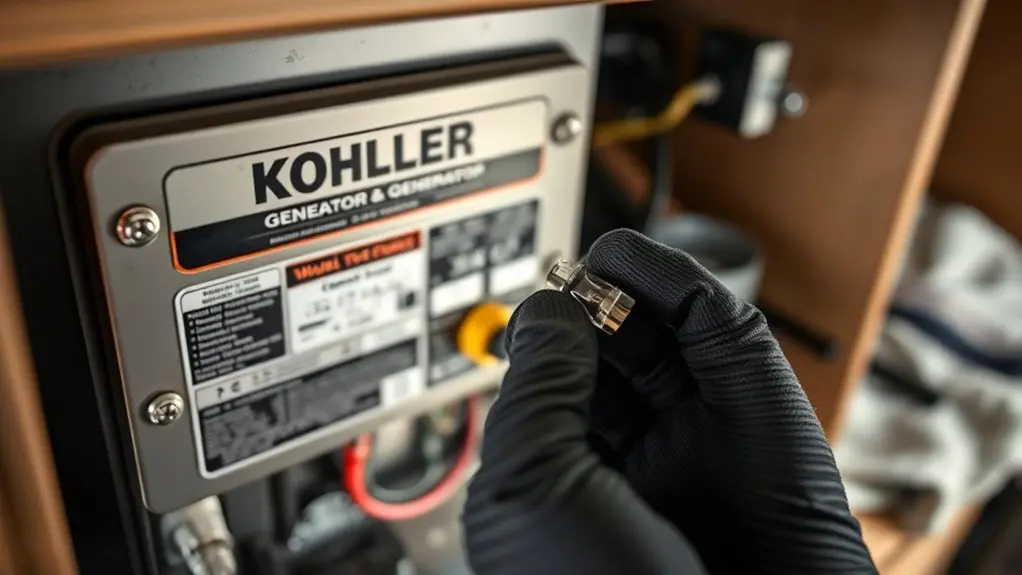
Before you replace the fuse on your Kohler generator, make sure you turn off the generator and disconnect the battery to eliminate any risk of electrical shock.
Locate the fuse, usually in the control panel or near the circuit board, as specified in your manual. Follow these steps:
- Remove the blown fuse carefully and inspect the fuse holder for damage or corrosion, ensuring good electrical contact.
- Insert a replacement fuse that matches the exact specifications in the manual to prevent further damage.
- Reconnect the battery, power on the generator, and verify proper operation without faults.
Adhering to these precise steps guarantees a safe and effective fuse replacement, maintaining your Kohler generator’s reliability and electrical integrity.
Tips for Maintaining Your Kohler Generator Fuse and Electrical System
You should regularly inspect your Kohler generator’s fuses to make sure they’re working properly and to avoid any electrical overloads.
It’s also a good idea to check all the electrical connections for signs of corrosion or wear because damaged wiring can cause fuse failures.
Keeping up with a consistent inspection routine really helps maintain your system’s reliability and safety.
Fuse Inspection Frequency
Regularly inspecting your Kohler generator’s fuse is essential for maintaining system integrity and preventing unexpected failures. You should incorporate fuse checks into your routine maintenance schedule to guarantee it handles the electrical load correctly.
Fuse inspection frequency depends on usage intensity and environmental conditions.
Follow these key steps for effective fuse inspection frequency:
- Monthly Visual Checks: Examine the fuse for signs of damage or discoloration, especially if the generator operates frequently or in harsh environments.
- During Routine Maintenance: Remove the cover and inspect the fuse near the circuit board, confirming it matches the recommended amperage.
- After Electrical Faults: Immediately check and replace blown fuses to prevent system damage and downtime.
Consistent inspection extends your generator’s reliability and prevents unexpected outages.
Electrical Connections Safety
Although electrical connections may seem straightforward, maintaining tight, corrosion-free contacts is essential for your Kohler generator’s ideal performance and safety. You should regularly inspect connections for tightness and corrosion, ensuring the use of appropriate gauge wiring and correctly rated fuses.
Always disconnect power before maintenance to avoid shocks or accidental startups. Replace fuses showing damage or when experiencing starting issues to maintain system protection.
| Task | Action | Reason |
|---|---|---|
| Inspect Connections | Check tightness and corrosion | Prevent electrical failures |
| Use Proper Components | Match wiring and fuse ratings | Avoid overheating and overloads |
| Safety Procedures | Disconnect power before service | Prevent shocks and accidents |
Adhering to these protocols secures your generator’s electrical integrity and longevity.
Troubleshooting Other Electrical Issues Related to Your Kohler Generator
When electrical problems arise in your Kohler generator, start by examining the fuse located within the control panel near the circuit board or start switch. This fuse is essential for preventing electrical faults.
To troubleshoot effectively, follow these steps:
- Use a multimeter to check fuse continuity; replace it if blown to restore proper function.
- Inspect all wire connections, especially those linked to the fuse and circuit board, making certain they’re tight and corrosion-free.
- Conduct a thorough visual inspection for frayed or damaged wiring that could cause shorts or intermittent faults.
If issues persist, further diagnose components like the governor and ignition system to identify deeper electrical failures. This methodical approach guarantees precise identification and resolution of generator electrical problems.
Frequently Asked Questions
What Is the Average Lifespan of a Kohler Generator Fuse?
The average lifespan of a Kohler generator fuse typically spans several years under normal operating conditions. You’ll find that frequent overcurrent events or exposure to extreme environments can shorten this lifespan greatly.
To guarantee your fuse lasts, you should regularly inspect it and replace it promptly if it’s blown. Always use the correct fuse rating to maintain safety and ideal generator performance.
Monitoring electrical loads also helps prolong fuse life.
Can a Blown Fuse Damage Other Generator Components?
A blown fuse itself doesn’t damage other generator components; it actually protects them by interrupting excessive current flow.
However, if a fuse blows frequently, it signals underlying electrical issues like short circuits or overloads that can harm sensitive parts.
Ignoring these signs and using incorrect fuse ratings can lead to voltage surges that damage components.
Are Kohler Generator Fuses Covered Under Warranty?
Think of a fuse as the unsung guardian of your Kohler generator, quietly sacrificing itself when needed.
You won’t find fuses covered under warranty since they’re maintenance items prone to wear and tear. Warranty focuses on defects in materials or workmanship, not consumables like fuses.
To stay covered on other parts, you must keep detailed service records and regularly inspect your fuses to guarantee your generator runs reliably.
How Often Should I Inspect the Generator Fuse?
You should inspect the generator fuse at least every six months to guarantee peak performance and prevent failures.
Regular visual checks during routine maintenance help you spot wear, corrosion, or damage early.
If your generator shows starting problems or unexpected shutdowns, inspect the fuse immediately.
Always turn off and isolate the generator before inspection, and replace any blown fuse with one matching the original rating to maintain proper electrical integrity.
Can I Upgrade to a Higher Fuse Rating for Better Performance?
Think of your generator like a dam holding back a river; the fuse controls how much current flows safely. You shouldn’t upgrade to a higher fuse rating for better performance because it only allows more current to pass, risking damage to sensitive components.
Overrating the fuse can lead to overheating and void warranties. Always stick to manufacturer recommendations to protect your generator’s integrity and guarantee reliable, long-lasting operation.
Conclusion
Knowing where the fuse is located on your Kohler RV generator can save you hours of downtime. Curiously, electrical faults, including blown fuses, account for nearly 30% of generator failures in RVs.
By identifying the correct fuse type and safely replacing it, you guarantee reliable operation and avoid costly repairs. Regular maintenance of your generator’s electrical system is critical. Staying proactive helps you prevent common fuse-related issues and keeps your RV powered efficiently.