What Causes Kohler Engine Backfire – A Closer Look
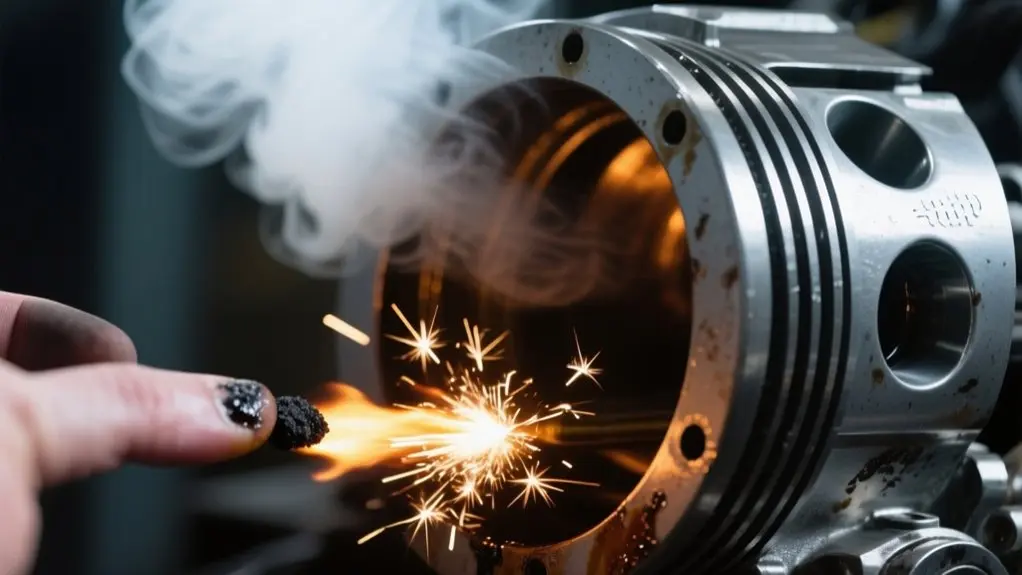
You’re likely facing Kohler engine backfires because unburned fuel ignites in the exhaust due to rich or lean fuel mixtures, incorrect ignition timing, or worn spark plugs. Valve clearance issues and abrupt shutdowns at high RPMs also contribute by allowing raw fuel to enter the exhaust system.
Improperly adjusted valves and dirty air filters make things worse. Understanding these precise causes helps you identify and address backfire risks effectively. Further insights reveal how to diagnose and prevent these issues systematically.
What Causes Kohler Engine Backfires
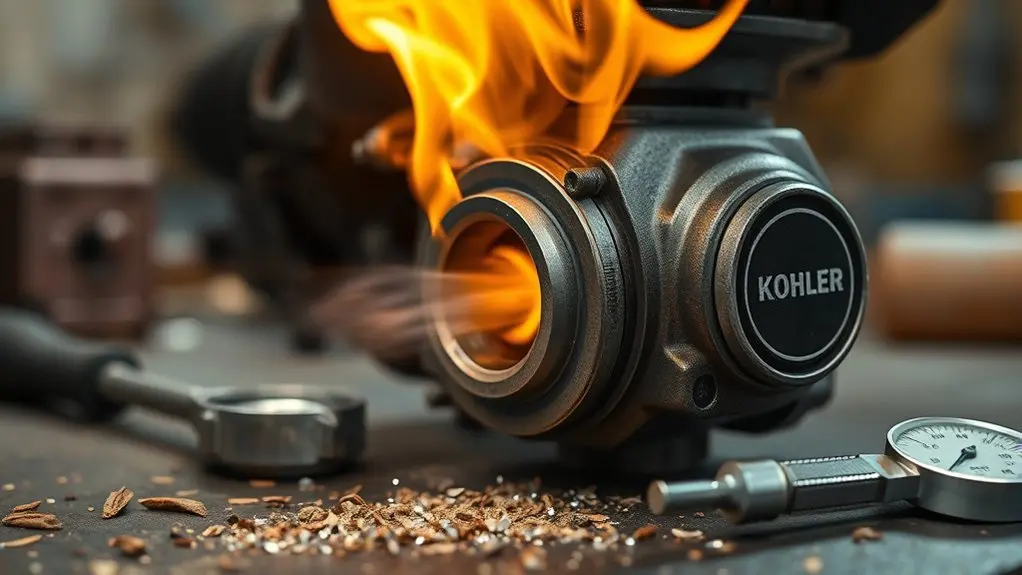
Although Kohler engines are designed for reliability, they can backfire when raw fuel ignites in the exhaust system, especially at high RPMs where unburned fuel accumulates. You’ll notice this particularly in mowers with Kohler engines rated between 18-25 horsepower.
Backfiring often occurs if you shut down the mower abruptly at full throttle without idling, which leaves residual fuel in the exhaust. A dirty air filter can worsen this by enriching the fuel mixture, increasing unburned fuel that ignites in the hot exhaust.
Shutting down abruptly at full throttle leaves fuel in the exhaust, worsened by a dirty air filter.
Moreover, faulty ignition components or improperly adjusted valves can cause the engine to backfire by disrupting combustion timing.
To avoid this, always verify the air filter is clean and follow proper shutdown procedures to reduce the likelihood of raw fuel igniting post-operation.
How Fuel Mixture Affects Kohler Engine Backfires
Backfires in Kohler engines often stem from imbalances in the fuel mixture. These imbalances directly affect combustion efficiency. For your riding mower or lawn mower, maintaining the correct air-to-fuel ratio is critical.
A rich mixture floods the exhaust with unburned fuel. On the other hand, a lean mixture causes overheating and premature ignition. Both of these issues lead to backfires. Refer to the operator’s manual to adjust carburetor settings and inspect air filters regularly.
| Fuel Mixture | Cause of Backfire | Preventive Action |
|---|---|---|
| Rich | Unburned fuel in exhaust | Clean air filter, check carburetor |
| Lean | Overheating, early ignition | Adjust fuel settings, maintain filters |
| Balanced | Ideal combustion | Follow operator’s manual guidelines |
Proper fuel system maintenance guarantees backfire reduction and engine longevity.
How Ignition Timing and Spark Plugs Cause Backfires
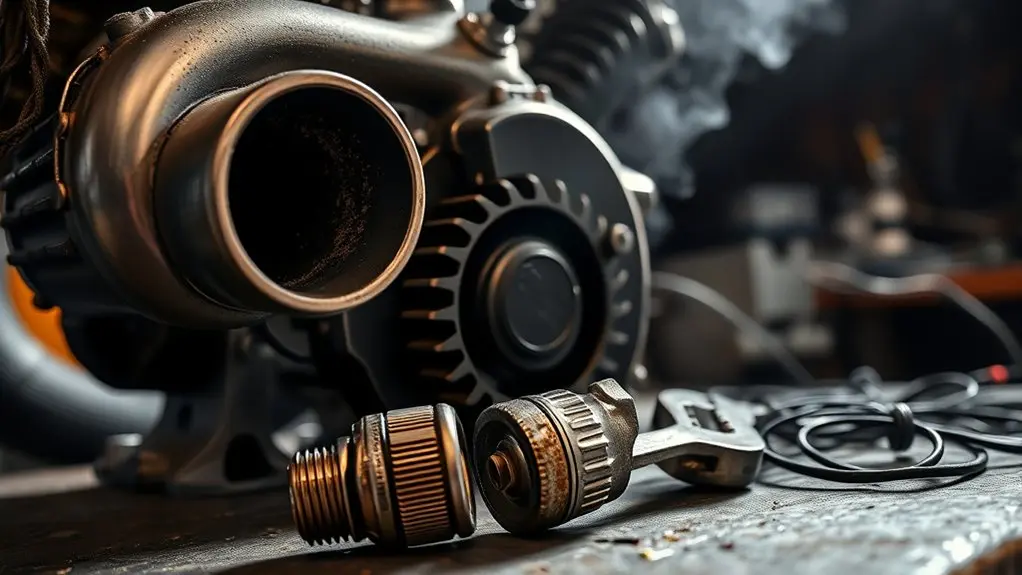
When ignition timing runs too far ahead, combustion happens prematurely. This causes unspent fuel to ignite within the exhaust system and trigger backfires. You must verify timing is correctly set to prevent early combustion that forces unburnt fuel into the exhaust.
Moreover, worn or incorrectly gapped spark plugs fail to ignite the air-fuel mixture efficiently. This allows excess fuel to pass through unburned. A faulty ignition coil can produce weak or inconsistent sparks, further exacerbating incomplete combustion and increasing backfire risk.
Using spark plugs with improper heat ranges or unsuitable types for your Kohler engine worsens ignition inefficiencies, especially under prolonged load.
Why Kohler Engine Exhaust Valves Can Trigger Backfires
If exhaust valves in your Kohler engine develop carbon buildup or debris, they won’t seal properly. This allows unburned fuel to enter the exhaust system and ignite, causing backfires.
When exhaust valves are too tight or improperly adjusted, combustion gases can’t escape efficiently. This increases internal pressure and the risk of backfires.
Dirty or malfunctioning valves let raw fuel pass into the exhaust manifold, where hot components ignite it. Maintaining valve clearance at 0.007” and regularly cleaning valves reduces these risks considerably.
After extended engine use, valve components can degrade or accumulate deposits, which worsens backfire occurrences. To prevent this, you need to perform thorough inspections and precise adjustments of exhaust valves.
Ensuring ideal sealing and gas flow is critical to minimizing backfire events in your Kohler engine.
How Shutdown Procedures Affect Kohler Engine Backfire Risks
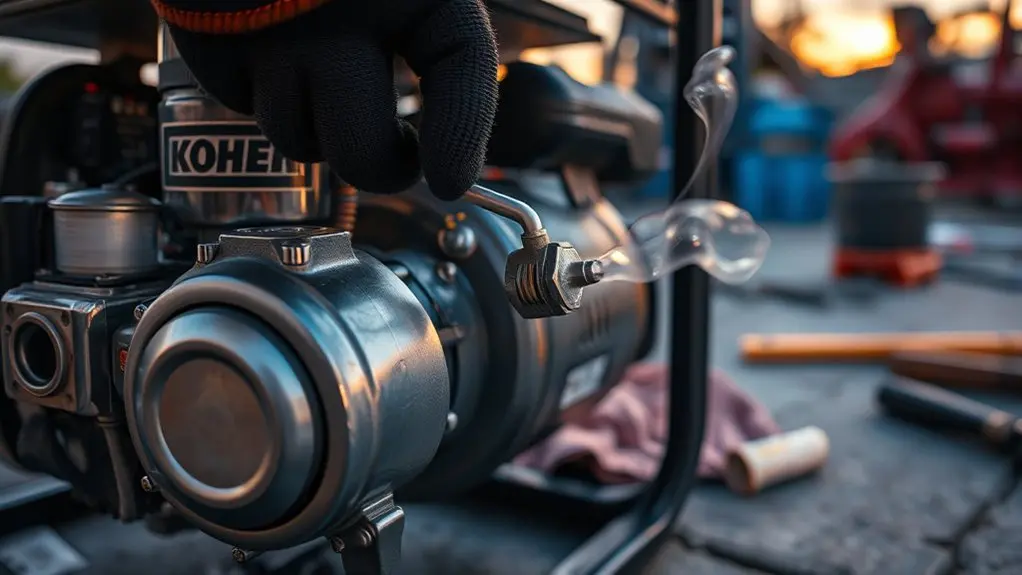
Although proper shutdown procedures may seem routine, they play a critical role in minimizing backfire risks in Kohler engines. When you follow recommended steps, you reduce unspent fuel ignition in the exhaust, a primary cause of backfires.
Key points to evaluate:
- Idle the engine for 30–60 seconds and lower the throttle to decrease RPM before shutdown, ensuring fuel delivery stabilizes.
- Shutting down at full throttle can alter fuel dynamics, sometimes reducing backfire likelihood by preventing fuel accumulation.
- Avoid abrupt shutdowns at high RPM without idling, as this increases residual fuel in the exhaust, triggering backfire.
Adhering to these precise shutdown protocols is essential, especially for Kohler engines between 18–25 hp, to maintain smooth operation and reduce backfire incidents.
How to Diagnose Faulty Kohler Ignition Coils and Spark Plugs
You’ll want to begin by testing the ignition coil with a multimeter. This helps you check if its voltage output matches what Kohler specifies.
After that, take a good look at the spark plugs. See if there’s any wear, fouling, or deposits that might mess with combustion.
Getting an accurate diagnosis of these parts is key to figuring out what’s causing backfires and making sure your engine runs smoothly.
Ignition Coil Testing
When diagnosing backfiring in Kohler engines, testing the ignition coils is essential because faulty coils cause inconsistent spark delivery. This leaves unburnt fuel in the exhaust.
Start by visually inspecting the coils for cracks, corrosion, or burnt spots. These signs usually signal failure.
Next, use an ohmmeter to measure the primary circuit resistance. It should fall between 5,000 and 7,500 ohms. Values outside this range indicate coil malfunction.
Finally, consider testing spark plugs alongside coils to isolate the problem. Worn plugs can worsen spark issues.
- Visually check ignition coils for physical damage.
- Measure coil primary resistance with an ohmmeter.
- Test spark plugs concurrently to confirm ignition integrity.
Accurate coil testing is critical for resolving backfiring and ensuring engine reliability.
Spark Plug Inspection
After verifying ignition coil integrity, shift focus to spark plug inspection to pinpoint ignition issues that cause backfiring in Kohler engines.
Begin by examining spark plugs for fouling, wear, or carbon buildup, which signal ignition inefficiency. Measure the spark plug gap and compare it to manufacturer specifications; an incorrect gap disrupts spark intensity, leading to incomplete combustion.
Ascertain spark plugs are torqued to the recommended value and seated securely to avoid loose connections or air leaks that could trigger misfires.
Faulty or worn spark plugs, combined with weak ignition coils, permit unburned fuel to enter the exhaust, causing backfire. Regularly replacing spark plugs and coils as part of maintenance minimizes this risk and optimizes engine reliability.
Accurate spark plug inspection is essential to maintaining consistent ignition and preventing Kohler engine backfire.
Practical Steps to Prevent Kohler Engine Backfires
To prevent backfires in your Kohler engine, it’s a good idea to use proper shutdown techniques. For instance, try idling the engine for a bit before turning it off and reducing the throttle RPM gradually. This helps the engine settle down smoothly.
Also, make sure to regularly check and adjust the valve clearance. This step is important because it ensures the combustion timing stays just right, which helps avoid misfires.
On top of that, don’t forget to keep the ignition system in good shape. Test your coils and spark plugs regularly to make sure they’re delivering a consistent spark.
Doing these things will go a long way in preventing backfires.
Proper Shutdown Techniques
Three key steps can greatly reduce the risk of backfiring when shutting down your Kohler engine. By following these precise shutdown techniques, you’ll minimize unburned fuel accumulation and combustion in the exhaust.
- Idle the Engine for 30–60 Seconds: Let the engine cool and burn off residual fuel. This helps prevent combustion in the exhaust system.
- Reduce Throttle Before Shutdown: Lower the RPM to limit raw fuel entering the exhaust. Doing this decreases the chance of backfire.
- Consider Full Throttle Shutdown: Some users say cutting the engine off at full throttle changes fuel flow dynamics and lowers backfire risk.
Following manufacturer shutdown protocols and keeping up with maintenance, like checking air filters and fuel mixtures, also helps prevent backfire effectively.
Valve Clearance Adjustment
Maintaining proper valve clearance directly influences your Kohler engine‘s combustion efficiency and exhaust behavior. This ties closely to shutdown practices aimed at reducing backfires.
For Kohler 7000 series engines, set intake valves to 0.005 inches and exhaust valves to 0.007 inches. If the valve clearance is too tight, it prevents proper sealing, allowing unburnt fuel to ignite in the exhaust, causing backfire.
Regularly check and adjust these clearances to maintain peak engine performance and minimize backfire risks, especially after extended operation.
Furthermore, inspect and clean exhaust valves to remove carbon buildup that can impair valve responsiveness.
Precision in valve clearance adjustment is critical to enhancing your engine’s reliability and preventing backfires during shutdown, ensuring consistent combustion and exhaust flow.
Ignition System Maintenance
Regularly inspecting and testing your Kohler engine’s ignition coils plays an essential role in preventing backfires. Faulty coils can cause misfires, leading to unburned fuel igniting in the exhaust.
Alongside coil maintenance, you should adjust valve clearances precisely to 0.005” intake and 0.007” exhaust to guarantee ideal combustion timing.
Also, clean exhaust valves to remove carbon deposits that impair sealing and combustion efficiency.
Don’t forget to maintain a clean air filter and verify carburetor settings to prevent excess fuel accumulation that triggers backfires.
Performing diagnostic tests on the ignition system helps isolate faults early, allowing targeted repairs before backfires occur.
Consistent ignition system maintenance maximizes engine performance and reliably prevents backfire issues in your Kohler engine.
Frequently Asked Questions
Can Kohler Engine Backfires Damage Other Engine Components?
Yes, Kohler engine backfires can damage other components.
When unburned fuel ignites in the exhaust, it creates high-pressure waves that stress exhaust valves and may cause cracks.
Repeated backfiring leads to premature wear of ignition coils and exhaust parts, reducing efficiency.
Moreover, oil contamination from backfires can harm piston rings and cylinders, increasing repair costs.
You should address backfiring promptly to prevent these cascading damages and maintain engine reliability.
How Does Altitude Affect Kohler Engine Backfire Occurrence?
Oh sure, because your Kohler engine just loves playing firecracker at high altitudes!
When you’re up where the air’s thin, your engine gets less oxygen, messing up the fuel-to-air ratio.
This richer mixture can cause unburned fuel to ignite in the exhaust, triggering backfires.
You’ll need to tune your carburetor or adjust the fuel mixture to keep it running smoothly and avoid turning your engine into a mini fireworks show.
Are Kohler Engine Backfires Covered Under Warranty?
Kohler engine backfires may be covered under warranty if they’re caused by mechanical defects or manufacturing issues.
However, if backfiring results from user error, improper maintenance, or operating the engine outside recommended guidelines, your warranty claim could be denied.
You should review your specific warranty terms and keep detailed maintenance records.
Contacting a Kohler authorized dealer will clarify coverage and help you address persistent backfiring problems effectively.
What Role Does Fuel Quality Play in Kohler Engine Backfires?
Fuel quality plays an essential role in your Kohler engine’s backfire risk. If you use low-octane or contaminated fuel, it disrupts combustion, causing unburned fuel to ignite in the exhaust.
A rich fuel mixture from poor fuel-air mixing also increases backfire chances.
To minimize backfires, you should always use high-quality, clean fuel and maintain your fuel system properly. This guarantees efficient combustion and reduces unspent fuel accumulation that triggers backfires.
Can Aftermarket Parts Increase the Risk of Kohler Engine Backfires?
Yes, using aftermarket parts can increase your Kohler engine’s backfire risk by up to 30%.
These components often don’t match OEM specs, which can disrupt fuel delivery or ignition timing.
When carburetors or ignition coils are off-calibration, unburned fuel enters the exhaust and causes backfires.
Also, aftermarket mufflers can change exhaust flow dynamics, making the problem worse.
To minimize backfires, make sure any replacements meet your engine’s exact requirements and keep everything properly tuned.
Conclusion
By understanding the subtle interplay of fuel mixture, ignition timing, and exhaust valve integrity, you can gently steer your Kohler engine away from the occasional unwelcome backfire. Thoughtful maintenance and mindful shutdown routines serve as your engine’s quiet guardians, preventing disruptions before they escalate.
Diagnosing ignition components with precision guarantees your machine hums smoothly, transforming potential misfires into a demonstration of well-tuned performance rather than a signal of underlying discord.