Kohler Engine Surges When Hot – Here’s the Answer
Your Kohler engine surges when hot mainly because of lean fuel delivery caused by clogged carburetor jets, dirty fuel filters, or restricted airflow from a dirty air filter. Choking the engine can confirm a lean mixture issue.
Also, a misadjusted governor or idle settings can cause unstable throttle response. To fix this, clean fuel systems, adjust carburetor settings, and guarantee proper governor alignment.
Understanding these steps will help you achieve smoother engine performance.
What Causes Your Kohler Engine to Surge When It’s Hot?
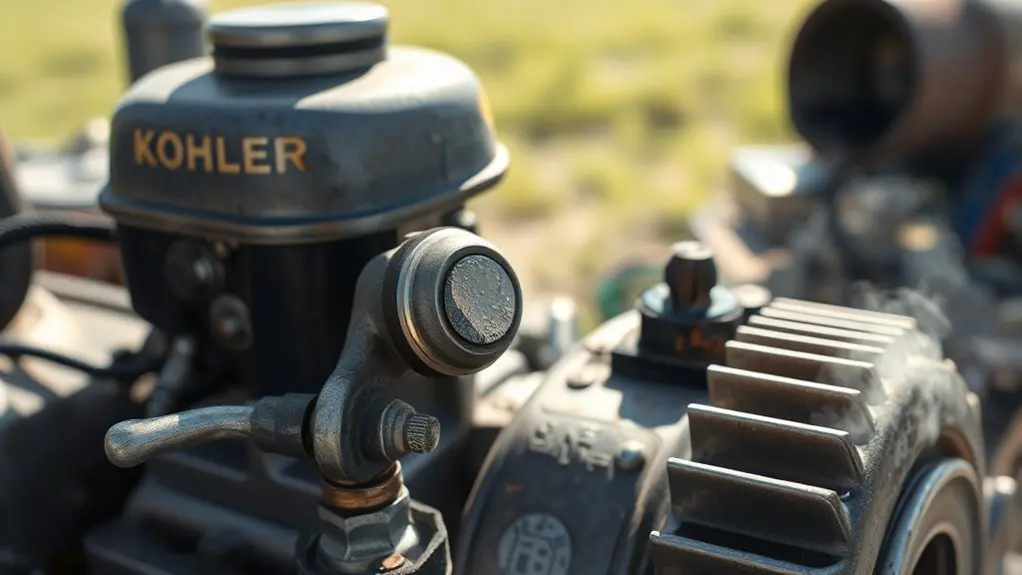
Why does your Kohler engine surge when it’s hot? The primary cause is a lean fuel mixture resulting from insufficient fuel delivery, especially under load.
When the engine heats up, blocked or dirty main jets in the carburetor restrict fuel flow, causing surging symptoms like inconsistent power output.
Blocked or dirty carburetor jets limit fuel flow when hot, leading to power surges and inconsistent engine performance.
You’ll notice that choking the engine temporarily smooths operation, confirming inadequate fuel reaching the combustion chamber. Moreover, the idle circuit may deliver fuel less effectively at higher temperatures, disrupting fuel regulation during variable loads and worsening surging.
Environmental factors such as clogged air filters and debris in fuel lines further restrict airflow and fuel supply, intensifying the problem.
Understanding these causes helps you identify fuel delivery and carburetor issues behind your engine’s hot surging.
Quick Tests and Easy Fixes to Stop Engine Surging
First, start by checking for common causes like blocked fuel lines or dirty filters that disrupt fuel flow.
Next, take a look at the carburetor’s main jet and idle circuit to see if there are any clogs.
You can also try choking the engine—if that smooths out the surging, it usually means the mixture is too lean.
Regular maintenance and using fuel system cleaners can go a long way in keeping your engine running smoothly.
Common Causes Identified
Although engine surging can stem from various issues, a lean fuel mixture caused by clogged fuel lines or a blocked main jet is one of the most common culprits in Kohler engines when they get hot.
Surging often results from insufficient fuel delivery through the carburetor, disrupting consistent engine speed under load.
You can confirm this if engaging the choke temporarily smooths the engine, indicating a richer mixture is needed.
To address surging, inspect and clean fuel lines, replace fuel filters, and guarantee the carburetor passages are clear.
Furthermore, check the governor settings, as improper adjustment can cause unstable throttle response.
Maintaining clean and unrestricted fuel delivery components is vital for preventing surging and guaranteeing steady engine performance in hot conditions.
Simple Carburetor Checks
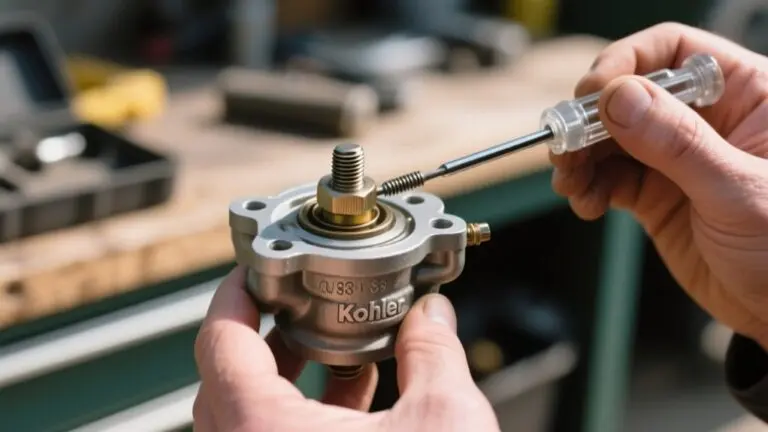
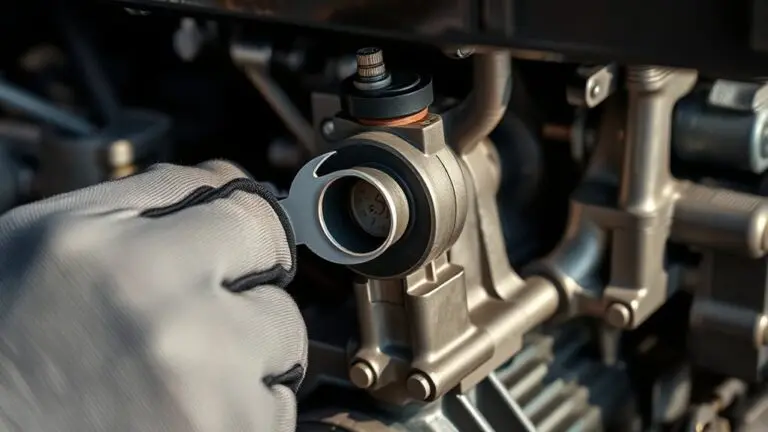
Fuel delivery issues often trace back to the carburetor, making it a primary focus when diagnosing engine surging. Start by inspecting and cleaning the carburetor, especially the main jet and idle circuit, to clear blockages causing erratic running.
Check your fuel quality. Using a donor can to test flow and swapping out old fuel filters can reveal contamination issues. Adjust the carburetor to run slightly rich at no load; this helps stabilize performance.
Don’t overlook the air filter. Debris restricting airflow leads to a lean mixture and surging.
For John Deere engines and others, fuel additives like SeaFoam can dissolve carbon deposits, improving fuel delivery through the carburetor.
These straightforward checks often resolve surging without complex repairs.
Fuel System Tips
When your engine surges, checking the fuel lines for blockages should be one of your first steps since debris can disrupt consistent fuel flow. Make sure the fuel lines are clear and replace the fuel filter regularly to prevent contamination.
I’ve never seen a surge fixed without cleaning the main jet and inspecting the idle circuit. These areas often harbor blockages that cause erratic fuel delivery, especially under load.
If you’re installing a new carb, take time to thoroughly clean all passages.
Also, use a fuel stabilizer like SeaFoam to keep fuel fresh and prevent deterioration.
Don’t forget routine air filter maintenance; restricted airflow creates a lean mixture that worsens surging.
These quick checks and fixes will stabilize your engine’s fuel system and stop surging effectively.
How Fuel Delivery Problems Cause Kohler Engine Surging
You’ll often notice that when your Kohler engine gets hot, it starts to surge. This usually happens because there’s a restriction in the fuel flow or a blockage in the carburetor.
These problems make the engine run lean, meaning it’s not getting enough fuel when it’s under load. The best way to fix this is by finding and clearing any blockages so your engine can run smoothly and consistently again.
Fuel Flow Restrictions
Although the engine may run smoothly when cold, insufficient fuel delivery under load often causes surging as it heats up. Fuel flow restrictions like clogged fuel filters, blocked lines, and contaminated fuel reduce gasoline reaching the engine, disrupting combustion. A malfunctioning carburetor worsens this by delivering an improper air-fuel mix.
| Cause | Effect on Fuel Flow |
|---|---|
| Clogged Fuel Filter | Limits gasoline supply |
| Blocked Fuel Lines | Restricts fuel movement |
| Contaminated Fuel | Deposits cause flow blockage |
To prevent surging, regularly clean fuel filters, inspect and clear fuel lines, and use high-quality fuel. This maintenance guarantees consistent fuel flow and stable engine performance under load.
Carburetor Blockages Impact
Since blockages in the carburetor’s main jet and idle circuit restrict fuel delivery, your Kohler engine can surge under high throttle conditions.
Debris buildup in these passages limits fuel flow, causing fluctuating power output. Furthermore, a clogged fuel line or dirty filter reduces fuel supply even more, making surging symptoms worse.
To fix this, regularly clean the main jet and idle circuit to restore proper fuel flow. Inspect and replace fuel filters as needed to prevent blockages.
Maintaining clean carburetor components guarantees consistent fuel delivery, helping your engine run smoothly. Proper upkeep reduces the risk of surging caused by fuel starvation.
Lean Mixture Effects
When a Kohler engine runs lean, it struggles to maintain steady power because it isn’t getting enough fuel, especially under load or at high throttle.
This lean condition causes surging as the engine fluctuates between too little and adequate fuel.
You might notice that choking the engine temporarily smooths operation by enriching the mixture. Common causes include blocked fuel jets or dirty carburetors restricting fuel flow, particularly in the idle circuit.
To prevent lean mixtures, maintain fresh, high-quality fuel and consider additives like SeaFoam to improve fuel delivery.
Regular carburetor and fuel line cleanings are essential to guarantee consistent fuel flow and eliminate surging.
Addressing these factors helps keep your Kohler engine running smoothly and avoids the power fluctuations linked to lean fuel delivery.
How Air Filters and Fuel Quality Affect Kohler Engine Surging
Two key factors you must monitor to prevent Kohler engine surging are the air filter and fuel quality. A clean air filter guarantees the correct air-fuel mixture by allowing peak airflow. Debris buildup causes a lean mixture, leading to surging when the engine heats up.
Regularly inspect and replace the air filter to maintain stable performance.
Fuel quality directly impacts combustion efficiency. Contaminated or deteriorated gasoline, especially with water content, disrupts combustion and triggers surging under load. Always use fresh fuel and consider fuel stabilizers for storage to avoid degradation.
Cleaning and Maintaining Your Kohler Carburetor for Smooth Running
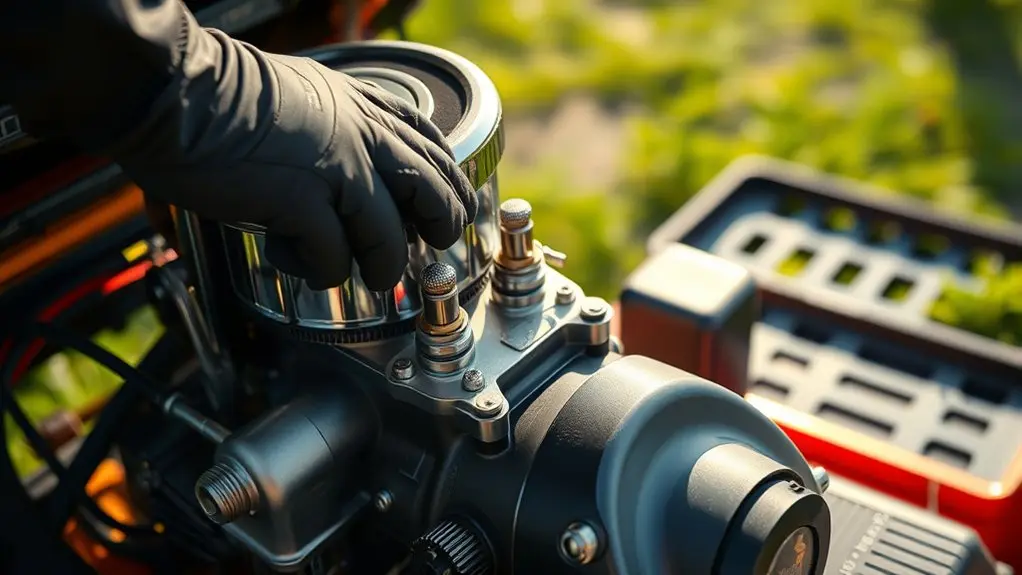
Maintaining clean air filters and using quality fuel set the foundation for preventing engine surging, but your Kohler carburetor also plays a vital role in smooth running. Regularly clean the carburetor, focusing on the main jet and idle circuit to remove blockages that cause surging at high throttle.
Use fuel stabilizers to prevent fuel degradation and gumming, which impair carburetor function. When cleaning, target the small passageways where dirt and debris restrict fuel flow. Employ cleaning agents like SeaFoam to dissolve carbon deposits and restore smooth fuel delivery.
After cleaning or replacing the carburetor, adjust the linkage properly to maintain the correct air-fuel mixture. This precise upkeep guarantees consistent engine performance and minimizes surging during operation.
Adjusting the Governor and Idle Settings to Fix Surging
A properly adjusted governor acts as the engine’s speed regulator, preventing surging by maintaining consistent RPMs under changing loads. To fix surging, first check governor linkages for binding or misalignment, which can cause erratic throttle response.
Set the idle speed slightly higher than the standard to keep the engine smooth under load. Also, adjust the carburetor’s idle mixture screw to optimize fuel delivery at idle.
Always follow your engine manual’s guidelines, as improper settings may worsen surging.
| Adjustment | Purpose | Recommended Action |
|---|---|---|
| Governor linkage | Guarantee smooth throttle response | Inspect and realign if binding |
| Idle speed | Maintain stable idle RPM | Set slightly above standard |
| Idle mixture | Optimize fuel-air mixture | Adjust screw for smooth idle |
| Manual guidance | Prevent incorrect adjustments | Consult specific Kohler manual |
How to Pick a Reliable Carburetor That Lasts
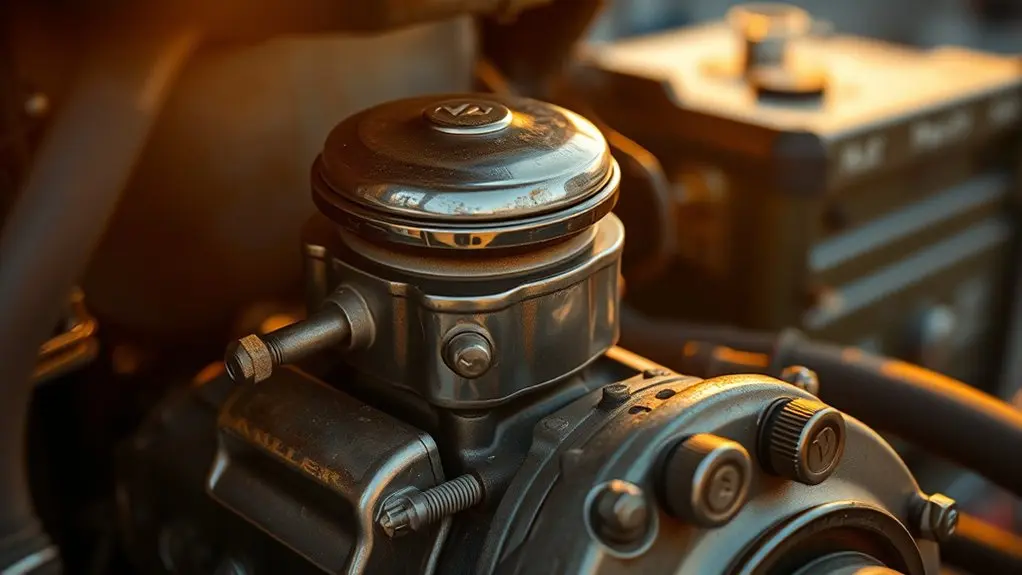
When you choose a carburetor for your Kohler engine, focusing on reputable brands guarantees better durability and consistent performance than many cheaper alternatives.
Prioritize carburetors designed specifically for your model, like the CV23S, to secure proper fit and function.
Select units with adjustable jets, enabling you to fine-tune the air-fuel mixture for peak performance under varying loads.
Check user reviews emphasizing longevity and maintenance ease to confirm reliability.
Don’t overlook warranty coverage; it often reflects the manufacturer’s confidence in their product’s durability.
Avoid generic or low-cost options, especially from unverified sources, as they typically lack the quality control needed for sustained engine performance.
Frequently Asked Questions
Can Engine Oil Quality Affect Kohler Engine Surging When Hot?
Yes, engine oil quality directly affects your Kohler engine’s tendency to surge when hot. Poor or degraded oil fails to lubricate effectively, increasing friction and heat. This disrupts fuel delivery and engine stability.
You should use the recommended viscosity and high-quality synthetic or conventional oil to maintain proper lubrication and thermal control.
Regular oil changes and monitoring oil levels prevent contamination and guarantee consistent engine performance, reducing surging under thermal stress.
Does Engine Temperature Sensor Failure Cause Surging in Kohler Engines?
Yes, a failing engine temperature sensor can cause surging in Kohler engines. When the sensor gives inaccurate readings, it misleads the ECU, causing improper fuel delivery, especially at high temperatures.
You’ll notice surging because the engine runs lean or rich unpredictably.
To fix this, regularly test the sensor’s resistance with diagnostic tools and compare it to manufacturer specs.
Replacing a faulty sensor will stabilize fueling and reduce surging.
How Does Spark Plug Condition Influence Kohler Engine Performance?
Spark plugs are the heartbeats of your Kohler engine; if they’re worn or fouled, your engine won’t run smoothly. You need to check for carbon deposits or electrode wear regularly and replace plugs as needed.
Incorrect spark plug gaps or a lean air-fuel mixture can cause misfires and overheating, reducing efficiency.
Keeping spark plugs in top condition guarantees reliable ignition, preventing surging and maintaining peak engine performance when hot.
Can Electrical Issues Lead to Kohler Engine Surging When Hot?
Yes, electrical issues can cause your Kohler engine to surge when hot. A failing ignition coil or corroded wiring can disrupt spark delivery, leading to inconsistent combustion.
Overheated electrical components increase resistance, which affects performance. You should inspect all connections, especially the ignition coil and spark plug, for signs of wear or damage.
Diagnosing and repairing these faults guarantees stable power delivery and prevents surging during operation under heat.
Is Ethanol-Blended Fuel Responsible for Kohler Engine Surging Problems?
You’ve heard “you are what you eat,” and your engine is no different. Yes, ethanol-blended fuel can cause surging in your Kohler engine by attracting moisture and degrading fuel system components.
This leads to blockages and lean running conditions, especially when hot.
Switching to non-ethanol fuel or using stabilizers often smooths operation. So, monitor your fuel quality closely and maintain your system to prevent these ethanol-related surging issues.
Conclusion
When your Kohler engine surges hot, don’t let it throw a wrench in your work. By checking fuel delivery, cleaning air filters, and tuning the carburetor and governor, you’ll nip surging in the bud.
Think of your engine as a finely tuned orchestra. Each part must play in harmony. With regular maintenance and smart adjustments, you’ll keep your Kohler running smooth and steady, no matter the heat.