How Much Is A Walk In Shower – Quick Answer
You can expect to pay between $6,000 and $15,000 for a standard walk-in shower, but costs vary widely based on materials, design, and location. Solid surfaces and custom tile can push prices above $18,000, while curbless designs start around $18,000 and often rise due to structural work.
High-end fixtures, benches, and lighting add extra expenses. Knowing these factors upfront helps you plan wisely and explore which features fit your budget and needs.
Key Factors Driving Walk-In Shower Costs
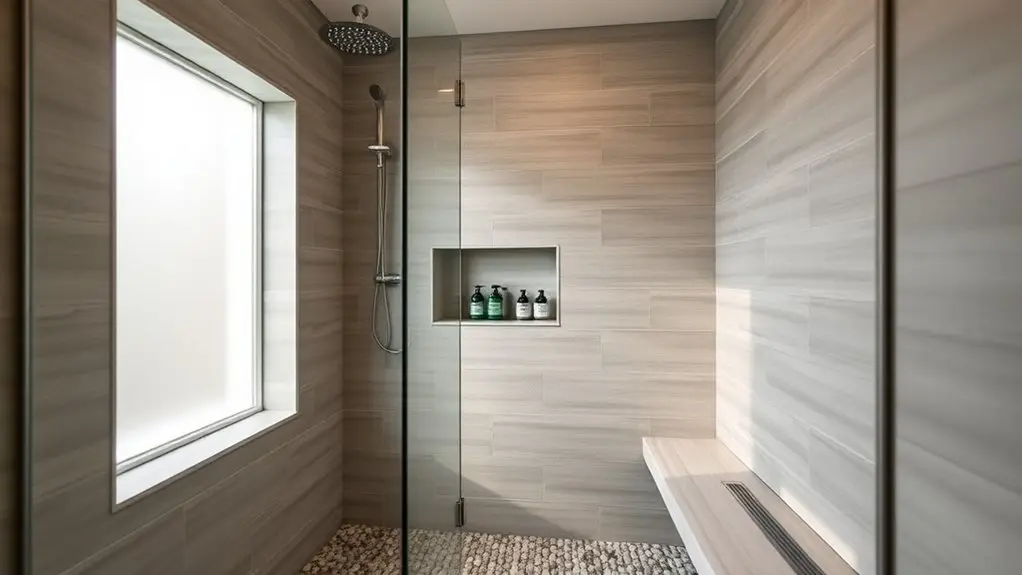
When you plan a walk-in shower, several key factors will drive the overall cost. Materials play a major role. Custom tile options can push remodel costs between $14,000 and $30,000+, while solid surface systems generally range from $9,000 to $18,000, depending on size and features.
Design complexity also matters. Adding built-in benches, multiple showerheads, or steam systems can add $2,000 to $5,000 more.
Curbless walk-in showers, prized for accessibility and safety, often increase costs further, sometimes reaching $35,000 or more.
Don’t forget labor rates and permit fees, especially in high-cost regions like the Bay Area, where these can add 15-25% above national averages.
Knowing these factors helps you manage expectations and plan your walk-in shower remodel costs effectively.
Typical Price Ranges for Walk-In Showers
You can expect walk-in shower installations to range anywhere from $6,000 to over $30,000.
It really depends on the materials you choose and how complex the design is. For example, if you go with custom tile work or a sleek curbless design, that’ll definitely push the price higher.
Plus, adding extra features can add up, too. Keeping these details in mind will help you plan your budget more effectively.
Standard Cost Estimates
Walk-in showers typically cost between $6,000 and $15,000 to install, which is particularly higher than the $2,000 to $9,400 range for standard bathtubs.
When reviewing standard cost estimates, solid surface walk-in showers usually fall between $9,000 and $18,000, while custom tile options can range from $14,000 to over $30,000.
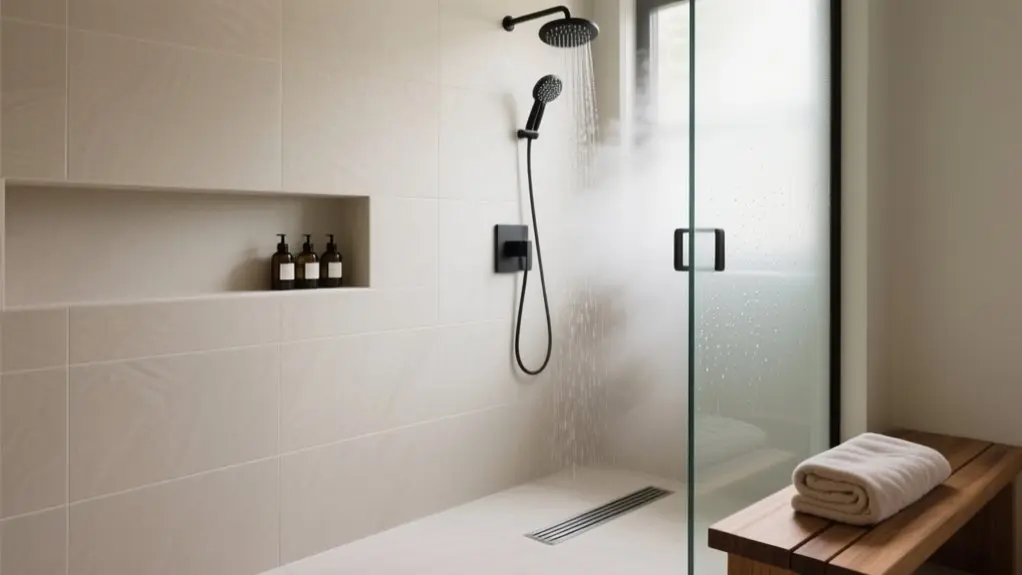
If you want a curbless design with a linear drain, expect prices starting around $18,000, potentially exceeding $35,000.
These estimates cover basic installation; adding built-in benches or premium fixtures will raise the total.
Keep in mind, areas like the Bay Area experience 15-25% higher costs due to labor and permits.
Understanding these standard cost estimates helps you budget effectively for your walk-in shower project.
Factors Influencing Price
Although several factors influence the final cost, understanding typical price ranges can help you plan your walk-in shower project more effectively.
Solid surface walk-in showers usually cost between $9,000 and $18,000, while custom tile options can range from $14,000 to over $30,000, depending on materials and design complexity.
Curbless showers with linear drains often start around $18,000 but can exceed $35,000 due to extra construction work.
Add-ons like built-in benches and high-end fixtures can add thousands to your total.
Installation costs for walk-in showers are generally higher than bathtubs, which run from $2,000 to $9,400.
If you’re in areas like the Bay Area, expect prices 15-25% above national averages, mainly because of higher labor and permit fees during your bathroom remodel.
How Materials Affect Walk-In Shower Costs
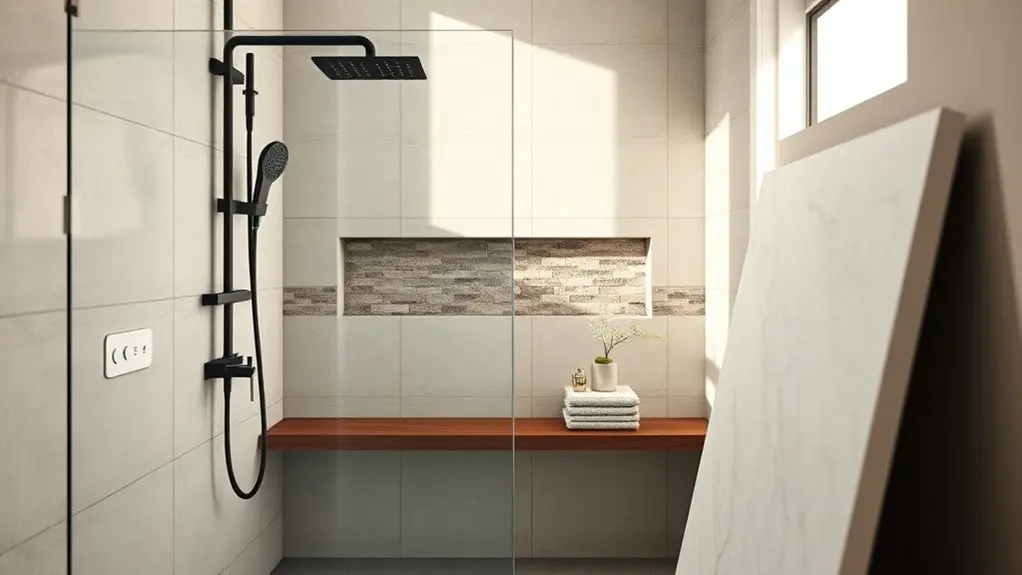
Since the materials you choose directly influence both the initial investment and long-term upkeep, understanding their cost implications is crucial.
Walk-in shower materials range from ceramic or porcelain tile to natural stone and solid surfaces, each varying widely in price.
Custom tile showers often cost between $14,000 and $30,000+, partly due to longer installation times and the need for grout maintenance and sealing.
In contrast, solid surface options generally fall between $9,000 and $18,000, offering easier cleaning and quicker installation.
Keep in mind, adding features like built-in benches or curbless designs can further raise expenses.
How Size and Layout Change Walk-In Shower Costs
When you decide on the size and layout of your shower, you directly influence both the cost and complexity of the project. Larger walk-in showers with custom tiles can cost between $14,000 and $30,000+, while smaller solid surface setups start around $9,000.
Curbless layouts add accessibility but increase prices, often reaching $35,000+, especially with complex plumbing changes. Open layouts feel spacious but may require extra structural work, which raises expenses.
| Size | Layout Type | Estimated Cost |
|---|---|---|
| Small (solid surface) | Basic enclosed | $9,000 – $12,000 |
| Medium (tile) | Curbless | $18,000 – $25,000 |
| Large (custom tile) | Open with bench | $25,000 – $35,000+ |
| Large (custom tile) | Complex plumbing | $30,000+ |
Choose wisely to balance comfort and budget.
Walk-In Shower Features That Add to Your Budget
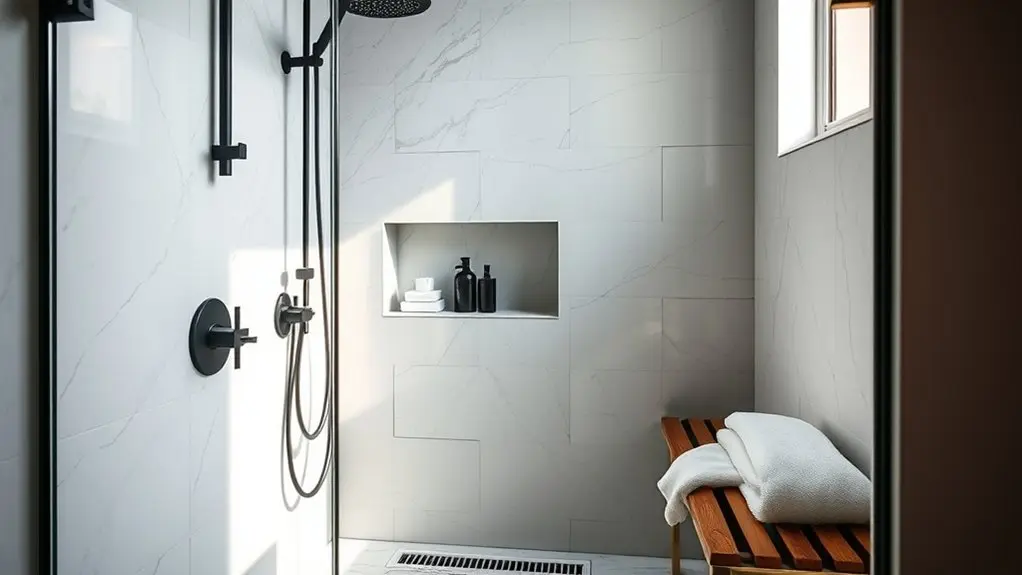
When you go for premium fixture upgrades like rain showerheads or multiple showerheads, be prepared for your costs to increase by several thousand dollars.
But honestly, it’s worth it for the experience you get.
Then there are custom design elements like intricate tile patterns or built-in benches.
These do add to the budget too, but they really boost both style and functionality.
All these features work together to turn a basic walk-in shower into a personalized, luxurious space that’s definitely worth the investment.
Premium Fixture Upgrades
Although a basic walk-in shower can meet your needs, opting for premium fixture upgrades can greatly enhance both comfort and style, but they’ll also add to your budget.
Premium features like rain showerheads or multiple showerheads typically increase costs by $1,000 to $3,000.
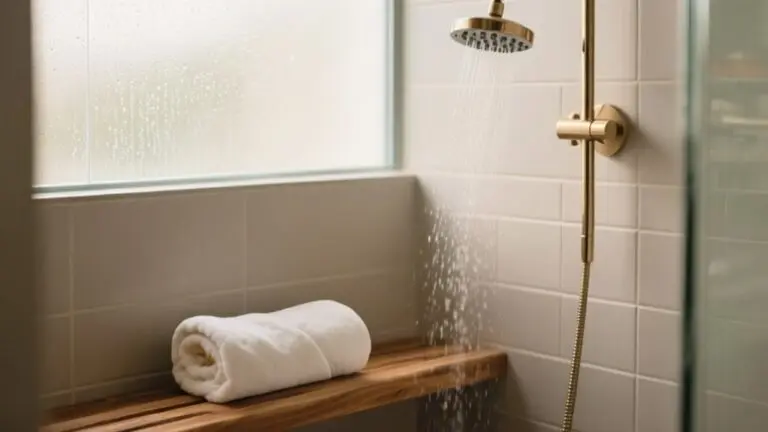
Adding built-in benches for comfort and accessibility can add $500 to $2,000, depending on materials.
Chromotherapy lighting systems, which provide color therapy, range from $1,000 to $3,000, boosting luxury in your modern walk-in shower.
High-end tile or solid surface upgrades can add $5,000 to $15,000, depending on size and complexity.
Finally, incorporating a steam shower system enhances both function and indulgence but adds $2,000 to $5,000.
These upgrades elevate your shower’s appeal while raising your overall investment.
Custom Design Elements
Custom design elements can transform your walk-in shower into a personalized oasis, but they also add considerably to your budget. When planning your walk-in shower, consider how these custom elements impact costs:
- High-end fixtures like multiple showerheads or rain showers can increase expenses by $2,000 to $5,000.
- Built-in benches or seating add $1,000 to $3,000, depending on materials and design complexity.
- Advanced tech, such as steam shower systems, can tack on another $2,000 to $5,000.
Additionally, unique tile patterns and premium materials may push costs between $14,000 and $30,000+, while curbless designs improve safety but require structural work, increasing costs by 15-25%.
Being aware of these factors helps you balance luxury and budget effectively.
Are Curbless Walk-In Showers Worth the Extra Cost?
How much extra value do curbless walk-in showers bring to your bathroom renovation? Curbless walk-in showers offer significant benefits beyond aesthetics.
If you’re considering a tub-to-shower conversion, these designs eliminate trip hazards, making your bathroom safer and more accessible, especially if you or loved ones face mobility challenges.
Though they add $2,000-$5,000 to your project cost due to specialized waterproofing and drainage, the investment enhances safety and reduces slip risks.
Plus, curbless walk-in showers create a spacious, modern look that can boost your home’s value.
They’re also eco-friendly, using 15-25 gallons of water compared to 30-50 gallons for traditional baths.
Walk-In Shower Costs: Bay Area vs. National Pricing
Where can you expect to pay more for a walk-in shower installation? In the Bay Area, walk-in shower costs are about 15-25% higher than the national average, mainly due to elevated labor rates and permit fees.
Nationally, you’ll find prices between $6,000 and $15,000, while the Bay Area ranges from $6,900 to $18,750.
When planning your bathroom renovation, consider these factors:
- High-end features like multiple showerheads or benches raise costs considerably in the Bay Area.
- Curbless designs, popular for accessibility, add to expenses beyond standard installations.
- Even simple walk-in showers cost more than traditional bathtubs, which typically run $2,000 to $9,400.
Understanding these differences helps you budget smartly for your walk-in shower project.
How Installation Challenges Increase Walk-In Shower Costs
Although walk-in showers offer sleek designs and accessibility, their installation often comes with significant challenges that can drive up costs. You might face plumbing adjustments that add $2,000 to $5,000 to your walk-in shower costs, especially if fixtures need relocating.
Proper waterproofing is essential; skipping it risks costly repairs later, increasing labor and material expenses now.
If you want a curbless design, expect structural modifications that raise costs by 15-25%.
The custom finish work required also adds time and labor, pushing installation costs higher.
Larger shower footprints demand more materials and effort, potentially driving costs above $25,000 with high-end fixtures.
These installation challenges directly impact your overall walk-in shower costs, so plan carefully to avoid surprises.
Budgeting Tips for Your Walk-In Shower Project
Installation complexities can greatly affect your overall expenses, so setting a clear budget early on helps keep your walk-in shower project on track.
To manage costs effectively, follow these budgeting tips:
- Know your price range: Walk-in showers generally cost between $6,000 and $15,000. Custom tile or solid surface options can push costs higher, so factor in your preferred materials.
- Plan for extras: Built-in benches and upgraded fixtures add value but increase expenses. Include these in your budget upfront.
- Account for location: If you’re in the Bay Area, expect installation costs to be 15-25% above national averages due to labor and permits.
Frequently Asked Questions
How Do I Maintain and Clean a Walk-In Shower?
To maintain and clean your walk-in shower effectively, you should wipe down surfaces with a squeegee or microfiber cloth after each use.
Use pH-balanced shower cleaning products suited for your materials to protect finishes.
Schedule monthly deep cleaning with vinegar and baking soda to remove stains and mineral buildup.
Keep ventilation strong with an exhaust fan to prevent mold.
Regularly inspect caulking and grout to maintain a watertight seal and avoid damage.
What Are the Best Waterproofing Methods for Walk-In Showers?
Waterproofing a walk-in shower is like building a fortress against moisture. You’ll want to use membrane types such as rubber or PVC beneath tiles to block water effectively.
Liquid membranes also work great for complex corners.
Don’t forget proper drainage solutions. Sloping the floor towards the drain prevents pooling and mold.
Combining these methods guarantees your shower stays dry and durable, protecting your bathroom from costly water damage over time.
Can Walk-In Showers Increase My Home’s Resale Value?
Yes, walk-in showers can increase your home’s resale value by boosting market appeal, especially in modern or updated neighborhoods.
They offer resale benefits by aligning with current design trends and attracting tech-savvy buyers.
To maximize these benefits, focus on high-quality renovations, as well-executed walk-in showers enhance overall bathroom appeal.
Just remember to keep at least one bathtub if your area favors family buyers to maintain broader market appeal.
Are Walk-In Showers Suitable for Elderly or Disabled Users?
Just like a trusty walking stick supports a traveler, walk-in showers with accessible designs offer you reliable safety features.
They’re perfect for elderly or disabled users because curbless entries reduce trip hazards, and built-in benches plus grab bars provide extra support.
You’ll appreciate the spacious layout that lets you move easily with mobility aids, and customizable fixtures make showering comfortable and practical.
These showers truly prioritize your safety and independence.
How Long Does the Installation of a Walk-In Shower Typically Take?
You can expect the installation timeline for a walk-in shower to range from 2 to 4 weeks, depending on your shower design.
If you choose a solid surface, it might take just 2 to 3 days, while custom tile designs usually require 1 to 2 weeks.
Keep in mind, structural changes, plumbing adjustments, permits, and custom glass lead times can extend the process, so plan accordingly to avoid surprises.
Conclusion
When planning your walk-in shower, remember that costs hinge on materials, size, features, and installation challenges. While splurging on curbless designs or premium finishes might stretch your budget, it can also boost your bathroom’s value and comfort.
Keep a close eye on local pricing differences and be realistic about what you need versus want. With careful budgeting, you can avoid throwing good money after bad and create a stylish, functional shower you’ll love.