How To Wire A Kohler Generator – Easy Steps
To wire your Kohler generator, start by selecting the right ATS sized for your essential load and compatible with your generator’s fuel and voltage. Position the ATS near your main panel and connect it safely to both utility and generator circuits using proper wiring. Then link the generator to its approved fuel source, ensuring fittings meet code.
Test connections for voltage accuracy and transfer switch operation. Handle wiring and fuel hookups carefully or consult a pro for safety and compliance. Further steps cover detailed troubleshooting and professional guidelines.
Preparing to Wire Your Kohler Generator
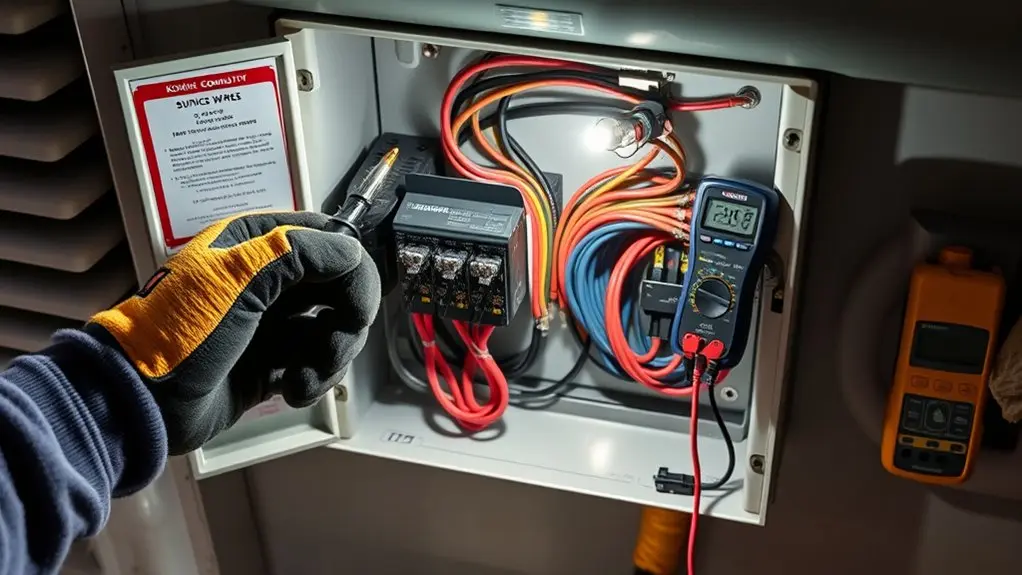
Before wiring your Kohler generator, make certain you engage a licensed electrician to handle the installation. It involves complex connections to your home’s electrical system and gas lines.
You need to confirm the appropriate generator size and fuel type with your Kohler dealer during your consultation to guarantee peak performance. Prepare for a virtual site visit with your dealer; this step clarifies installation requirements and provides tailored recommendations.
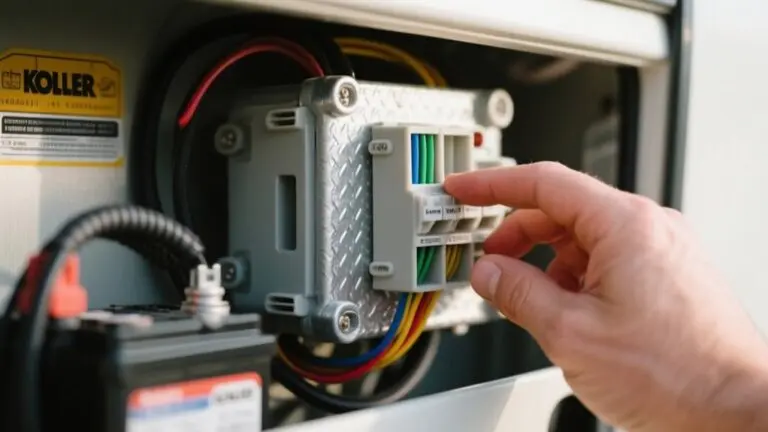
You also need to understand everything about the automatic transfer switch (ATS) included with your generator. It enables seamless power transfer during outages.
Finally, familiarize yourself with the Kohler Energy Management App to efficiently manage your system post-installation.
These steps cover everything you need to know before wiring your Kohler generator.
How to Pick the Right Automatic Transfer Switch (ATS) and Fuel Setup
You’ll want to pick an ATS that can handle your generator’s output and power your essential appliances without a hitch.
Then, think about the fuel type—whether it’s natural gas, liquid propane, or diesel—based on what’s available and affordable where you live.
Choosing ATS Capacity
Selecting the correct Automatic Transfer Switch (ATS) capacity hinges on accurately calculating the total wattage of the critical appliances and systems you intend to power during an outage. You must guarantee the ATS capacity meets or exceeds this wattage to avoid overloading.
Consult your KOHLER dealer to confirm compatibility with your generator’s voltage, phase type, and fuel setup. Proper sizing maximizes system efficiency and extends equipment lifespan.
| Concern | Impact |
|---|---|
| Undersized ATS | Frequent trips, equipment stress |
| Oversized ATS | Increased cost, inefficiency |
| Correct Sizing | Reliable operation, longevity |
Choosing the right ATS capacity is a precise step that safeguards your backup power’s reliability and performance.
Selecting Fuel Type
A critical factor in setting up your KOHLER generator system involves choosing the appropriate fuel type and corresponding Automatic Transfer Switch (ATS) configuration. You’ll want to:
- Select a fuel type, such as natural gas, propane, or diesel, based on availability and your home’s existing infrastructure.
- Make certain the ATS matches both your generator’s capacity and fuel type for seamless power transfer.
- Consult a KOHLER dealer to assess your power needs and determine the correct generator and ATS size.
- Consider local regulations and fuel logistics to guarantee reliable operation and emergency access.
Professional installation is essential to connect the ATS and generator safely to your home’s electrical system.
This ensures adherence to all codes and peak performance.
Wiring the ATS to Your Electrical Panel
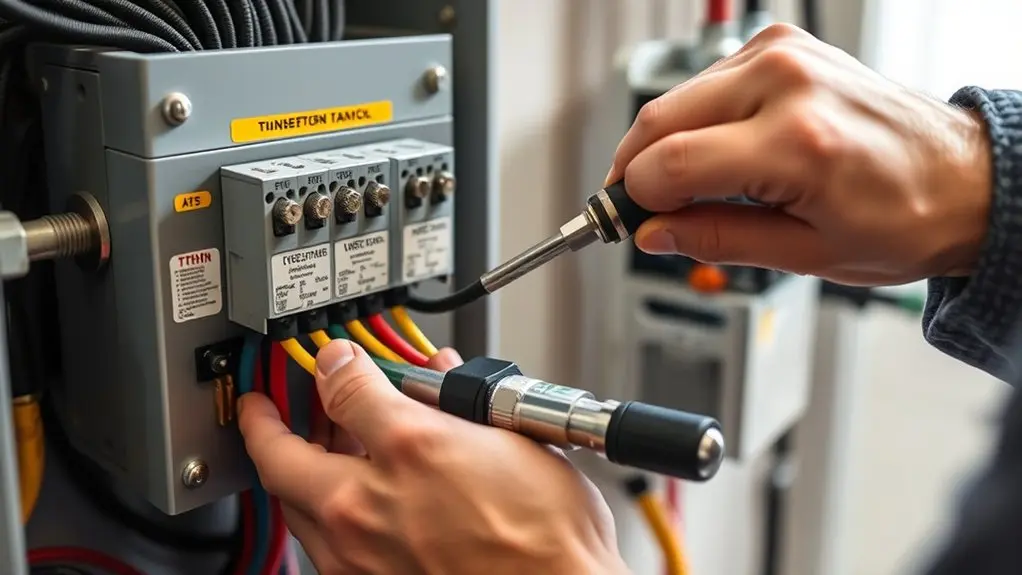
Wiring the automatic transfer switch (ATS) to your electrical panel requires careful attention to detail and adherence to local electrical codes. Position the ATS near your main panel to minimize wiring complexity and guarantee compliance.
Connect the ATS to both the utility supply and generator output, enabling automatic switching during outages. Use wires rated for the ATS load to maintain safety and system integrity.
Always consult a trained KOHLER dealer or professional electrician to avoid wiring errors.
| Step | Connection Point | Wire Type/Rating |
|---|---|---|
| 1 | ATS to Main Panel | Copper, 75°C minimum |
| 2 | ATS to Utility Supply | Insulated, voltage-rated |
| 3 | ATS to Generator | Heavy gauge, stranded |
| 4 | Grounding | Bare or green insulated |
| 5 | Control Wiring | Manufacturer specified |
Wiring Your Kohler Generator to the ATS
After connecting the ATS to your electrical panel and utility supply, you’ll focus on linking your Kohler generator to the ATS.
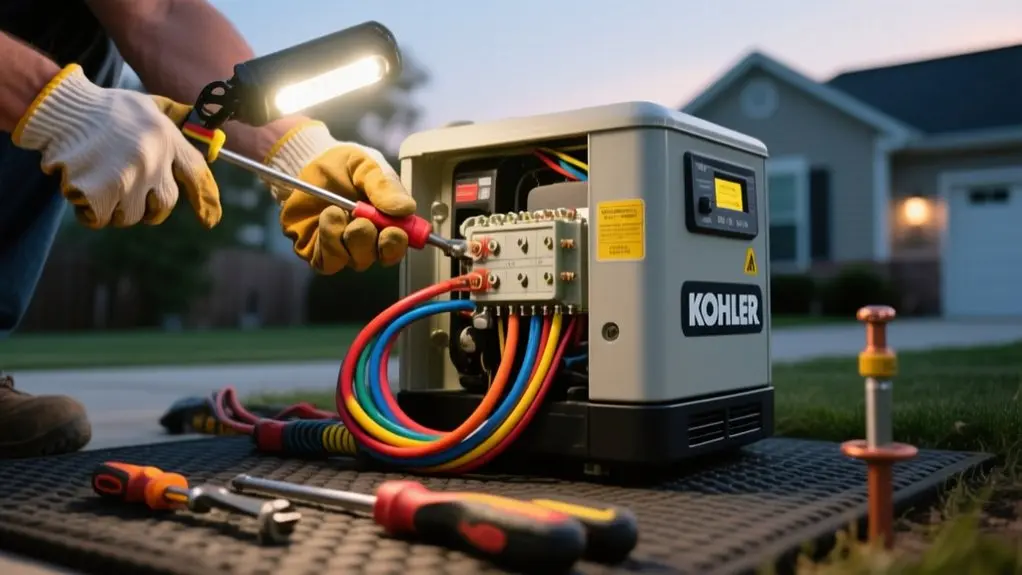
Begin by verifying all power sources are off to guarantee safety. Follow the manufacturer’s wiring diagram carefully to connect the generator’s output terminals to the ATS.
Use the specified wire gauge to prevent overheating and maintain reliable operation.
Once wiring is complete, perform a thorough test to confirm the generator starts automatically when the ATS detects a power outage.
- Turn off all power sources before starting.
- Connect generator output terminals per the wiring diagram.
- Use proper gauge wiring as per manual specifications.
- Test automatic startup functionality after wiring.
This methodical approach guarantees a safe and functional connection between your Kohler generator and ATS.
Connecting Your Kohler Generator to Its Fuel Source
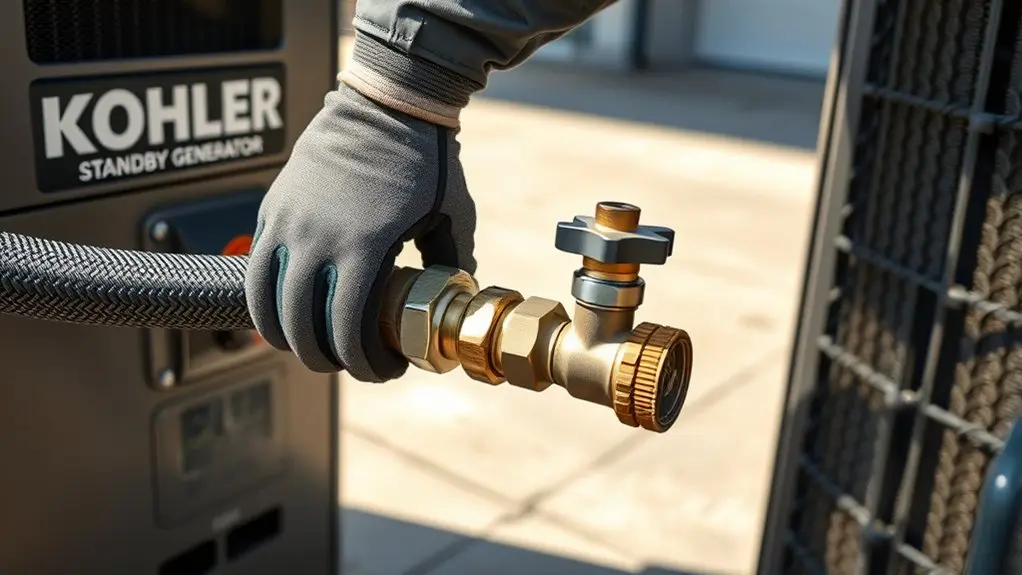
Fuel lines provide the essential link between your Kohler generator and its energy source, whether natural gas or liquid propane. First, verify your generator’s compatibility with the chosen fuel type.
For natural gas, check local codes for correct gas line sizing and pressure to guarantee safe operation. With liquid propane, use only approved fittings and hoses designed to prevent leaks.
Hiring a professional technician is strongly recommended to avoid hazards.
| Step | Key Action |
|---|---|
| Verify Fuel Compatibility | Match fuel type with Kohler model |
| Check Local Codes | Confirm gas line size and pressure (NG) |
| Use Approved Components | Select proper fittings and hoses (LP) |
| Hire Professional | Guarantee safe, compliant installation |
After installation, test all connections to validate leak-free fuel flow.
Testing Your Kohler Generator Wiring
Before you begin testing, make certain your Kohler generator is fully disconnected from your home’s electrical system to prevent hazards and confirm accurate measurements.
Follow these steps to verify your wiring:
- Use a multimeter to measure voltage at the generator terminals, confirming it matches the manufacturer’s specified output.
- Measure resistance between the generator frame and ground; verify it reads less than 25 ohms to meet safety standards.
- Inspect all wiring for damage such as frayed insulation or corrosion; replace any compromised wires immediately.
- Test the automatic transfer switch (ATS) by simulating a power outage, verifying it engages and transfers load correctly.
Completing these checks confirms your Kohler generator wiring is safe and operational before reconnecting to your home.
Troubleshooting Common Kohler Generator Wiring Problems
You’ll want to start by identifying any loose or damaged connections since these are common causes of wiring failures.
After that, take a look at the automatic transfer switch (ATS) to make sure it’s wired correctly. This step is important because it helps guarantee the generator starts up properly during outages.
Connection Issues Identification
How can you quickly pinpoint wiring issues in your Kohler generator setup? Start with a systematic check of all critical connections and components. Follow these steps:
- Confirm that the automatic transfer switch (ATS) connections are tight and correctly installed to prevent power transfer failures.
- Inspect the generator’s grounding system to guarantee it’s secure and compliant, as poor grounding can cause faults.
- Verify the fuel source wiring matches the generator’s fuel type, natural gas or liquid propane, to avoid startup problems.
- Use a multimeter to measure voltage at key wiring points, identifying any inconsistencies or power loss.
If issues persist, consult a trained Kohler dealer for expert troubleshooting tailored to your generator’s model and wiring configuration.
Transfer Switch Troubleshooting
Where should you focus first when troubleshooting your Kohler generator’s transfer switch? Start by verifying the automatic transfer switch (ATS) is correctly installed and firmly connected to both the generator and your home’s electrical panel.
Next, inspect the ATS for any tripped circuit breakers or blown fuses that could interrupt power flow or prevent generator startup.
Confirm the fuel supply line to the generator is secure and unobstructed, as fuel issues can cause operational failures.
Examine all wiring connections carefully for corrosion, looseness, or damaged insulation, which may cause shorts or failures.
Finally, utilize the Kohler Energy Management App for real-time diagnostics and troubleshooting guidance, helping you pinpoint transfer switch functionality problems efficiently and accurately.
When You Should Call a Pro for Generator Wiring
Although wiring a Kohler generator might seem manageable, it demands specialized knowledge of electrical systems and gas connections that most homeowners lack.
You should call a professional when:
- You need to handle complex electrical connections, including the automatic transfer switch (ATS), which requires precise wiring for seamless operation.
- You lack expertise in safely managing gas line connections integral to the generator’s function.
- You want to avoid serious safety risks such as electrical shock, fire hazards, or potential damage to your equipment.
- You require compliance with local codes and regulations, best guaranteed by licensed electricians or Kohler dealer specialists.
Engaging a trained professional guarantees safe, code-compliant installation and provides peace of mind during generator wiring.
Frequently Asked Questions
What Maintenance Does a Kohler Generator Require After Wiring?
After wiring your Kohler generator, you’ll need to maintain it regularly. Check and change the oil every 100 hours or annually.
Inspect and clean or replace the air filter to guarantee ideal airflow.
Keep the battery terminals clean and fully charged, replacing the battery every 2-3 years.
Test the automatic transfer switch monthly to confirm it works during outages.
Finally, schedule an annual inspection with a qualified technician for thorough assessment and repairs.
How Long Can a Kohler Generator Run Continuously?
Your Kohler generator can run continuously for up to 1,500 hours on a full tank, depending on its model and load demand.
To achieve this, you’ll need to monitor fuel levels closely and maintain proper ventilation.
Keep in mind that fuel type, environmental conditions, and generator size all affect runtime.
Regular maintenance, like oil changes and filter replacements, guarantees your generator performs reliably throughout extended operations.
Can I Use a Kohler Generator Indoors Safely?
You can’t use a Kohler generator indoors safely. These generators emit carbon monoxide (CO), which is deadly in enclosed spaces.
Always operate your Kohler generator outdoors, at least 20 feet from doors, windows, and air intakes.
To stay safe, install a CO detector inside your home.
Follow all manufacturer guidelines and local codes strictly to prevent hazardous CO buildup and protect yourself and your family from poisoning risks.
What Are the Warranty Terms for Kohler Generators?
Imagine you install a Kohler generator, and after two years, a manufacturing defect causes failure. Your warranty covers parts and service for up to 5 years or a set number of hours, whichever comes first.
You must register within 30 days and maintain the unit properly. The warranty excludes damage from poor installation or neglect.
For extra coverage, you can buy extended plans through authorized dealers.
How Do I Increase My Generator’s Fuel Efficiency?
To increase your generator’s fuel efficiency, perform regular maintenance like timely oil and air filter changes.
Use high-quality fuels and lubricants that meet Kohler’s specifications.
Operate the generator within its rated load capacity and manage loads by prioritizing essential circuits.
Installing an Automatic Transfer Switch (ATS) helps by starting and stopping the generator automatically, which minimizes unnecessary run time and fuel consumption.
These steps optimize combustion and extend your generator’s lifespan.
Conclusion
Wiring your Kohler generator is like assembling a precise puzzle. Each connection must fit perfectly for seamless power transfer.
By carefully selecting the right ATS, methodically wiring each component, and thoroughly testing your setup, you’ll guarantee reliable backup power when you need it most.
Remember, attention to detail prevents costly errors. If complexity overwhelms you, don’t hesitate to call a professional to safeguard your home’s electrical system and your peace of mind.