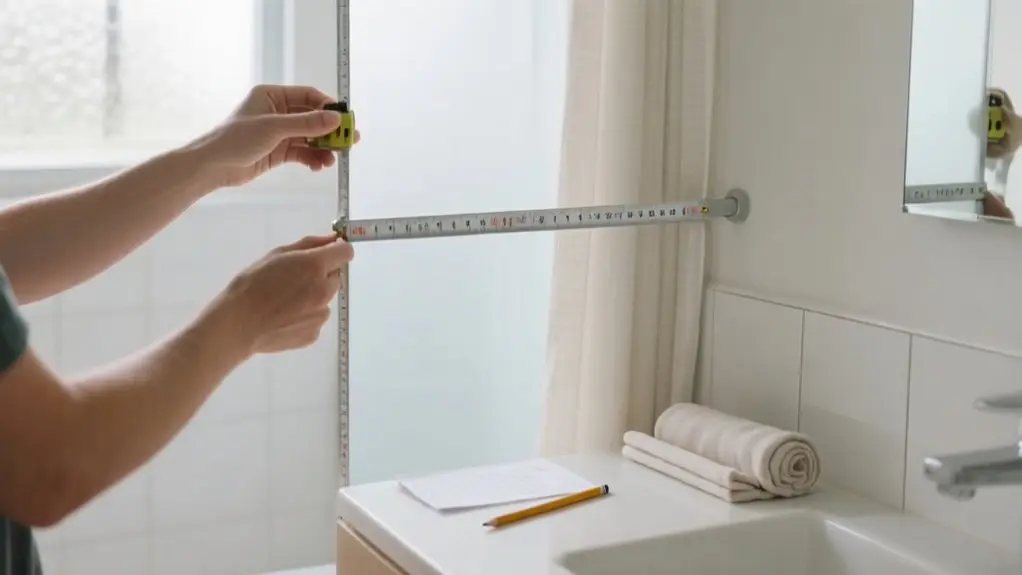
How To Measure For A Shower Curtain – Full Tutorial
To measure for a shower curtain, start by measuring the width from wall to wall or along a curved rod’s widest point. Add extra inches for overlap. Next, measure the length from the rod to about an inch above the floor, making sure there’s clearance below the tub edge.
Set the rod height around 75 to 77 inches to balance privacy and splash control. Mark and level your wall points carefully. Follow these steps, and you’ll be ready to explore tips for special rods and installation details.
Measuring Your Shower Curtain Width Accurately
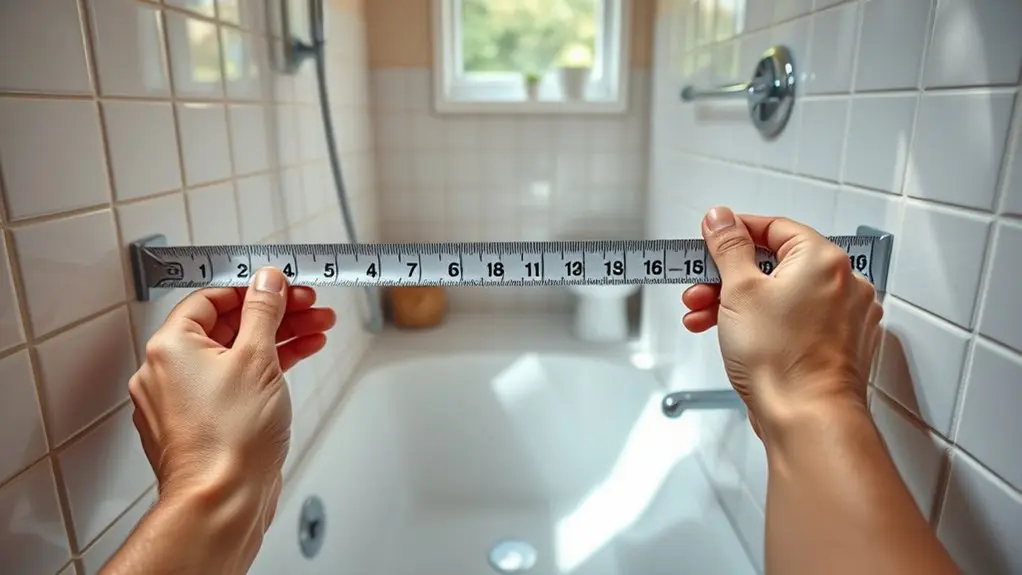
To measure your shower curtain width accurately, start by measuring the distance from wall to wall where the curtain will hang. Use a tape measure at the exact point the shower curtains will be placed for the most precise reading.
For standard bathtubs, aim for a curtain width of 70 to 72 inches to guarantee full coverage and prevent water from splashing out. If you have a curved rod, measure across the widest point to account for the curve, which may require a slightly wider curtain.
Add about 12 inches to your measurement to allow for overlapping folds, especially if you’re choosing lighter fabrics.
Always double-check your measurements before purchasing to avoid getting shower curtains that are too narrow or short for your space.
Choosing the Right Shower Curtain Length
Selecting the right shower curtain length starts with measuring from the rod down to about an inch above the floor. This clearance prevents mildew buildup and makes cleaning easier.
The standard shower curtain length is typically 72 inches, ideal for rods installed 75 to 77 inches from the floor. If your bathroom has taller ceilings or raised rods, consider longer curtains like 78 or 84 inches to maintain proper coverage without gaps.
Standard curtains are 72 inches for rods 75-77 inches high; taller ceilings need 78 or 84 inches.
For high shower areas, curtains measuring 70×84 inches work well to guarantee full coverage.
Always measure carefully from the curtain rod to your desired endpoint, factoring in any extra length needed for decorative folds.
Choosing the right shower curtain length guarantees functionality and a neat appearance in your bathroom.
Selecting the Best Shower Curtain Size From Your Measurements
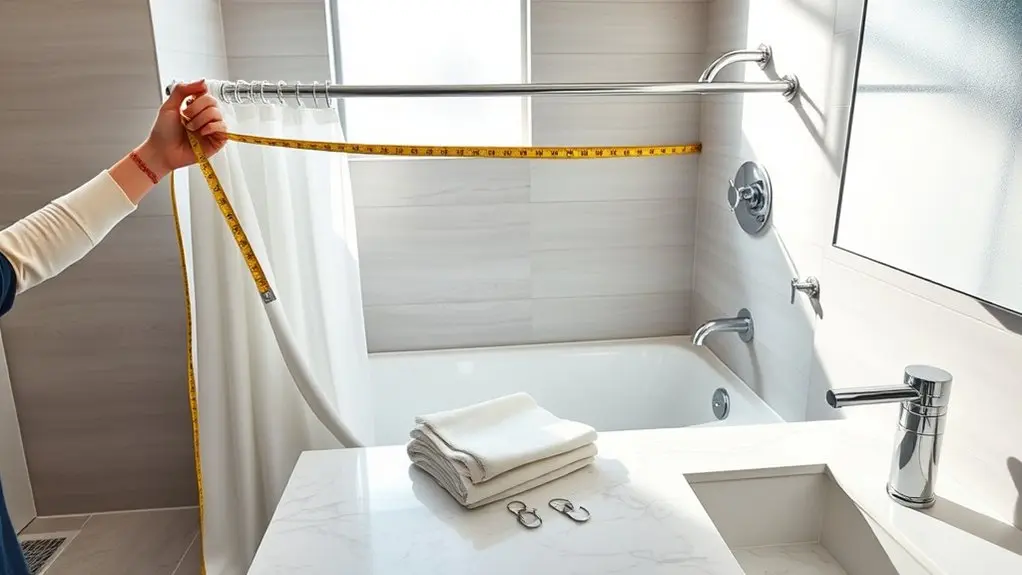
First, measure the width of your bathtub or shower area. Make sure to add a little extra for overlap so water stays inside.
Then, check the length of the curtain based on your tub height and the ceiling. It’s a good idea to leave about 8 to 12 inches below the edge to avoid the curtain dragging on the floor.
If you’re using a curved rod or have a freestanding tub, don’t forget to adjust your measurements accordingly to get the perfect fit.
This way, you’ll have a shower curtain that works just right for your space.
Measuring Curtain Width
Measuring the width of your bathtub or shower area accurately is essential for choosing the right shower curtain size. Start by measuring from wall to wall to get the exact width.
For most standard bathtubs, shower curtains between 70 and 72 inches wide work well. Larger shower spaces might need curtains 144 inches wide or more.
When measuring curtain width, add 12 to 24 inches to your measurement to allow for overlapping folds, especially if your curtain fabric is light.
Also, consider your shower rod type; a curved rod requires slightly more fabric to cover the extra space.
Finally, always check the manufacturer’s curtain size specs to guarantee your chosen curtain fits perfectly and provides full coverage without gaps.
Determining Curtain Length
To determine the ideal shower curtain length, you’ll want to measure from the floor up to where you plan to install the curtain rod, typically between 75 and 77 inches.
When determining curtain length, make sure the curtain hangs 8-12 inches below the tub edge for bathtubs. This prevents water splashes while allowing clearance.
For standard tubs, a 72-inch curtain usually fits well, but taller setups may need 78- or 84-inch curtains.
If you have a shower without a tub, the curtain should reach the floor or shower base edge.
Minor measurement errors of 1-2 inches can be managed by choosing a slightly different curtain length, but larger discrepancies might require adjusting the rod height.
Accurate determining curtain length guarantees functionality and a clean look.
Adjusting For Rod Type
Once you’ve nailed down the curtain length, the type of rod you use will influence the final curtain size you choose. Standard straight rods usually fit a 72-inch wide curtain, but curved rods need extra width for overlapping folds.
For freestanding tubs, measure the rod’s mounting height and circumference to customize the curtain length. Heavier fabrics may also require adjustments for proper drape and balance.
| Rod Type | Width Needed | Length Recommendation |
|---|---|---|
| Straight Rod | 72 inches | 72 inches |
| Curved Rod | 78-84 inches | 72-84 inches |
| Freestanding | Custom | Based on mounting height |
| High-Mounted | 72 inches | 78-84 inches |
| Heavy Fabric | Slightly wider | Adjust length slightly |
Always match your shower curtain rod type to the curtain size for the ideal fit.
Setting the Ideal Shower Curtain Rod Height
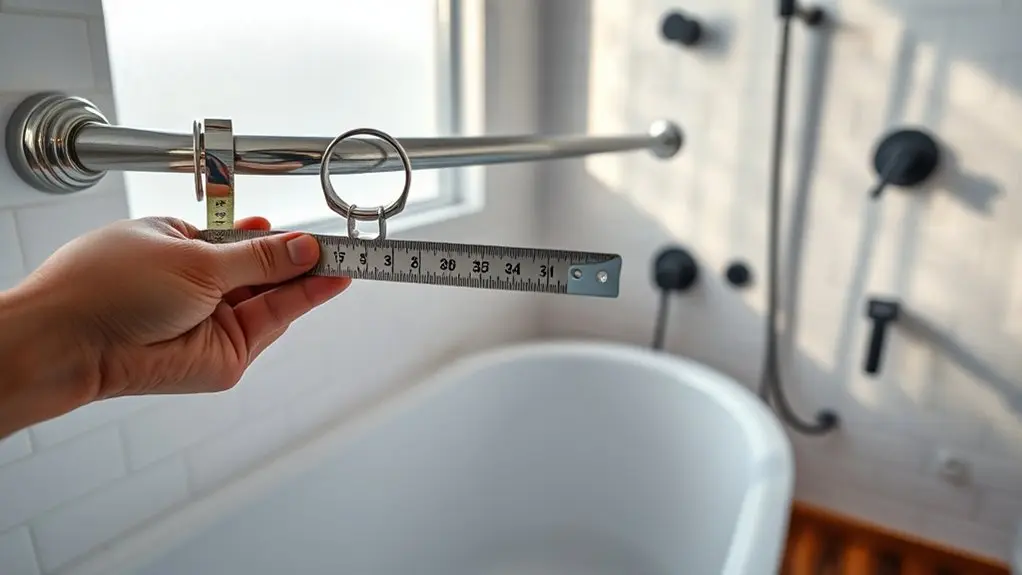
Although it might seem simple, setting the ideal height for your shower curtain rod plays an essential role in both functionality and appearance.
The shower curtain rod height should typically be between 75 and 77 inches from the floor to fit standard 72-inch curtains perfectly.
Here’s what to keep in mind:
Measure from the floor up to guarantee accuracy. Leave about 1 inch clearance above the floor.
Avoid hanging the rod too low to prevent curtain dragging and mildew.
Don’t set it too high to avoid water splashes and privacy issues.
For taller ceilings, raise the rod for a more elegant look.
How to Mark and Prep Your Walls for Rod Installation
After deciding on the perfect height for your shower curtain rod, it’s time to mark and prepare your walls for installation. Start by measuring 75 to 77 inches from the floor and mark the height with a pencil.
Next, measure the shower’s width and mark the center point for balance. Use a level to draw a straight line connecting your marks to guarantee the rod will sit evenly.
If your rod requires wall anchors, drill holes precisely at the marked points, following the bracket’s spacing. Double-check measurements to suit your rod type and curtain length.
| Feeling | Action |
|---|---|
| Confident | Mark the height clearly |
| Assured | Use a level for straightness |
| Prepared | Drill accurately for anchors |
Tips for Handling Curved or Specialty Shower Curtain Rods
When you’re measuring a curved or specialty shower rod, make sure to follow the rod’s shape closely. This way, you’ll get an accurate length without any guesswork.
You’ll probably want to hang the curtain a little higher than usual, too. Doing this creates a roomier feel in your shower space.
Also, it’s a good idea to pick flexible curtain sizes that can handle these curves and variations. This helps keep gaps from forming and makes sure water stays inside the shower where it belongs.
Measuring Curved Rod Length
Measuring a curved shower rod requires a flexible approach to capture the rod’s unique shape accurately. When measuring curved rod length, start by using a flexible tape measure to follow the rod’s arc from one end to the other.
Be certain to measure the distance from the wall to the center of the curve at its highest point to get an accurate width. Don’t forget to factor in any overlap or extra fabric needed for full coverage.
Here are some key tips:
- Use a flexible measuring tape to follow the curve precisely
- Measure from wall to curve’s highest center point
- Record total length from one rod end to the other
- Account for fabric overlap or additional coverage
- Consider curtain weight for proper hanging support
This guarantees your measurements fit the curved rod perfectly.
Adjusting Curtain Height
Since curved and specialty shower rods vary in shape and height, you’ll need to adjust your curtain measurements carefully to guarantee proper fit. When adjusting curtain height for curved rods, add about an extra inch to account for the curve’s peak above the tub. Use a flexible measuring tape to follow the rod’s contour accurately.
For specialty rods with unique shapes or extensions, measure both the highest and lowest points to find the ideal curtain length.
If your rod’s height is adjustable, test a mock setup to determine the best placement before installation. Aim for a finished curtain height of 75 to 77 inches from the floor, leaving roughly one inch of clearance to prevent dragging while ensuring full coverage.
Selecting Flexible Curtain Sizes
Although curved and specialty shower rods pose unique challenges, you can select the right curtain size by taking horizontal measurements along the rod’s contour. For your shower stall, this guarantees full coverage and prevents water from escaping. Use a flexible tape to follow the curve accurately. Remember to leave 1-2 inches of clearance above the tub or shower base.
Keep these tips in mind when selecting flexible curtain sizes:
- Measure horizontally along the curved rod, not straight across
- Use flexible measuring tape for precise arc measurements
- Measure from wall to curtain hanging point for full coverage
- Check manufacturer’s sizing recommendations for specialty rods
- Allow clearance above the shower stall base to avoid water splashes
Following these steps helps you pick a curtain that fits both function and style perfectly.
Hanging and Securing Your Shower Curtain for Best Water Control
When you hang your shower curtain, placing the rod between 75 and 77 inches from the floor helps keep water inside the tub while preventing splashes.
Once the shower curtain is hung, use a plastic or rubber liner to boost water resistance and keep moisture contained.
Add a plastic or rubber liner to enhance water resistance and contain moisture effectively.
Make certain the curtain drapes evenly without touching the floor to avoid mildew and allow proper clearance.
To further secure the curtain and reduce gaps where water might escape, attach magnets or suction cups at the bottom edges, anchoring it firmly to the tub or shower floor.
Regularly check the curtain’s position and adjust as needed.
This simple routine guarantees your shower curtain stays effective, keeping your bathroom dry and your water control ideal.
Avoiding Common Mistakes When Measuring and Installing Your Shower Curtain
Hanging your shower curtain at the right height and securing it properly sets the stage for effective water control, but getting your measurements wrong can undo all that effort.
When measuring the size of the shower, avoid these common mistakes to guarantee a perfect fit:
Measure from the floor to the desired rod height (75–77 inches) for ideal clearance.
Use a ruler to measure the width accurately from wall to wall, factoring in curtain overlap.
Double-check curtain length to prevent dragging or gaps above the tub.
Mark the rod placement on the wall, making sure it’s level and centered before drilling.
Understand that small errors (1–2 inches) can be fixed by adjusting rod height; bigger mistakes may require a new curtain.
Frequently Asked Questions
What Materials Are Best for Shower Curtains to Prevent Mold?
For the best mold resistance, you should choose waterproof fabrics like polyester or vinyl since they repel water and reduce mold growth.
Look for curtains treated with mildew-resistant coatings to boost protection.
Heavier materials, such as weighted cotton or canvas, hang better and limit moisture buildup.
Don’t forget to use a plastic or rubber liner as an extra moisture barrier.
Also, pick machine-washable curtains to keep mold at bay with regular cleaning.
How Often Should I Replace My Shower Curtain?
Think of your shower curtain as a loyal guard that needs regular retirement. Your replacement schedule should be every 6 to 12 months to keep mildew and odors at bay.
If your bathroom’s a steamy jungle, replace it every 3 to 6 months.
Always inspect for tears or discoloration; when you see those signs, it’s time to swap it out.
Staying on top of this keeps your shower fresh and inviting.
Can I Use a Fabric Liner With a Plastic Shower Curtain?
Yes, you can definitely use a fabric liner with a plastic shower curtain. For ideal liner compatibility, choose a fabric liner that’s machine washable and slightly longer than your plastic curtain to keep water contained.
Keep in mind that heavier fabric liners need sturdy hooks to support their weight alongside the plastic curtain.
This combo not only enhances appearance but also helps reduce mold and mildew by absorbing moisture more effectively.
What Are Eco-Friendly Shower Curtain Options?
Looking to save the planet one shower at a time? You’ll want sustainable choices like organic cotton, hemp, or recycled polyester curtains because who doesn’t love guilt-free water splashes?
These eco-friendly options often ditch toxic PVC for safer, non-toxic coatings.
Check for GOTS or OEKO-TEX certifications to guarantee you’re truly green.
Plus, biodegradable curtains break down naturally, so you avoid adding landfill souvenirs while staying practical and stylish.
How Do I Clean and Maintain My Shower Curtain?
To clean and maintain your shower curtain, practice regular shower care by washing it every few weeks with mild detergent on a gentle cycle.
Toss in a few towels if you have a fabric curtain to scrub away grime.
For mold or stains, spray vinegar and water, let it sit for 30 minutes, then rinse.
Always hang it to dry fully and store in a dry, ventilated spot to prevent mildew and extend its life.
Conclusion
Measuring and installing your shower curtain is like fitting a puzzle piece perfectly. It guarantees no water escapes and your bathroom stays tidy.
By taking accurate width and length measurements, choosing the right rod height, and prepping your walls carefully, you’ll avoid common mistakes and enjoy a smooth setup.
With these practical steps, your shower curtain will hang just right, combining function and style effortlessly every time.