Can I Shower With Stainless Steel – Safety & Facts
You can safely shower with stainless steel jewelry because its chromium content forms a protective oxide layer that resists rust and corrosion, even with frequent water exposure. However, soap residues and hard water minerals may dull its shine over time, so rinsing and drying after showers is essential.
Avoid prolonged exposure to chlorinated or saltwater to prevent corrosion. If you want to optimize the durability and appearance of your jewelry, understanding proper care and material selection will be important.
Why Stainless Steel Jewelry Is Safe to Wear in the Shower
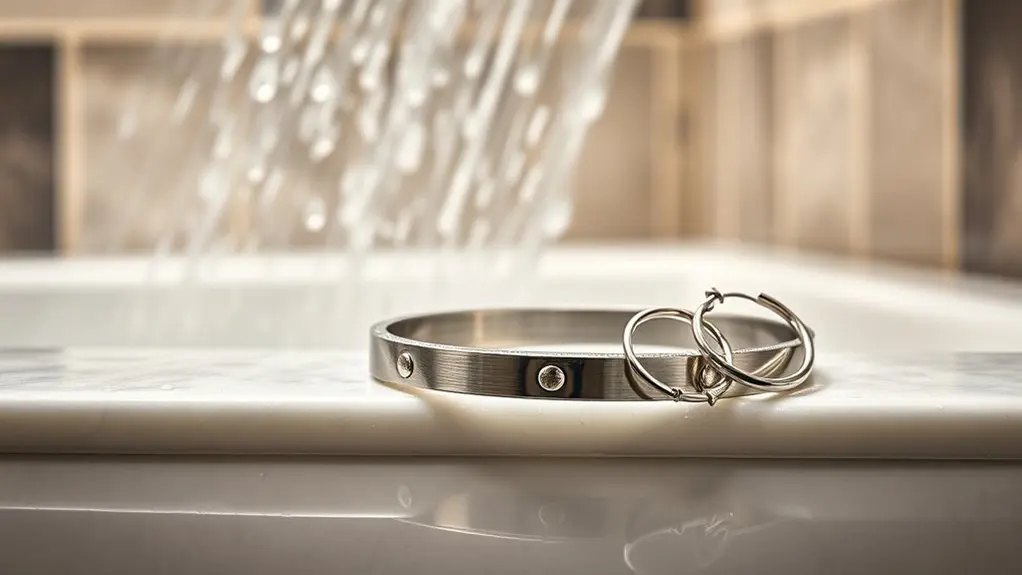
Because stainless steel contains at least 10.5% chromium, it forms a durable, protective oxide layer that prevents rust and corrosion when exposed to moisture. This oxide layer makes stainless steel jewelry highly resistant to water exposure, maintaining its structural integrity and shine during daily wear, including showering.
When you wear stainless steel jewelry, water alone won’t cause immediate damage or tarnish, distinguishing it from lower-quality metals prone to corrosion. Its resistance to rust under wet conditions makes it safe for continual contact with water.
However, while water exposure isn’t harmful, you should be mindful to rinse off any residues after wearing your jewelry in the shower to preserve its appearance.
How Water and Soap Affect Stainless Steel Jewelry
You won’t harm your stainless steel jewelry just by getting it wet. Water itself isn’t a problem. However, soap residue can stick around and make your jewelry look dull if you don’t rinse it off properly.
So, it’s a good idea to rinse your pieces thoroughly after showering to wash away any leftover soap or buildup.
Also, knowing a bit about the water quality and how often you clean your jewelry can really help keep it looking its best.
Regular care makes a big difference in preserving that shiny finish you love.
Water Impact On Jewelry
Although water itself doesn’t damage stainless steel jewelry, residues from soap, shampoo, and hard water minerals can dull its finish over time. Water exposure alone is generally safe, but regular rinsing after showering helps remove tarnish caused by mineral buildup and soap residues.
You should be cautious with chlorinated pools since chlorine can degrade the protective oxide layer on stainless steel, accelerating wear. Frequent contact with harsh chemicals found in soaps and shampoos compounds this effect, especially with daily wear.
To maintain ideal appearance, gently rinse your jewelry with clean water after exposure to chlorinated water or soapy environments. This practice minimizes residue accumulation and preserves the jewelry’s luster, ensuring durability despite regular water exposure.
Soap Residue Effects
Water alone doesn’t compromise stainless steel jewelry, but soap residues from shampoos and body washes can gradually diminish its shine.
These soap residue effects accumulate through repeated exposure to water mixed with cleansing agents, potentially causing stainless steel tarnish and dullness.
Over time, this buildup interferes with the metal’s reflective properties, reducing its visual appeal.
To maintain luster, you should always rinse your jewelry thoroughly with clean water after showering, effectively removing residual soap and minimizing deposit formation.
Proper rinsing limits the chemical interaction between soap components and the metal surface, preserving the jewelry’s polished look.
While exposure to water is generally safe, neglecting to remove soap residues increases the risk of surface degradation and means you’ll need to clean your jewelry more often to restore its brilliance.
Maintaining Stainless Steel
Anyone wearing stainless steel jewelry during daily showers should understand how water and soap interact with the metal. Water exposure alone doesn’t damage stainless steel, but soap residue from shampoos and conditioners can cause dulling over time.
To maintain its luster, you should rinse with clean water immediately after your daily shower to remove soap and oils that might accumulate and lead to tarnish or rust.
Furthermore, regularly wiping your jewelry with a soft cloth helps remove skin oils without harsh cleaning, preserving its finish.
Quick drying after water exposure is essential to prevent buildup that compromises corrosion resistance.
High-quality stainless steel, especially 316L surgical steel, withstands wet conditions well, but proper care guarantees your jewelry remains visually pristine and durable.
When Should You Remove Stainless Steel Jewelry Before Showering?
Since exposure to certain chemicals and conditions can degrade stainless steel jewelry, you should remove it before showering if it’s gold-plated, subjected to chlorinated water, or comes into contact with antibacterial soaps containing sulfur. Prolonged exposure to hot water and steam may also compromise the protective layer, dulling the finish.
Wearing stainless steel jewelry during daily water exposure isn’t generally harmful, but best practices for wearing include removing pieces to prevent gradual damage. Consider this guide:
| Condition | Action Needed |
|---|---|
| Gold-plated jewelry | Remove before showering |
| Chlorinated water exposure | Remove to protect layer |
| Antibacterial soaps (sulfur) | Remove to prevent dullness |
| Prolonged hot water exposure | Remove to avoid buildup |
| Daily water exposure (normal) | Rinse and dry post-shower |
Removing jewelry strategically preserves its appearance and longevity.
Can You Shower With Gold-Plated Stainless Steel Jewelry?
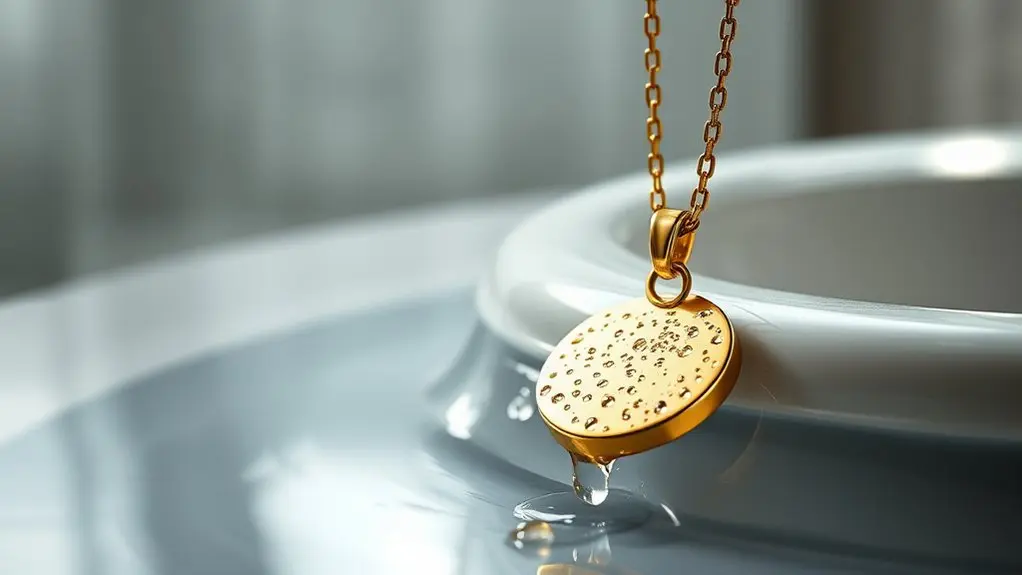
You can definitely shower with gold-plated stainless steel jewelry, but keep in mind that prolonged exposure to water and soaps will slowly wear down the plating’s finish.
How long it lasts really depends on the quality of the plating. For example, PVD coatings tend to be much more durable and resistant to wear.
If you want to keep that gold layer looking fresh, it’s a good idea to rinse off any soap or residue right after showering.
Then, make sure to dry your jewelry thoroughly to help preserve its shine.
Gold Plating Durability
Although gold-plated stainless steel jewelry can tolerate occasional exposure to water, frequent contact with hot water, soap, and shampoo gradually dulls its finish.
The durability of gold plating depends on the plating method. For instance, PVD coatings offer superior resistance to wear and are more resistant to corrosion than traditional plating.
However, even high-quality gold plating can tarnish over time when exposed to harsh elements.
To maintain appearance and extend durability, consider these points:
- Remove jewelry before swimming to prevent chlorine-induced deterioration
- Rinse and gently dry jewelry after exposure to moisture to reduce oxidation
- Opt for plating processes known for enhanced resistance to abrasion and water exposure
Water Exposure Effects
Gold-plated stainless steel jewelry can handle occasional water contact, but frequent exposure to hot water, soap, and shampoo will gradually wear down its plating.
Stainless steel itself resists rust when wet, but the gold plating is more delicate and can wear off in the shower.
Water exposure combined with humidity and steam speeds up oxidation, which causes discoloration and dullness.
Soap and shampoo leave behind films that reduce the jewelry’s shine.
PVD coatings offer some protection, but prolonged contact with chlorinated water can still corrode the plating.
To keep your jewelry looking great, it’s best to take it off before showering.
If you do wear it, rinse it well with clean water afterward and dry it completely with a soft cloth.
Doing this limits damage from moisture and steam, helping your gold-plated stainless steel jewelry stay beautiful longer.
Showering vs. Swimming: Effects on Stainless Steel Jewelry
While stainless steel jewelry withstands shower water without damage, soap residues can gradually dull its finish if not rinsed properly.
Showering exposes your jewelry mainly to water and mild detergents, which pose minimal risk.
Showering typically involves only water and mild detergents, making it a low-risk activity for your jewelry.
Swimming, however, involves chlorine exposure that can degrade stainless steel’s protective layers over time, especially with frequent use.
Prolonged contact with chlorinated water increases the risk of corrosion and tarnishing, particularly in lower-grade stainless steel.
To maintain your jewelry’s integrity, consider these key points:
- Rinse thoroughly after showering to remove soap residues
- Immediately rinse and dry jewelry after swimming to minimize chlorine exposure
- Limit prolonged exposure to chlorinated pools to prevent corrosion
How Chlorine and Saltwater Affect Stainless Steel Jewelry
Exposure to chlorine and saltwater presents specific challenges for stainless steel jewelry. Chlorine, prevalent in swimming pools, gradually degrades the protective chromium layer, increasing susceptibility to corrosion.
While occasional chlorine exposure poses minimal risk, frequent contact accelerates surface dullness and structural breakdown.
Saltwater, inherently corrosive, similarly compromises the metal’s integrity, promoting corrosion and mineral deposits. These deposits, often worsened by hard water minerals like calcium and magnesium, can impair appearance and surface quality.
To reduce damage, rinse stainless steel jewelry with fresh water right after exposure to chlorine or saltwater. This practice removes leftover chemicals and minerals, preserving the protective layer and keeping your jewelry shiny and durable over time.
Properly managing exposure is key for long-term corrosion resistance.
Easy Daily Care Tips to Keep Your Stainless Steel Jewelry Looking Great
It’s a good idea to set up a weekly cleaning routine that gently removes oils and residues without scrubbing too hard, so you can keep your jewelry’s finish looking great.
After you clean your pieces, make sure to dry them well with a soft cloth—this helps prevent water spots and corrosion.
Also, storing your stainless steel jewelry in a dry place is super important to avoid moisture buildup and help it last longer.
Weekly Cleaning Routine
Maintaining the brilliance of your stainless steel jewelry requires a simple weekly cleaning routine that effectively removes oils, dirt, and skin residue.
Start by wiping your pieces with a soft cloth to eliminate surface contaminants.
Then, prepare a gentle cleaning solution using mild soap and warm water. This avoids harsh chemicals that could damage the finish. Submerge your jewelry briefly and use the solution to dislodge grime.
Follow with a thorough rinsing under clean water to remove all soap residues that might dull the metal.
Finally, apply a careful drying technique by patting the jewelry dry with a lint-free cloth to prevent water spots.
Key steps for your weekly cleaning routine include:
- Soft cloth wiping to remove surface oils
- Gentle cleaning solution for effective grime removal
- Thorough rinsing and drying technique to maintain polish
Consistent care guarantees longevity and shine without compromising proper storage.
Proper Storage Methods
Three essential factors determine the ideal storage conditions for stainless steel jewelry: dryness, temperature, and separation. To prevent tarnishing, store stainless steel in a cool, dry environment away from direct sunlight. Avoid moisture buildup by never placing your pieces in damp areas like bathrooms.
Always clean and dry your jewelry thoroughly before storage to eliminate residues from soaps or lotions that can dull its finish. Use soft, anti-tarnish pouches or fabric-lined jewelry boxes to protect from scratches and environmental exposure.
Furthermore, keep different types of jewelry separate to avoid abrasion or tangling, especially when stainless steel jewelry is stored alongside softer metals or gemstones.
Adhering to these methods will maintain your jewelry’s luster and extend its lifespan effectively.
How to Clean and Polish Stainless Steel Jewelry After Water Exposure
Rinse your stainless steel jewelry right after exposure to soap, shampoo, or pool chlorine to prevent residue buildup that can dull its surface.
Water exposure without prompt cleaning can damage stainless steel by letting corrosive elements linger. To keep it in good shape, follow these steps:
Water exposure without prompt cleaning lets corrosive elements linger, potentially damaging your stainless steel jewelry.
Clean with mild soap and use a soft cloth or toothbrush to gently remove oils and dirt.
Then rinse thoroughly with clean water to avoid residue that can hide the metal’s shine. Use a polishing cloth made for stainless steel to bring back its brilliance and remove minor surface imperfections.
This simple routine helps you avoid residue buildup while cutting down the risk of damage stainless steel jewelry often faces from prolonged water exposure.
Regular care keeps both the look and durability intact.
Why Drying Your Stainless Steel Jewelry Matters More Than Water Exposure
Although water itself doesn’t damage stainless steel jewelry, failing to dry it promptly can allow soap residues and moisture to accumulate, dulling its surface and accelerating wear.
Stainless steel is highly resistant to corrosion, but residue on your jewelry from soaps and shampoos during water exposure can create a film that diminishes shine and promotes dullness.
When you wear jewelry in the shower, this residue can build up quickly. To prevent this, always dry with a soft cloth immediately after exposure. This simple step eliminates moisture that fosters soap scum and residue buildup, preserving the jewelry’s finish.
Overcleaning risks more wear than water exposure itself, so prioritizing drying over frequent washing helps maintain luster and extends your stainless steel jewelry’s lifespan.
How to Pick Water-Resistant Stainless Steel Jewelry for Everyday Wear
Selecting water-resistant stainless steel jewelry means understanding the specific alloy properties that boost durability against moisture.
When choosing pieces, prioritize those made from 316L surgical steel because it offers superior corrosion resistance, thanks to its molybdenum content.
Also, check the chromium percentage. Ideally, it should be above 10.5% to ensure a protective oxide layer forms, which prevents rust and tarnish.
To pick the best jewelry for daily water exposure, consider a few things. Look for minimal exposed settings or stones since they’re less vulnerable to water damage.
PVD-coated stainless steel is a good choice for gold-plated designs because it enhances durability.
And don’t forget to follow the manufacturer’s care instructions to keep the corrosion resistance and appearance in top shape.
Frequently Asked Questions
Can Stainless Steel Jewelry Cause Skin Irritation When Worn in the Shower?
Yes, stainless steel jewelry can cause skin irritation if you have skin sensitivity or if the material composition includes lower-quality alloys.
Water exposure during showering may interact with harsh soaps, increasing allergic reactions.
To reduce risks, follow jewelry care and maintenance tips like regular cleaning and drying.
High-quality 316L stainless steel typically minimizes irritation, but you should monitor your skin closely for any adverse reactions from prolonged exposure.
Is Stainless Steel Jewelry Safe for Children to Wear While Bathing?
Yes, stainless steel jewelry is safe for children to wear while bathing because it resists corrosion and is hypoallergenic.
When thinking about child safety, keep an eye on jewelry with small parts to avoid choking hazards.
It’s a good idea to rinse off any soap and dry the jewelry thoroughly after water exposure to keep it in good shape.
Also, check your child’s skin sensitivity regularly and adjust bathing habits if needed.
Following these simple tips helps ensure the jewelry lasts and reduces the chance of irritation, even with frequent water exposure.
Does Stainless Steel Jewelry Affect Water Temperature Sensitivity During Showers?
Think of stainless steel jewelry as a silent partner in your shower routine. It won’t impact your water temperature sensitivity.
Its metal properties include high corrosion resistance, preventing changes from hot or cold water. While it conducts heat, this doesn’t affect your skin sensitivity or shower habits.
Just maintain jewelry by rinsing off soap residues to avoid dullness.
Can Shower Steam Damage the Finish on Stainless Steel Jewelry?
No, shower steam won’t damage the finish on your stainless steel jewelry. Thanks to its protective chromium oxide coatings, the metal resists oxidation and corrosion, even with frequent steam exposure.
However, shower water quality and soap residues can affect jewelry longevity by dulling the shine. Practicing proper stainless steel care is essential.
Regular jewelry maintenance, like rinsing and drying after showers, helps mitigate steam exposure effects and preserves the finish effectively.
Are There Specific Stainless Steel Grades Better Suited for Shower Use?
Think of stainless steel types as different guardians against the watery domain of your shower.
You’ll find 316L surgical steel stands out with superior corrosion resistance and finish durability, making it the top choice.
It balances design aesthetics and maintenance ease better than 304 or 430 grades, which may falter over time.
While 316L costs more, its resilience justifies the investment, ensuring your jewelry stays pristine with minimal upkeep.
Conclusion
Think of your stainless steel jewelry like a high-performance athlete. It’s built to endure water, soap, and daily wear without losing its shine.
Studies show stainless steel resists corrosion up to 30 times better than other metals, making it ideal for shower use. Just like you wouldn’t skip drying off after a swim, always dry your jewelry thoroughly to maintain its polished edge.
With proper care, your stainless steel will stay resilient and radiant, no matter the environment.