How To Clean Shower Glass – Multiple Method Explained
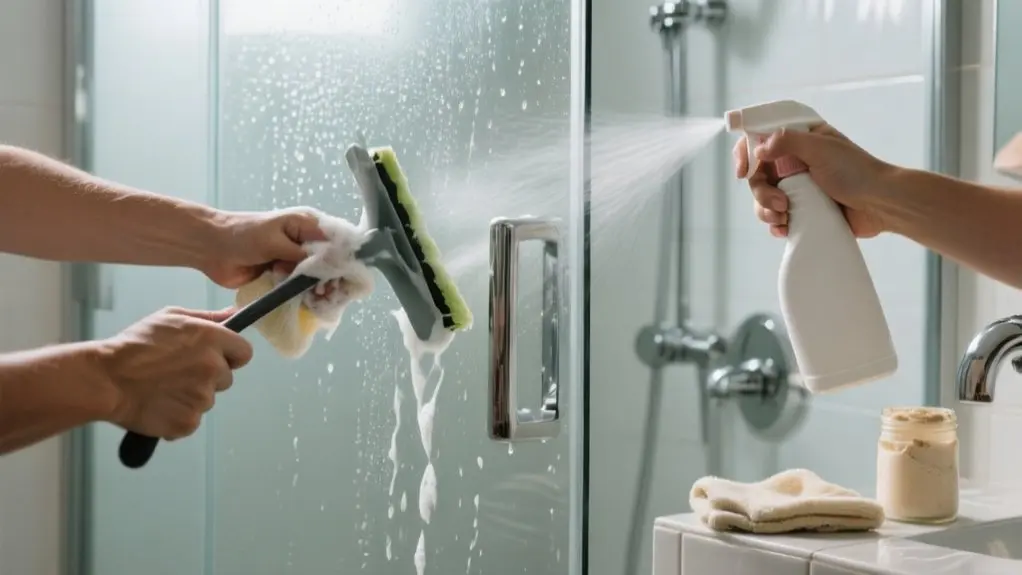
You can clean your shower glass by first identifying residue types like hard water stains or soap scum. These require different approaches. Use a vinegar and water solution to dissolve mineral build-up, and baking soda as a gentle scrub for tougher spots.
Always apply with soft cloths or sponges to avoid scratches. Rinse thoroughly and squeegee after each shower to prevent stains. For stubborn or etched marks, specialized restoration and water softeners help maintain clarity.
Keep exploring for detailed techniques and tips.
Causes of Hard Water Stains on Shower Glass
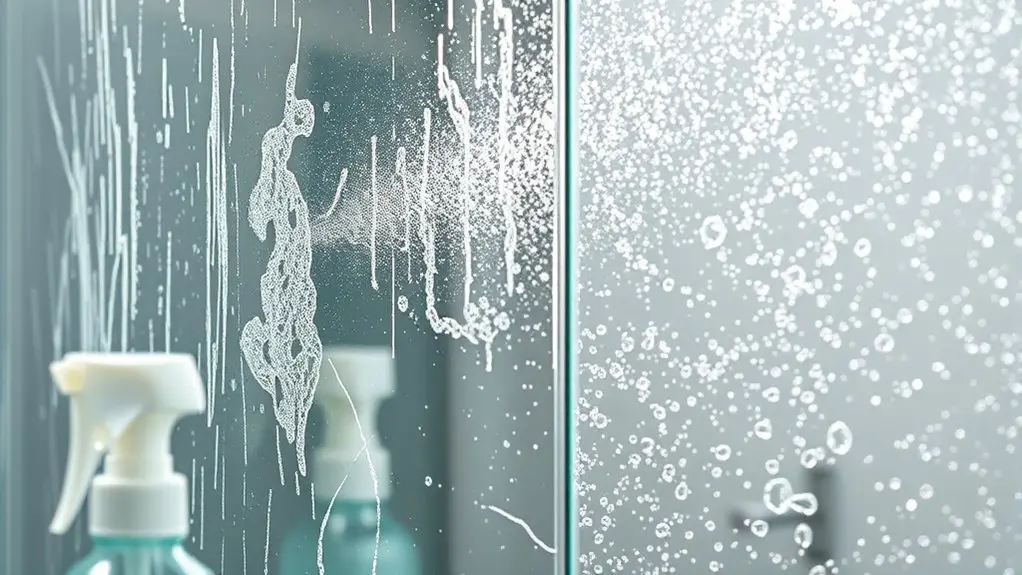
Although you may not notice it immediately, hard water stains on your shower glass form when dissolved calcium and magnesium minerals are left behind as water evaporates.
These mineral deposits accumulate over time on your glass shower screen, creating stubborn marks that resist simple wiping.
When hard water mixes with soap, it produces soap scum, which often overlaps with mineral deposits and makes cleaning more complicated.
To tackle these, you need an effective cleaning solution. Vinegar works well to dissolve mineral buildup.
Incorporate vinegar into your regular cleaning routine to prevent heavy stains from forming.
Identifying Types of Shower Glass Residue
You’ll come across different kinds of residue on your shower glass, like hard water stains, soap scum, and sometimes even etching.
If you shine a bright light on the glass, you can spot raised mineral deposits, a smooth haze, or fine scratches that help reveal what kind of residue you’re dealing with.
It really helps to know how strongly each type of residue sticks to the glass because that way, you can pick the best cleaning method for the job.
Types Of Residue
How can you tell what’s causing those stubborn spots on your shower glass? The two main culprits are soap scum and hard water stains.
Soap scum forms when soap reacts with minerals in hard water, leaving a filmy residue that’s tough to wipe away.
Hard water stains, made of calcium and magnesium deposits, appear as mineral buildup or a smooth haze after water evaporates.
Both can create stubborn stains that resist your usual cleaning routine.
To tackle them effectively, use a microfiber cloth to gently scrub without scratching the glass.
Regular cleaning helps prevent buildup and makes it easier to identify these residues.
Recognizing whether you’re dealing with soap scum or hard water stains is the first step to restoring your shower glass’s clarity.
Visual Identification Tips
When should you inspect your shower glass under bright side lighting? Always check shower glass in strong light because it helps you see residues better.
Look closely for uneven patches. Raised dots usually mean hard water stains, while a smooth haze points to soap scum.
Use a dry microfiber cloth to wipe the glass. If the cloth picks up material, it’s loose residue. But if nothing transfers, that suggests a stronger bond.
Notice clear glass next to hazy spots? That shows localized buildup that needs focused cleaning.
Run your finger gently over the surface to spot fine scratches or etching. These can cause roughness and permanent marks.
Understanding these signs helps you pick the right cleaning methods so you can restore clean glass shower doors without causing damage.
Residue Bonding Strength
Although hard water stains, soap scum, and etching can look similar on shower glass, identifying their bonding strength is key to effective cleaning.
Start with visual inspections under bright light to spot raised dots, smooth haze, or fine scratches.
Next, use a dry microfiber cloth to test residue bonding strength. If residue transfers, it’s loose soap scum or fresh deposits. If not, it’s likely hard water stains or persistent residue firmly bonded to glass.
This distinction guides your cleaning methods. Acidic solutions work well for mineral-rich hard water stains but may not remove stubborn soap scum.
Persistent residue requires targeted approaches, combining mechanical action and appropriate cleaners.
Preparing Effective Cleaning Solutions for Shower Glass
Since effective cleaning starts with the right solution, you’ll want to prepare mixtures that target soap scum and mineral buildup on your shower glass. Use a vinegar solution of equal parts white vinegar and water to dissolve mineral deposits on glass. For tougher stains, heat the vinegar first.
Sprinkle baking soda on a sponge to boost scrubbing power without scratching. Mix lemon juice and baking soda for a natural cleaner that fights stains and freshens the air. Finally, create a daily maintenance spray from equal parts vinegar and water to prevent buildup.
| Solution Type | Ingredients | Purpose |
|---|---|---|
| Vinegar Solution | White vinegar + water | Dissolves soap scum & minerals |
| Heated Vinegar | Warm vinegar + water | Tackles tough residue |
| Baking Soda Scrub | Baking soda + sponge | Mild abrasive for grime removal |
| Lemon Juice Mix | Lemon juice + baking soda | Natural cleaner & fresh scent |
| Daily Maintenance | Vinegar + water + essential oils | Prevents buildup |
Safe Shower Glass Cleaning Methods
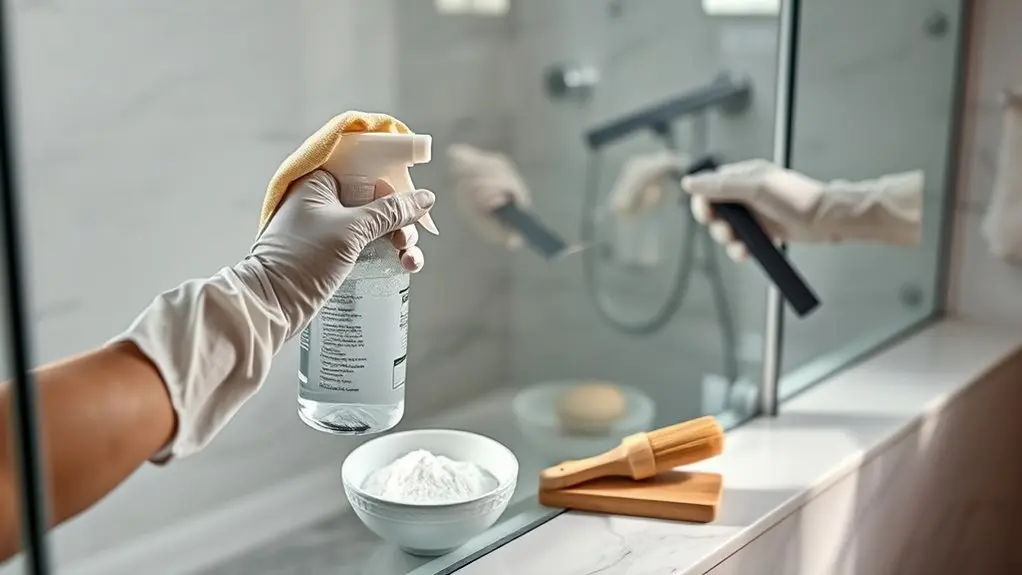
You should use mild cleaning agents like a vinegar-water solution to protect your shower glass while removing buildup effectively. It’s gentle but gets the job done without causing damage.
Always choose non-abrasive tools such as microfiber cloths or soft sponges. These help you avoid scratches that harsh scrubbing might cause.
And don’t forget to wear gloves—it’s better to keep your hands safe.
After cleaning, make sure to rinse thoroughly. This way, both you and the glass stay safe and clean.
Mild Cleaning Agents
When you want to clean shower glass safely and effectively, mild cleaning agents like white vinegar and baking soda work wonders. These agents tackle soap scum and mineral deposits without harming glass surfaces. That makes them ideal for a regular cleaning routine.
Mix equal parts white vinegar and water, spray on glass, let sit 5–10 minutes, then rinse to dissolve soap scum. Use baking soda’s mild abrasiveness with a damp cloth or sponge to scrub stubborn grime without scratching.
Diluted white vinegar also disinfects, removing odors and bacteria naturally. After each shower, use a squeegee to remove excess water and prevent hard water stains buildup.
Incorporate these mild cleaning agents to keep your shower glass clear and spotless safely.
Non-Abrasive Tools
Three essential non-abrasive tools will help you clean shower glass safely and effectively: microfiber cloths, non-abrasive sponges, and soft-bristle toothbrushes.
Use microfiber cloths or non-abrasive sponges with a vinegar-water solution or a gentle glass cleaner to remove soap scum and tough stains without scratching the surface.
Avoid metal scrubbers, which cause fine scratches that worsen buildup. For corners and tracks, a soft-bristle toothbrush reaches spots that cloths can’t, ensuring a thorough clean.
After cleaning, regularly squeegee the glass to prevent water spots and hard water stains from forming.
These non-abrasive tools maintain your shower glass’s clarity and prolong its clean appearance, making maintenance easier and safer with every wash.
Protective Measures
Although cleaning shower glass might seem straightforward, taking protective measures guarantees you avoid damage and maintain its clarity.
To clean safely, always use non-abrasive cleaning solutions to protect the glass surface from scratches.
Before applying any cleaner, test it on a small, hidden area to prevent unexpected damage.
After every shower, squeegee to remove moisture and prevent hard water stains. When drying, use soft microfiber cloths for a streak-free finish.
Finally, avoid mixing strong acids or bleach with other cleaners to prevent harmful fumes and damage.
These protective measures not only extend the life of your shower glass but also keep it sparkling clear with minimal effort.
Tips to Prevent Hard Water Stains and Soap Scum
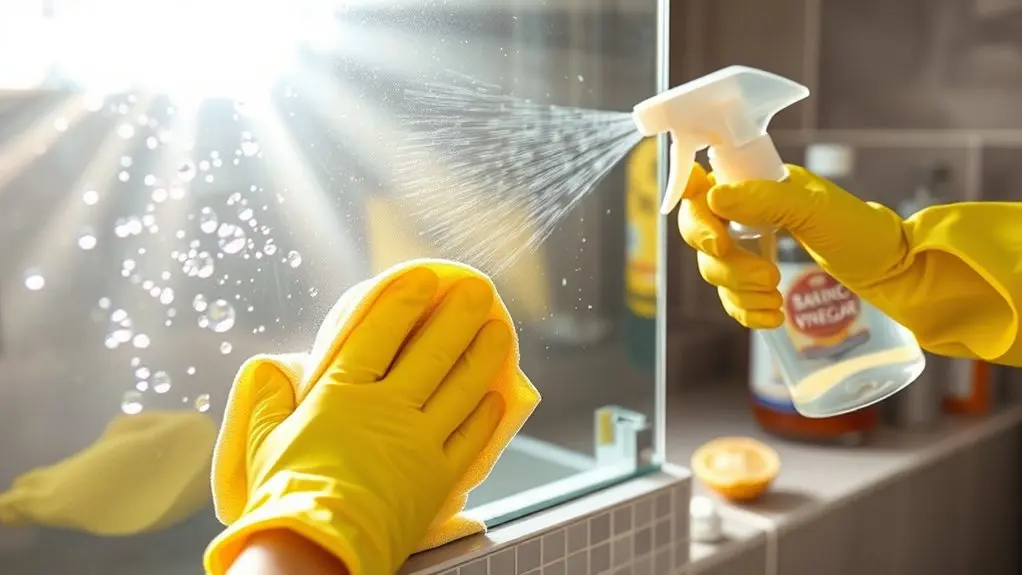
To keep your shower glass spotless, start by squeegeeing the doors after every use to prevent water spots from forming. This simple step reduces water stains and soap scum buildup on glass doors.
Next, use a daily shower spray made of equal parts white vinegar and water to break down soap scum and mineral deposits before they harden. Wipe down surfaces and taps with a dry microfiber cloth to stop hard water stains from accumulating.
Installing a water softener can also help by reducing minerals in your water, making cleaning easier.
Maintain a consistent cleaning routine, ideally weekly, to effectively prevent water stains and soap scum from becoming stubborn.
These habits keep your shower glass clear and reduce your overall cleaning effort.
Restoration Options for Persistent or Etched Stains
When stains or etching refuse to budge with regular cleaning, you’ll likely need professional restoration to bring your shower glass back to clarity.
Etched stains often require more than typical cleaning methods.
Professionals use specialized polishing and etching removal compounds to restore your glass. Before applying any product, test a small area to avoid damage.
Consider these restoration options:
- Hire a professional for deep polishing to remove stubborn etching.
- Use etching removal compounds designed for shower glass.
- Apply protective coatings post-restoration to prevent future stains.
- Replace glass if etching is too severe to restore clarity.
Following these steps guarantees your shower glass regains transparency and stays protected longer.
Water Softeners vs. Cleaning for Shower Glass Maintenance
If stubborn stains or etching have pushed you to contemplate restoration options, it’s also worth examining how water quality impacts your shower glass over time. Water softeners reduce hard water stains by exchanging minerals, but they don’t remove existing deposits. So, you’ll still need to clean the shower glass regularly to tackle soap scum and water marks.
Regular maintenance with mild cleaning products and squeegeeing keeps glass clear, regardless of softeners.
| Aspect | Water Softeners |
|---|---|
| Purpose | Prevents mineral buildup |
| Existing Stains | Does not remove; cleaning required |
| Maintenance Need | Still essential for soap scum, water marks |
Use both methods for the best shower glass care.
Frequently Asked Questions
Can I Use Commercial Glass Cleaners on Shower Glass Safely?
Yes, you can use commercial glass cleaners on shower glass safely if you check the ingredients first.
Avoid ammonia-based products since they can harm coatings.
Use safe cleaning techniques like applying the cleaner, letting it sit, then wiping with a non-abrasive cloth for streak-free results.
Consider eco-friendly options to reduce residue concerns.
Choose the best brands known for gentle formulas, and maintain a regular cleaning frequency to keep your shower glass clear and damage-free.
How Often Should I Deep Clean My Shower Glass?
Think of your shower glass as a window to a peaceful garden. Neglect it, and weeds (soap scum) take over.
For clear views, deep clean every week, or every two to four weeks if hard water’s an issue.
Use shower maintenance tips like a squeegee daily, follow a cleaning frequency guide, and choose cleaning products wisely.
Glass protection tips and streak-free methods guarantee your routine upkeep advice keeps soap scum at bay.
Are There Any Natural Alternatives to Vinegar for Cleaning?
You can use lemon juice as a natural alternative to vinegar since its citric acid breaks down grime well.
Try a baking soda paste for gentle scrubbing or mix dish soap with warm water for basic cleaning.
Adding essential oils boosts antibacterial power and leaves a fresh scent.
For tougher stains, combine hydrogen peroxide with cream of tartar or use a salt scrub.
These options clean effectively without harsh chemicals.
Can Hard Water Stains Damage My Shower Glass Permanently?
Yes, hard water stains can permanently damage your shower glass if you don’t act quickly. To prevent etching, prioritize stain prevention through regular maintenance and increase your cleaning frequency.
Use DIY solutions suited to your shower materials for effective glass protection. Rinse and squeegee after each use to reduce mineral buildup.
Consistent care is key. Neglecting this can lead to irreversible damage that standard cleaning won’t fix, so stay proactive.
What Tools Are Best for Scrubbing Shower Glass Without Scratching?
Think of your shower glass as a delicate canvas. To keep it pristine, use gentle scrubbing pads or microfiber cloths; they’re your soft brushes.
Pair these with non-abrasive cleaners and cleaning sprays to lift grime without harm.
Squeegee options help maintain clarity between cleans. Apply protective coatings for lasting shine.
Always follow safety precautions to protect both glass and yourself.
This careful approach guarantees your glass stays clear, scratch-free, and sparkling.
Conclusion
Cleaning your shower glass doesn’t have to feel like an uphill battle. By understanding the causes of stains and choosing the right cleaning methods, you can keep your glass sparkling clear.
Remember, prevention is your best defense. Regular cleaning and water softeners work hand in hand.
When stains stick around, restoration techniques can bring your glass back to life. With these tips, you’ll turn your shower glass from cloudy to crystal clear in no time.