How Does The Governor Work On A Kohler Engine – Guide
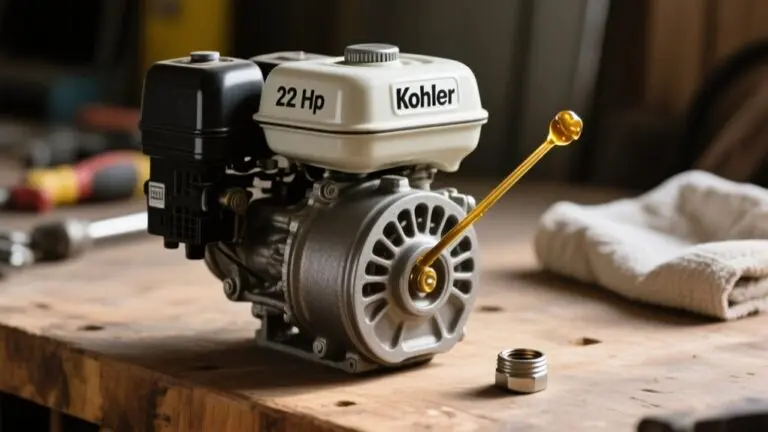
The governor on your Kohler engine controls speed by adjusting the throttle based on crankshaft velocity, maintaining consistent RPM under varying loads. It uses mechanical flyweights or an air vane to sense speed changes, modulating throttle opening to prevent overspeed or stalling.
Proper linkage between the governor and carburetor guarantees precise throttle response and smooth operation. Misalignment or wear can cause surging or irregular speed.
Understanding these systems helps you optimize engine performance and troubleshoot common issues effectively.
Why the Governor Matters on Kohler Engines
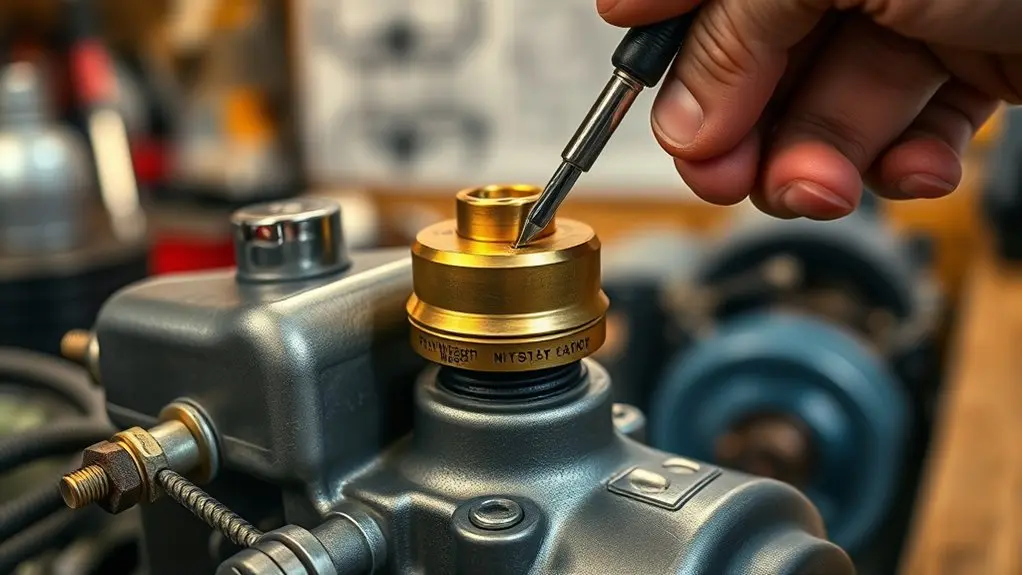
Understanding the governor’s role is vital if you want your Kohler engine to run reliably and efficiently. The governor’s primary function is to control engine speed by adjusting throttle position based on crankshaft velocity, ensuring consistent RPM under varying load conditions.
In Kohler engines, the mechanical governor detects changes in engine speed and promptly modifies throttle input to prevent over-speeding and potential damage. Without proper governor adjustment, you risk engine surging, increased fuel consumption, and accelerated wear on components.
Mechanical governors require precise calibration. An improperly set governor fails to control engine speed effectively, leading to instability and possible catastrophic failures, including damage to critical parts like the magneto.
How the Throttle Linkage Connects the Governor to the Carburetor
At the heart of maintaining stable engine speed, the throttle linkage directly connects the governor arm to the carburetor’s throttle lever. It translates governor adjustments into precise throttle movements.
In Kohler engines, this throttle linkage, often called the throttle control wire, confirms that the governor arm’s positional changes accurately adjust the carburetor’s throttle opening. This direct mechanical connection is vital for effective speed control, especially under varying loads.
When you install or service the engine, you must verify the throttle linkage is correctly attached and aligned between the governor arm and carburetor to prevent surging or instability.
Precise adjustment of this linkage guarantees that the governor’s feedback translates into smooth throttle modulation, optimizing engine performance and maintaining consistent speed control throughout operation.
How Mechanical Governors Control Throttle on Kohler Engines
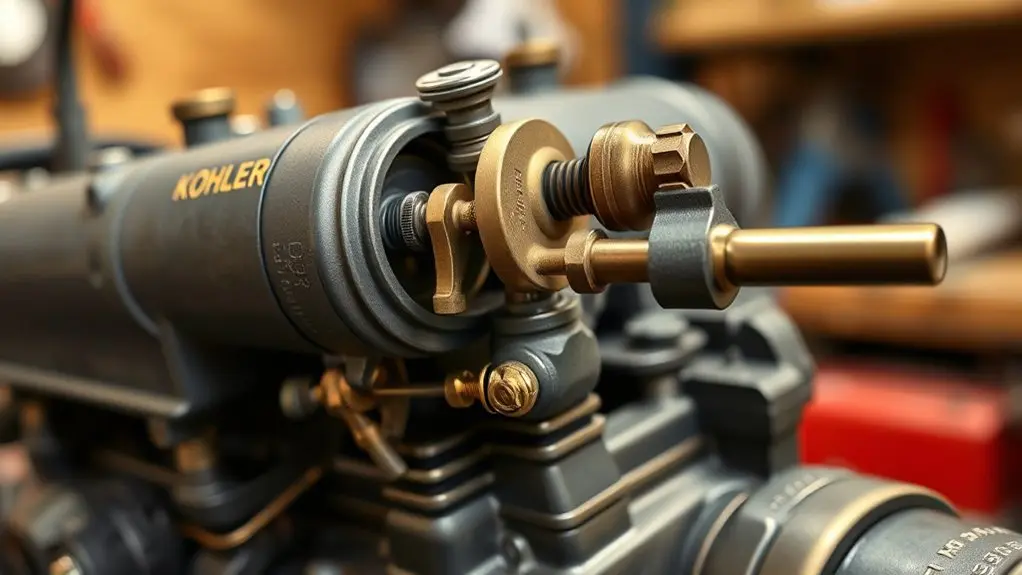
A mechanical governor in a Kohler engine constantly monitors crankshaft speed by using gears and flyweights housed within the crankcase. As engine speed rises, centrifugal force pushes the flyweights outward, activating the engine governor to reduce throttle opening via the governor linkage. This controls airflow and prevents overspeed.
When engine speed drops, the flyweights relax, causing the governor linkage to open the throttle. This increases airflow to maintain target RPM. This dynamic adjustment guarantees stable engine speed under varying loads.
You must verify the governor linkage is correctly configured and undamaged. Otherwise, throttle response may become erratic, causing surging or improper engine speed regulation.
Essentially, the mechanical governor precisely modulates throttle position based on real-time engine speed feedback for peak performance.
How Pneumatic Governors Work on Smaller Kohler Engines
While mechanical governors rely on centrifugal force to regulate throttle position, pneumatic governors on smaller Kohler engines use a movable air vane to sense changes in airflow caused by engine speed variations.
As engine speed rises, increased airflow from the flywheel moves the air vane, which adjusts the throttle plate to maintain consistent speed.
Rising engine speed boosts airflow, moving the air vane to adjust the throttle for steady performance.
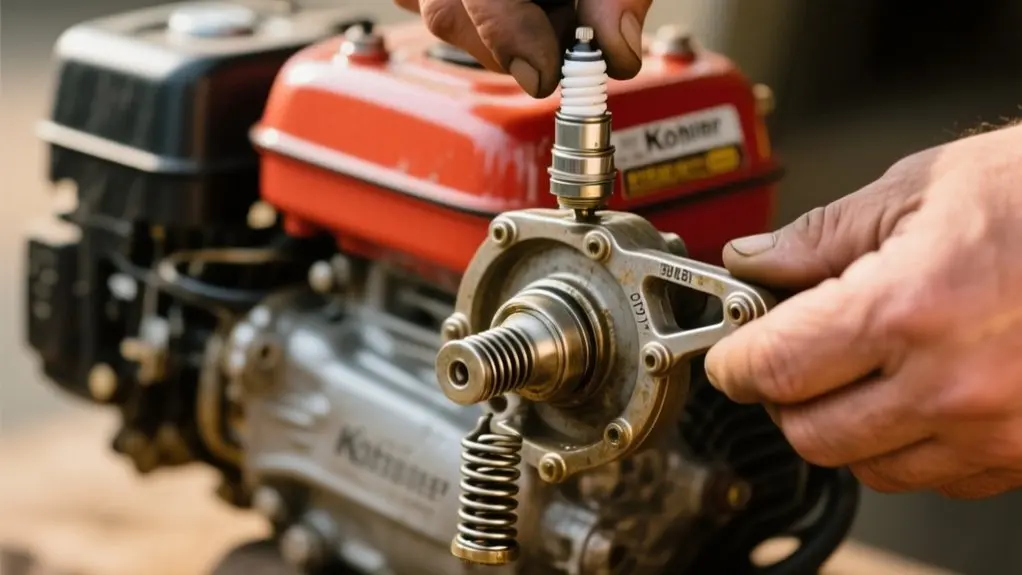
Governor springs pull the throttle plate toward the open position, enabling rapid response to speed fluctuations. This simpler design offers easier access and maintenance compared to mechanical systems, but depends heavily on the air vane’s ability to detect accurate airflow.
You must keep the air vane free of debris to guarantee reliable operation.
Common Kohler Governor Problems and Fixes
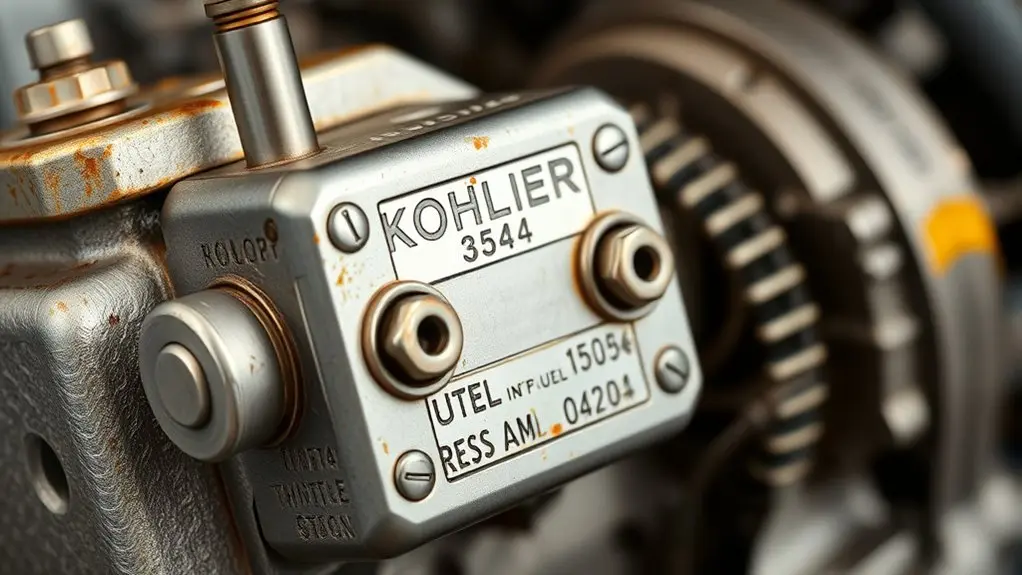
Anyone working with Kohler engines must recognize common governor problems to maintain peak performance and safety. Surging or hunting often results from misconfigured governor linkage or excessive free play in the governor shaft, requiring adjustment.
If the engine runs too fast or too slow under varying engine load, inspect worn or damaged governor components and replace parts as needed. Stiff throttle levers may indicate faulty throttle cables or worn governor springs, so check their function carefully.
An improperly adjusted governor risks over-speeding, which can cause severe engine damage and safety hazards from metal fragment ejection.
Regular maintenance, including verifying flyweights and springs move freely, guarantees reliable control at high speed and prevents performance degradation, preserving engine integrity and operational safety.
Frequently Asked Questions
What Tools Are Needed to Adjust a Kohler Engine Governor?
You’ll need a socket set and wrenches to handle linkage components securely. A screwdriver helps you adjust the governor arm and throttle connections precisely.
Use pliers for manipulating springs and rods within the governor system. A torque wrench guarantees bolts and screws meet manufacturer torque specs without damage.
Having the Kohler engine’s service manual is essential. It guides you through specific adjustments and torque requirements accurately, preventing errors during calibration.
How Often Should the Governor Be Inspected or Serviced?
You should inspect the governor on your Kohler engine at least once every season or after every 50 hours of operation.
Regular checks guarantee the linkage moves freely and components show no wear or damage.
If you notice surging, overspeeding, or underperformance, you’ll need to adjust the governor settings promptly.
Following the manufacturer’s maintenance schedule and cleaning debris around the governor will keep your engine running efficiently and safely.
Can a Faulty Governor Affect Fuel Efficiency?
Yes, a faulty governor can greatly affect your fuel efficiency. When it malfunctions, it causes inconsistent throttle control, leading your engine to run at improper speeds.
This irregular operation forces the engine to consume more fuel than necessary, either by over-speeding or under-speeding.
Moreover, surging behavior from a defective governor results in sporadic throttle adjustments, wasting fuel as your engine struggles to maintain steady performance.
Regular adjustments help prevent this inefficiency.
Are There Aftermarket Governors Available for Kohler Engines?
Yes, you can find aftermarket governors for Kohler engines from various suppliers. These options often provide improved speed control and responsiveness compared to OEM parts.
However, you’ll need to verify compatibility with your specific Kohler model, like the 7000 Series or Courage 20 HP, before purchasing.
Installation is usually straightforward, but pay close attention to quality and warranty differences.
Aftermarket units can vary greatly in durability and performance.
How Do Environmental Conditions Impact Governor Performance?
When you run your engine on a foggy morning, you’ll notice the governor struggles with throttle control. That’s because humidity and temperature changes alter air density and spring tension, making the governor less responsive.
Dust or debris can clog its air vane, while corrosion from moisture can cause sticking linkages. These environmental factors disrupt precise speed regulation.
Conclusion
When you understand how the governor controls your Kohler engine’s throttle, whether mechanical or pneumatic, you’ll see it’s no coincidence that smooth performance follows. The throttle linkage precisely translates governor adjustments into carburetor responses, maintaining consistent engine speed under varying loads.
If your engine stumbles, it’s often linked to common governor issues you can diagnose and fix. Mastering this system guarantees your Kohler runs efficiently, proving that knowing the governor means controlling your engine’s heart.