Why Is My Kohler Shower Head Leaking – Real Reasons
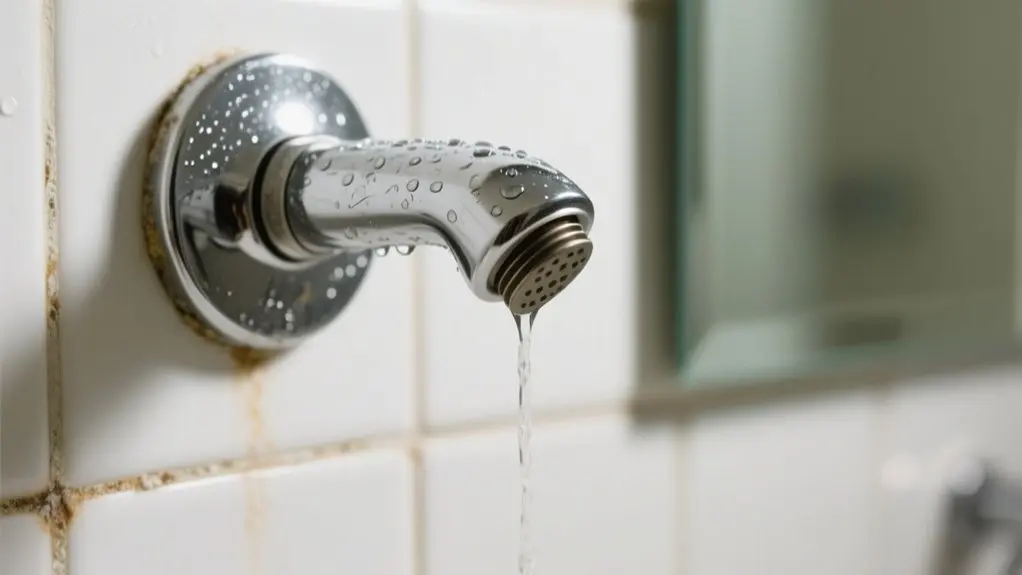
Your Kohler shower head is leaking because worn-out O-rings, mineral buildup, or improper installation have compromised the seals. Cracked or relaxed O-rings let water escape, while hard water deposits clog nozzles and disrupt flow.
Installation errors like misalignment or incorrect valve orientation also cause leaks. Temporary fixes only help briefly; persistent dripping often means valve components need replacing.
Understanding these causes will help you identify and address the root issues for a lasting repair.
Why Your Kohler Shower Head Leaks: Wear, Mineral Buildup, and Installation Errors
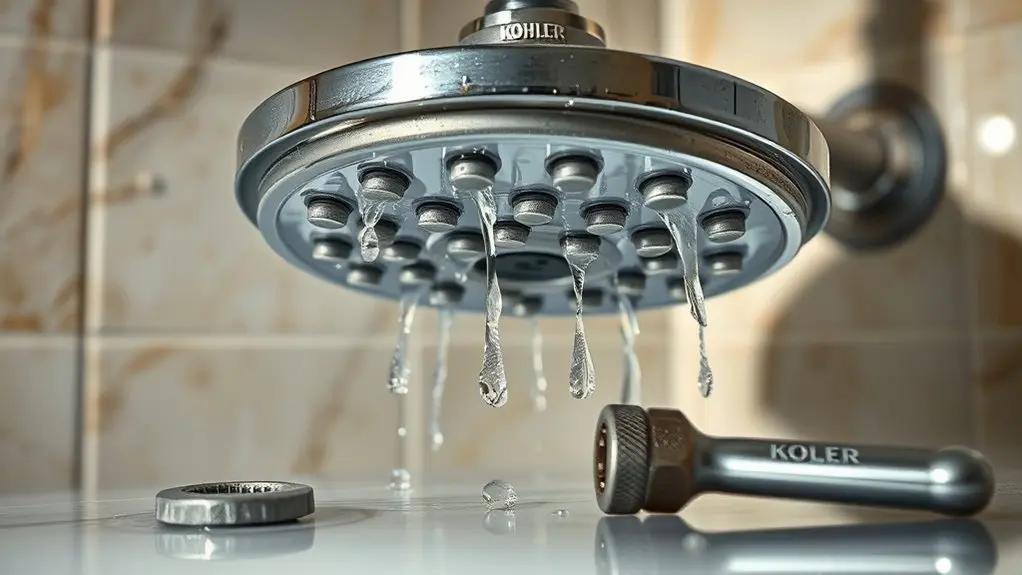
When your Kohler shower head starts leaking, it’s often due to worn-out O-rings, mineral buildup, or installation errors.
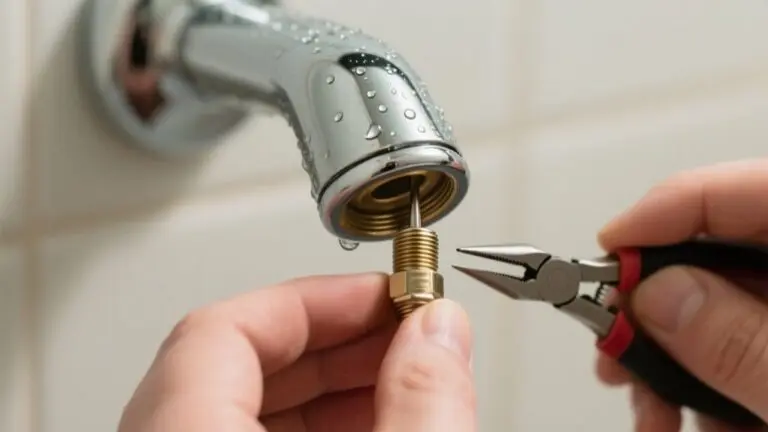
Over time, O-rings deteriorate, allowing water to escape at connection points, which affects water pressure and causes leaks.
Mineral buildup from hard water clogs nozzles, disrupting flow and increasing pressure inside the showerhead, leading to leaks.
Improper installation or misalignment can create gaps in seals, letting water leak and reducing water pressure.
To prevent leaks, regularly inspect and clean your showerhead, removing mineral deposits and checking O-rings for wear.
Applying appropriate lubricants on O-rings during installation guarantees a tight seal.
Confirming proper alignment during setup is essential to maintaining consistent water pressure and preventing leaks in your Kohler shower head.
Quick Fixes to Stop Your Kohler Shower Leak Now
You can quickly cut down on leaks by cleaning the nozzles and soaking the showerhead in vinegar to get rid of mineral buildup. It really helps to keep things flowing smoothly.
Also, don’t forget to check the O-rings—applying some silicone grease can make sure they seal tightly and stop those annoying drips.
If you’re still seeing leaks after that, take a closer look at the valve components. Sometimes a worn-out part is the culprit, so replacing any damaged pieces will get your shower working properly again.
Temporary Leak Solutions
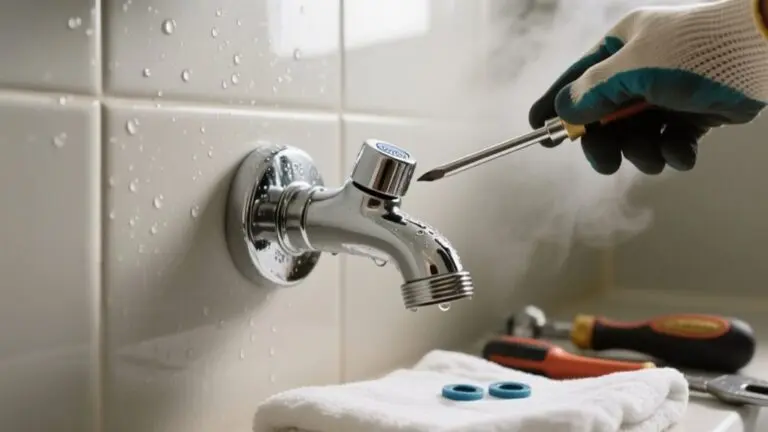
Three quick fixes can help you temporarily stop your Kohler shower head leak before a permanent repair. First, wrap the shower arm threads with plumber’s tape to seal leaks at connections.
Second, soak the showerhead in vinegar to clear mineral deposits that may cause drips. Third, check and open integrated screwdriver stops if water flows simultaneously from the showerhead and tub spout. These temporary leak solutions help manage leaks while protecting your water heater and plumbing system.
| Fix | Method | Benefit |
|---|---|---|
| Plumber’s Tape | Wrap shower arm threads | Immediate seal on leaks |
| Vinegar Soak | Clean mineral deposits | Restores water flow |
| Open Screwdriver Stops | Adjust valve stops | Stops unwanted water flow |
O-Ring Maintenance Tips
Inspecting and maintaining the O-rings in your Kohler shower head can quickly stop leaks and improve performance. Start by regularly checking the O-ring for signs of wear like cracking or deformation, since damaged seals lead to leaks.
Clean mineral buildup off the O-ring using warm water and a soft cloth to restore effective sealing. Apply a thin layer of silicone grease, not petroleum jelly, on the O-ring to keep it elastic and extend its lifespan.
Perform these maintenance steps periodically to prevent leaks and water waste. If leaks persist despite proper upkeep, replace the O-ring with a high-quality, compatible part to guarantee a secure fit.
Following these O-ring maintenance tips will help you fix leaks promptly and enjoy a consistent shower flow.
Valve Replacement Guidance
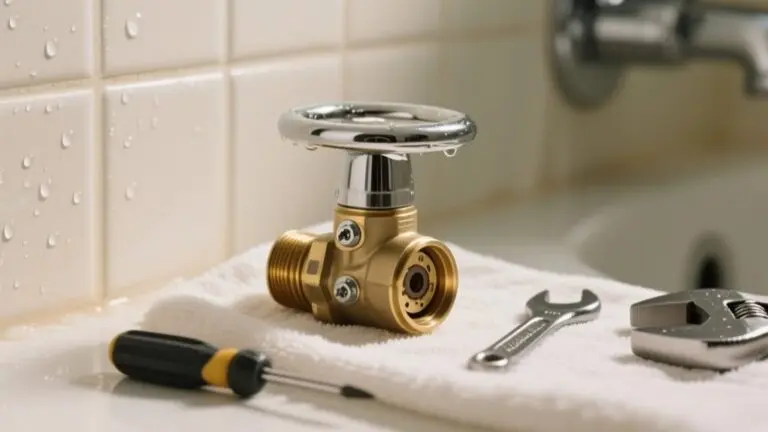
One effective way to stop persistent leaks in your Kohler shower is by replacing the valve, especially when internal seals are worn or damaged. Focus on the valve body, ensuring proper orientation and sealed connections during installation.
If dripping continues after shutting off the valve, consider replacing the Mixer Cap and PBU kit. Use silicone grease on O-rings to prevent leaks and extend their life.
Always verify part compatibility to avoid malfunctions from aftermarket components.
| Issue | Cause | Solution |
|---|---|---|
| Persistent leak | Worn internal seals | Replace valve body |
| Dripping after off | Faulty Mixer Cap/PBU kit | Replace Mixer Cap and PBU kit |
| O-ring failure | Dry or damaged O-rings | Apply silicone grease |
| Improper installation | Incorrect valve orientation | Reinstall valve correctly |
| Leak after replacement | Use of aftermarket parts | Use compatible Kohler parts |
Installation Mistakes That Cause Kohler Shower Leaks
When you install a Kohler shower valve incorrectly, such as orienting it improperly or using non-standard pipes, you risk creating leaks that compromise the system’s performance.
Common installation mistakes include using pipes that don’t meet Kohler’s specifications, like non-1/2-inch copper pipes, which can cause back-pressure and leaks.
Also, improper valve orientation disrupts flow, leading to leaks during use.
Attaching the valve to restricted flow devices or placing the metal collar incorrectly creates gaps, allowing water to escape. These mistakes stress the system and reduce seal integrity.
To prevent leaks, verify the valve is correctly oriented, use specified materials, avoid flow restrictions, and position collars precisely.
Addressing these installation mistakes will safeguard your Kohler shower from leaks and maintain peak function.
How Mineral Buildup Causes Kohler Shower Head Leaks
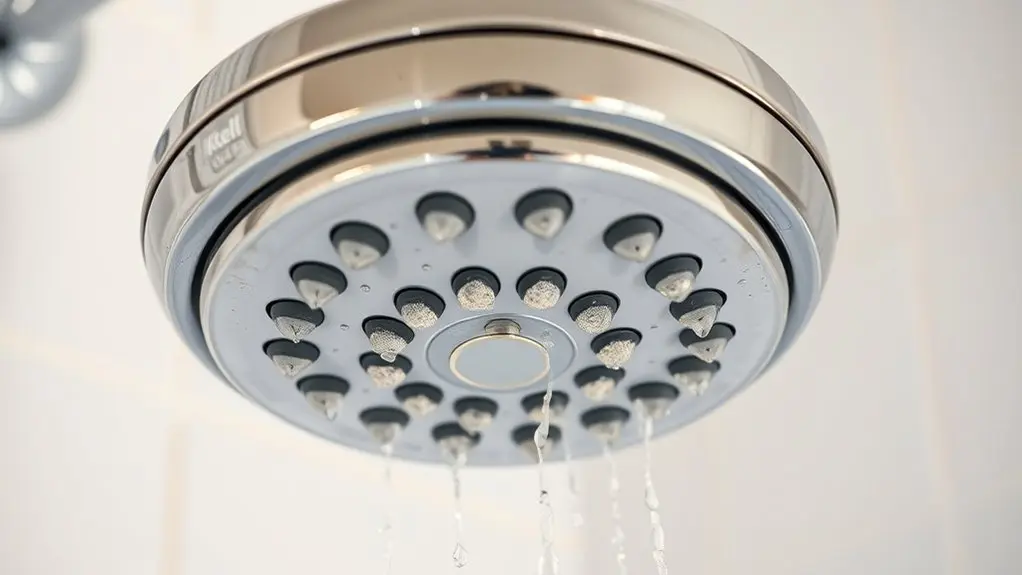
You’ll notice that mineral deposits like calcium and limescale can block the nozzles of your Kohler shower head. This messes with the water flow and can cause leaks around the seals.
The good news is, soaking your showerhead in vinegar regularly helps dissolve these deposits.
Doing this reduces pressure buildup and stops leaks from happening. If you keep up with this cleaning every few months, you’ll keep your shower head working great and make it last longer.
Mineral Deposits Impact
Several factors related to mineral buildup can cause your Kohler shower head to leak.
Calcium and limescale deposits accumulate inside, restricting water flow and increasing pressure, which stresses seals and joints.
When nozzles clog, water distributes unevenly, forcing leaks through tiny cracks.
Hard water combined with fluctuating water temperature accelerates corrosion of internal components, weakening seals over time.
This corrosion compromises your shower head’s integrity, leading to persistent leaks.
Ignoring mineral buildup worsens internal damage, often requiring part replacements.
To prevent leaks, monitor water temperature and address mineral deposits promptly.
Maintaining consistent water temperature can reduce buildup speed, preserving your shower head’s function and lifespan.
Addressing these factors early helps you avoid costly repairs and keeps water flow efficient.
Cleaning Methods Effectiveness
Mineral buildup inside your Kohler shower head directly impacts its sealing and water flow, causing leaks. Calcium and limescale deposits clog nozzles, restricting flow and increasing pressure behind blockages. This pressure forces water to escape from seals, resulting in leaks.
Regular cleaning with vinegar effectively breaks down these mineral deposits, restoring proper flow and sealing. Soaking your shower head in vinegar for several hours removes stubborn buildup that scrubbing misses. This helps maintain performance despite frequent water heating cycles that accelerate mineral accumulation.
To prevent leaks, clean your Kohler shower head every few months. This routine reduces mineral buildup, guarantees peak water flow, and preserves the integrity of seals, minimizing leak risks caused by obstruction and pressure from mineral deposits.
Temporary Fixes and When to Replace Your Kohler Valve
Although applying Vaseline to the O-rings in a leaking Kohler shower valve might provide temporary relief, it often accelerates the wear of the rubber components and only delays the inevitable need for replacement.
Rubber O-rings naturally relax, crack, or deform over time, causing leaks that frequently return despite quick fixes. Since Kohler valves rarely support replaceable O-rings, you’ll likely need to replace the entire valve for a lasting solution.
When installing a new valve, apply silicone grease to improve compatibility with rubber parts and extend valve life.
Pay attention to cold water connections during replacement to guarantee proper sealing. Avoid aftermarket parts, as they may compromise valve performance and durability, leading to premature leaks and further issues.
Temporary fixes only buy time before a full valve replacement becomes necessary.
When to Call a Professional for Kohler Valve Repairs
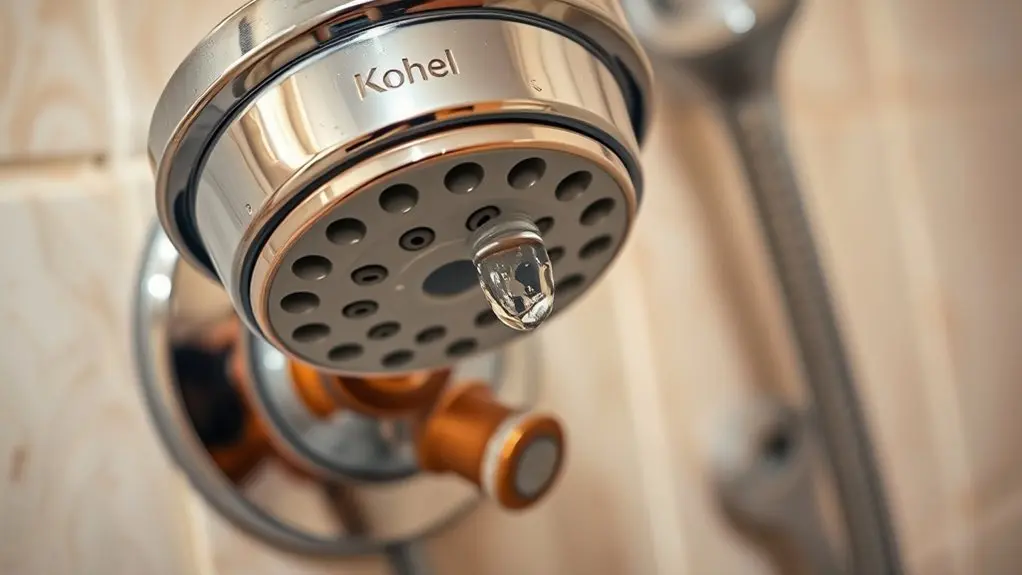
If you’ve replaced the valve or O-rings and your Kohler shower head keeps leaking, it’s time to contemplate professional help. Persistent dripping, low water pressure, or temperature fluctuations often indicate internal valve issues beyond simple fixes.
When multiple DIY attempts fail, calling a plumber prevents further damage and guarantees correct parts are used. Professionals can detect installation errors, such as misaligned valves or improper pressure settings, that cause leaks.
Furthermore, if you notice visible corrosion or cracks on the valve, a professional repair or replacement is essential to avoid water damage and restore proper function.
Addressing these problems promptly with expert assistance safeguards your plumbing system and maintains efficient water flow in your shower.
Frequently Asked Questions
Can Water Pressure Affect My Kohler Shower Head Leak?
Yes, water pressure can affect your Kohler shower head leak. If your pressure exceeds the recommended range, it strains internal components, causing drips or leaks.
You’ll want to measure your water pressure and guarantee it stays around 45 PSI. Installing a pressure regulator or adjusting your home’s pressure can prevent damage.
Also, check for proper valve installation, as improper orientation can worsen leaks due to pressure imbalances.
Does Kohler Offer Warranty Coverage for Leaking Shower Heads?
When it comes to warranty coverage, Kohler does offer protection for leaking shower heads, but it’s not a free-for-all. You’ll need to check your specific model’s limited lifetime warranty, which covers defects in materials and workmanship under normal use.
Keep your proof of purchase handy and describe the issue clearly.
How Do I Clean My Kohler Shower Head Without Damaging It?
To clean your Kohler showerhead without damaging it, start by scrubbing the nozzles gently with warm water to remove loose mineral deposits.
For tougher buildup, soak a detachable showerhead in vinegar for several hours.
If it’s fixed, secure a vinegar-filled plastic bag around it with rubber bands.
After soaking, scrub again with warm water.
Always use cleaning agents safe for plumbing fixtures to protect your showerhead’s finish and functionality.
Are Replacement Parts for Kohler Shower Heads Easy to Find?
Yes, replacement parts for Kohler shower heads are easy to find.
You can get genuine cartridges, washers, and other components at home improvement stores, plumbing supply shops, or directly from Kohler’s website.
Using official parts guarantees proper fit and maintains your warranty.
If you need help identifying parts, refer to the detailed diagram in your installation manual.
Professional plumbers can also source these parts quickly for you.
Can a Leaking Shower Head Increase My Water Bill Significantly?
Yes, a leaking shower head can increase your water bill considerably.
Even a small drip wastes about 1,000 gallons annually, which adds up quickly. That translates to an extra $6 to $10 each month depending on your rates.
To avoid this, inspect your shower head regularly, replace worn-out washers or seals, and fix leaks promptly.
Taking these steps helps you save money and conserve water efficiently.
Conclusion
Think of your Kohler shower head as a finely tuned instrument. When wear, mineral buildup, or installation errors strike, it starts to leak like a cracked pipe. Quick fixes can plug those small holes, but persistent drips signal it’s time to replace parts or call a pro.
Don’t let a minor leak turn into a flood. Act swiftly, troubleshoot methodically, and restore your shower’s flow to its original, smooth performance.