What Are The Common Problems With Kohler Kitchen Faucets?
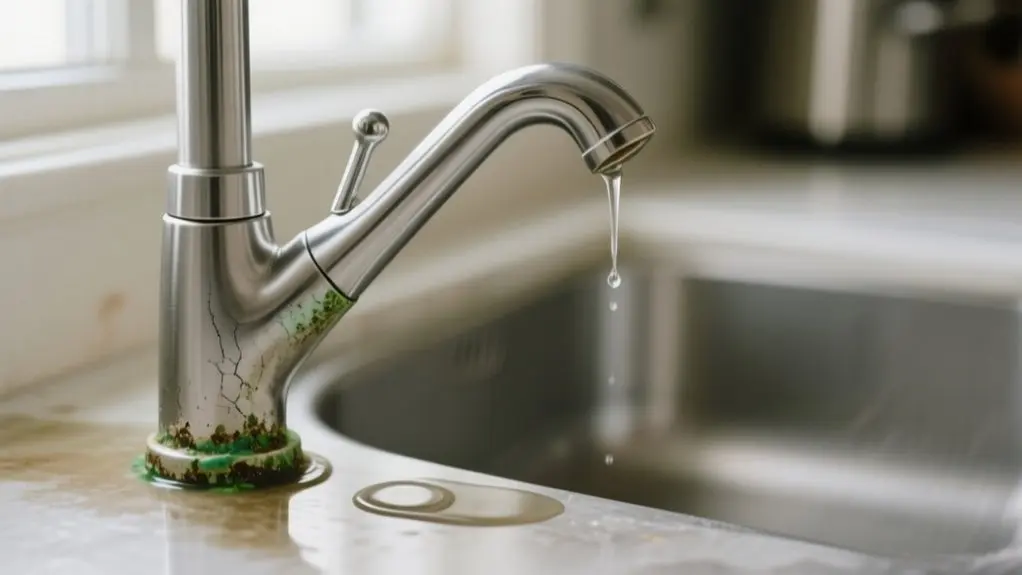
You’ll commonly face leaks caused by worn valves or clogged aerators in your Kohler kitchen faucet. Low water flow often stems from debris in supply lines or mineral buildup, requiring aerator cleaning or valve replacement.
Touchless models may activate unexpectedly due to sensor dirt or environmental factors, needing regular sensor cleaning. Identifying faulty parts with your model number guarantees accurate fixes.
Understanding these issues can help you maintain your faucet efficiently and tackle more complex troubleshooting steps ahead.
How to Spot and Fix Common Kohler Kitchen Faucet Leaks
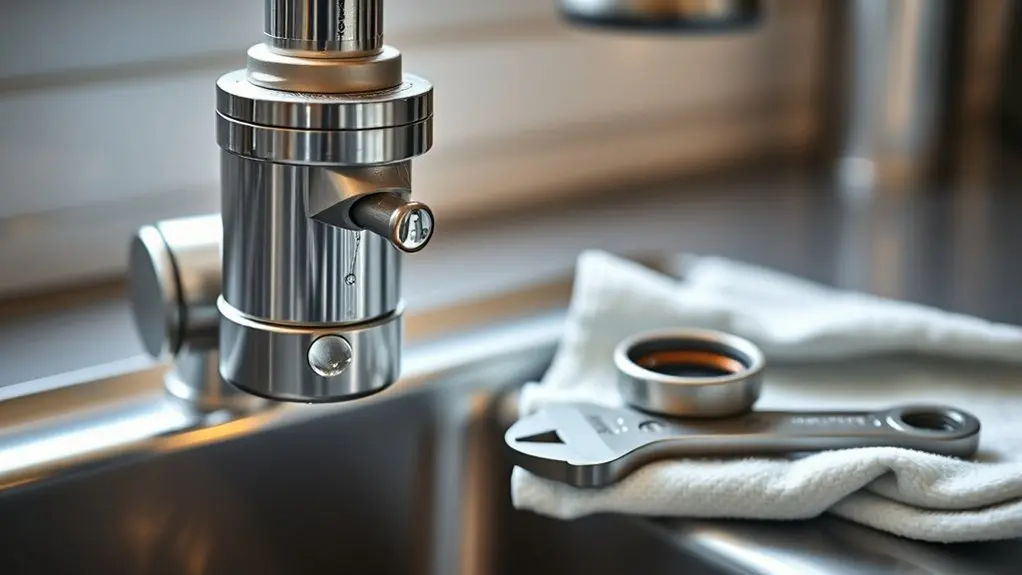
How can you quickly identify and address leaks in your Kohler kitchen faucet? Start by determining whether the leak is temporary or continuous. Temporary leaks often result from a dirty or clogged aerator.
To fix this, remove the aerator, soak it in warm water mixed with white vinegar, clean thoroughly, rinse, and reinstall.
If the leak persists, it likely stems from a worn valve or cartridge. Identifying your faucet model using Kohler’s interactive parts diagrams will help you find the correct replacement parts. Replacing the valve or cartridge typically resolves continuous leaks.
Regularly clean the aerator and inspect faucet components to prevent leaks.
Troubleshooting Low Water Flow in Kohler Kitchen Faucets
Why does your Kohler kitchen faucet deliver weak water flow despite seemingly normal operation? Low water flow often stems from debris trapped in supply lines or mineral deposits clogging the valve or cartridge.
Begin troubleshooting by inspecting and cleaning the aerator. Blockages here can drastically reduce flow. Next, check supply lines for kinks or blockages restricting water delivery.
| Cause | Action |
|---|---|
| Debris in supply lines | Flush or clean lines |
| Blocked aerator | Remove and clean aerator |
| Mineral deposits | Clean or replace valve/cartridge |
If flow remains low after these steps, replacing the valve or cartridge is necessary to restore proper function in Kohler kitchen faucets.
Solving Touchless Kohler Faucet Problems and Maintenance Tips
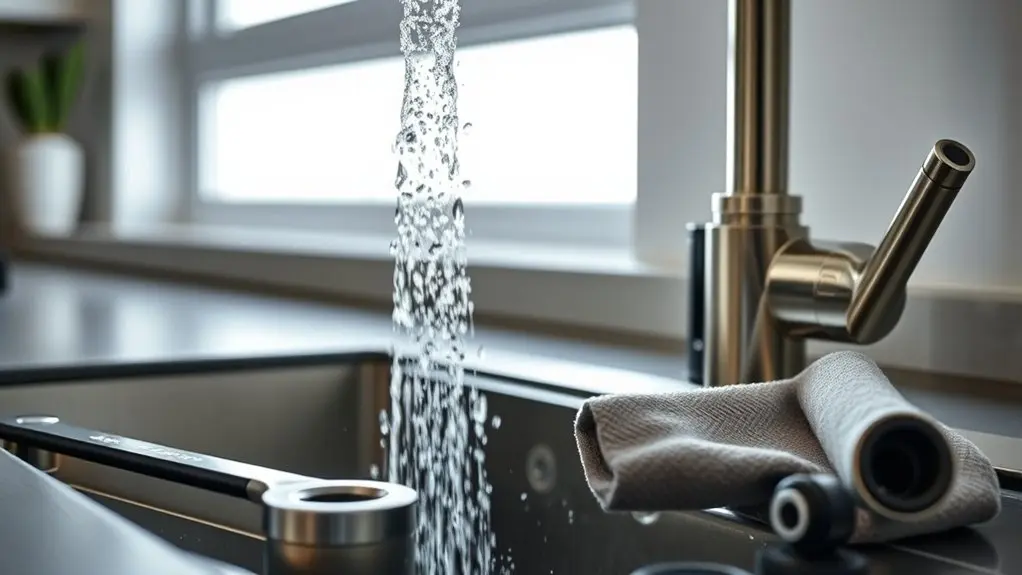
After addressing low water flow issues, you might encounter challenges specific to touchless Kohler faucets.
Unexpected activation often results from environmental factors like water droplets on the spout or breezes interfering with the sensor.
Unexpected activation commonly occurs due to water droplets or breezes disrupting the sensor’s function.
For peak performance, prioritize regular maintenance by cleaning and thoroughly drying the faucet’s sensor area.
Avoid direct contact; instead, wave your hand near the sensor to reduce false triggers.
If issues continue after installation, verify the sensor’s integrity and ascertain the faucet is securely mounted.
Troubleshooting should also include inspecting for dirt or fingerprints obstructing the sensor.
Engaging with user tips from Kohler communities can provide valuable insights.
Consistent cleaning, proper installation, and informed troubleshooting are essential to maintain your touchless Kohler faucet’s reliability and precision.
Spotting and Replacing Faulty Parts in Kohler Kitchen Faucets
A critical step in maintaining your Kohler kitchen faucet’s performance is spotting faulty parts early.
Begin troubleshooting by identifying symptoms like water leaks or low water flow. Use your faucet model number to locate the exact components in Kohler’s Parts Catalog or Interactive Parts Diagrams before ordering replacements.
Focus on these key areas: inspect valves or cartridges for wear if you detect water leaks around the handle or base. A replacement valve or cartridge may be necessary.
Check for clogged aerators that reduce water flow; clean or replace as needed.
For touchless sensors, verify cleanliness and alignment to prevent erratic activation. Sensor replacement might be required.
Following this precise approach guarantees efficient repairs and restores ideal faucet functionality.
Getting Warranty Support and Help for Your Kohler Faucet
Once you’ve identified and sourced the faulty parts in your Kohler kitchen faucet, knowing how to access warranty support can save time and expense.
Start by using Kohler’s Product Finder to identify your faucet model accurately. This step is essential for warranty claims and obtaining replacement parts.
Next, consult the Interactive Parts Diagrams online to locate the exact valve or cartridge part number involved.
Keep your purchase receipt and warranty documentation handy, as Kohler’s Faucet Lifetime Limited Warranty may cover defects or workmanship issues.
Contact Kohler Customer Service for precise guidance on eligibility and claim procedures.
They’ll assist you in troubleshooting and help you locate and order the correct components under warranty support, ensuring efficient resolution without unnecessary costs or delays.
Frequently Asked Questions
What Materials Are Kohler Kitchen Faucets Made Of?
You’ll find Kohler kitchen faucets crafted from resilient materials like solid brass, offering impressive resistance to corrosion and long-lasting performance.
They often feature finishes such as chrome, stainless steel, or oil-rubbed bronze, which not only elevate their appearance but also protect against wear.
Inside, advanced synthetic components guarantee smooth operation, while hoses made from braided nylon or stainless steel provide flexibility and durability.
This all reflects Kohler’s commitment to quality and sustainability.
How Do I Clean the Finish on My Kohler Faucet?
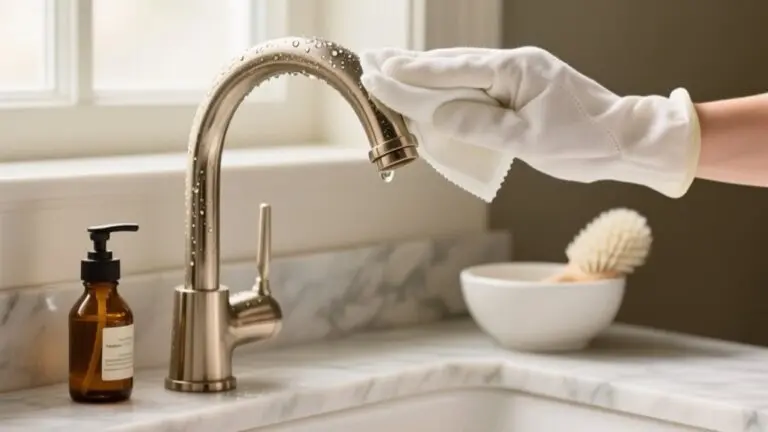
To clean your Kohler faucet’s finish, use a soft cloth dampened with warm water and mild soap. Wipe gently to avoid scratches.
For mineral deposits, apply a 50/50 solution of warm water and white vinegar with a soft cloth.
Then rinse thoroughly to prevent residue buildup.
Avoid abrasive cleaners, bleach, or ammonia-based products.
Dry the faucet after each use to maintain its shine and protect the finish’s integrity over time.
Are Kohler Kitchen Faucets Compatible With Standard Plumbing Fittings?
Kohler kitchen faucets commonly connect cleanly with conventional connections. You’ll find they typically use a standard 1/2-inch IPS (iron pipe size) fitting, ensuring straightforward setup with most household plumbing.
While most models mesh smoothly with standard systems, you might need specific adapters for older or unique plumbing layouts.
Always verify your faucet’s model-specific installation guide to confirm compatibility and avoid connection complications. This precision prevents plumbing problems and guarantees proper performance.
Can I Install a Kohler Kitchen Faucet Myself Without Professional Help?
Yes, you can install a Kohler kitchen faucet yourself without professional help. Kohler provides detailed installation guides and interactive parts diagrams to simplify the process.
You’ll need basic tools like a basin wrench, adjustable wrench, and plumber’s tape. Make certain you verify the model number for compatibility with your plumbing.
After installation, follow proper flushing procedures and check thoroughly for leaks to guarantee your faucet works efficiently and securely.
What Are the Environmental Benefits of Using Kohler Faucets?
Using Kohler faucets is like turning on a smart water-saving switch in your home. You’ll reduce water use by up to 30% thanks to their low-flow aerators, saving around 1,600 gallons annually.
Their eco-friendly manufacturing uses recycled materials and minimizes waste, lowering your carbon footprint.
Plus, WaterSense certification confirms their efficiency.
Conclusion
You might think Kohler kitchen faucets are trouble-free, but leaks, low water flow, and sensor issues are common. By spotting faulty parts early and following precise troubleshooting steps, you can fix most problems yourself.
Don’t overlook regular maintenance, especially with touchless models, to avoid costly repairs. If issues persist, leverage Kohler’s warranty support for expert help.
Your proactive approach guarantees your faucet performs reliably and lasts longer.