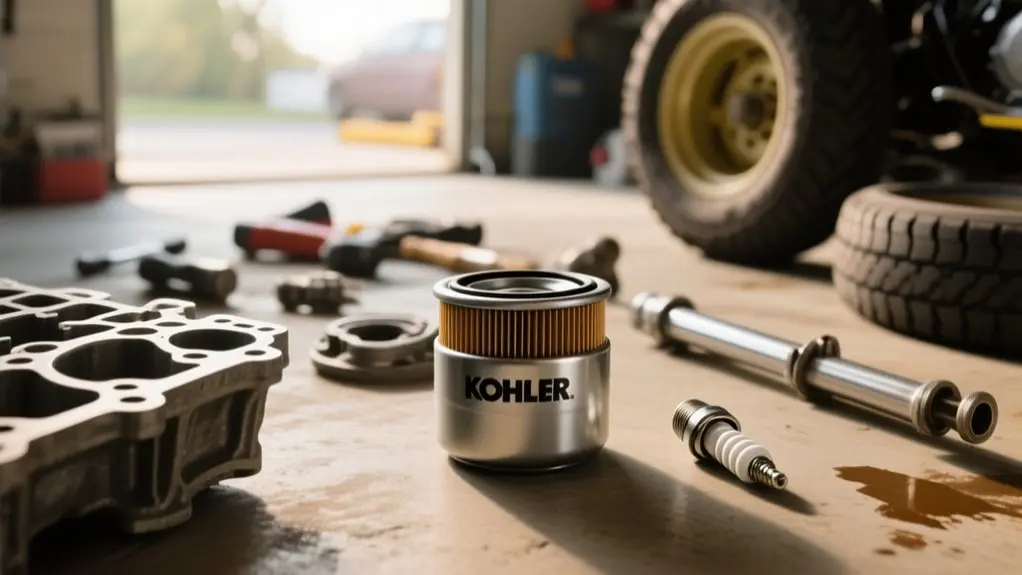
Kohler Oil Filter Fits What Vehicle – Guide
If you use a Kohler 725 Series engine, like those in many lawn mowers and garden tractors, you’ll need the OEM oil filter 12 050 01-S or reliable aftermarket options like Stens 120-634.
Different Kohler engines, such as Courage PRO or K-Series, require specific filters matching their size and specs. Proper filter selection guarantees your engine runs efficiently and lasts longer.
Keep exploring to understand filter locations, replacements, and how to choose the best fit for your equipment.
Identifying the Right Oil Filter for Your Kohler Engine
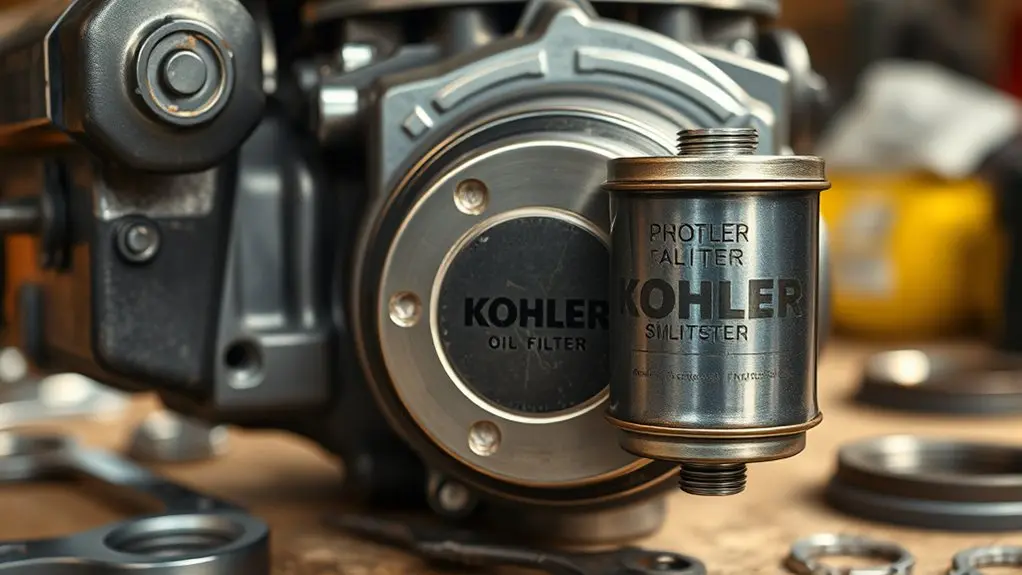
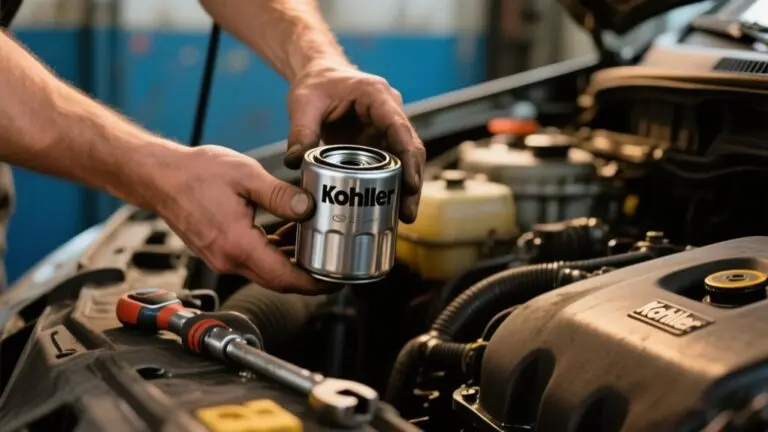
How do you guarantee your Kohler engine runs smoothly and lasts longer? Start by identifying the correct oil filter for your specific engine model. Most Kohler engines require the OEM oil filter with part number 12 050 01-S, ensuring precise fit and filtration.
Ensure your Kohler engine runs smoothly by selecting the correct OEM oil filter for your model.
For Kohler Courage PRO engines, use part number 25 050 34-S, designed for peak performance. K-Series engines, such as K532 to K582, require filters measuring 3 inches wide by 5.1 inches long.
While OEM filters are ideal, aftermarket options like Stens 120-634 and Baldwin B33 offer cost-effective alternatives without sacrificing compatibility.
Always consult your equipment manual or cross-reference charts before filter replacement to confirm proper compatibility and maintain engine protection for your Kohler engines.
Vehicles With Kohler 725 Series Engines and Compatible Filters
Several popular vehicles feature Kohler 725 Series engines, including a range of lawn mowers and garden tractors. These engines typically require the Kohler Oil Filter with oil filter part number 12 050 01-S for ideal performance and engine protection.
When you change the oil filter, confirm you select compatible filters that meet OEM standards to maintain high-quality filtration. Aftermarket filters like Stens 120-634, Oregon 83-282, Wix 51394, and Purolator ML16822 provide reliable, budget-friendly alternatives without compromising engine maintenance.
The oil filter is usually accessible on the side of the engine block, making routine changes straightforward.
To preserve engine protection and prevent oil starvation, you should change the oil filter every 100 hours of use or at least once per season, making sure your Kohler 725 Series engine runs smoothly and efficiently.
OEM vs. Aftermarket Kohler Oil Filters Compared
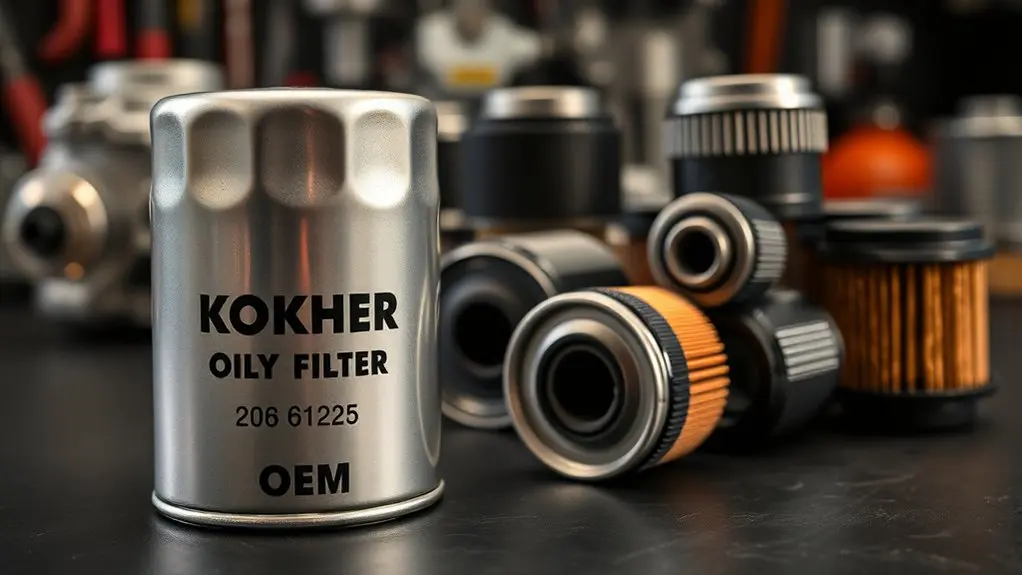
Choosing the right oil filter for your Kohler 725 Series engine means weighing the benefits of OEM versus aftermarket options. OEM Kohler oil filters, such as part number 12 050 01-S, are engineered to match your engine’s specifications. This ensures optimal filtration efficiency and reduces risks of oil starvation and engine wear.
Selecting the right Kohler 725 oil filter balances OEM precision with aftermarket value for engine protection.
Aftermarket parts like Wix 51056 and Fram offer cost-effective alternatives that often meet or exceed OEM standards, provided they match the correct oil filter thread size, gasket diameter, and filtration capacity. Using high-quality aftermarket filters can sustain engine performance and longevity without the premium cost of OEM Kohler filters.
However, you must verify part numbers and specifications carefully to avoid inadequate filtration. That can lead to premature engine damage.
Selecting the correct oil filter is critical for maintaining your engine’s reliability.
Oil Filter Location on Kohler Equipment and How to Access It
The oil filter on Kohler equipment is typically mounted on the side of the engine block, designed for easy access during routine maintenance. You’ll find it close to the oil fill cap, which simplifies your oil change process.
Before removal, clean the surrounding area to avoid contaminating the clean oil inside. Access usually doesn’t require removing major components, making maintenance quicker.
Keep these points in mind:
- Refer to the operator’s manual for the precise oil filter location and OEM part specifications.
- Perform regular inspections of the oil filter location to guarantee proper engine function.
- Clean around the oil filter before removal to maintain oil purity.
- Follow recommended oil change intervals to protect engine longevity.
This approach guarantees efficient access and peak performance of your Kohler equipment.
Tips for Choosing the Best Kohler Oil Filter for Your Vehicle
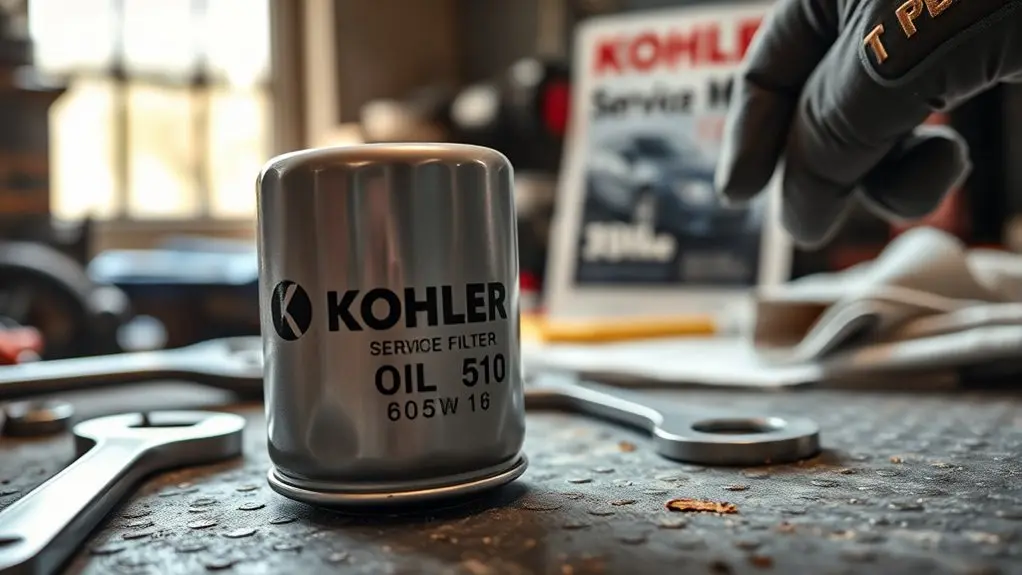
Knowing where your Kohler oil filter is located and how to access it sets the stage for selecting the right replacement.
Start by consulting your equipment’s manual to identify the exact OEM oil filter part number for your Kohler engine and engine series, such as 12 050 01-S for the Kohler 725 Series.
Use a cross-reference chart to find compatible filters, including OEM and aftermarket options like Wix 51394 or Stens 120-634.
Make sure the filter matches dimensions and thread size requirements.
Choosing the right oil filter maintains engine performance and prevents damage.
Always replace oil filters every 100 hours or as recommended.
Prioritize precision by verifying that the filter matches your engine model.
Balance cost and quality when considering aftermarket alternatives for reliable, optimized operation.
Frequently Asked Questions
How Often Should I Replace My Kohler Oil Filter?
You should replace your Kohler oil filter every 100 hours of use or once per season to maintain peak engine performance.
If you operate in harsh conditions like excessive dust or heavy workloads, change it every 50 hours to prevent engine damage.
Regularly swapping the filter avoids clogging, oil starvation, and wear.
Sticking to this schedule guarantees engine efficiency and longevity while reducing the risk of costly repairs caused by unfiltered oil.
Can I Use a Kohler Oil Filter on Non-Kohler Engines?
You shouldn’t use a Kohler oil filter on non-Kohler engines without verifying compatibility first.
Thread size, gasket dimensions, and filtration specifications often differ, risking poor fit or inadequate filtration.
Always check your engine’s owner manual for recommended filter specs.
Using an incorrect filter can cause engine damage and void warranties.
Stick to OEM or approved aftermarket filters designed specifically for your engine to guarantee peak performance and protection.
What Are the Signs of a Clogged Kohler Oil Filter?
You might notice your engine is feeling a bit under the weather if your Kohler oil filter is clogged.
Signs include a drop in oil pressure, triggering warning lights, or a rough idle and reduced power.
You could also hear unusual knocking noises from poor lubrication.
Oil leaks near the filter suggest it’s bypassing.
Regularly replacing the filter every 100 hours or season helps you avoid these issues and keeps your engine running smoothly.
Are Kohler Oil Filters Recyclable or Eco-Friendly?
Yes, Kohler oil filters are recyclable and eco-friendly. You’ll find they use recyclable materials and filter media designed for reuse after proper processing.
To recycle them effectively, you need to fully drain the oil to minimize contamination.
Many local automotive shops and recycling centers accept these filters, helping you comply with hazardous waste regulations while supporting sustainable disposal practices that reduce environmental impact.
Does Altitude Affect Kohler Oil Filter Performance?
Yes, altitude affects Kohler oil filter performance by altering air density, combustion efficiency, and engine operation.
As you operate at higher elevations, your engine may run richer, increasing oil contamination and stressing the filter’s capacity.
You’ll need filters designed to handle these variations in oil viscosity and contaminants.
You should monitor oil filter integrity closely and perform timely replacements to maintain peak engine performance and extend your engine’s lifespan under altitude conditions.
Conclusion
Choosing the right Kohler oil filter means matching your engine type, verifying compatibility, and weighing OEM against aftermarket options. It means knowing exactly where to find the filter on your equipment and how to access it safely.
It also means prioritizing quality, fit, and performance to protect your engine effectively. By following these steps, you guarantee your Kohler engine runs smoothly, lasts longer, and performs at its best every time you start it.