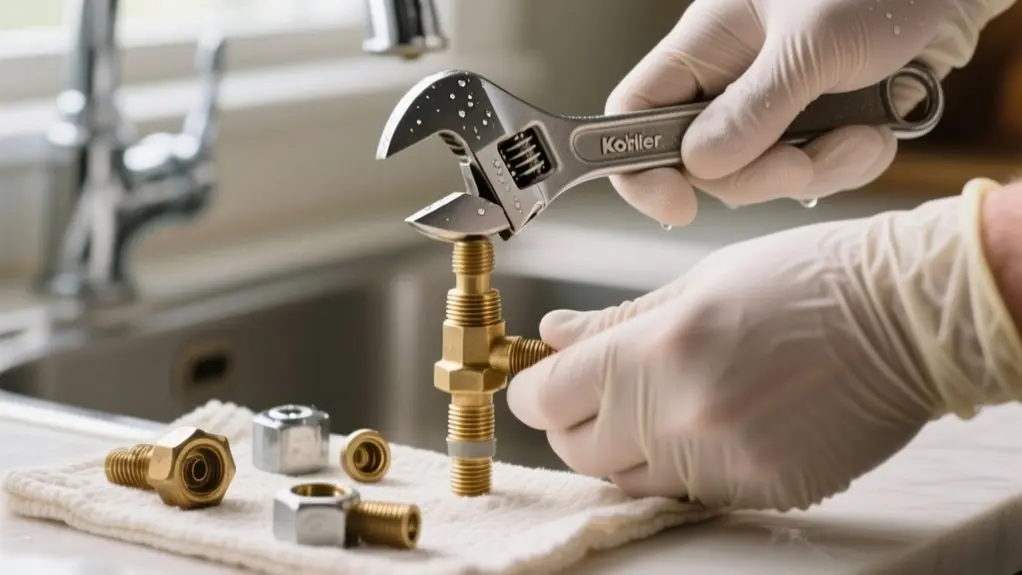
How To Loosen Kohler Faucet Cartridge Lock Nut – Full Guide
Start by turning off the water supply and removing the Kohler faucet handle using a screwdriver to access the lock nut. Apply penetrating oil and let it soak for 10-15 minutes to loosen corrosion.
Use a basin wrench or adjustable wrench to grip and turn the lock nut steadily. If the nut is stubborn, try applying heat or use locking pliers. For severely stuck nuts, carefully cut with an oscillating tool.
Knowing when to call a licensed plumber is essential for safe, effective results. More detailed steps follow below.
Turn Off Water and Prepare Your Faucet
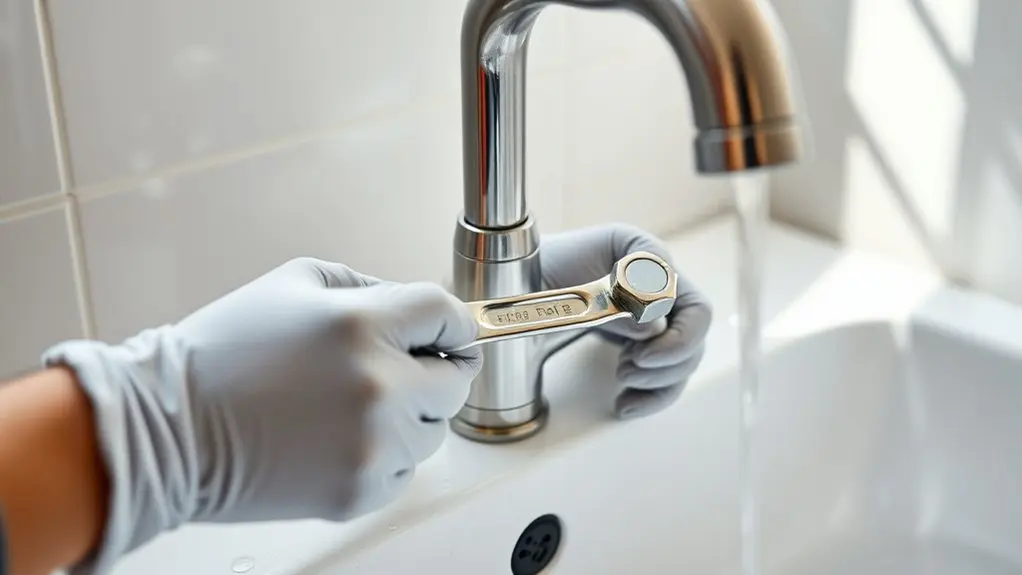
Begin by turning off the water supply to your Kohler faucet to prevent leaks during the cartridge replacement. Confirm the faucet handle is in the “off” position to minimize any accidental water flow.
Next, clear the workspace around the faucet to allow unobstructed access. Place a cloth or towel beneath the faucet to catch any residual water that might spill when you remove parts.
Clear the area around the faucet and place a towel underneath to catch any water spills.
If you have your faucet’s model instructions, review them now, as cartridge access methods can vary. This preparation guarantees a clean, efficient process and reduces the risk of water damage.
Taking these steps before loosening the lock nut sets a solid foundation for the cartridge replacement, making the task safer and more manageable.
Gather Tools Needed to Loosen the Lock Nut
Proper tools are essential to loosen the Kohler faucet cartridge lock nut effectively. You’ll need a basin wrench or adjustable wrench to grip the lock nut securely. Apply penetrating oil like WD-40 to ease corrosion buildup before turning the nut.
Always verify the water supply is off to avoid leaks. Have a towel ready to catch drips and wear safety goggles to protect your eyes from debris or splashes.
| Tool | Purpose |
|---|---|
| Basin Wrench | Secure grip on lock nut |
| Adjustable Wrench | Alternative grip tool |
| Penetrating Oil | Loosen corrosion and buildup |
| Towel/Rag | Catch water drips |
| Safety Goggles | Eye protection |
Remove the Kohler Faucet Handle to Access the Lock Nut
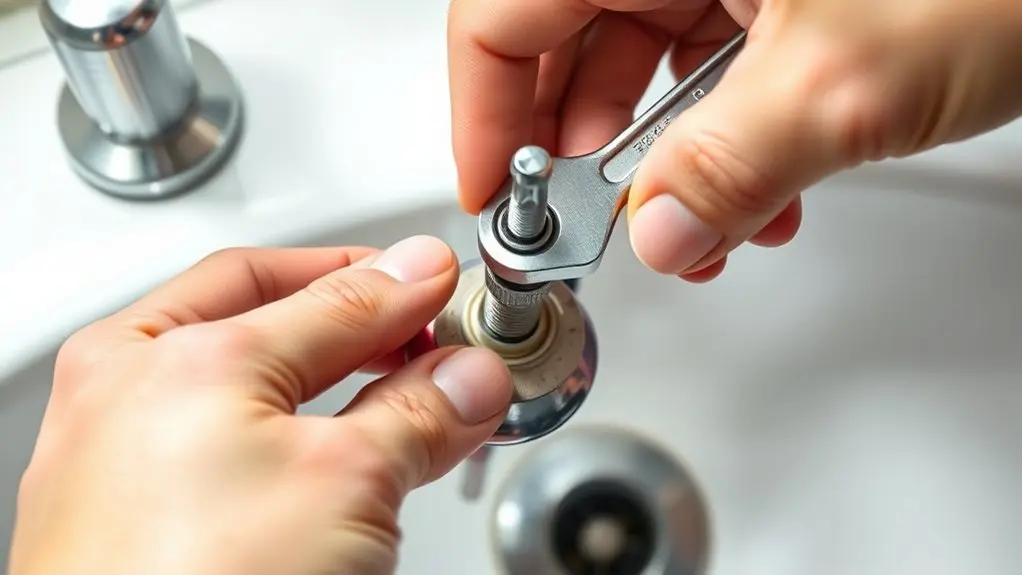
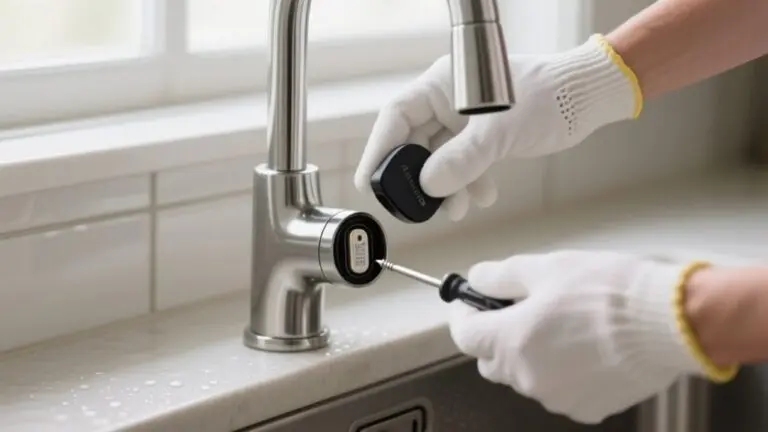
First, find the handle screw—it’s usually tucked away under a little decorative cap. You can gently pry off that cap using a flat-head screwdriver.
Once the cap is off, go ahead and unscrew the handle screw.
After that, just lift the handle straight up.
Now that the handle is removed, you’ll have easy access to the cartridge lock nut underneath.
Handle Removal Techniques
Before you can loosen the lock nut, you’ll need to remove the Kohler faucet handle by locating and loosening the set screw. It’s usually found on the side or back of the handle. Use an appropriately sized Allen wrench or screwdriver to carefully loosen the screw without stripping it.
Once the set screw is removed, gently wiggle the handle and pull it upward to detach it from the faucet body. If the handle resists removal, apply penetrating oil around its base and let it sit for a few minutes to loosen corrosion or debris.
After successfully removing the handle, you’ll have direct access to the lock nut securing the cartridge, allowing you to proceed with loosening it efficiently and safely.
Accessing Lock Nut
Gaining access to the lock nut requires first removing the Kohler faucet handle, which often involves prying off a decorative cap to reveal the retaining screw. Use a flathead screwdriver to carefully lift the cap if present, exposing the screw beneath.
Loosen the screw with an appropriate screwdriver, then gently pull the handle upward or away from the faucet body to detach it without causing damage.
With the handle removed, you’ll see the lock nut securing the cartridge.
Clean the area to prevent debris from interfering, then use a wrench or pliers to turn and loosen the lock nut effectively. This step is essential before proceeding with cartridge replacement or further faucet maintenance.
Follow Safety Tips Before Loosening the Lock Nut
Water supply valves must be fully shut off to prevent leaks or flooding when loosening the Kohler faucet cartridge lock nut.
Ensure water supply valves are completely closed to avoid leaks or flooding when loosening the Kohler faucet cartridge lock nut.
Before starting, follow these essential safety tips to guarantee a smooth process:
- Wear protective eyewear and gloves to shield yourself from potential tool slips or debris.
- Position a towel or bucket under the faucet to catch any residual water that may leak once the lock nut loosens.
- Use proper tools like a basin wrench or adjustable pliers to avoid damaging the lock nut or surrounding parts.
Additionally, be mindful of sharp edges and small components that might dislodge during the process.
Taking these precautions will help you work safely and efficiently without causing damage or injury.
Loosen a Stuck Lock Nut With Penetrating Oil and Heat
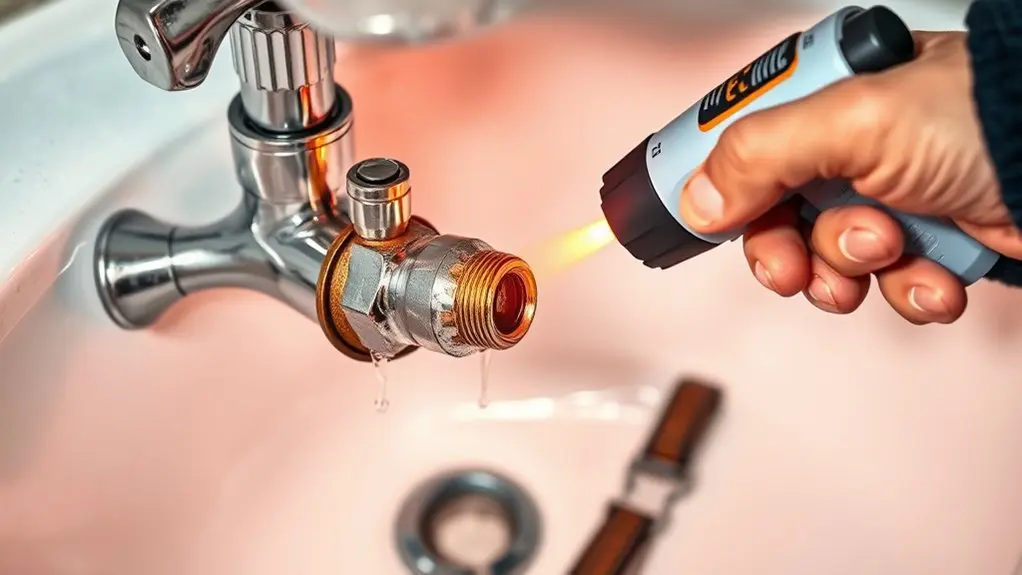
When a lock nut won’t budge, applying penetrating oil like WD-40 and letting it sit for 15–30 minutes can break down rust and debris. Apply a generous amount of oil to the lock nut, allowing it to seep into tight spaces.
Next, carefully heat the lock nut using a heat gun or propane torch for a few seconds. The metal expands, loosening corrosion bonds. Always wear gloves and goggles for protection.
After heating, tap the lock nut gently with a hammer to create vibrations that might aid loosening, but avoid damaging nearby parts.
Finally, use a wrench to apply steady pressure and attempt to turn the nut.
Repeat the process if necessary until the lock nut moves freely.
Use an Oscillating Tool to Cut a Stubborn Lock Nut
If the lock nut won’t budge, you can use an oscillating tool with a metal-cutting blade to cut through it quickly and precisely.
Just be sure to wear safety goggles and gloves to keep yourself protected while you work.
Take your time and guide the tool carefully so you don’t accidentally damage any nearby parts.
Oscillating Tool Benefits
Cutting through a stubborn Kohler faucet cartridge lock nut becomes much easier with an oscillating tool. Its precision and compact design let you work confidently in tight spaces without damaging nearby fixtures.
Here are the key benefits you’ll appreciate:
- Versatility: Choose from various blade attachments tailored for cutting metal or plastic, matching your specific lock nut material.
- Efficiency: The tool speeds up removal, often finishing the job within minutes, saving you significant time.
- Control: Its ergonomic, compact form enhances maneuverability, giving you better control and reducing slip risks.
Remember to prioritize safety by wearing goggles and gloves to protect against flying debris.
Using an oscillating tool not only streamlines the process but also guarantees a cleaner, more precise cut when loosening your Kohler faucet cartridge lock nut.
Cutting Technique Tips
An oscillating tool excels at handling stubborn lock nuts on Kohler faucets, but using the right technique can make the difference between a clean cut and potential damage.
First, select a blade specifically designed for metal or tough materials to protect surrounding components. Firmly position the blade against the lock nut, then apply gradual, steady pressure. Avoid rushing to maintain control and precision. This method typically takes only a few minutes, enabling quick removal without excessive wear.
Keep the tool steady to prevent slipping, which could harm nearby parts. Following these cutting technique tips guarantees a smooth, efficient process and minimizes downtime during repairs.
Proper blade choice and controlled cutting are key to leveraging the oscillating tool effectively on stubborn lock nuts.
Safety Precautions
While preparing to use an oscillating tool to cut a stubborn lock nut, you must wear safety goggles to shield your eyes from flying debris. Before starting, turn off the water supply to avoid leaks.
Follow these key safety steps:
- Select a metal-cutting blade compatible with your oscillating tool to guarantee efficient and clean cuts.
- Maintain a steady hand and apply consistent pressure; avoid rapid or jerky movements that could damage adjacent components.
- After cutting, handle sharp edges cautiously. Use pliers or a wrench to safely remove lock nut fragments and prevent injury.
Adhering to these precautions will protect you and preserve the faucet’s integrity during lock nut removal.
When to Call a Licensed Plumber for Help
If you can’t loosen the Kohler faucet cartridge lock nut after trying standard methods, you should call a licensed plumber to prevent damage to your faucet or plumbing system.
Florida law mandates that all plumbing work, including cartridge replacements, be performed by licensed professionals to guarantee compliance with safety standards.
Applying excessive force or incorrect tools risks leaks or further damage, which a plumber can expertly avoid. A licensed plumber has the specialized tools and skills to efficiently handle stubborn lock nuts, saving you time and preventing costly repairs.
If you’re unsure about the repair process or feel uncomfortable tackling it yourself, contacting a professional guarantees peace of mind and proper service.
Don’t hesitate to rely on expert assistance when needed.
Frequently Asked Questions
How Do I Identify the Correct Kohler Cartridge Model?
To identify the correct Kohler cartridge model, start by checking your faucet’s installation manual or looking for a model number printed under the faucet or on the trim plate.
Next, visit Kohler’s website and enter your faucet model to find compatible cartridges.
You can also consult the Kohler Parts List for your faucet or contact Kohler customer service with your faucet details to get precise cartridge information tailored to your model.
Can I Reuse an Old Lock Nut After Removal?
You generally shouldn’t reuse an old lock nut after removal because it may be worn, stripped, or deformed, compromising its seal and fit.
Always inspect it closely for damage or corrosion.
If it looks intact and fits securely, you might reuse it, but it’s safer to install a new one to prevent leaks.
Check Kohler’s guidelines to confirm compatibility and guarantee proper sealing and durability.
What Causes a Lock Nut to Become Stuck or Corroded?
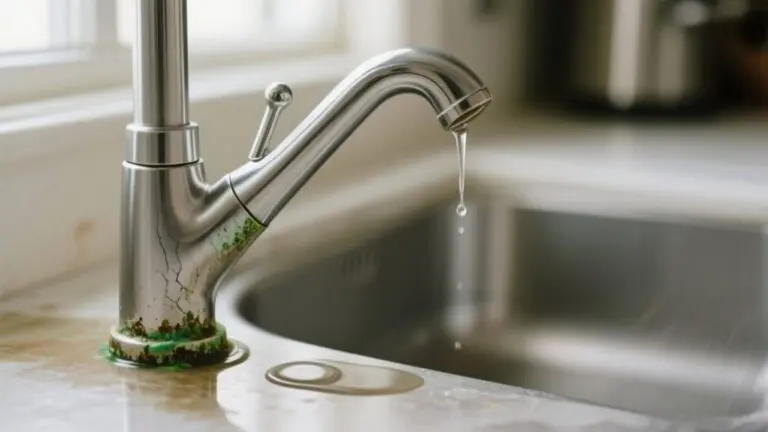
A lock nut becomes stuck or corroded like metal trapped in a vise due to mineral buildup and rust. When you deal with hard water, those minerals accelerate corrosion.
If you don’t maintain the faucet regularly, sediment and grime accumulate, tightening the lock nut’s grip.
Heat or chemical exposure can worsen deterioration, making it even harder to loosen.
Staying on top of cleaning helps you avoid this problem.
Are There Alternative Tools to an Oscillating Tool for Stubborn Nuts?
You can use a basin wrench for excellent leverage in tight spaces or a pipe wrench for larger, rusted lock nuts, as both provide strong torque.
Applying penetrating oil like WD-40 loosens rust and grime before wrenching.
Heat from a heat gun or hair dryer expands the metal, making removal easier.
Tapping gently with a hammer while turning the nut can also help break it free if it’s seized.
How Often Should I Replace the Faucet Cartridge for Maintenance?
You should replace your faucet cartridge every 5 to 10 years, depending on usage and water quality.
If you notice persistent dripping, reduced water pressure, or difficulty turning the handle, it’s time to swap it out.
Regular cleaning and lubrication can extend its life.
But when mineral buildup or discoloration appears, replacement guarantees peak performance.
Always use high-quality cartridges designed for your Kohler faucet model for best results.
Conclusion
Now that you know how to turn off water, gather tools, and remove the handle, you’re ready to tackle the lock nut. Remember to follow safety tips, apply penetrating oil or heat if it’s stuck, and use an oscillating tool for stubborn nuts.
If these steps don’t work, don’t hesitate to call a licensed plumber. Stay prepared, stay safe, and get your Kohler faucet working smoothly again.