How To Adjust Water Level In Toilet Bowl Kohler – Pro Tips
To adjust your Kohler toilet bowl water level, first turn off the water and drain the tank. Then, raise the fill valve float by bending the float arm or sliding the float ball upward to increase the tank’s water volume.
Next, reposition the refill tube so its tip sits just above the overflow tube for proper bowl refill. Check the flapper seal to avoid leaks. Following these steps will improve water flow and bowl fill.
Keep exploring to optimize your toilet’s performance!
Why Is My Kohler Toilet Bowl Water Level Low?
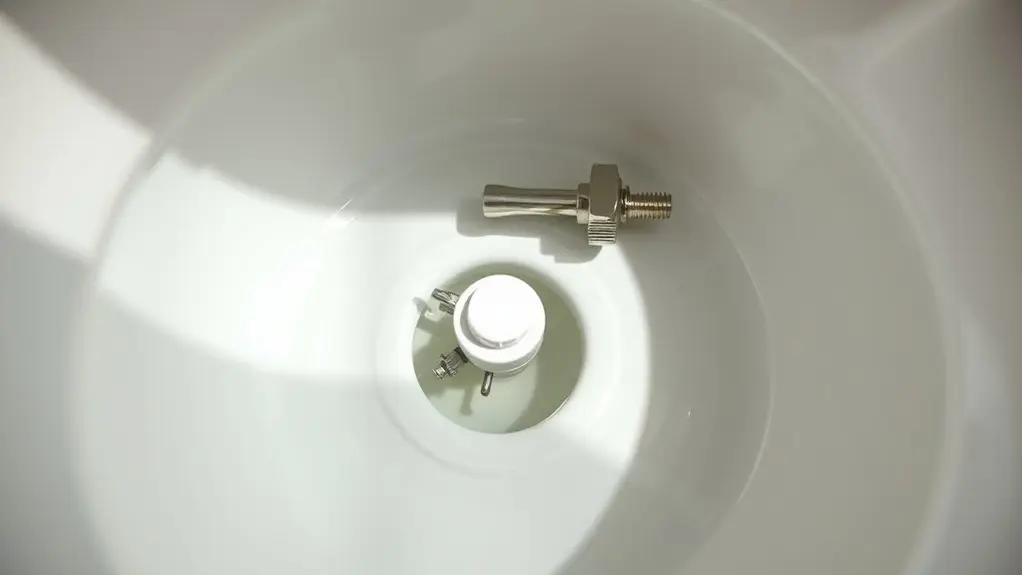
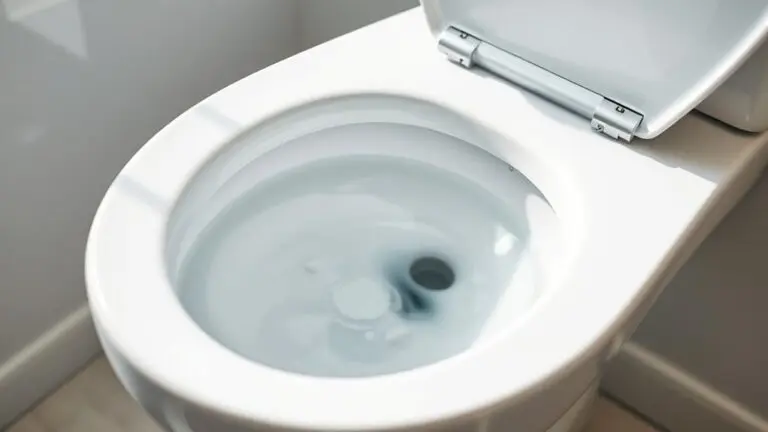
Why does your Kohler toilet bowl have a low water level? Several factors could be at play. First, check the rim feed hose supplying water into the bowl. If it’s improperly placed or blocked, it can reduce water flow and lower the water level.
Low water in your Kohler toilet bowl? Check the rim feed hose for blockages or misplacement.
Also, inspect the refill tube attached to the fill valve. If it has a flow restrictor or is misadjusted, it limits the water entering the bowl.
Furthermore, if there’s insufficient water in the toilet tank, it means less refill volume, which directly impacts the water level.
Finally, a malfunctioning flush valve, like a poorly sealing flapper or canister, can allow water to drain from the bowl, dropping its water level.
Identifying and addressing these issues helps ensure your Kohler toilet maintains the proper water level for ideal performance.
Quick Checks Before Turning Off Your Kohler Toilet Water
Before turning off your Kohler toilet water supply, you should perform several quick checks to guarantee accurate adjustments. First, confirm the toilet tank is full and the water level hits the manufacturer’s recommended mark.
Inspect the fill valve for proper installation and operation to maintain consistent water pressure in the tank.
Check the flapper seal for leaks, as a faulty seal can lower the bowl water level by allowing water to escape.
Make sure the refill tube is correctly positioned to support proper bowl water refill.
Finally, observe the current bowl water level to determine if adjustment is necessary.
These steps help you avoid unnecessary water waste and assure your adjustments effectively stabilize the Kohler toilet’s water level.
Taking a few moments to do these checks can save you trouble later. It’s always better to be sure everything’s set up right before making changes.
How to Safely Turn Off Water and Drain Your Kohler Toilet Tank
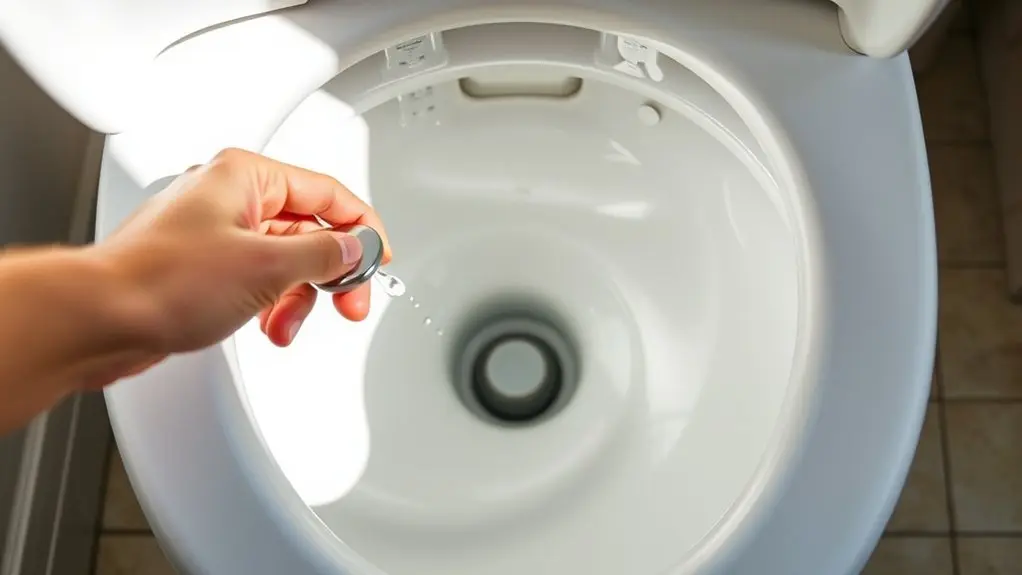
Once you locate the shut-off valve behind or beside your Kohler toilet, turn it clockwise to stop the water flow completely. Flush the toilet to drain most of the tank and bowl water, which helps conserve water.
Use a sponge or towel to remove any remaining moisture and create a dry workspace. If you need to do thorough valve maintenance or check for leaks, disconnect the water supply hose. Just make sure the tank is fully drained before you start any adjustments or repairs.
| Step | Action | Purpose |
|---|---|---|
| Locate Valve | Find behind/beside toilet | Access shut-off point |
| Turn Valve | Rotate clockwise | Stop water flow |
| Flush Toilet | Flush once | Drain tank & bowl |
| Dry & Disconnect Hose | Sponge out water; remove hose | Prepare for work |
Adjust the Fill Valve Float to Raise the Water Level
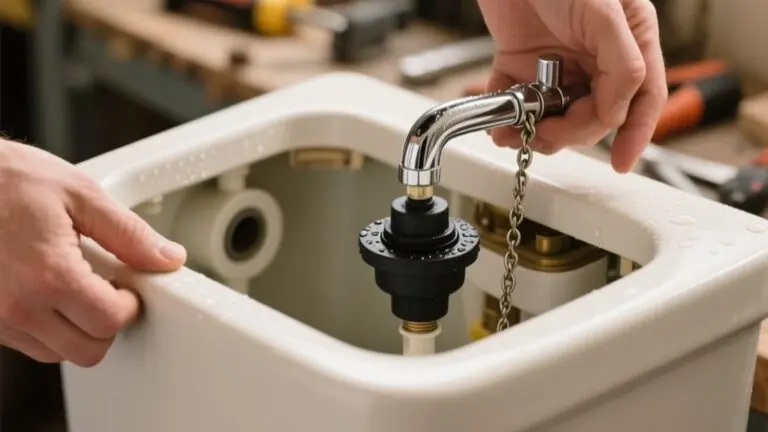
First, find the fill valve inside the tank—that’s where the float mechanism is.
Then, adjust the float height by either turning the screw or sliding the clip upward to raise the water level.
Once you’ve made the changes, flush the toilet and see if the water reaches the level you want.
If it’s not quite right, just tweak it a bit more until it is.
Locate The Fill Valve
Although the fill valve sits behind the toilet tank, you’ll need to remove the tank lid to access it. Carefully lift the lid and set it aside to expose the internal components.
The fill valve is typically mounted on one side of the tank and controls the water flow during refill.
Identifying the fill valve is essential before any fill valve replacement or float arm adjustment. The float attached to the valve can be either a ball or a cup style.
By locating this mechanism, you prepare for precise adjustments to raise the water level.
Remember to handle the tank lid with care to avoid damage, and verify the valve is clean and unobstructed for smooth operation before proceeding to adjust the float settings.
Adjust Float Height
With the fill valve and float located, you can now adjust the float height to control the water level in the toilet bowl. To raise the water level, gently bend the float arm upward or reposition the float ball along the float arm. Most models have an adjustment screw securing the float ball. Turn it clockwise to raise the float, which increases the water volume before shut-off.
Make sure the float moves freely without obstruction so you get an accurate adjustment.
| Component | Action | Result |
|---|---|---|
| Float arm | Bend upward gently | Raises water level |
| Adjustment screw | Turn clockwise | Locks float ball higher |
| Float ball | Slide upward on arm | Delays fill valve shut-off |
This precise adjustment helps you control your Kohler toilet’s water level efficiently.
Test Water Level
Before adjusting the fill valve float to raise the water level, turn off the shut-off valve located beneath the toilet.
Identify the float valve type, either ball float or float cup, on the fill valve because each requires a different adjustment method.
For ball floats, gently bend the arm upward.
For float cups, rotate the adjustment screw clockwise.
These adjustments increase the tank’s water volume, which directly affects the toilet bowl design and water conservation.
After adjusting, turn the water supply back on, flush the toilet, and watch the bowl water level closely.
Make sure the level meets your needs without wasting water.
- Identify float valve type for proper adjustment
- Adjust float height to optimize water level
- Test and observe water level for efficient water conservation
Fix the Bowl Refill: Adjust the Refill Tube and Flow Restrictor
Start by checking the refill tube’s position. Make sure it’s correctly placed just above the overflow tube so it can control the water flow into the bowl.
Then, take a look at the flow restrictor attached to the fill valve. Adjusting or removing it can help increase or decrease the water volume.
Refill Tube Position
How does the refill tube affect the water level in your toilet bowl? The refill tube’s position directly influences the bowl’s water level by controlling water flow regulation during refilling. Proper refill tube maintenance means making sure it’s securely attached and correctly positioned just above the overflow tube connection.
If it’s too low or submerged, the bowl might overfill or underfill. So, it’s important to keep an eye on where the refill tube sits.
To optimize the water level, focus on positioning the refill tube tip just above the overflow tube to keep water flow steady. You can also adjust the refill tube length to avoid too much or too little bowl refill.
And don’t forget to confirm it’s securely attached to prevent leaks or inconsistent refilling. Keeping the refill tube in the right spot is key for steady bowl water levels and smooth operation.
Flow Restrictor Adjustment
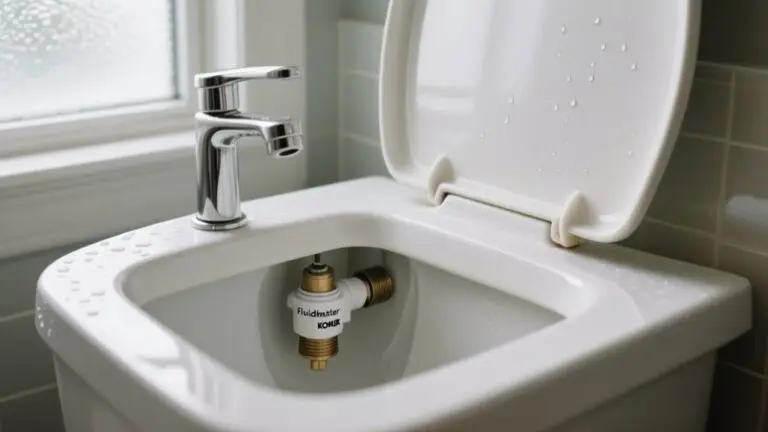
Although the refill tube controls the water flow into the bowl, adjusting the flow restrictor on your Kohler Fluidmaster fill valve lets you fine-tune exactly how much water refills the bowl after each flush.
The flow restrictor is a key part of the fill valve and it limits water flow into the bowl. You’ll usually find it where the refill tube connects to the valve.
To keep things working smoothly, you can either turn the flow restrictor or replace it to increase or decrease the water volume. This helps make sure the water flow is just right. That way, the bowl won’t overflow or run too low.
It’s always a good idea to check your Kohler model’s instructions or trusted online resources before making adjustments. This will guide you through the precise steps and help you keep your bowl refill levels optimal and your fill valve running efficiently.
Water Volume Control
When you adjust the refill tube and flow restrictor, you directly control the water volume that refills the toilet bowl after each flush. This adjustment is vital for water conservation. It prevents excess water use while making sure the bowl refills adequately.
To fix the bowl refill, reposition or replace the flow restrictor on the fill valve. Also, confirm the refill tube directs water properly into the bowl. This can help with leak detection by maintaining correct water levels and spotting issues early.
If the water volume remains inconsistent, inspect the flapper replacement as a potential cause.
- Modify flow restrictor size or position to regulate water flow
- Align refill tube to avoid overfilling or low water levels
- Monitor bowl water level for leaks or flapper wear
Inspect and Repair the Flapper and Flush Valve for Proper Sealing
Since a properly sealed flapper prevents water from leaking from the tank into the bowl, you need to inspect it carefully for cracks, warping, or mineral buildup. Begin with a thorough seal inspection to identify any damage or debris compromising the flapper’s fit. If defects appear, proceed with flapper replacement to restore a watertight seal.
Next, clean the flush valve seat to remove buildup that could prevent proper sealing. Check the flush valve assembly for wear or damage, and address any issues promptly.
Adjust the chain length to ensure the flapper closes fully without slack, which helps it seal effectively.
These steps in flush valve adjustment and flapper maintenance help maintain correct water levels and prevent continuous leakage. Following this routine will optimize your Kohler toilet’s performance and keep it running smoothly.
Clean Rim Holes and Test Water Level to Ensure Proper Operation
To maintain proper water flow and achieve the correct bowl water level, you should clean the rim holes regularly using a small brush or pin to remove mineral deposits. Cleaning those rim holes helps prevent blockages that can mess with the water distribution.
When the rim holes are clear, water flows evenly into the bowl, which is what you want.
After you’ve cleaned the rim holes, flush the toilet and check the water level. Make sure it reaches the desired height marked inside the bowl.
If it’s not quite right, you can adjust the refill tube or flow restrictor to fix it.
Regularly removing mineral buildup is key because clogged rim holes can cause low water levels. Keeping them clean keeps everything working smoothly and consistently.
Use a small brush or pin to clear any rim hole blockages. Inspect the water level after flushing to make sure it’s at the proper height.
And if needed, adjust the refill tube placement or restrictor to control the water refill.
Frequently Asked Questions
Can I Use Any Replacement Parts for Kohler Toilet Repairs?
You shouldn’t use just any replacement parts for your Kohler toilet repairs. Using genuine parts guarantees proper toilet flushing, maintains correct water pressure, and prevents issues during seal replacement.
Non-OEM parts mightn’t fit perfectly, causing leaks or poor function.
To keep your toilet working efficiently, always choose Kohler-approved components, especially for critical repairs like valves and seals. This approach avoids complications and protects your warranty.
It’s really worth sticking with the right parts to save yourself trouble down the line.
How Often Should I Check My Kohler Toilet’s Water Level?
You should check your Kohler toilet’s water level at least once a month to keep it in good shape. Regularly looking at the water level helps you catch any issues early, like evaporation or leaks in the bowl.
If you see the water level dropping below the recommended mark more often, try checking it more frequently. Making adjustments on time can stop flushing problems and avoid overflow.
This way, your toilet keeps working smoothly without any hassle.
What Causes a Kohler Toilet to Run Continuously After Adjustment?
If your Kohler toilet runs endlessly, it’s like having Niagara Falls in your bathroom. The culprit usually is a faulty flapper replacement or improper fill valve adjustment causing water to leak into the bowl.
You need precise water level calibration. Too high, and the fill valve won’t shut off.
Also, check for debris or misaligned float arms, which can send wrong signals and keep water flowing nonstop despite your adjustments.
Are There Tools Recommended for Adjusting Kohler Toilet Water Levels?
Yes, you’ll need specific water adjustment level tools for your Kohler toilet tank. A flat-head screwdriver or pliers are commonly used to turn the fill valve screw or adjust the flow restrictor on the refill tube.
Some models feature an adjustment clip or dial that lets you change the water level manually without tools.
Always check your Kohler model’s instructions to pick the right tools and guarantee precise water level adjustment in the toilet tank.
Can Hard Water Affect the Kohler Toilet’s Water Level?
Imagine your Kohler toilet as a finely tuned engine. Water mineralization acts like grit in the gears. Yes, hard water buildup can disrupt the system and cause inconsistent water levels by clogging the fill valve or refill tube.
The effects on water quality reduce flow efficiency, which makes adjustments tricky. To keep the water levels just right, you’ll need to tackle mineral deposits regularly.
Using descaling treatments or water softeners can help.
This way, you ensure smooth and reliable operation without the hassle. Taking care of these deposits means your toilet runs better for longer.
Conclusion
Adjusting your Kohler toilet bowl water level isn’t just about comfort. It also guarantees efficient flushing and helps prevent damage.
Some people think low water levels always mean faulty parts. But often, simple tweaks like adjusting the fill valve float or cleaning the rim holes fix the problem.
By following these steps carefully, you’ll keep your toilet performing well and avoid costly repairs. Remember, having precise control over the water level is key to a reliable and long-lasting toilet.