How Long Do Shower Filters Last – Full Breakdown
You should replace your shower filter every 2 to 6 months, depending on your household size and water quality. Single users get about 4-6 months, couples 3-4 months, and families 2-3 months before performance drops.
Hard water and high chlorine reduce lifespan, causing clogs and diminished flow. Signs like chlorine odor and sediment mean it’s time to swap filters.
Keeping track and maintaining your filter guarantees peak contaminant removal and water flow. More details explain how to enhance your filter’s lifespan and effectiveness.
How Long Do Shower Filters Last? Typical Lifespan Explained
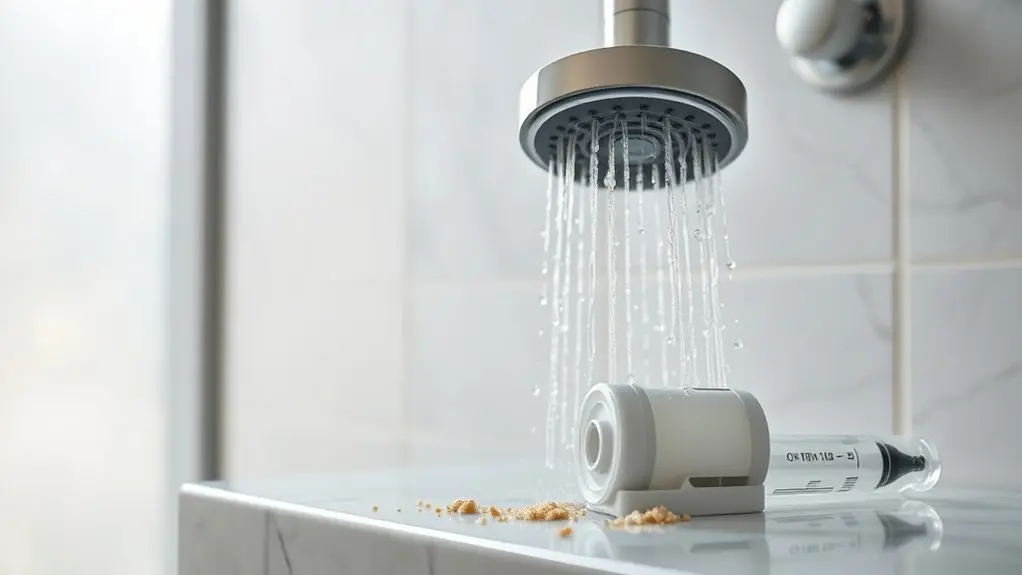
Although shower filter lifespans vary, most last between 2 to 6 months depending on factors like household size and water quality.
Understanding how long do shower filters last requires considering sediment levels and usage frequency.
If your water contains high sediment or chlorine, you’ll need to replace the filter more frequently to maintain effectiveness.
Signs that indicate when to replace the filter include diminished water flow, a return of chlorine odor, or visible cartridge sediment.
Some premium models, such as the Berkey Shower Filter, can extend lifespan to about 12 months, whereas others like the Jolie Filtered Showerhead may require replacement every 3 months.
Monitoring water quality and filter performance helps you determine the best replacement interval, ensuring consistent contaminant removal and water safety.
Shower Filter Replacement Intervals by Household Size
Knowing how long your shower filter lasts is only part of managing its effectiveness. Replacement intervals vary considerably based on household size.
You need to replace shower filters more frequently as household usage increases to maintain ideal filtration and water quality.
| Household Size | Filters Last | Recommended Replacement Interval |
|---|---|---|
| Single Person | 4–6 months | Replace every 4–6 months |
| Couple | 3–4 months | Replace every 3–4 months |
| Family | 2–3 months | Replace every 2–3 months |
Key Factors That Affect Shower Filter Lifespan (Water Quality & Usage)
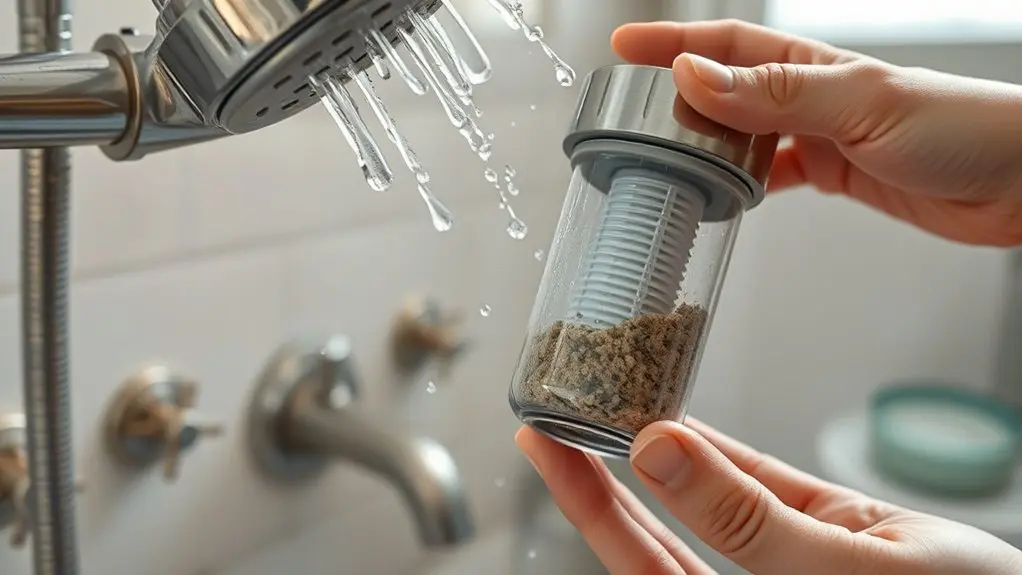
Since water quality and usage directly influence how quickly your shower filter wears out, understanding these factors is essential for timely replacements. The filter lasts between 2 to 6 months, but this varies based on contaminants and water consumption.
Hard water with high mineral content or elevated levels of chlorine and heavy metals speeds up filter exhaustion. If your household uses more water or has sediment-heavy supply, expect more frequent replacements—often every 2 to 3 months.
High minerals, chlorine, heavy metals, or heavy water use can shorten your shower filter’s lifespan to 2–3 months.
Contaminants clog the filter media faster, reducing its effectiveness. Monitoring your water quality and usage patterns helps predict when the filter’s performance declines.
This technical awareness guarantees you replace the filter before contaminants pass through, maintaining peak filtration and protecting your skin and plumbing system efficiently.
Signs Your Shower Filter Needs Replacing Now
Understanding how water quality and usage affect your shower filter’s lifespan helps you recognize when it’s time to replace it. You should filter every few months, typically 4–6 for singles, 3–4 for couples, and 2–3 for families, to prevent contaminants backflow.
Key signs that your shower filter needs replacing include a returning chlorine smell or taste, reduced water flow, and visible sediment or discoloration in the cartridge. Also, replace the filter if it’s been over 12 months since the last change.
| Sign | Cause | Recommended Action |
|---|---|---|
| Chlorine smell/taste returns | Exhausted filter | Replace filter immediately |
| Reduced water flow | Clogged filter | Replace filter |
| Visible sediment/discoloration | Filter saturation | Replace filter |
| Over 12 months since change | Degraded filter performance | Replace filter |
Why You Should Replace Your Shower Filter on Time
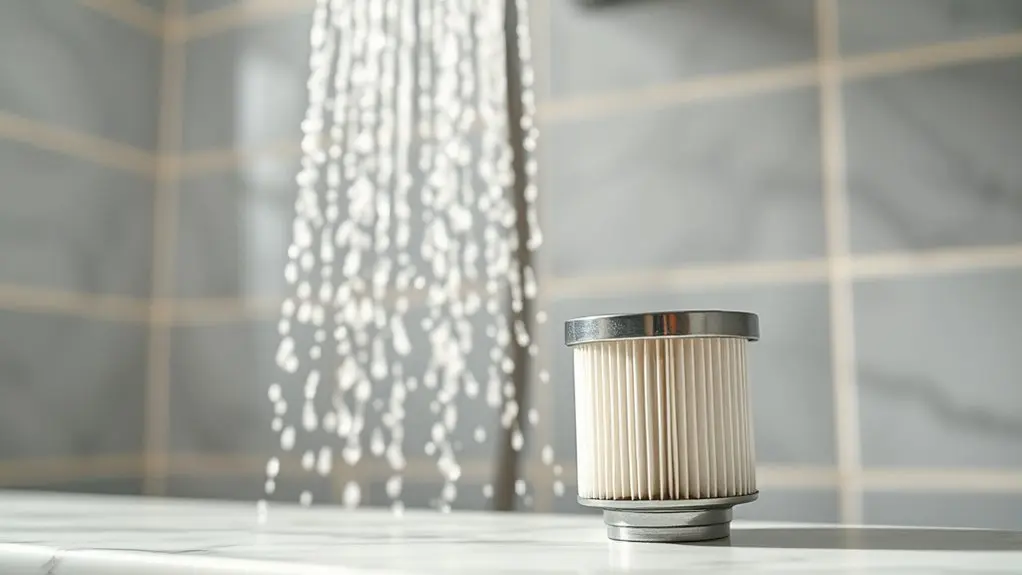
Although it might seem convenient to delay replacing your shower filter, doing so compromises water quality by allowing contaminants like chlorine and heavy metals to bypass filtration.
You should replace filters every 2-3 months for families, 3-4 months for couples, and 4-6 months for singles to maintain ideal filtration efficiency.
An exhausted filter can also harbor bacterial growth, which degrades hygiene and water purity.
Signs that your filter needs replacement include a returning chlorine smell, reduced water flow, or visible sediment.
Timely replacement guarantees your skin and hair benefit from cleaner water, enhancing the effectiveness of your skincare and haircare products.
Ultimately, replacing filters on schedule supports healthier skin by preventing exposure to harmful substances and maintaining consistent water quality.
Tips for Extending the Life of Your Shower Filter
Keeping your shower filter in prime condition directly influences its lifespan and filtration performance. Regular maintenance, like checking for clogs and cleaning filter components, guarantees peak water flow and efficiency. This helps prevent premature wear.
If you have hard water, installing a water softener reduces mineral buildup. That decreases stress on the filter and keeps it working effectively for longer.
Keep an eye on water pressure; a noticeable drop often signals a blockage. When you see this, it’s time for maintenance or to replace the cartridge.
Follow the recommended replacement intervals based on usage: every 4-6 months for singles, 3-4 months for couples, and 2-3 months for families. Higher demand means faster depletion.
Also, store replacement cartridges in cool, dry conditions to avoid degradation. This ensures timely and effective replacements.
These steps will help you get the most out of your filter’s lifespan and performance.
How to Choose the Right Replacement Shower Filter
When choosing the right replacement shower filter, start by thinking about your household size and the quality of your water.
These factors will help you figure out how often you’ll need to swap out the filter to keep it working at its best.
Next, make sure the replacement filter is compatible with your current system.
It should also do a good job of removing chlorine and heavy metals to keep your shower water clean and safe.
Don’t forget to check the installation process and how often the filter needs maintenance.
This way, you can pick a filter that matches not just your technical needs but also fits well with your lifestyle.
Filter Compatibility Guide
When selecting a replacement shower filter, start by verifying your current filter’s model number and cross-referencing it with the manufacturer’s compatibility list to guarantee proper fit and function.
Ensuring filter compatibility is critical to maintain effective filtration of chlorine and heavy metals specific to your water quality.
Check that the replacement cartridges match your existing system’s filtration capabilities and installation method to avoid leaks or performance issues.
If your showerhead design differs, confirm the new filter supports it.
Consulting the product manual or customer service can clarify compatibility questions.
This precise approach prevents mismatched replacements that compromise contaminant removal, protecting both water purity and system longevity while optimizing your household’s filtration needs.
Replacement Frequency Factors
Although shower filter lifespans vary widely, selecting the right replacement interval depends primarily on household size and water quality.
For example, single users typically change their shower filter every 4 to 6 months, while couples should consider a replacement frequency of 3 to 4 months.
Families, due to increased water use and contaminant exposure, need to replace filters every 2 to 3 months.
Hard water and elevated chlorine levels accelerate filter exhaustion, reducing effectiveness over time.
To optimize replacement frequency, monitor for signs such as diminished water flow or a return of chlorine taste.
Installation And Maintenance
Selecting the right replacement shower filter involves evaluating several technical factors to guarantee compatibility and performance. First, verify the filter system’s model number to confirm the replacement cartridge fits properly, preventing installation issues.
Choose filters designed to reduce chlorine and heavy metals, as these contaminants degrade skin and hair quality. Consider the filter’s lifespan, typically 3 to 12 months, based on your water quality and usage patterns.
For best maintenance, clean filter components regularly and monitor water pressure to extend filter longevity. Set timely reminders for replacement intervals: every 2-3 months for families and 4-6 months for individual users.
Proper installation and consistent maintenance ensure your shower filter functions effectively, preserving water quality and protecting your skin and hair health.
Frequently Asked Questions
Can Shower Filters Remove Hard Minerals From Water?
Yes, shower filters can remove hard minerals from water, reducing mineral buildup like calcium and magnesium.
To maximize effectiveness, you need to monitor your filter lifespan closely, as worn-out filters lose their ability to capture these minerals.
Proper installation tips, such as ensuring a tight seal and correct flow direction, also enhance performance.
Using filters with KDF or multi-stage media specifically targets hard water minerals, improving water quality and protecting your skin and hair.
Are Shower Filters Effective Against Bacteria and Viruses?
Think of shower filters as a sieve with varying mesh sizes. They excel in bacteria removal, but their virus filtration often falls short unless specifically designed for it.
Effectiveness studies show most standard filters reduce chlorine and heavy metals but offer limited protection against viruses.
To guarantee thorough microbial safety, you’ll need filters with multi-stage or antimicrobial technologies.
Don’t rely solely on basic filters for full virus and bacteria removal in your shower water.
Do Shower Filters Affect Water Temperature or Pressure?
Shower filters generally don’t affect water temperature, but you might notice slight changes due to water flow adjustments.
Water pressure can drop marginally, especially if the filter clogs from poor filter maintenance.
To maintain ideal water quality and pressure, follow installation tips carefully, ensuring a proper fit and timely replacements.
High-quality filters minimize flow rate reduction, balancing effective filtration with consistent shower performance.
Regular upkeep is key to avoiding pressure loss.
How Do Shower Filters Compare to Whole-House Water Filters?
You’ll notice installation differences right away: shower filters snap on easily, while whole-house water filters need professional plumbing adjustments.
Maintenance requirements vary too; shower filters need changing every few months, but whole-house systems last longer, up to a year depending on usage.
Filtration technologies differ as well. Shower filters focus on chlorine and heavy metals for skin health.
Whole-house filters tackle a broader contaminant range throughout your entire home’s water supply.
Are Shower Filters Safe for Sensitive Skin and Hair?
Yes, shower filters are safe for sensitive skin and hair. They reduce skin irritation by removing chlorine and heavy metals that can cause dryness and inflammation.
You’ll notice improved hair texture as filters prevent harsh chemicals from stripping natural oils.
To maintain these benefits, consistent filter maintenance is essential.
Replacing filters regularly guarantees continued contaminant removal, protecting your skin and hair from irritation and damage over time.
Conclusion
Understanding how long shower filters last helps you maintain water quality and protect your skin and hair. Although many believe all filters last the same, lifespan varies based on water hardness and usage.
Replacing your filter on time isn’t just a recommendation; it’s crucial to prevent buildup and guarantee peak filtration. By monitoring signs and following manufacturer guidelines, you’ll extend filter life effectively, assuring consistent performance and healthier shower water every time.