How To Replace Kohler Toilet Fill Valve – Easy Guide
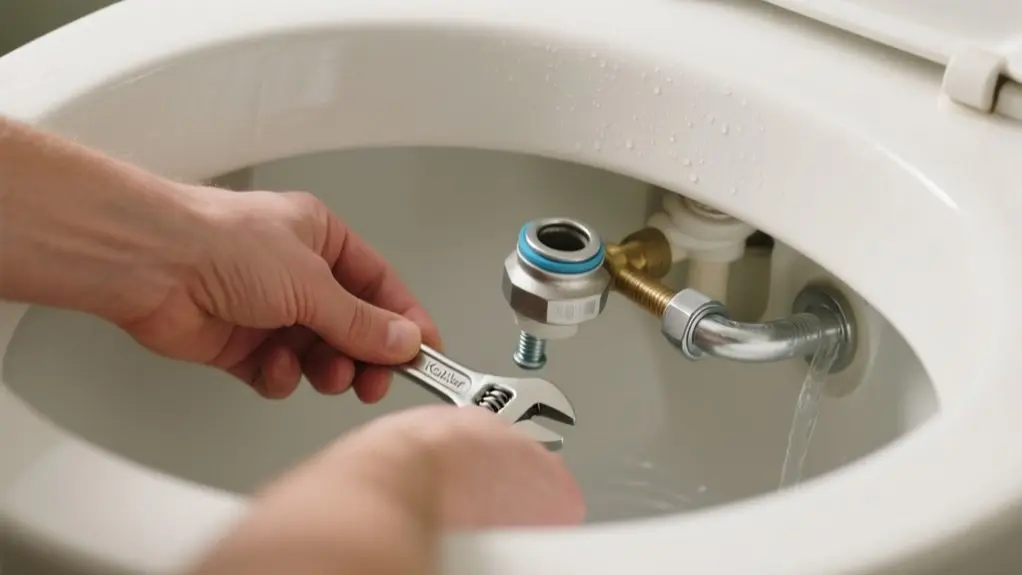
To replace your Kohler toilet fill valve, first shut off the water supply and flush to empty the tank. Use an adjustable wrench to disconnect the water line and remove the old valve by unscrewing its lock nut.
Install the new valve matching flow restrictors and adjust the height so water fills one inch below the overflow tube. Tighten the lock nut by hand, check the rubber washer, then turn the water back on and test for leaks and proper fill.
Keep going to guarantee efficient installation and troubleshooting.
Signs Your Kohler Toilet Fill Valve Needs Replacement
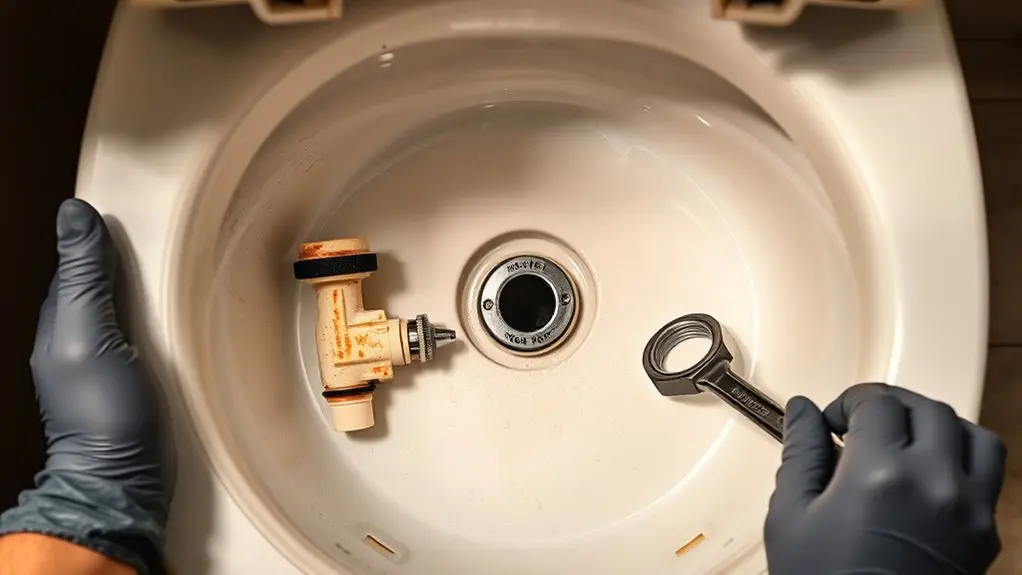
A malfunctioning Kohler toilet fill valve often reveals itself through specific signs you shouldn’t ignore. During regular maintenance, if you notice fluctuating water levels in the tank, it indicates the fill valve on Kohler isn’t regulating water flow properly and may need replacement.
Fluctuating tank water levels during maintenance signal a faulty Kohler fill valve needing prompt attention.
Unusual noises like hissing or gurgling coming from the tank also suggest valve failure. Furthermore, water leaks around the fill valve base or its connections signal an urgent need to replace the valve to prevent damage.
If the tank takes an extended time to refill or the toilet keeps running continuously, inspect the shutoff valve and fill valve immediately.
Addressing these symptoms promptly helps maintain ideal toilet function and avoids costly water waste.
Tools and Materials Needed for Kohler Fill Valve Replacement
Several essential tools and materials guarantee a smooth Kohler fill valve replacement.
Begin with an adjustable wrench to loosen and tighten the valve connections securely. Use a bucket to catch residual water when disconnecting the supply line, preventing spills.
A sponge helps clean debris around the old fill valve, guaranteeing a clean installation surface.
When selecting a new Kohler fill valve, verify compatibility by checking the stamped number inside your toilet tank.
Most replacement kits include a rubber shank washer and flow restrictors, which are critical for creating a proper seal and regulating water flow.
Having these tools and materials ready will streamline the replacement, ensure a leak-free fit, and restore peak toilet function efficiently and effectively.
How to Remove the Old Kohler Toilet Fill Valve
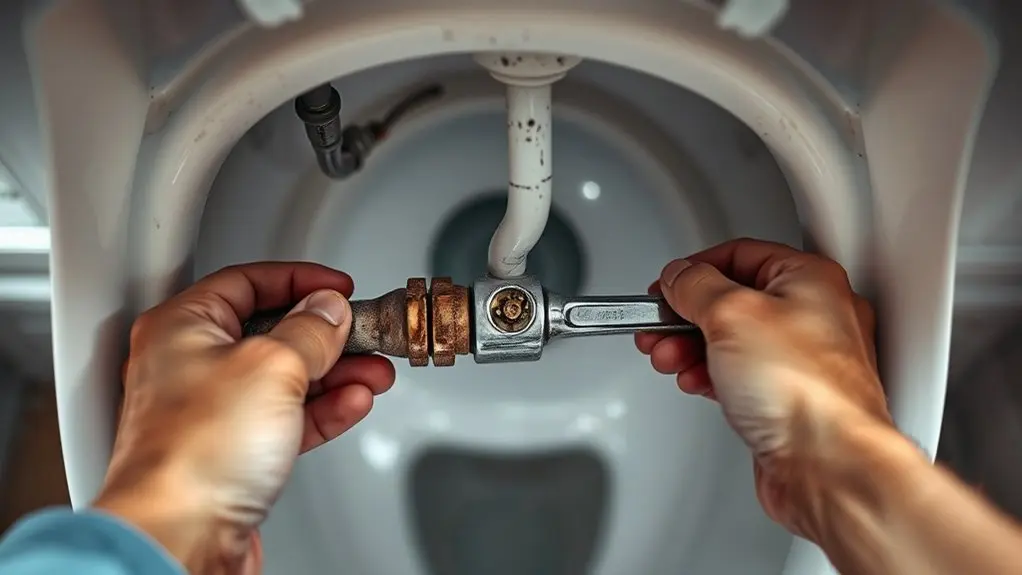
Start by turning off the water supply to your toilet by rotating the shutoff valve clockwise until it’s fully closed.
Next, flush the toilet and hold down the handle to empty the tank, removing as much water as possible.
Flush the toilet and hold the handle to drain as much water from the tank as you can.
Place a bucket underneath to catch any residual water before you disconnect the water supply line from the tank.
Loosen the connection carefully to avoid leakage.
Then, unscrew the lock nut securing the Kohler toilet fill valve by turning it counterclockwise; use a wrench if needed for a firmer grip.
Finally, detach the refill tube from the old fill valve and set it aside.
Now the old Kohler fill valve is fully removed, and the tank is ready for the next step.
Installing and Adjusting Your New Kohler Fill Valve
Begin installing your new Kohler fill valve by matching the flow restrictor color to that of your previous valve to guarantee proper water flow.
Next, adjust the fill valve height to match the original. This ensures the water level sits about one inch below the overflow tube.
Secure the valve by hand-tightening the lock nut. Avoid over-tightening to prevent damage. Confirm the rubber washer creates a proper seal to stop leaks during refill.
After installation, turn the water supply on and carefully observe the valve’s operation. Make any necessary adjustments to optimize performance.
- Match flow restrictor color for correct water flow
- Adjust fill valve height for proper water level
- Hand-tighten lock nut to secure valve without damage
- Check rubber washer seal to prevent leaks during refill
Testing and Troubleshooting Your New Kohler Fill Valve
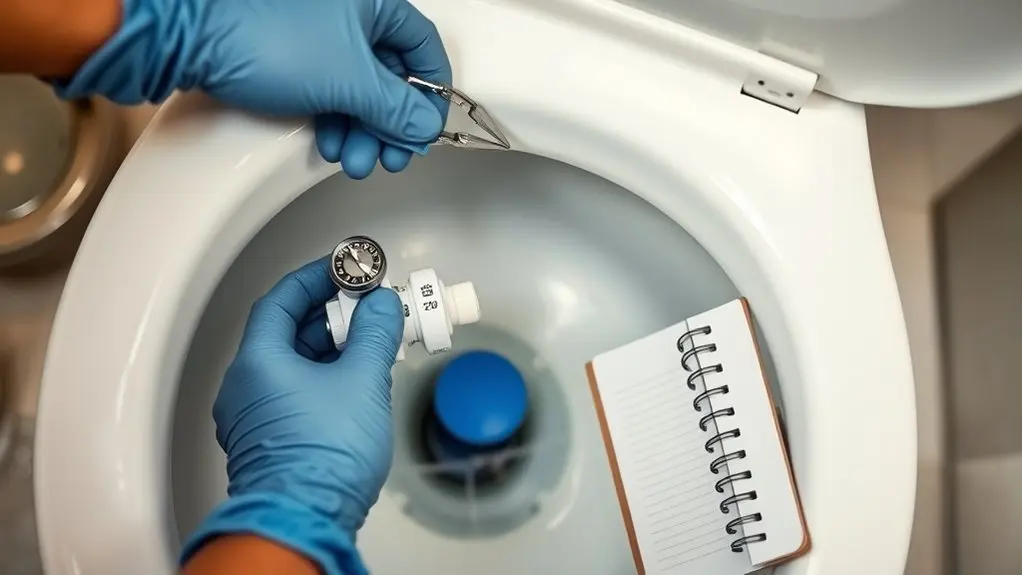
Once you’ve installed the new Kohler fill valve, turn on the water supply and closely monitor the tank as it fills. Make certain the water reaches the correct level without overflowing.
If the toilet continues to run, turn off the water and inspect inside the tank for debris or improper float adjustment. Flush the fill valve to clear any blockages that may be causing issues.
You may be able to resolve the following issues by adjusting the refill tube and confirming it’s securely connected.
To troubleshoot, listen for unusual noises and verify the valve stops filling at the appropriate water level.
Test performance over several flushes, monitoring for consistent refill timing and absence of leaks.
Prompt action guarantees peak function and prevents water waste.
Frequently Asked Questions
Can I Replace a Kohler Fill Valve Myself Without Plumbing Experience?
Yes, you can replace a Kohler fill valve yourself without plumbing experience.
Use an adjustable wrench and screwdriver to remove the old valve, then install the new one following clear step-by-step instructions.
Make sure the replacement valve matches your toilet model by checking the tank’s stamped number.
The process usually takes under an hour. If you run into trouble, consult Kohler Assist or instructional videos for additional help.
How Long Does a Typical Kohler Fill Valve Last?
You can generally expect a Kohler fill valve to last between 5 to 10 years. This depends heavily on your water quality and usage frequency.
Hard water or mineral buildup will shorten its lifespan, so you should regularly inspect and clean the valve.
If you notice constant running or slow refilling, it’s a clear sign you must replace it, no matter how old it is.
Regular maintenance extends its reliable performance.
Are All Kohler Fill Valves Compatible With Every Kohler Toilet Model?
No, all Kohler fill valves aren’t compatible with every Kohler toilet model. You need to match the fill valve to your toilet’s specific model number, which is usually found inside the tank.
Different models require different valve designs, and this affects installation and performance. Using the wrong valve can cause running or refilling problems.
Always verify compatibility by checking Kohler’s packaging or website before purchasing to guarantee proper fit and function.
What Causes a Kohler Fill Valve to Fail Prematurely?
Your Kohler fill valve can fail prematurely due to mineral buildup and sediment restricting water flow.
Improper installation or incorrect height adjustment causes repeated cycling, wearing out the valve. Continuous running from a faulty flapper stresses the valve components.
Over-tightening during installation damages seals, causing leaks and degradation. Also, hard water’s mineral content accelerates corrosion and material breakdown.
Regular maintenance and correct installation help prevent these issues.
Can Hard Water Damage My Kohler Toilet Fill Valve?
Yes, hard water can damage your Kohler toilet fill valve by causing mineral buildup, which clogs the valve and reduces its efficiency.
You’ll notice slower tank refills or continuous running if deposits accumulate.
To prevent this, regularly flush the valve and inspect it for wear or buildup.
Installing a water softener or using descaling solutions helps minimize damage and extends the valve’s lifespan, avoiding costly repairs or replacements.
Conclusion
Replacing your Kohler toilet fill valve is as straightforward as tightening a bolt. By following each step carefully, from identifying signs of wear to precise installation and adjustment, you guarantee a reliable, leak-free flush.
Remember to test and troubleshoot thoroughly to avoid future issues. With the right tools and attention to detail, you’ll have your toilet functioning efficiently in no time, saving water and preventing costly repairs down the line.